
After installing one in our old apartment a couple years ago and seeing dozens more in friends’ homes since, here’s what I’ve learned about whether tray ceilings are actually worth it: the good ones are subtle, the bad ones age fast, and most modern homes do not need one.
That is the honest answer. Not the dramatic design-forum answer where every tray ceiling is treated like a crime scene. Tray ceilings work when they are quiet, shallow, and used in the right room. They fail when they are deep, tiered, contrasted, or added because someone thought a ceiling needed “something.”
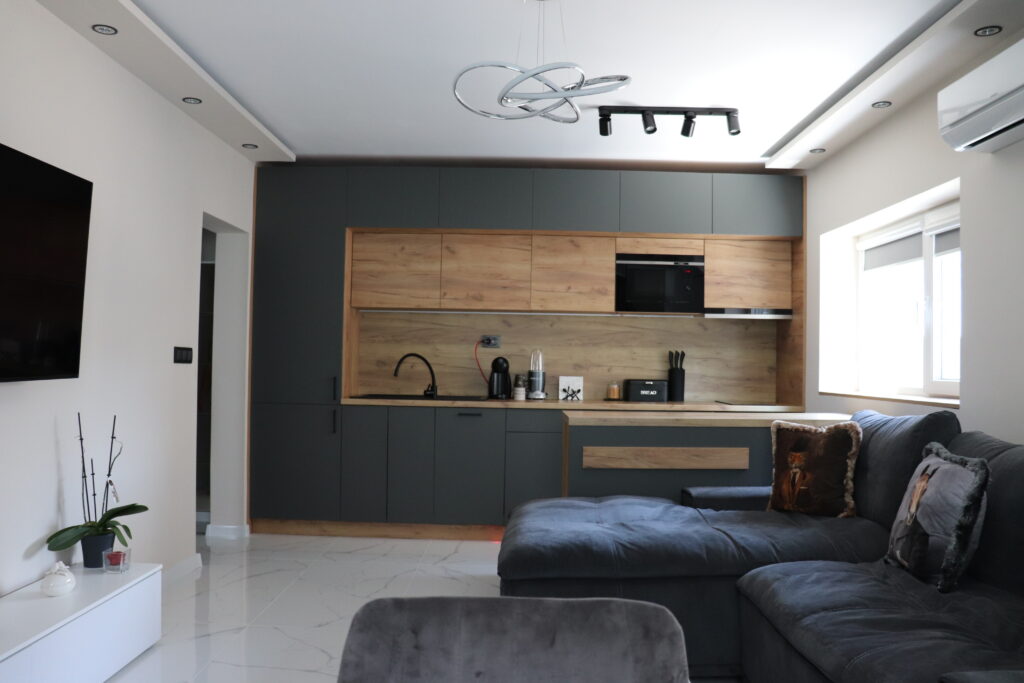
I learned this the expensive way. During a recent small one-bedroom apartment renovation, we added a tray ceiling to the living room. The project was a mix of DIY and contractor work, which means I got the full experience: the excitement, the dust, the painting regret, the invoices, and the “oh, that detail now controls the light fixture” moment. I loved it at first. The love was real. Then I lived with it.
Quick Guidelines
- Keep it shallow – depth equals dated.
- Skip in modern homes – they fight clean architecture.
- Living rooms only – kitchens are a hard no.
- Match colors to the wall and ceiling – never high contrast.
- If you’re under 9 foot ceilings – this is your moment.
My verdict for 2026
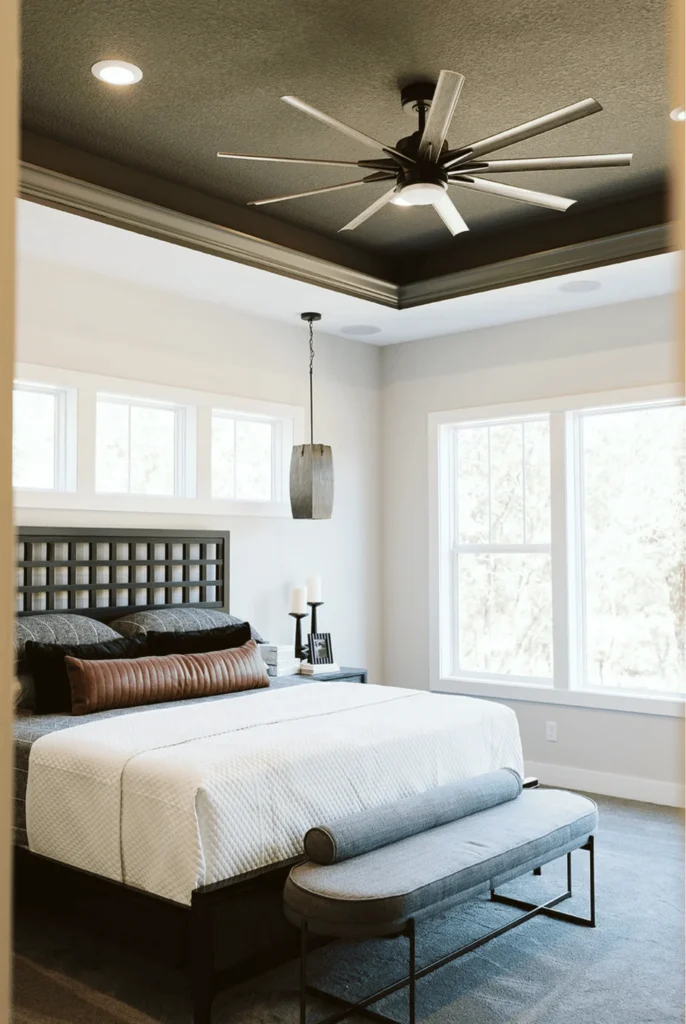
Are tray ceilings worth it in 2026? In most modern homes, no. In traditional or transitional homes with lower ceilings, yes, when executed with restraint.
That is the line.
Tray ceilings have partly peaked. The heavy ones from the early 2000s are out. The multi tiered versions with crown molding wrapped around every level are OUT. The simple versions with a shallow recess and warm hidden lighting still work, especially in living rooms and bedrooms that need height or structure.
A tray ceiling is not automatically outdated. A badly designed tray ceiling is reeallly outdated.
Where they work best
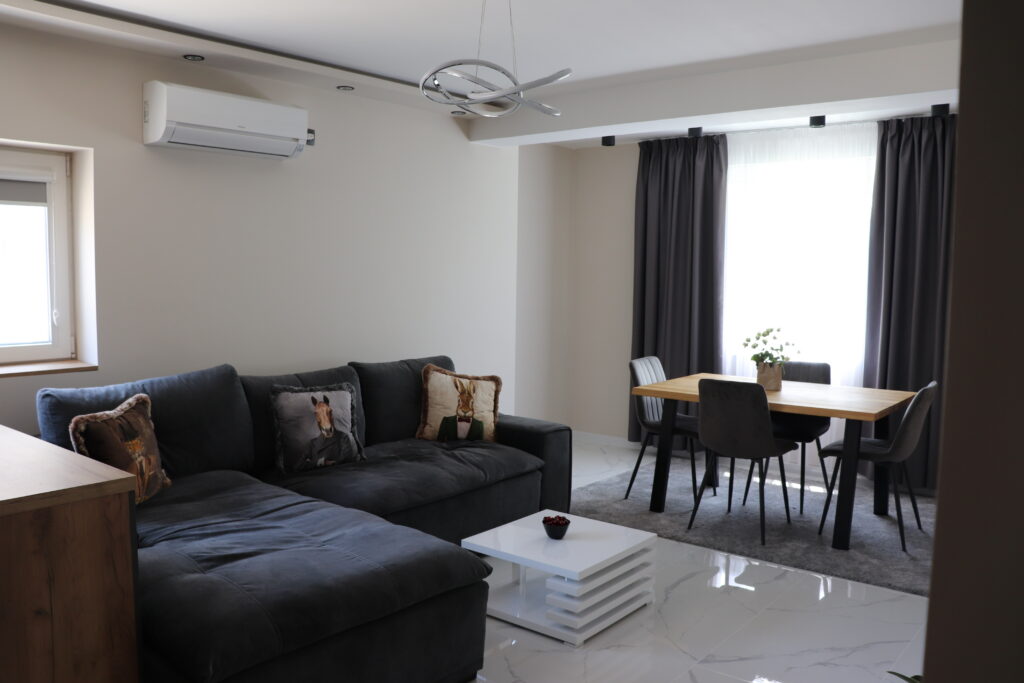
A tray ceiling living room is the strongest case for doing one. Living rooms have enough scale to handle ceiling detail, and a subtle tray can frame a seating area without shouting. Mine did that. In our small apartment, it gave the room a finished feeling before the furniture caught up with the renovation.
A friend of mine has the best version I’ve seen in real life. Her living room leans traditional, the ceiling height is modest, and the tray is shallow with soft tray ceiling cove lighting tucked inside the edge. No contrast paint. No chunky trim. No ceiling doing jazz hands. At night, the glow lifts the whole room without making the ceiling the main event.
That ceiling proved the point for me: tray ceilings can work beautifully when they belong to the room. Ashley at Bigger Than the Three of Us lands in the same place. She says tray ceilings are not something she’d add to a new build, but the examples that work are working with the house instead of fighting it.
Where they fail hardest
A tray ceiling kitchen is the biggest red flag. Kitchens already have cabinets, counters, backsplash, pendants, appliances, hardware, a hood, and sometimes open shelving trying to prove a point. Add a tray ceiling and the room gets seven main characters and no plot.
In a kitchen, the ceiling should calm everything down. Use better pendants. Use warm recessed lighting. Use a cleaner ceiling plane. Let the cabinetry and materials do their job.
Tray ceilings also fail in modern homes. A modern home tray ceiling often looks like someone added “character” without asking whether the architecture wanted it. Clean lines, flat doors, minimal trim, wide openings, and simple ceiling planes do not need a decorative recess sitting above them.
The wedding cake problem
Multi tiered tray ceiling designs are the fastest way to make a room feel trapped in 2003.
You know the ones. Three or four stepped layers climbing up like a drywall staircase. Crown molding on each level. Different paint colors to really underline the situation. A chandelier hanging in the middle like it is trying to save everyone.
Multi-tiered tray ceilings are the design equivalent of a wedding cake nobody wants to eat.
Laurel Bern has a whole post called Tray Ceilings, The Good, Bad, & The Truly Hideous, and yes, “the truly hideous” is exactly the category those heavy versions belong in. She also points out that tray depth matters, and that straight-sided trays should stay shallow in most rooms.
The painting reality

Anyone who says painting a tray ceiling is easy has not painted one.
The angles are the problem. Every transition needs a decision. Ceiling color here. Wall color there. Inside section this shade. Vertical drop that shade. Tape, check, tape again, touch up, swear quietly, repeat.
I painted ours once and immediately understood why our contractor treated it like extra work. It is extra work. Professionals charge more because clean lines around a tray take more time, and DIY painting around one tests your emotional maturity.
This is where permanent architectural details reveal their full cost. You pay in maintenance, future painting, and design restrictions. I wrote about that same commitment with trim in Is Crown Molding Still Popular? Why We Said No During Our House Build, and tray ceilings live in the same family of decisions.
Pretty detail. Permanent consequence.
The dust ledge nobody mentions
Tray ceilings create ledges. Ledges collect dust.
Cleaning meant climbing up, reaching into the recess, and dragging a duster around the perimeter without dropping everything onto the wall below.
The resale value reality
Do tray ceilings add value? Yes, in the right house. Traditional homes, transitional homes, formal living rooms, dining rooms, and bedrooms with low ceilings can benefit from a well-proportioned tray ceiling.
A dated tray ceiling can hurt the room because buyers see work, not luxury. In a clean-lined home, a bulky tray reads like inherited confusion.
A tray ceiling adds value when it looks original to the home, improves the proportions, and disappears into the architecture. It subtracts value when it looks like an upgrade package.
If you already have one
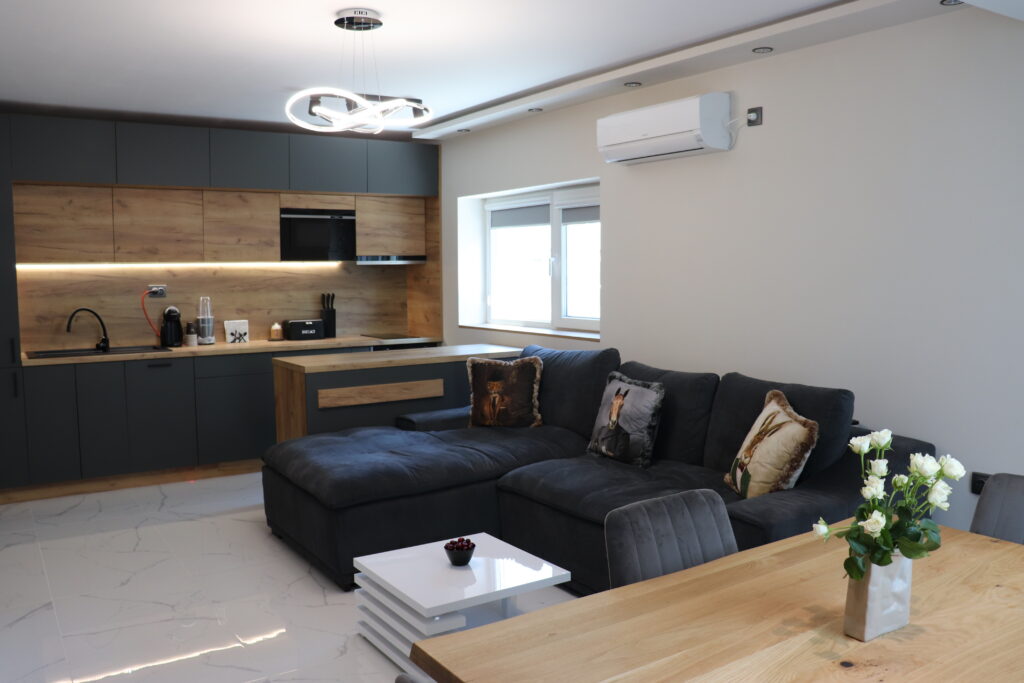
Do not panic and rip it out. Existing tray ceilings can be saved.
The easiest fix is paint. Remove contrast. Paint the tray so it blends with the ceiling and walls instead of outlining every edge. Contrast is what makes many tray ceilings look dated. Quiet color makes them architectural again.
Wood treatments can also work when the room supports them. Sarah Saucedo’s cozy tray ceiling makeover is a strong example of using wood beam treatments to make an existing tray feel warmer and more intentional. That kind of makeover works because it commits to a direction instead of pretending the ceiling is not there.
Better tray ceiling alternatives
If you have tray ceiling cost money sitting in the budget, spend it on lighting first.
A tray ceiling cost can reach a few thousand dollars once framing, drywall, paint, electrical, and lighting are involved. If you have that much money for a living room wow upgrade, better lighting will change your daily life more than a ceiling recess.
Use that money for a beautiful statement fixture, warm dimmable lamps, better recessed lighting, sconces, or layered lighting zones. I have seen a living room shift completely with paint, curtains, and smarter lighting, which is exactly why I wrote What a $100 Budget Actually Does to a Living Room. Intention beats random upgrades.
Other tray ceiling alternatives worth considering: coffered ceilings, beams, a clean cove lighting detail, or nothing at all. Coffered ceiling vs tray ceiling? Coffered ceilings usually age better when the house has the architecture for them.
Who should install one
Install a tray ceiling if your ceilings are under 9 feet and the room needs height. Install one if your home is traditional or transitional. Install one in a living room, dining room, or bedroom where the ceiling detail has room to breathe.
Keep it shallow. Keep the paint quiet. Use warm hidden lighting if the design calls for it. Make it look intentional, not decorative for the sake of decoration.
Skip it if your home is modern or minimalist. Skip it in kitchens. Skip multi-tiered designs. Skip high-contrast paint. Skip anything that feels like it came from a builder showroom called “The Executive Package.”
Final verdict
Are tray ceilings worth it? Yes, when they are shallow, subtle, and installed in the right traditional or transitional room. No, when they are deep, tiered, high contrast, or added to a modern home that needs cleaner lines.
I loved mine at first, and that matters. I also lived with the dust ledges, the painting headaches, and the way the ceiling started controlling other decisions. That matters more.
Tray ceilings done right are beautiful. Tray ceilings done by accident are not. The difference is execution, intention, and knowing when your home does not need one.
Hugs, Jully x
FAQ
Are tray ceilings worth it?
Yes, in traditional or transitional homes with lower ceilings and a subtle design. For most modern homes, skip them and spend the money on better lighting.
Are tray ceilings outdated in 2026?
Heavy, multi-tiered, high-contrast tray ceilings are outdated in 2026. Shallow tray ceilings with clean lines and hidden warm lighting still work in the right home.
What room is best for a tray ceiling?
A living room is the best room for a tray ceiling because it has enough scale to handle ceiling detail. Bedrooms and dining rooms can also work when the design stays quiet.
Do tray ceilings add value?
Tray ceilings add value when they fit the architecture and improve the room’s proportions. They do not add value when they look dated, bulky, or out of place.
What is a good tray ceiling alternative?
Better lighting is the best tray ceiling alternative. Coffered ceilings, beams, warm cove lighting, or a clean flat ceiling with a statement fixture are stronger choices for many homes.