Hey all! My name is Julia, former college student and a home decor enthusiast who loves DIY home improvement projects and finding creative ways to decorate any living spaces on a budget. Recently moved from my dorm to my new apartment which I renovated from scratch and I am here to help you with tips & tricks about home decor/college and more 🙂
When I say small bedroom decor ideas, I really mean tricks that make your tiny room feel bigger, calmer, and more like a retreat. I’m walking you through layout, light, storage, and styling so you can fix real-life cramped bedroom problems without renovating or starting from scratch.
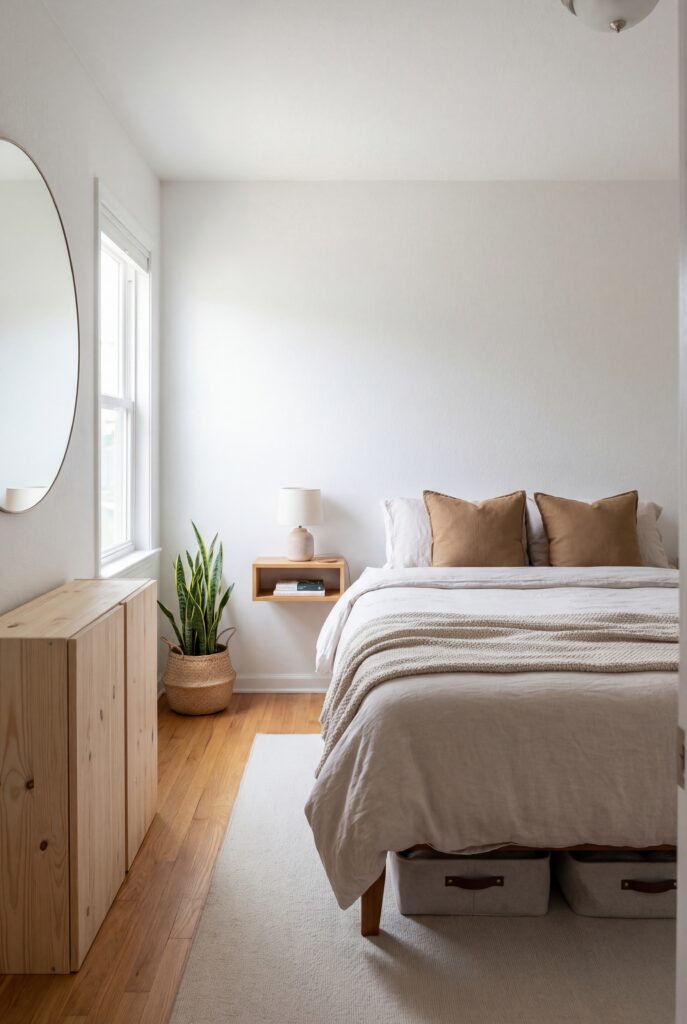
You know that sideways shuffle between the bed and the dresser, clutching a laundry basket like it is a riot shield and apologizing to your own shins. That used to be my entire bedtime routine.
My bedroom had all the classics. Tight walkways. A bed that technically fit but basically touched everything. One outlet in the wrong corner. Random stuff on every surface. Nowhere for books, chargers, hand cream, the kids’ dinosaur, and my phone to live without staging a nightly coup. It did not feel like a retreat. It felt like a storage unit with a pillow.
I kept reading advice that made me weirdly mad. “Use mirrors.” “Pick light colors.” “Just declutter.” Okay, but where does the hamper go. Where does the lamp live. How do I fit a laptop and a real human body in here without it looking like my college dorm.
So this is the guide I wish I had. No tearing down walls. No full furniture reset. Just honest problems and real fixes that make a small bedroom feel calmer and bigger, even with laundry, chargers, and life still happening in it.
My Small Bedroom Illusion Framework
I eventually realized that every time a tiny room started working, I had quietly done the same five things in the same order. So I turned it into a little framework to keep myself from chaos rearranging.
I think through the room like this:
- Layout first
- Light and reflection
- Scale of furniture
- Vertical space and storage
- Restraint and negative space
Layout is where your body moves. Light and reflection set the mood and brightness. Scale is whether your furniture looks like it belongs here or borrowed from a mansion.
Vertical space is how your walls and doors help. Restraint is the editing that stops everything from shouting at once.
If your bedroom feels wrong, it is almost always one of these. Bed in the wrong spot, heavy furniture, flat lighting, empty walls doing nothing, or decor piling up. I will keep circling back to this so it feels like one big system, not fifty random tips.
1. Center the bed on the best wall
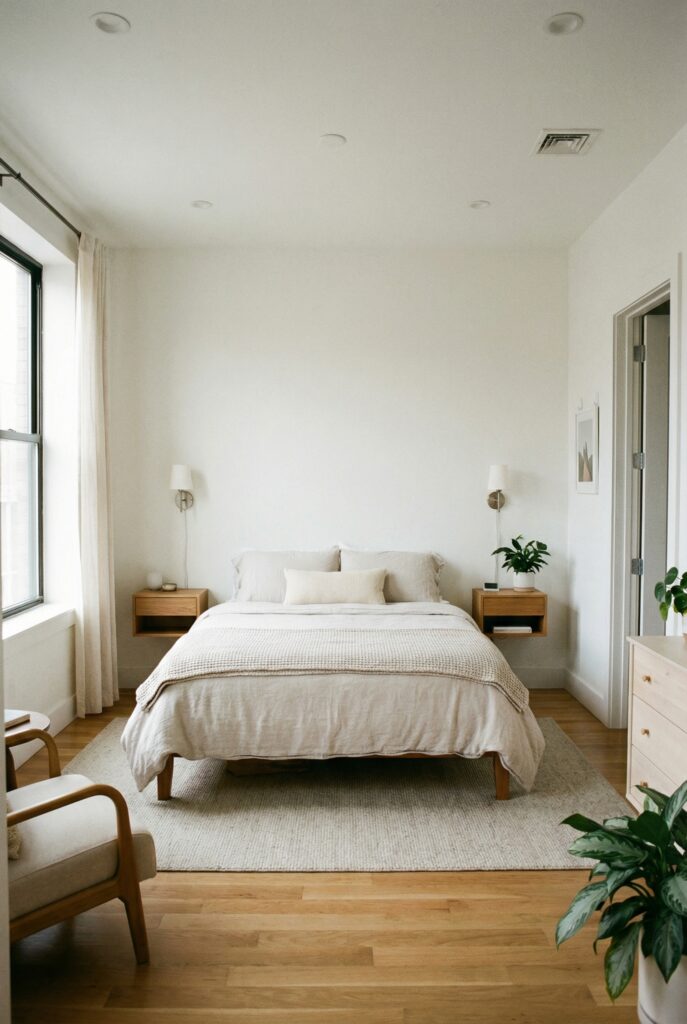
Put the bed on the longest solid wall that is not full of doors. This creates a calm focal point and clears your main walkway so the room feels more open. Renter friendly because you are only moving furniture, not drilling anything.
2. Hang curtains high and wide
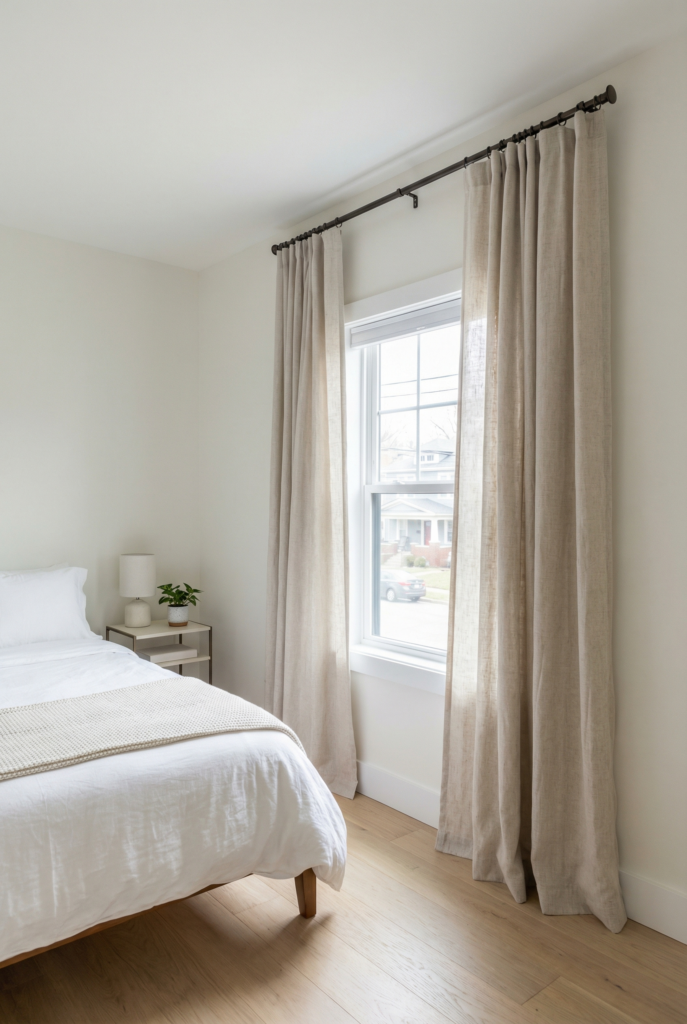
Mount the curtain rod a little below the ceiling and extend it past the window frame. It tricks the eye into thinking the window is larger and the ceiling higher. Cheap rods and simple cotton panels work just fine.
3. Use one big mirror instead of many small ones
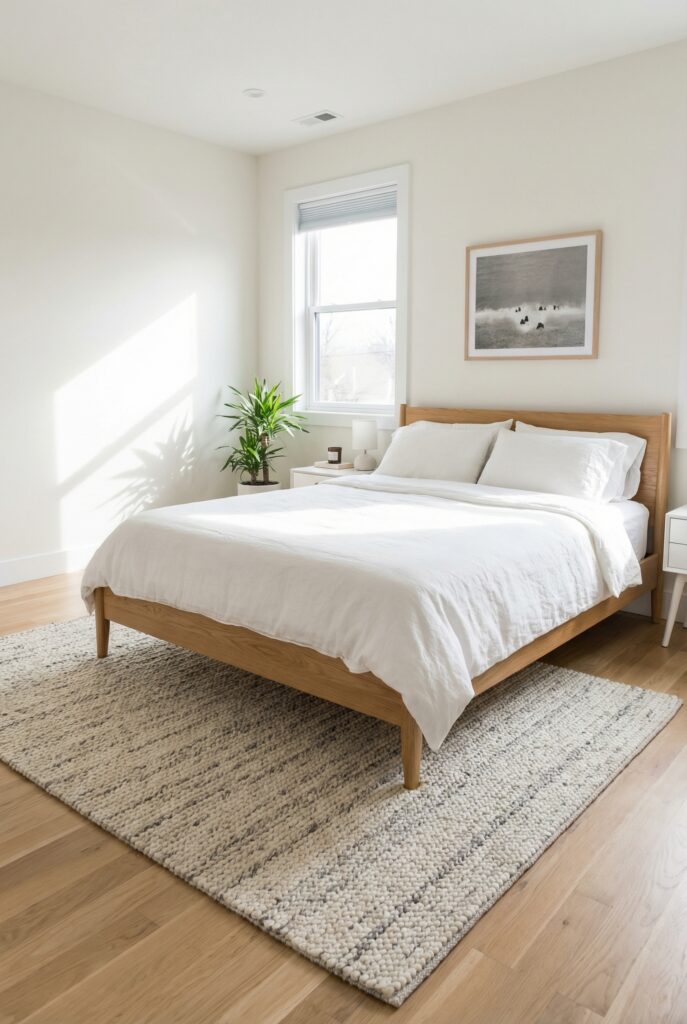
Choose a tall mirror and place it opposite or diagonal from the window. It bounces light deeper into the room and feels like a fake doorway. Thrift store mirrors plus a coat of paint are the budget version.
4. Pick a rug that tucks under the bed
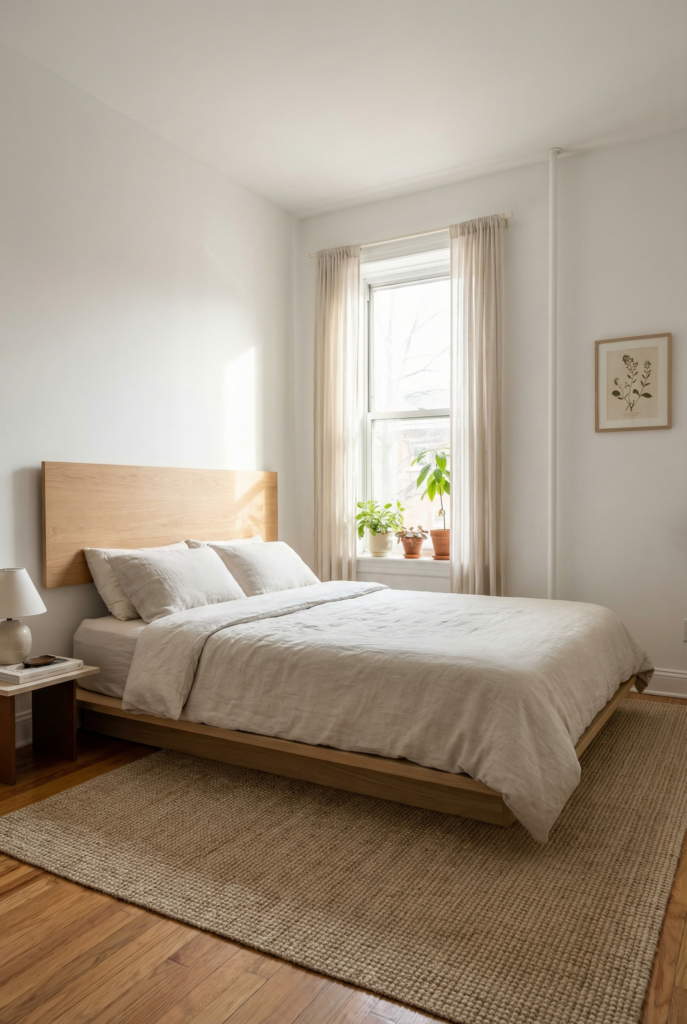
Use a rug big enough so at least the front two thirds of the bed sit on it. Seeing a generous rug edge around the bed makes the floor feel larger. If a big rug is pricey, layer a medium rug under the bed and leave the rest of the floor bare.
5. Match nightstand height to the mattress
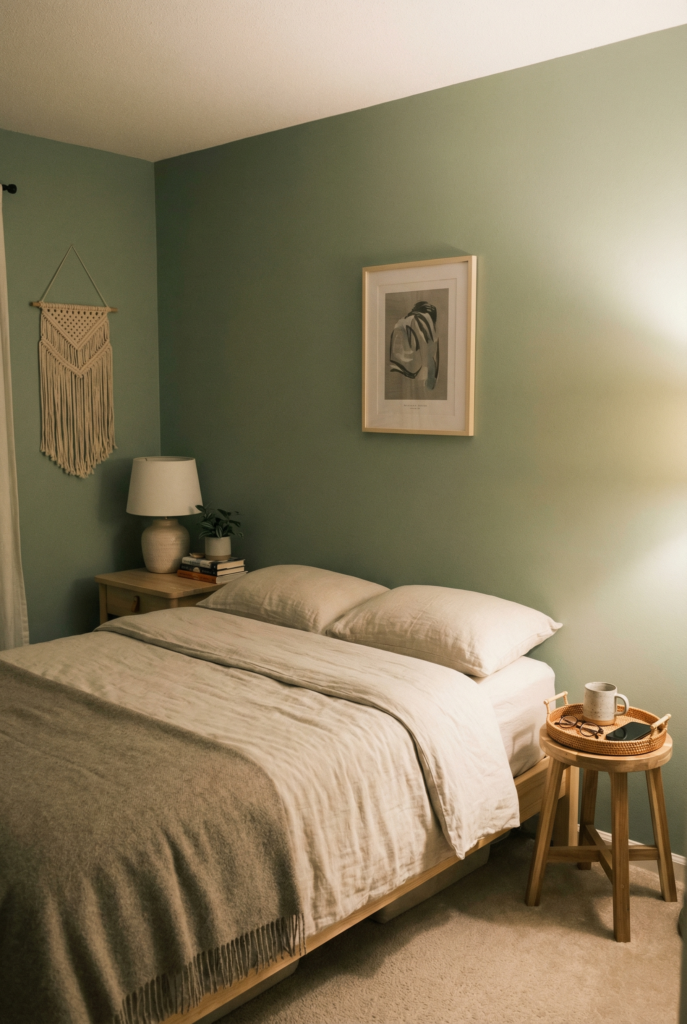
Choose nightstands roughly level with the top of your mattress. This keeps the sight line clean around the bed and stops the room from feeling choppy. Use a sturdy stool with a tray on top if a proper nightstand is not in the budget.
6. Try wall mounted or floating nightstands
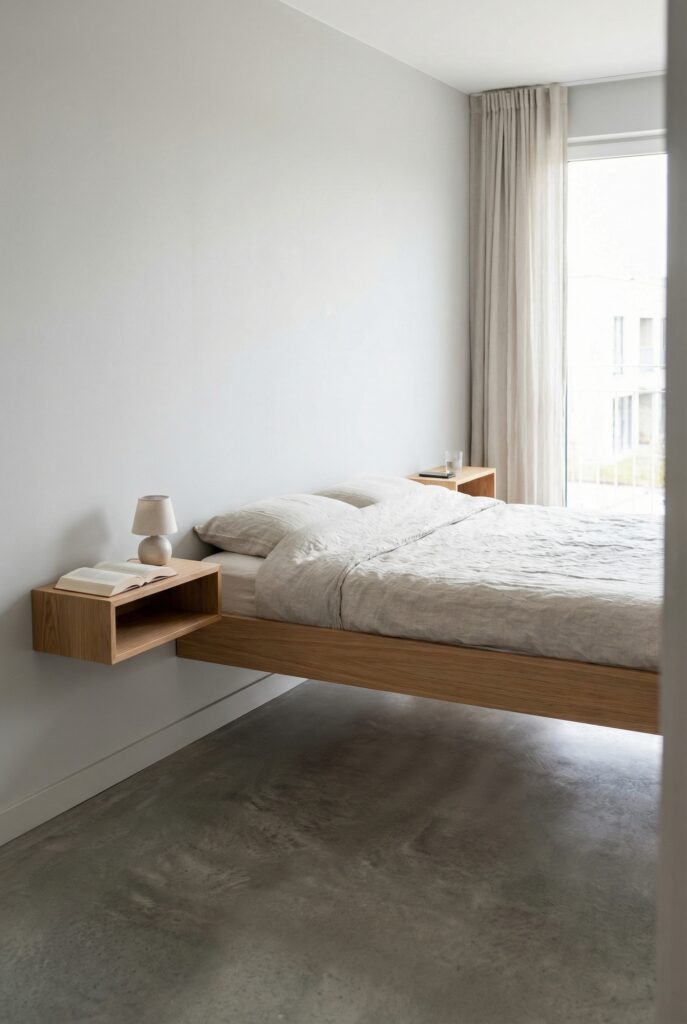
Mount a small shelf or shallow box as a bedside table. Clear floor underneath instantly makes the room feel more open and modern. Use strong adhesive brackets or removable systems if you cannot drill.
7. Use plug in wall sconces instead of table lamps
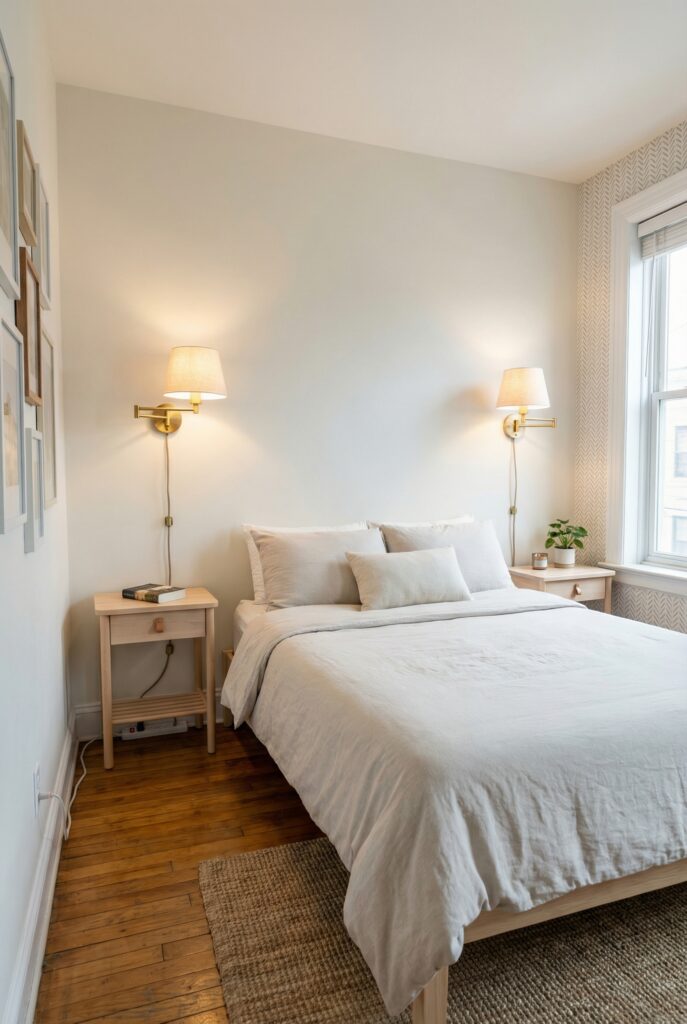
Mount plug in sconces above or beside the bed and snake the cord neatly down. You free up surface space and add light without bulky lamp bases. Affordable versions are everywhere now and do not require hardwiring.
8. Choose a low profile headboard
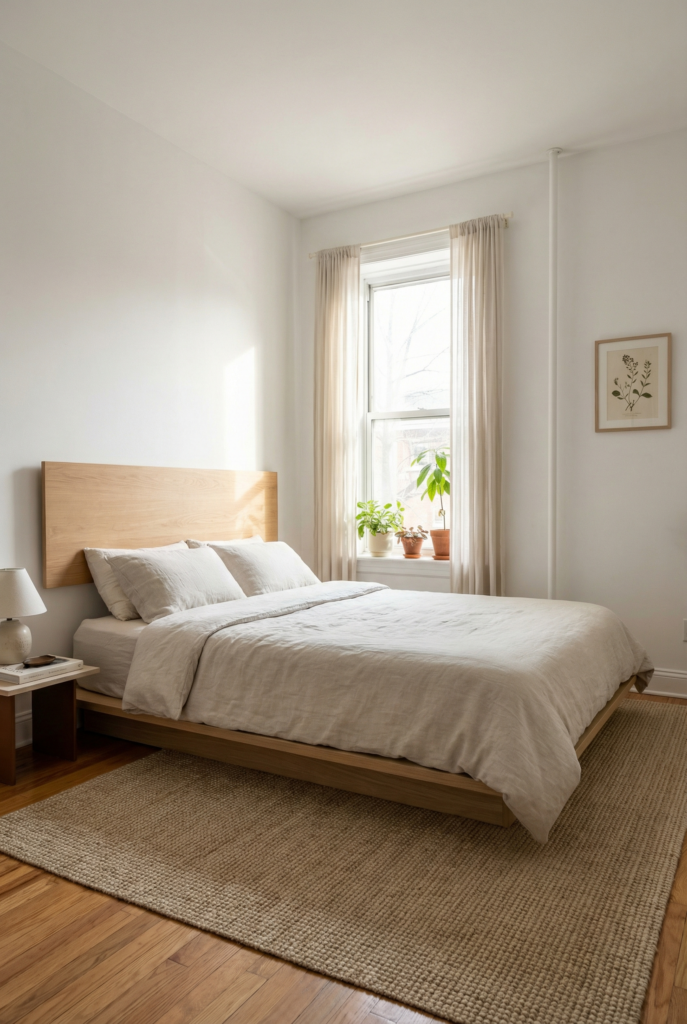
A simple, lower headboard keeps the sight line to the window and ceiling more open. The bed feels grounded but not heavy. A wall mounted cushion, fabric panel, or even a painted rectangle behind the bed works on a budget.
9. Go nearly monochrome with walls and trim
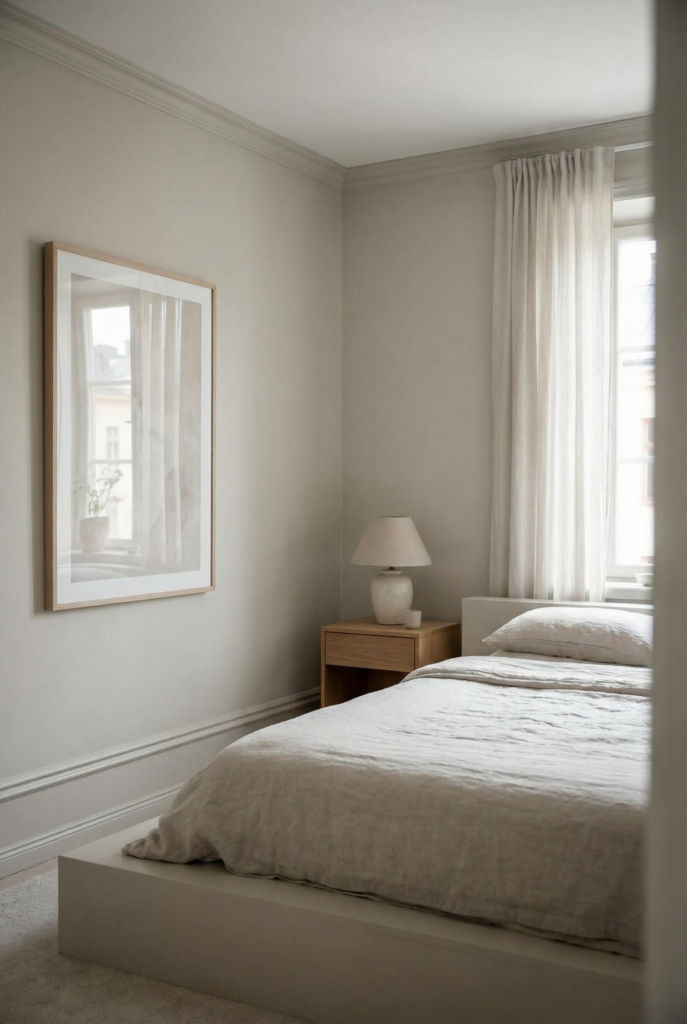
Paint walls and trim in the same color or very close shades. It blurs the edges of the room so you notice form and light, not lines. Great for renters if your landlord already prefers light neutrals.
10. Limit patterns to one or two big players
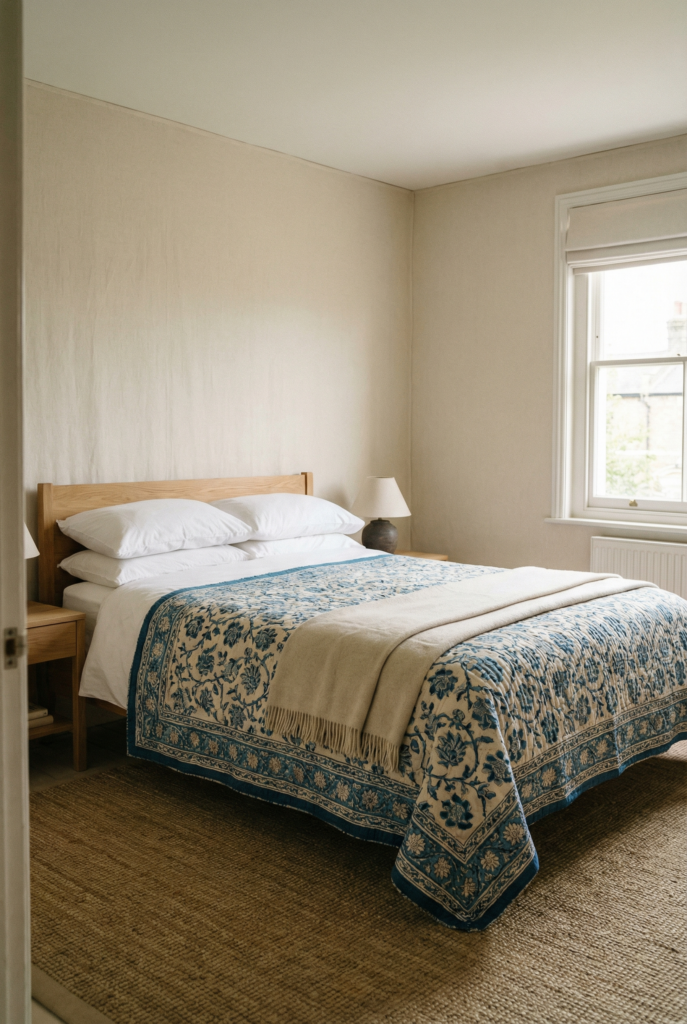
Use pattern on either the bedding or the rug, not both screaming at once. The room feels more open when your eye can rest on larger, calmer areas. Swap extra patterns for solid pillow covers without buying new inserts.
11. Run a hook rail along one short wall
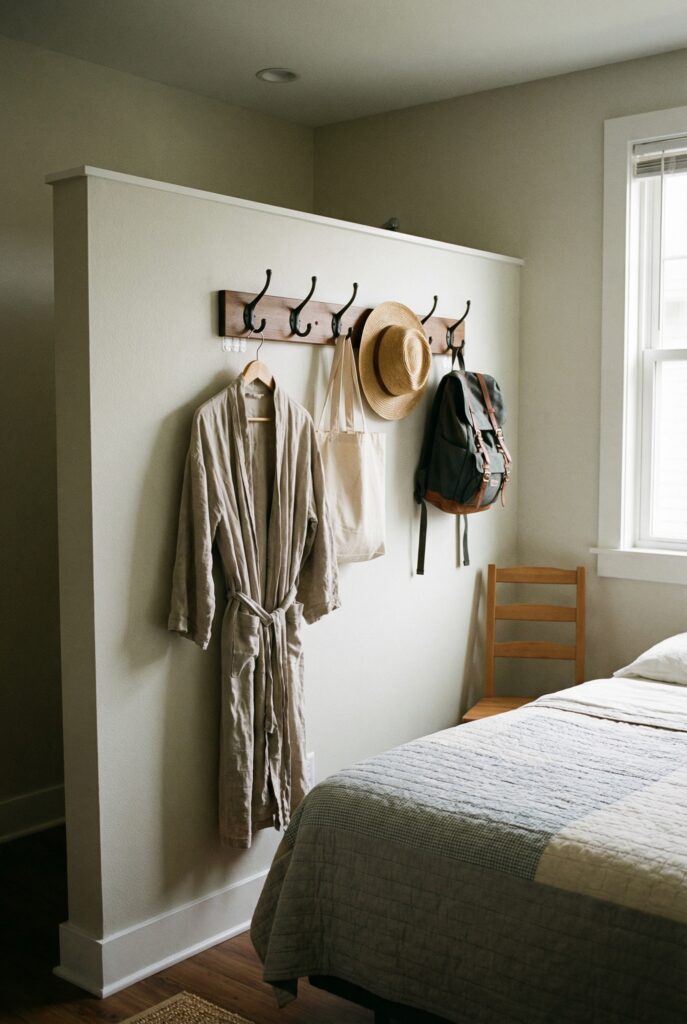
A row of hooks for robes, bags, and hats gives all the grab and go things a home. Keeping these off chairs and the floor instantly declutters and reveals more floor space. Use removable hooks in a straight line if you cannot install a real rail.
12. Add one leafy plant at eye level
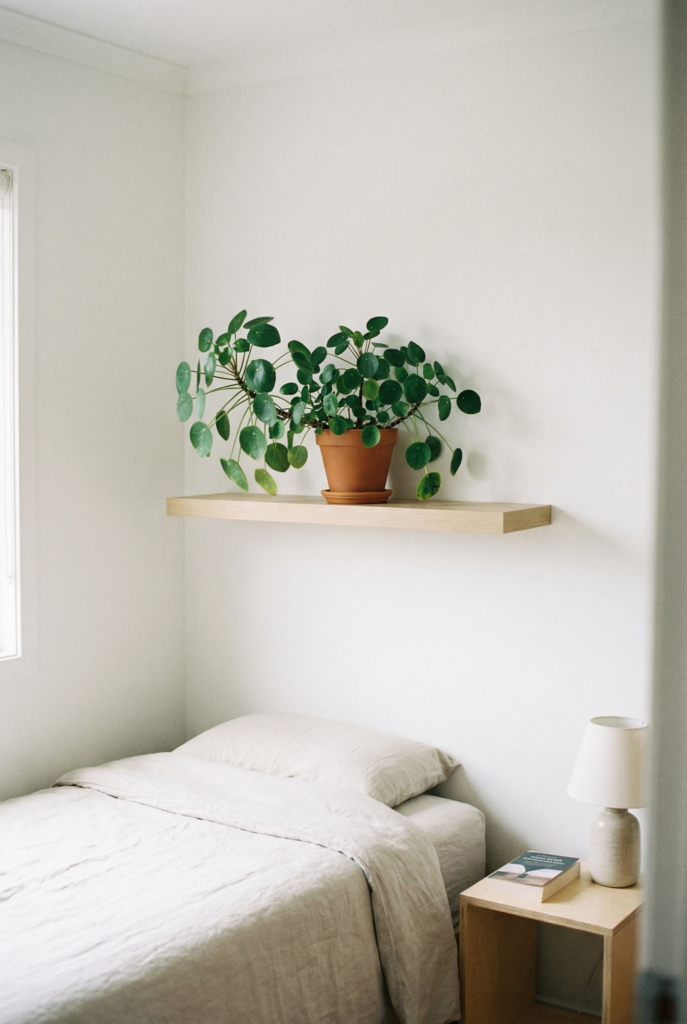
A single medium plant on a dresser or wall shelf brings life without crowding. Green softness balances the straight lines and makes the space feel fresher. Choose a low light plant like pothos or snake plant if your window is small.
13. Create a mini vanity and desk combo
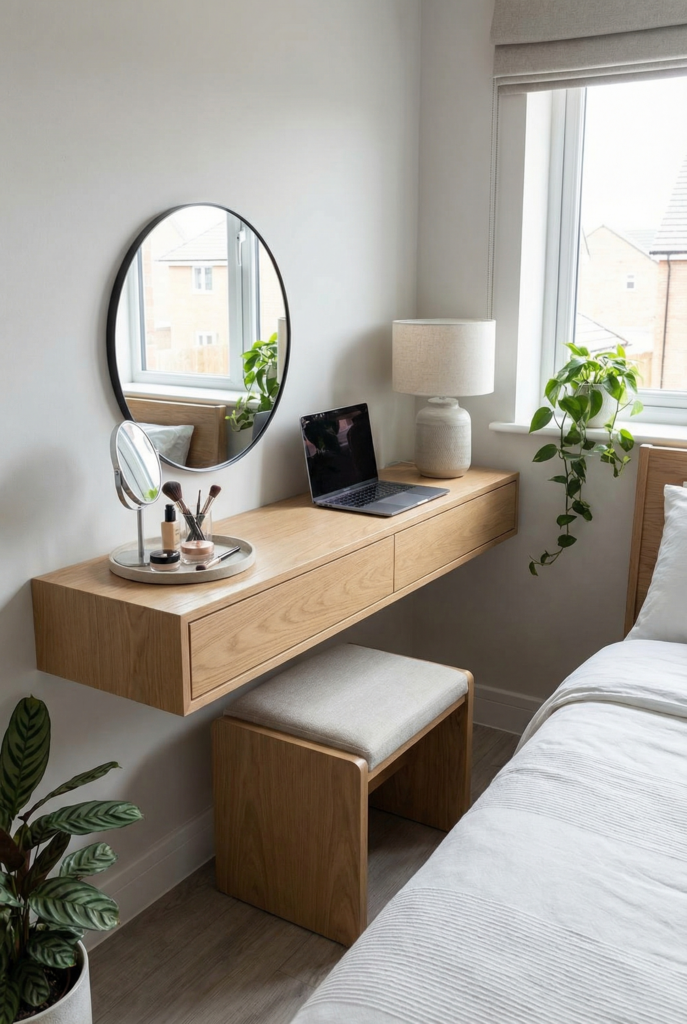
Use a narrow table or console as both vanity and tiny desk. One piece, two jobs, fewer legs on the floor. Pair it with a pretty chair or stool that can tuck fully underneath when you are not working.
14. Group art instead of scattering it
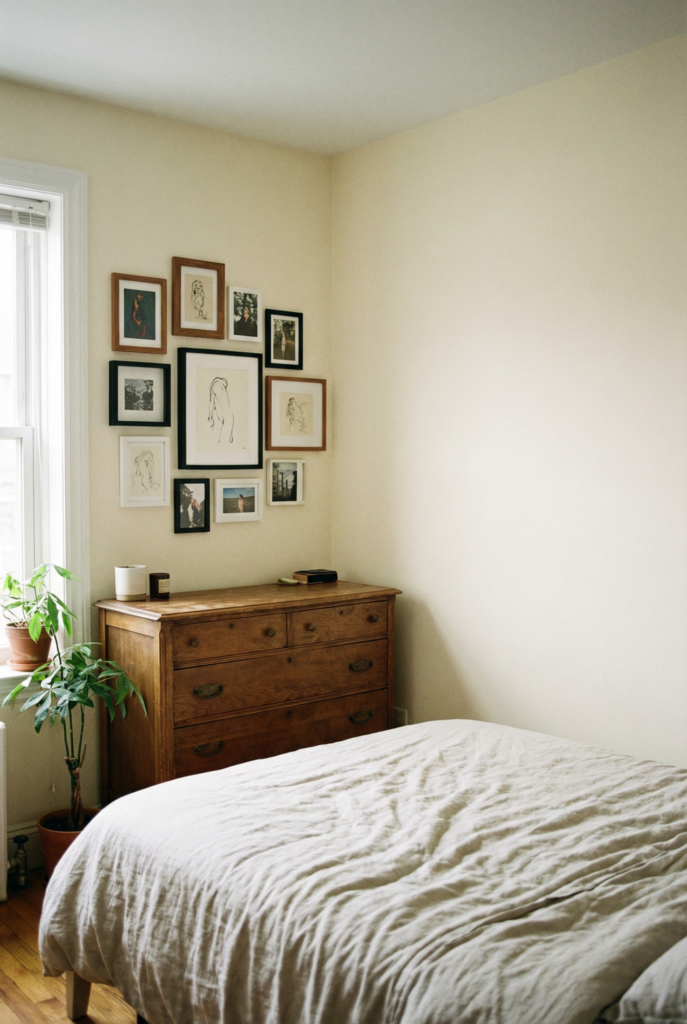
Gather small frames into one mini gallery above the dresser instead of sprinkling them on every wall. The rest of the walls stay calmer, which reads as more spacious. Use printable art and simple frames for a budget friendly gallery.
15. Keep bedding mostly solid and layered
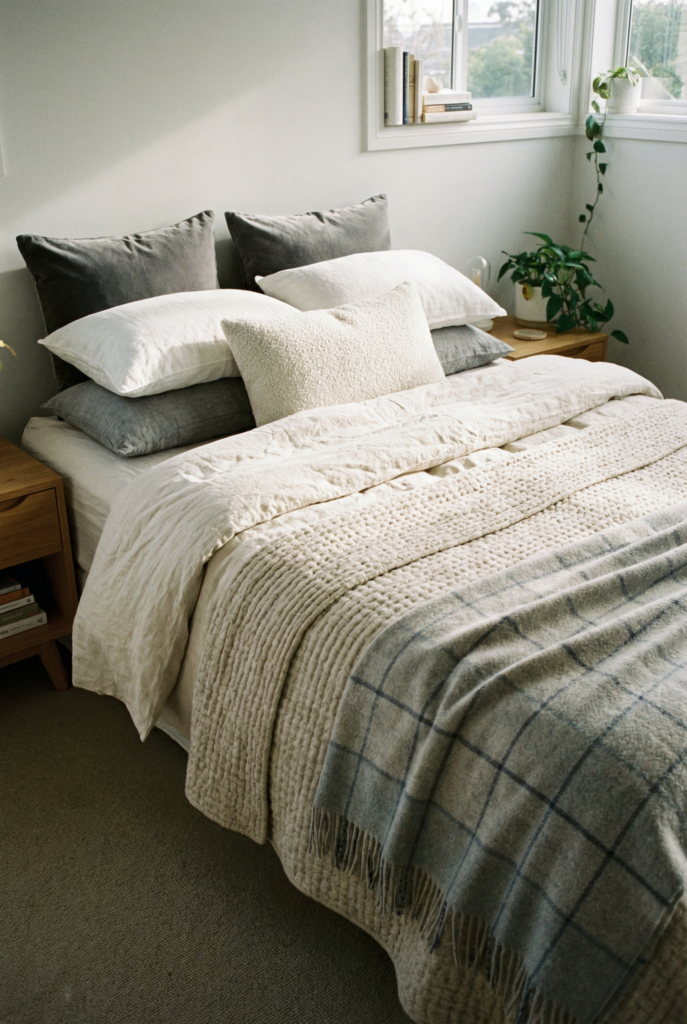
Go for solid or softly textured bedding with maybe one patterned pillow. Layering textures feels cozy without visual clutter. You can often find affordable duvets and covers that feel nicer than they cost.
16. Use under bed storage that fully hides
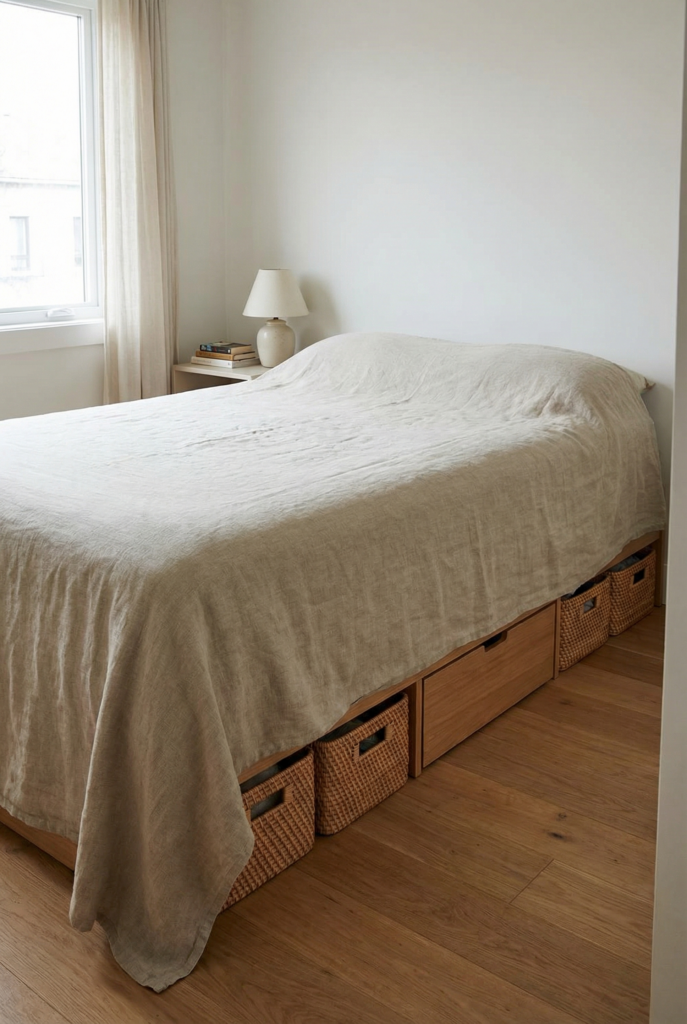
Slide low bins or drawers that sit completely under the bed edge. Hidden storage clears floors and surfaces, which makes the room feel bigger. Even basic clear bins work, as long as they disappear once the bedspread is down.
17. Let the dresser top breathe
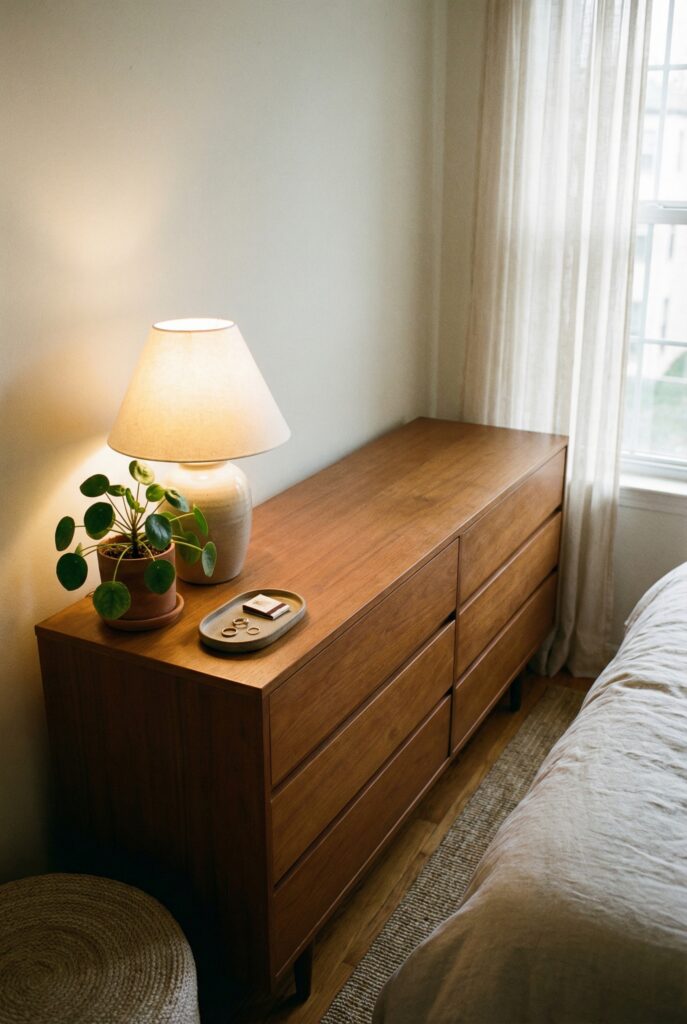
Style one corner of the dresser with a lamp, a plant, and a tray, then leave the rest mostly empty. Negative space here makes your eye read the surface as long and open. Reuse a kitchen tray or cutting board as your catchall.
Measurements cheat sheet for tiny bedrooms
You do not need to obsess over every centimeter, but a few numbers make planning so much easier. Here is the quick and dirty guide I keep in my head.
- Try for at least 60 cm of clearance on the sides of the bed where you walk
- Aim for about 75–90 cm at the foot of the bed if it faces a wall or dresser
- Nightstand tops should sit roughly level with the mattress, give or take 5 cm
- Curtains usually look best hung 10–20 cm above the window frame, near the ceiling line
- Let the curtain rod extend about 10–20 cm past each side of the window
- A rug under a double or queen bed should extend at least 45–60 cm past the sides and foot
- Leave about 5–7 cm between the top of a headboard and the bottom of any art above it
You can break these a little, but they are a good starting point before you commit to new furniture or a rug.
Smart layout and space planning
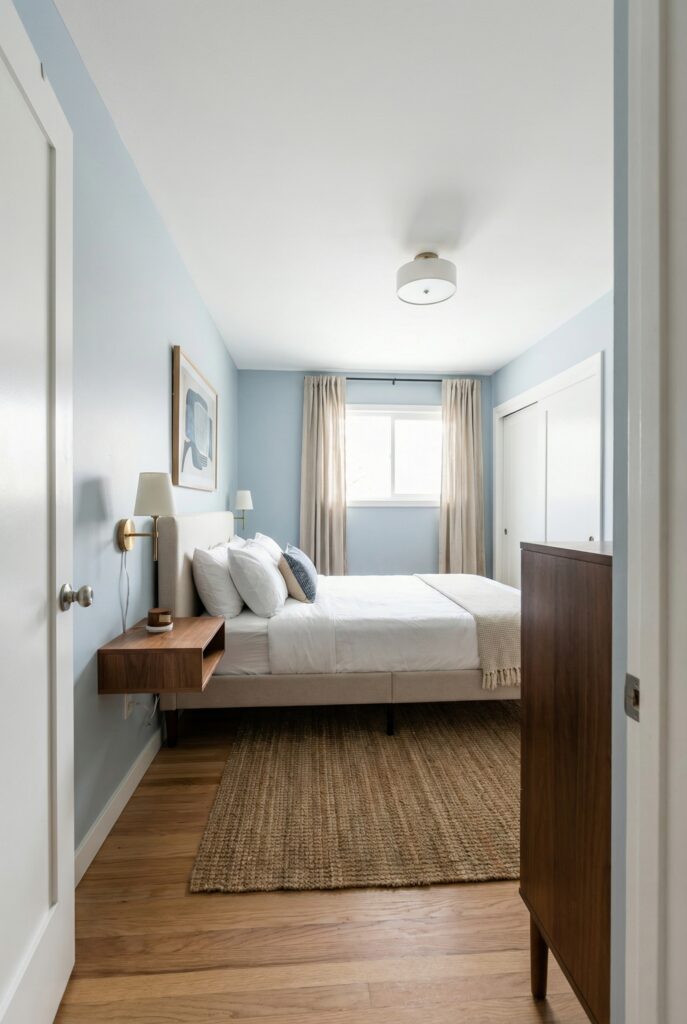
Smart layout means the room fits human bodies first, furniture second, decor third.
In a small bedroom, that translates to one clear path from the door to the bed, storage that does not block anything, and pieces sized for the actual walls you have, not the walls you wish you had.
Most of us start with “shove it where it fits.” Bed under the biggest wall, deep dresser opposite, two nightstands because apparently that is the rule, and maybe a chair in the last empty corner.
Suddenly you are shimmying sideways to reach your pillow, the door grazes the mattress, and the closet can only half open. It is not that the room is too small. The layout just forgot about legs and knees.
Instead, sketch the room as a simple rectangle and place the bed on the longest continuous wall that does not have a door. If that is impossible, choose the wall that lets you access at least one side easily.
Protect a walkway about shoulder width from the door to the bed. Let deep pieces like dressers live where they do not choke that path. Use painter’s tape on the floor to outline furniture footprints before you move anything heavy.
Decor wise, layout is where you decide things like a rug position, art placement over the bed, and where sconces could go.
A rug that runs under most of the bed, art centered on the headboard, and plug in sconces mounted above the side tables all support that calm, clear path. None of those changes require tearing anything out. Just better use of the box you already live in.
Light colors and reflective surfaces
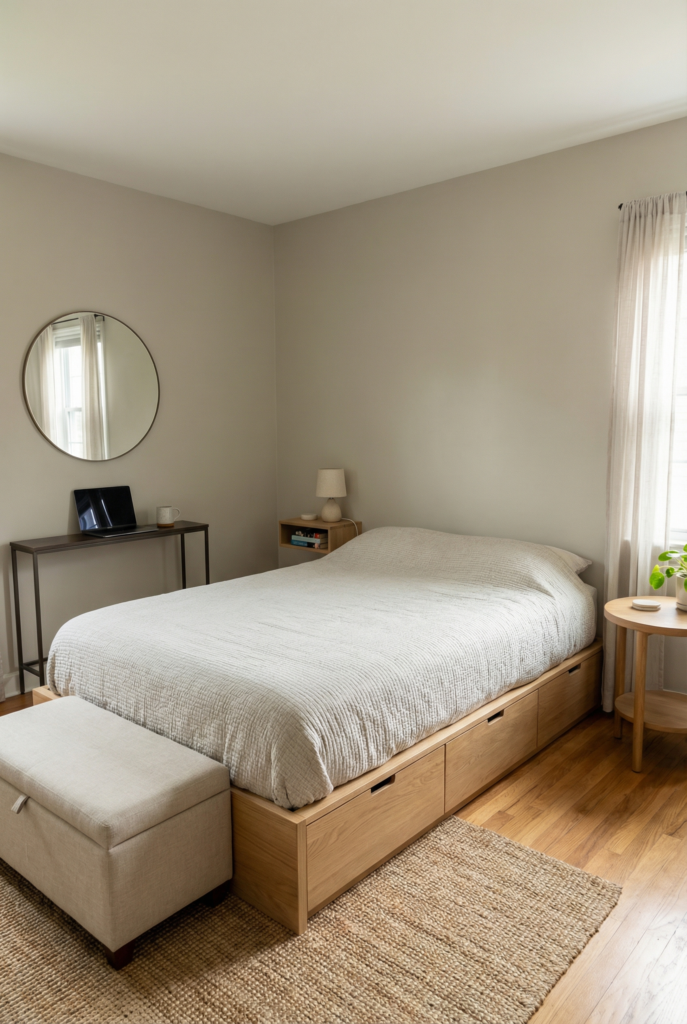
Light and reflection are your secret mood board. They decide whether your small bedroom feels like a soft little cloud or a dim cave where socks go to disappear. Paint, curtains, lamps, and mirrors all team up here.
Two main mistakes show up over and over. One is going all in on dark “moody” paint with only a single overhead light.
The other is painting everything beige with no contrast and calling it done. Mirrors often get added as tiny decorative pieces scattered around instead of one large, helpful one. Lights get mixed in harsh different bulb colors so the room feels disjointed.
Instead, pick a light main wall color that plays nicely with the daylight you have. Layer in a bit of depth with textiles and furniture rather than jumping straight to deep walls. Choose one big mirror and place it where it can catch the window or at least a bright lamp.
Let curtains be light and airy, hung high and wide so the window feels generous. Build three levels of light: a soft overhead, warm bedside lamps or sconces, and maybe a small accent light on the dresser.
Decor tricks live inside this too. A low profile headboard keeps more wall visible above the bed, especially if you line it up with a single large art piece instead of five tiny frames.
Pale walls and ceiling in roughly the same family blur edges and make corners recede. Even one leafy plant near the window will catch and filter light in a way that makes the space feel fresher and less boxed in.
Multi-functional & compact furniture
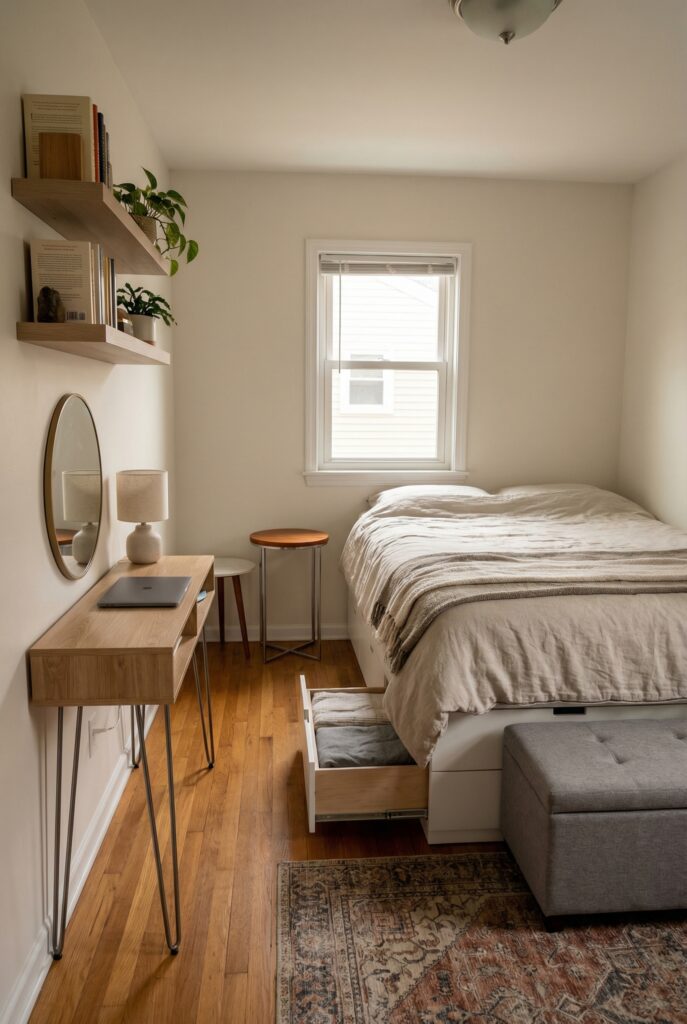
Furniture will either be the hero of your tiny room or the villain. The goal here is fewer pieces that quietly do more. Every leg on the floor matters. Every centimeter of depth matters.
The easiest way to shrink a room is to fill it with a full size bedroom set. Big bed frame, two chunky nightstands, deep dresser, maybe even a separate desk.
That is how you end up with drawers that cannot open fully and a chair that always bumps the bed. I have done it. Twice. It looks like the furniture store display took a wrong turn and got stuck in a smaller box.
Start by asking what truly needs to live in this room. Do you need a dresser, or can folded things move into the closet if you add better shelves.
Can your “desk” be a narrow console that also acts as a vanity and nightstand. Look for beds with drawers or space underneath for storage bins.
Swap bulky nightstands for slimmer ones, or wall mounted shelves with plug in sconces above. Let at least one major piece earn its keep with hidden storage.
On the decor side, compact does not mean boring. A slim metal legged nightstand with a warm wood top looks light but still cozy. A simple upholstered bench at the foot of the bed can hide blankets inside and double as a place to sit.
A round side table instead of a boxy one softens all the straight lines and lets light move around it more easily. The room feels like an intentional retreat instead of an accidental furniture warehouse.
Vertical storage and wall solutions
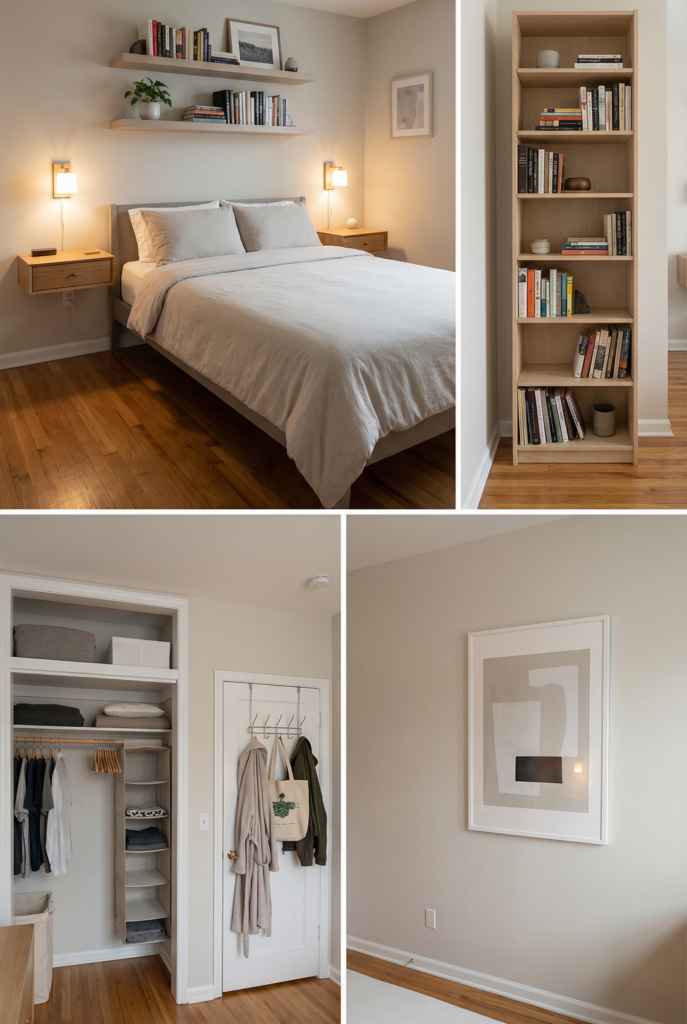
When the floor space is limited, the walls and doors need to get promoted. Vertical storage is how you stop every corner from becoming a pile. It also gives you chances to decorate without losing function.
The usual pattern is one lonely closet rod, one shelf above it, maybe a short bookcase, and then chaos. Clothes on chairs.
Bags on the floor. Hats, scarves, robes, tomorrow’s outfit all draped over anything that can hold fabric. Art hung at random heights in random sizes. The top half of the room looks noisy while the bottom half looks crowded.
Instead, treat vertical space as prime real estate. Inside the closet, add a second rod or a hanging organizer for folded things so the dresser can shrink or disappear. Use the back of the door for hooks or an over door rack. Add a simple shelf above the bed, or a pair of shallow shelves over the dresser for books and pretty objects. Keep art at a comfortable eye level and group smaller pieces rather than spreading them everywhere.
Decor wise, this is where wall mounted nightstands, floating shelves, and hook rails shine. A pair of small floating tables beside the bed plus plug in sconces above gives you full floor underneath.
A narrow bookshelf that climbs up instead of spreading out lets you display photos and favorite objects without losing walking space.
If you keep one wall purposefully quiet, maybe just paint and one large art piece, the room will feel bigger because your eye gets a place to rest.
Minimal decor for an open feel
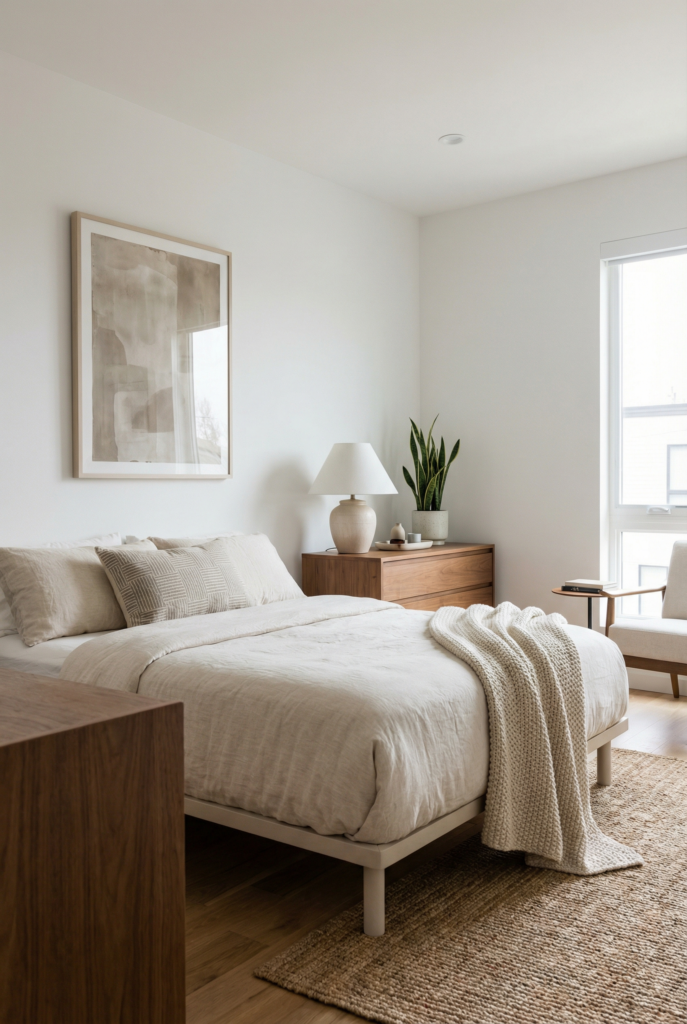
Minimal decor is not about living with one pillow and a single sad plant. It is about choosing what gets to be visible so the room feels open, not cluttered.
Especially in a small bedroom, decor is where things either tip into cozy or into “why is everything screaming at me.”
The trap is turning the bedroom into a display shelf for every cute object. All the candles, all the frames, all the throw pillows with words.
Plus curtains with pattern, a busy rug, bold bedding, and shiny lamps. The room starts to feel like a decor store aisle. Add in that one pillowcase with an old kids’ toothpaste stain, and the whole scene reads more chaotic than calm.
Instead, choose two or three focal decor moments. Maybe the bed is the star, with layered solid bedding, one patterned pillow, and a textured throw.
Maybe the dresser gets a lamp, a plant, and a tray while the rest stays mostly empty. Keep your color palette tight so the eye can move around without stumbling.
Rotate decor seasonally so not everything is out at once. Store sentimental pieces in a box instead of on every surface.
One as a rule I love. One statement pillow, one plant on the dresser, one cluster of art. When you have those in place, step back and see if the room already feels full enough. Often it does.
The “open feel” is really about negative space. You want some quiet around your favorite things so they can breathe. That empty corner, that clean stretch of wall, they are part of the decor too.
What makes small bedrooms look cluttered or tacky
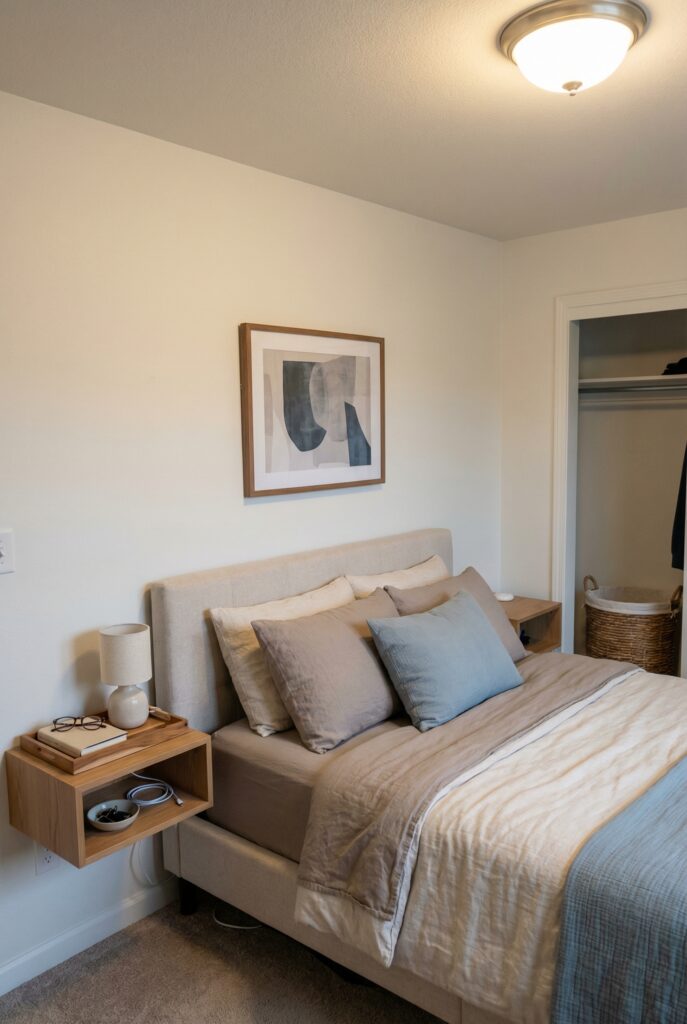
Most small bedrooms do not look bad because they are small. They look bad because a lot of tiny decisions ganged up over time. The good news is, those are the easiest things to change.
Clutter usually shows up as surfaces doing too many jobs at once. Nightstands holding books, skincare, chargers, jewelry, random receipts, hair ties, a half melted candle, and last week’s mug.
Cords snaking everywhere. Laundry living permanently on the chair. Emotionally, the room feels loud.
Tacky is often about scale and shine. Tiny art floating solo on a big wall. Super shiny bedding with no soft texture nearby. A huge glossy headboard paired with spindly nightstands.
Colored LED lights that feel fun for five minutes then start making everything look a bit off. The brain reads those combinations as cheap, even when nothing was actually inexpensive.
To fix both, use containment and editing. Give each surface a tray or bowl where small things are allowed to live. Everything else gets a real home or leaves the room entirely.
Check your biggest visual choices. Could the art be larger or grouped. Could the bedding be more matte with shine saved for one accent.
Could you swap the overhead boob light for a simple drum shade so the whole room calms down. I still have one boob light in a hallway I complain about weekly. This is a progress story, not a perfection story.
What to fix first
When you are staring at your room and your brain is buzzing, it helps to know where to start. Here is how I triage a tiny bedroom.
If you can change only one thing, fix the flow. Move or remove whatever blocks your path from the door to the bed.
That one improvement changes how you feel every night and every morning. If your flow is already decent, lighting is the next single best upgrade. Swap bulbs to warm white, add a second lamp, and start turning off the overhead light after dark.
If you can change three things, go in this order. Layout. Lighting and color. Storage. Move the bed and dresser into better positions.
Choose a calm palette or at least unify your textiles a bit. Add vertical storage so less stuff lives on the floor and low surfaces. Only after those would I start shopping for decor pieces.
If you want a slightly bigger reset without renovating, combine layout, furniture scale, and storage. That might mean selling the too deep dresser, getting a simpler bed frame, and finally adding shelves in the closet.
Maybe you invest in a rug that actually fits instead of the small one that curls in the corner just enough to trip you every third Tuesday.
My own unresolved thing is still my “temporary” bedside stool that wobbles slightly and makes my water glass nervous. One day I will replace it. Today is not that day.
FAQ
How do I make a small bedroom feel luxurious
Start with touch. Nicer feeling sheets, a comfortable pillow, and a soft rug under bare feet will feel more luxurious than ten decor items. Add a proper lamp with a shade, swap the laundry basket for one you like seeing, and clear surfaces so a few beautiful things can stand out. One special piece, like a framed print you love or a really good throw, speaks louder than a crowd of cheap decor.
What are common bedroom layout mistakes
Blocking walkways is the number one culprit. After that, it is oversized furniture, doors hitting furniture, and ignoring where outlets are. If a drawer or door cannot fully open, something needs to move. Sketching the room and measuring before you lift anything is boring but magical. It stops you from doing the move it, hate it, move it back dance.
What are the best minimalist designs for tiny bedrooms
The best minimalist rooms feel warm, not strict. They usually have a tight color palette, a few repeated textures, and furniture that looks light enough for the space. Surfaces are mostly clear, with a few well chosen items instead of many small ones. Minimalist here means “only things I use and love live in this room,” not “I own nothing and sit on the floor.”
What are some cheap bedroom decorating ideas
Start by shopping your own home. Move a lamp, borrow a mirror, steal a plant from the living room. Frame postcards, printable art, or photos you already own. Swap pillow covers instead of whole pillows. Rearrange furniture first, then decide if you actually need to buy anything. Often the biggest change is layout and editing, not new stuff.
What makes a bedroom look tacky
It is usually too many loud elements all at once. Lots of slogans, very shiny fabrics, harsh lighting, and cluttered surfaces all competing for attention. Tiny art on big walls, furniture wildly out of scale, and mismatched bulb colors do not help either. When you edit down, match scale to the space, and keep lighting soft and warm, the room almost always shifts from “tacky” to “quiet” without a full makeover.
If you remember nothing else, remember this. Your room does not have to be bigger to feel better. Start with how you move, then how you see, then what you keep. The rest is just gentle tweaking until your bedroom feels like the place you actually exhale in, not just the room where you sleep and dodge laundry.