Okay so. Quick story before we get into it.
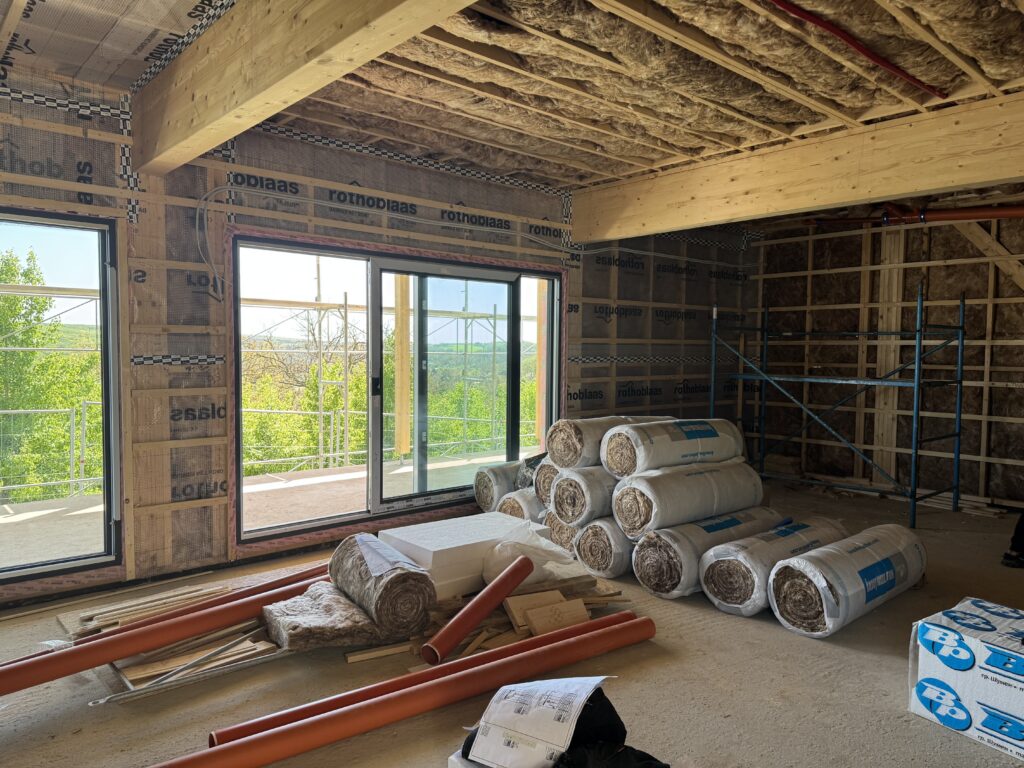
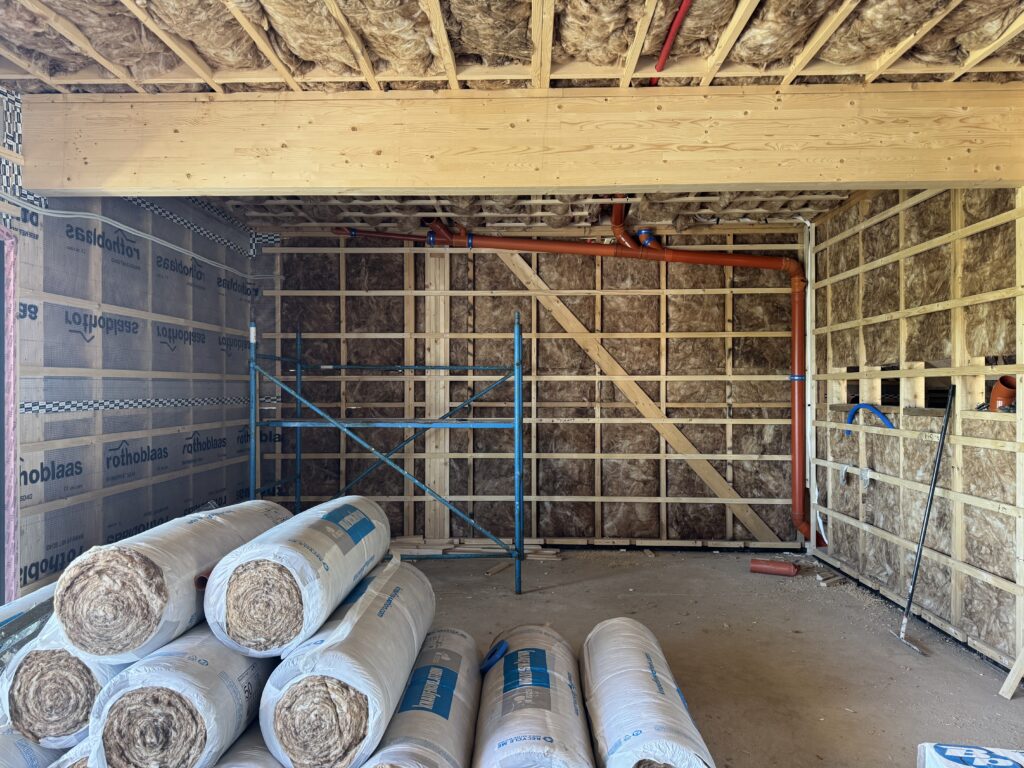
A couple days ago we were standing in what will eventually be our living room. Windows were in but that was about it. You could still see all the rough electrical and plumbing running through the walls, concrete floors, that unmistakable smell of a house that isn’t a house yet. My partner looked up at the ceiling, then at me, and said “what about crown molding for this room?”
And my gut reaction, before my brain had even processed the question, was no.
Not a considered no. Not a “let me think about it” no. Just an immediate, full-body no that surprised even me, because I genuinely love crown molding in other people’s homes. I’ve saved maybe 4,000 Pinterest images of English cottage dining rooms with creamy thick trim. It’s beautiful. It’s historical. It’s the kind of detail that makes a room feel like someone lived a whole life in it.
But in our living room? Standing there surrounded by exposed wiring, picturing how this space was actually going to feel? No. It was wrong.
I didn’t have the words for why yet. I do now, and that’s kind of what this whole post is about.
So First, Is Crown Molding Even Still Popular in 2026?
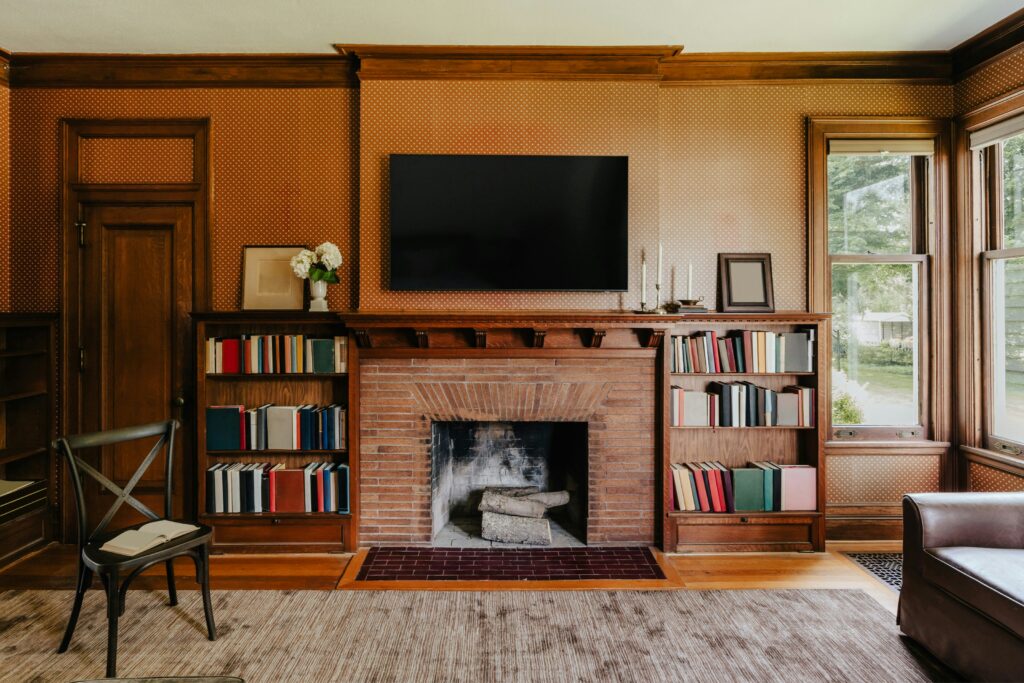
Yes. Sort of. It depends entirely on what kind of crown molding and what kind of house.
If you’re picturing the heavy three-tiered stuff from 2005-era McMansions, with that weird little dust gap between the molding and the ceiling nobody can ever explain – that kind is very much dated. Designers have been backing away from anything ornate, anything high-contrast, anything that feels like it’s trying to look “fancy” for the sake of it.
What is having a real moment is simple, clean-profile crown molding on homes where it genuinely belongs architecturally. Historic homes. Traditional new builds. Transitional interiors where the rest of the architecture supports it. I recently read a post from The Zhush about painting walls and trim the same color – she makes a strong case that doing this (even with the crown molding) actually makes a room feel larger and more cohesive rather than the choppy look you get with contrast trim.
So the real question isn’t is crown molding outdated. The real question is does it fit YOUR house. And I think that’s the conversation most articles kind of dance around, because the honest answer for a lot of modern new builds is… probably not.
Why We Skipped It (And Why It Was Actually an Easy Decision, Eventually)
Here’s what I didn’t realize standing there with my partner that day: we’d already made the decision months earlier. We just didn’t know it yet.
We’d committed early on to a different ceiling feature for the living room. I’ll get into the specifics below, but the short version is that our plan involves something running along the top of the wall where the curtains hang. And when my partner asked about crown molding, my brain started doing this calculation I hadn’t fully articulated yet: if we already have one statement happening at the ceiling line, adding crown molding around the rest of the room is going to be too much. Two different things fighting for attention up there when really only one of them can win.
It’s not that crown molding would have been “wrong.” It’s that we’d already chosen what this room’s moment was going to be. And it wasn’t trim.
Our ceilings are 3 meters, which is tall. Technically plenty tall for crown molding to work beautifully. So height wasn’t the issue. The issue was just that we already had a vision for this specific room, and crown molding didn’t fit inside it.
Once I said that out loud — “I think it’ll be too much with what we already planned” — my partner got it immediately. He nodded. We moved on. Decision made, probably in under 90 seconds, standing in a room that didn’t even have flooring yet.
Do I Ever Second-Guess It? Sometimes
I’ll be honest about this part.
When I see crown molding done really well in someone’s home — properly proportioned, painted the same shade as the walls, on a house where it actually belongs – I get a small pang. A “hmm.” Not regret exactly. More like the feeling of walking past a beautiful pair of shoes in a style you don’t wear.
But here’s the thing I’ve noticed. Every single time I feel that pang, it’s when I’m looking at an older home. A pre-war apartment. A restored colonial. A place where the crown molding is part of the architectural history of the building. I have never once seen crown molding retrofitted onto a modern new build and thought yes, that was the move. It always looks a little like someone was trying to add “character” to a house that wasn’t asking for any.
So the pang is real but it’s not useful. I’d make the same choice every time.
Where Crown Molding Still Looks Incredible in 2026
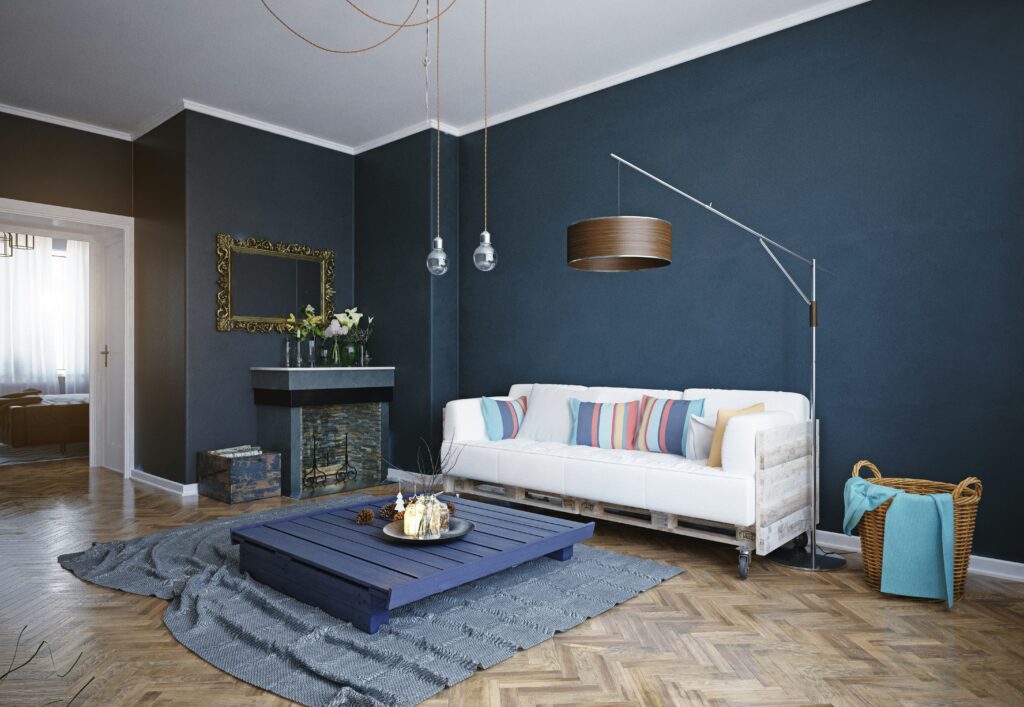
If you’re on the fence and your house leans traditional, crown molding is genuinely not outdated for you. A few situations where it absolutely earns its place:
Pre-1950 homes with original millwork. Please keep it. Please restore it if you need to. You can’t buy that kind of craftsmanship anywhere anymore. Ripping out original trim is one of the fastest ways to strip the soul out of an old house, and I see people do it every day on renovation accounts, and every time I want to cry a little.
Traditional-style new builds. Colonials, genuine farmhouses (not the beige box “modern farmhouses” — different style entirely), Tudors, Mediterranean homes. These architectural languages expect crown molding. Leaving it out would be the thing that looks wrong.
Tall rooms that feel cavernous without a ceiling detail. High ceilings are gorgeous but can make a room feel a little unmoored without something anchoring the eye at the top. Crown molding does this job beautifully in traditional contexts.
Formal dining rooms or library rooms even in contemporary homes. Some rooms get permission to be their own traditional moment. A dining room with wainscoting and trim in an otherwise modern house can work, as long as you fully commit to that room’s separate vibe.
Where Crown Molding Will Make Your Home Look Dated
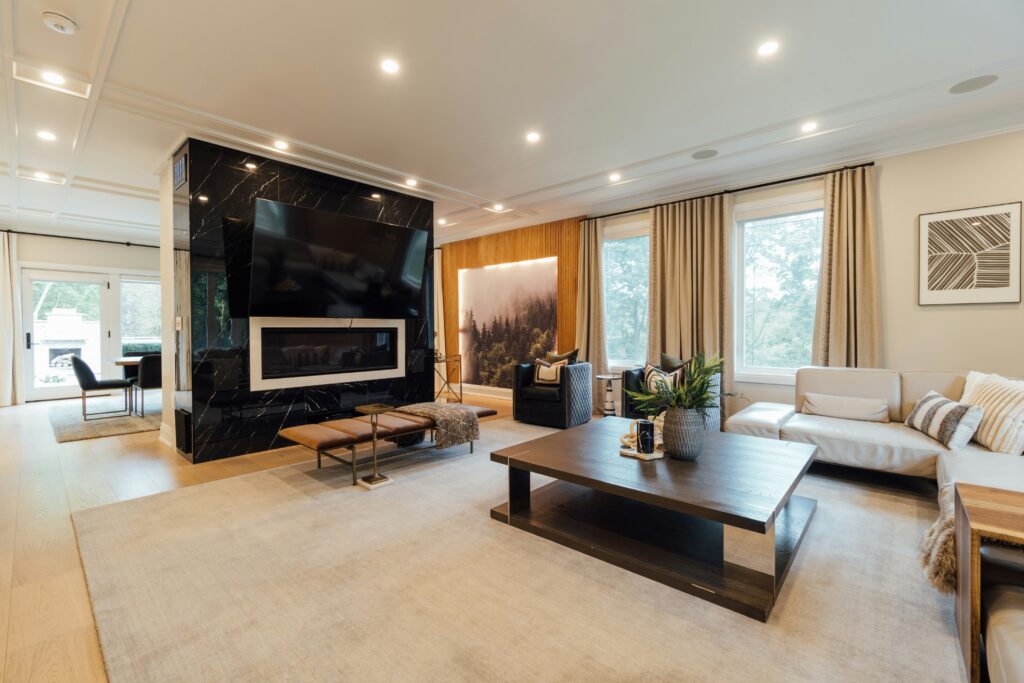
This is where most articles get diplomatic and I’d rather not.
Low ceilings with heavy molding. The 90s builder classic. Eight-foot ceilings plus five-inch crown equals a room that feels like it’s crushing you from above.
Actually modern homes has clean lines, big windows, flat-panel doors, minimal trim everywhere else — crown molding will fight the architecture every single time. There’s no winning.
Open floor plans with ceiling changes. Crown molding needs to be continuous to read as architecture. In houses where walls half-divide spaces or ceilings step up and down, the molding has to stop and restart in weird ways and it looks more like a mistake than a feature.
Bright white trim against colored walls. This look had its whole moment around 2015-2018. That moment has ended. If you’re installing molding in 2026 the designer consensus is paint it the exact same color as the walls. Let it disappear into the architecture.
What We’re Doing Instead: Hidden LED Cove Lighting

So the thing I’m actually excited about. It’s actually simple thing but super effective!
Our plan is to build a recessed channel into the ceiling about 15-20cm out from the wall, running along where the curtain track will be. LED strip lights live inside the channel. Warm white, 2700K or warmer — anything cooler looks like a hospital waiting room and absolutely kills the vibe. The curtains hang just in front of the channel, so when the lights come on at night, what you see is the fabric glowing softly from above. Not the strip itself. Just this halo of light making the curtains look almost backlit.
Architecturally it does the same job crown molding does — creates a defined edge where wall meets ceiling. But instead of adding physical weight with trim, it adds light. The glow actually makes a room feel taller, not shorter, because your eye is drawn up toward something luminous rather than something heavy.
A few things we’ve learned while researching (still a ways out from actually installing this, but I’ve been deep in forums and YouTube):
You need a dimmer. Undimmable cove lighting is the fastest way to end up with a room that feels like a hotel conference space. Non-negotiable. We’re also looking into smart switches now, but that’s a whole separate rabbit hole I’ll write about later.
Channel depth matters. Too shallow and you’ll see the LED dots through the curtains. Too deep and you lose the glow. The sweet spot seems to be around 4-5cm for most curtain weights.
Warm white only. Say no to “daylight” LEDs in a living room. I know they seem more efficient. They will make your home feel like a dentist office.
I’ll do a whole separate post once we actually install this, probably with video because honestly that’s the only way to really show how it looks.
The Questions That Helped Me Decide
If you’re in the same spot I was – partner asks about crown molding, you feel something, you don’t know what yet – here’s what I eventually walked through:
What architectural style is your house? Not what you wish it was. What is it actually.
How tall are the ceilings? Under 9 feet (roughly 2.7m) the molding needs to be very minimal or it’ll feel heavy.
Do you want this room to read modern or traditional when someone walks in?
Have you already committed to another architectural detail that could conflict? A statement fireplace. Dramatic lighting. A wall of windows. Crown molding is not a small addition — it wants to be the feature if you add it.
If you add crown, will the rest of your trim match its weight? Because mismatched trim proportions look cheap fast.
For me it was that fourth question that did it. We’d already picked our feature. Adding trim on top would’ve been competing with it.
The Resale Value Thing
People ask about this constantly so I’ll be brief. In traditional neighborhoods with character homes, crown molding adds real value. In newer subdivisions full of contemporary finishes, it can actually HURT perceived value by making your home feel out of step with the neighborhood. If resale is a factor for you, think about your block, not the internet.
Quick FAQ
Is crown molding outdated in 2026? Heavy, ornate styles yes. Simple minimal profiles on the right homes no.
Does crown molding add value to a home? Only in traditional homes. In contemporary builds it can reduce perceived value.
What’s the modern alternative to crown molding? LED cove lighting, flat minimal trim, shadow-gap reveals, or a clean wall-to-ceiling transition.
What ceiling height do you need? 9 feet (2.7m) minimum for standard profile. Taller is better.
Should I match molding to walls or ceiling? Walls. Always walls now. The contrast-white-trim moment is over.
So. Crown molding. Still popular, on the right houses, done the right way. Not right for us, and not right for a lot of new builds honestly. If you’re standing in your own unfinished living room right now and your partner just asked about it, pay attention to your gut. Sometimes the answer is right there before you have words for it.
I’ll update this post once we actually have the LED cove installed and I can show you how it looks lit up at night. For now it’s still a pretty picture in my head and a bunch of research tabs.
If you’re going through this same decision I’d genuinely love to hear about it in the comments. Did you add crown molding and love it? Skip it and wonder? Install it and regret it? I read everything.