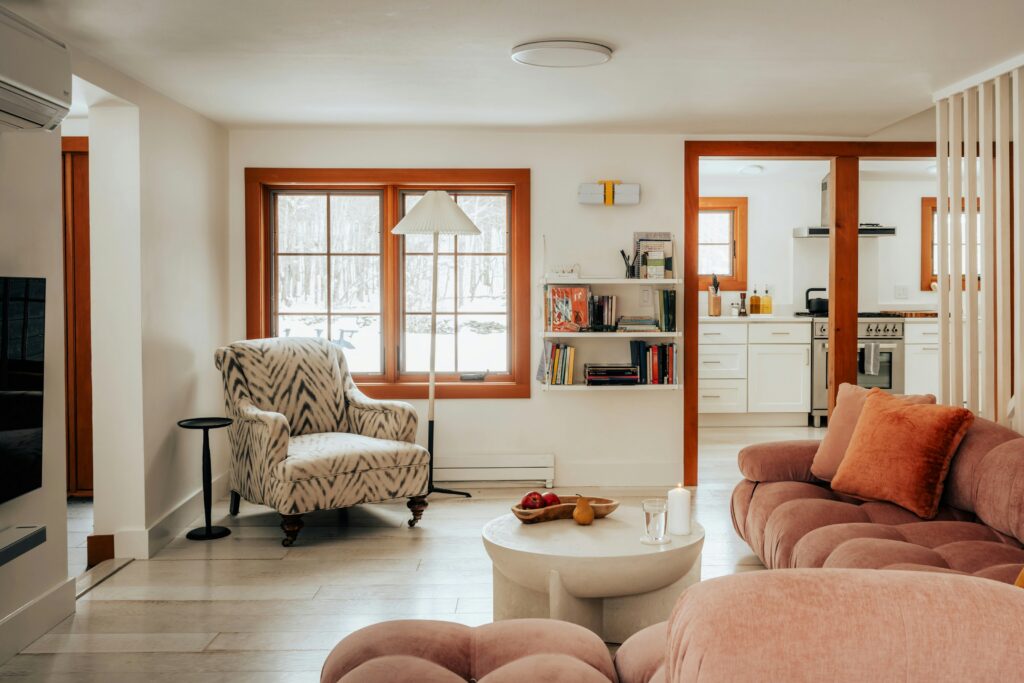
Here’s something I haven’t wanted to admit out loud: I’ve been treating my current living room like it doesn’t count. Like it’s a placeholder. Like the real version of my life starts when the house is done. That house counts. This living room? This living room has a $60 Target lamp I bought years ago that never gave off the right light (it also tips over if you breathe on it wrong, which I keep telling myself I’ll fix, and then don’t), and I’ve kept it because “it’s fine for now.” And somehow “for now” became three years.
I don’t fully know why I do this. There’s something about having a bigger project coming – a house being built, a future being planned – that makes the present space feel like a waiting room. You stop investing. You stop seeing it. (You also stop noticing that the lamp is still broken, apparently.) And then one day you walk in at 9:47 PM still wearing your house-build-site clothes and realize you’ve been slightly unhappy in this room every single day.
ANYWAY. I gave myself $100 and one weekend. Here’s what actually moved the needle.
The Living Room Makeover Under $100: Order Matters More Than the Purchases
If you’re doing a living room makeover under $100, the sequence matters more than the individual items. I learned this the hard way when I spent $79 on a sofa cover that was supposed to be temporary and then just… lived with it. For two years. It never fit right. The corners kept coming undone. I told myself I’d get a real sofa eventually, so why invest in this one? But that logic – that future-me would solve present-me’s problems – meant I spent two years sitting on something that made me slightly unhappy every single day.
So here’s the order. Paint first ($25-35 per gallon). Curtains and rod second ($30-40 for floor-length panels plus hardware). The remaining $25-35 goes toward frames, one plant, or lighting adjustments. Paint changes everything else in the room – how the furniture looks, how the light hits the walls, how you feel when you walk in. Curtains add height and softness and signal “this is intentional” even if nothing else is. Accessories fill gaps that actually exist rather than gaps you’re imagining.
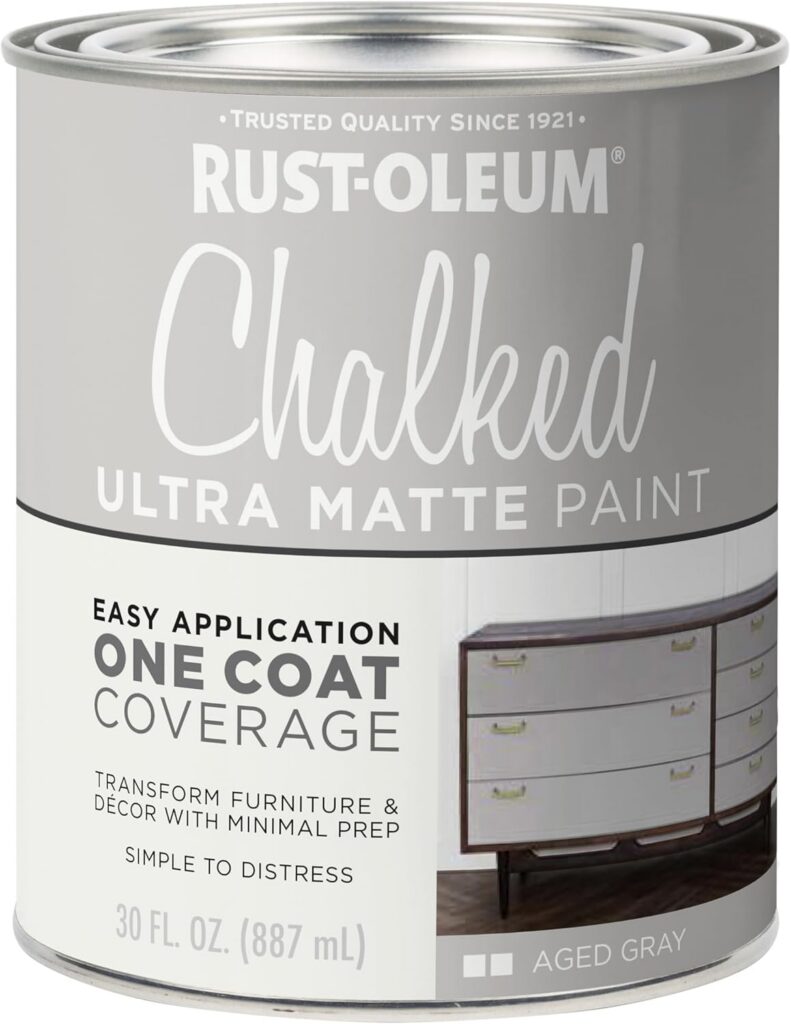
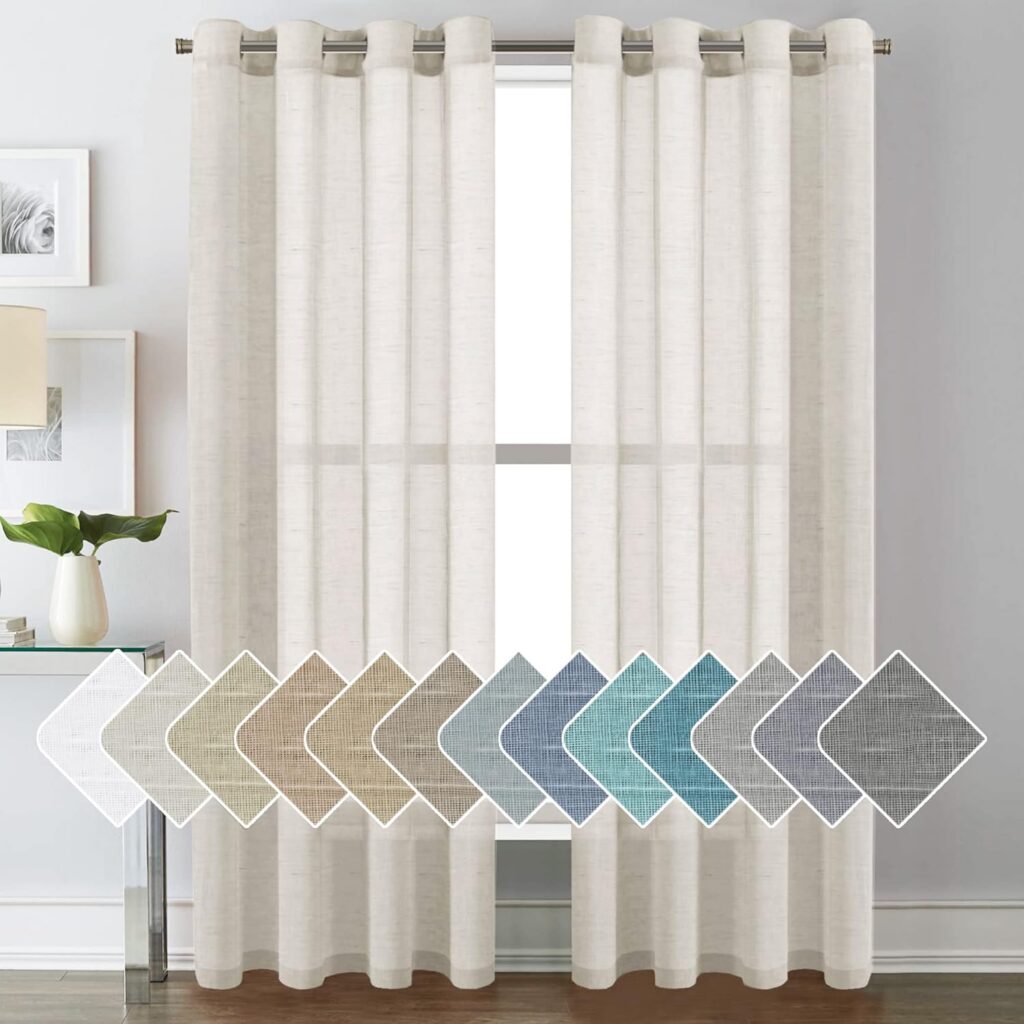
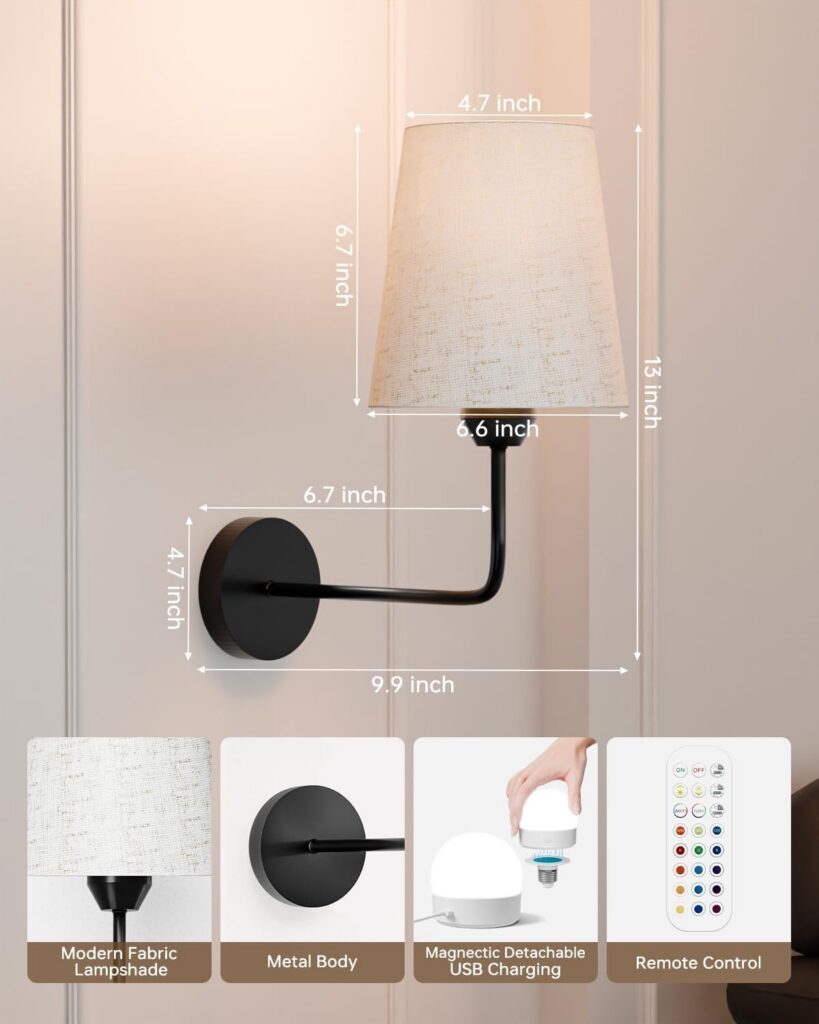
All-in-One Ultra Matte Paint (18 colors) / Natural Linen Sheer Curtains / Wireless Wall Scones
I painted one wall in a previous apartment bathroom in BM White Dove and I still think about that bathroom. It was 10 square feet. I spent $28 on the paint sample quart and it felt like I’d moved into a different place entirely. That’s the whole game. That’s what $100 can do if you put it in the right place first.
The Temporary Trap
The $60 lamp is still here, by the way. I keep looking at it and thinking about what that $60 could have been. A can of paint and a curtain rod. Three thrifted frames and prints from the public domain collection at the New York Public Library. Anything except a lamp that gives off light at the wrong color temperature and tips over if you touch it wrong.
The bigger mistake was the mindset. The “this is temporary” excuse that let me buy things I didn’t actually like because they were cheap and available and I told myself I wasn’t really investing in this space. I thought being smart about money meant saving the good decisions for the real home. But that logic has a cost that doesn’t show up in a spreadsheet – years of walking into a room that makes you feel slightly worse instead of slightly better, every single day.
Now I’m building a house and obsessing over every detail of a space I won’t live in for months – and I’m realizing that the same brain that can spend weeks debating a single decision for the new house was the brain that accepted a wobbly lamp for three years. The temporary trap isn’t about money. It’s about believing that your present life is less important than your future life. And I don’t want to bring that thinking into the new home. I don’t want to fill brand new rooms with “for now” and wake up five years later wondering how “for now” became “forever.”
What $100 Actually Buys You (And What It Doesn’t)
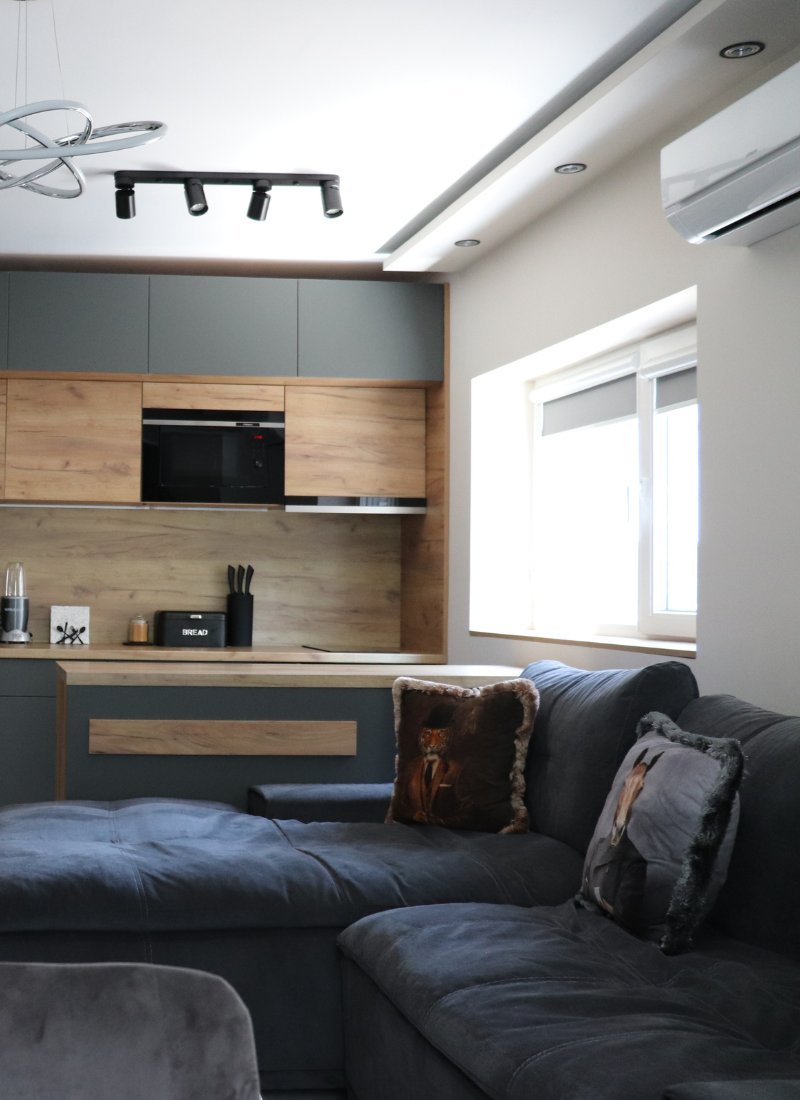
Paint transforms. That’s the whole truth. One wall painted the right color makes the whole room feel different. I painted the wall behind my sofa with a warm gray that pulls toward greige in afternoon light and the sofa I was bored with suddenly looks intentional. The whole room feels lower and cozier in a way I can’t fully explain but immediately noticed.
While you’re at it – change the lightbulbs. This costs almost nothing and makes an embarrassing amount of difference. Every bulb in the room should be 2700K warm white. Not 3000K, not “soft white” which can mean anything depending on the brand. 2700K. The difference between that and a cool white bulb is the difference between a room that feels like a home and a room that feels like a waiting room at a dentist’s office. I changed four bulbs for $11 and the room felt warmer before I’d moved a single piece of furniture.
Thrifting is where my marketing background actually helps. Facebook Marketplace is an algorithm like anything else – the good stuff goes to people who search specific terms. I search “mcm coffee table” and “mid century side table” and “vintage wood dresser” because those are the words people who own good pieces use when they’re selling them. Estate sales are better on Sundays when everything is half off and the dealers have already taken what they want. The vintage coffee table in my living room right now came from an estate sale in a neighborhood I’d never have found if I hadn’t mapped out every sale within 20 miles. Thirty dollars.
Gallery walls are the biggest hack in this price range and the one I’m planning first. Public domain art from the Met or the New York Public Library, printed at FedEx for $0.59 per page in engineering print size, framed in thrifted frames you paint all the same color. I’ve mapped it out for the living room – botanical prints, all the same frame color, total budget somewhere around $12. Twelve dollars for what should look like a collected-over-years gallery wall. I’ll report back on whether it actually works.
One large plant. Not three small ones scattered around – one large one in a corner that needs something. A fiddle leaf fig if you have good light, a pothos if you don’t, a snake plant if you genuinely cannot keep things alive. A single large plant in the right spot does more for a room than a dozen decorative objects. Budget $15-25 for the plant, $10-15 for a decent pot, and put it somewhere it will actually thrive rather than somewhere it looks good while slowly dying. (A slowly dying plant is worse than no plant. This is a hill I will die on.)
Curtains hung high – 6 to 12 inches above the window frame – make ceilings feel taller even when they’re not. I’ve been resisting this because I’m genuinely not a curtain person. I don’t want to clean curtains. I want to wash my windows and be done. But after I painted and rearranged, something still felt missing, and I finally admitted it was the windows. The plan is linen curtains hung higher than feels logical. I’ve ordered them. They’re not hung yet. I’ll tell you if the room suddenly feels finished in the way everyone promises it will.
What $100 doesn’t buy you is everything at once. You don’t get new furniture. You don’t get a complete transformation. You get one or two things done really well, and the discipline to stop there instead of buying four mediocre things that sort of work.
Rearranging What You Already Own (The Free Part of Any Budget Living Room Makeover)
The Saturday after I painted, I moved every piece of furniture in the room. This costs nothing but time and sore muscles. I found the focal point – for this room it’s the window, since there’s no fireplace – and centered the sofa on it. I moved the chair from the corner where it had been sitting doing nothing into the living room where it actually makes sense. I kept a 3-foot passageway behind the sofa even though I wanted to push it back another six inches, and the room feels bigger because of it.
Shopping your own space is the most underrated decorating strategy. The side table sitting unused in the corner? It works better next to the sofa. The mirror leaning against the wall in the hallway? Above the console, suddenly it’s intentional. We get so used to seeing things where they are that we stop seeing them at all. Moving pieces around makes you notice them again.
And then – remove things. This is the step nobody talks about because it feels like failure rather than decorating. But editing a room down is often more powerful than adding to it. The decorative objects you bought because they were on sale and “sort of worked” – box them up. The throw pillows in the wrong color that you’ve been ignoring for two years – donate them. A room with fewer things that are all right is almost always better than a room full of things that are almost right.
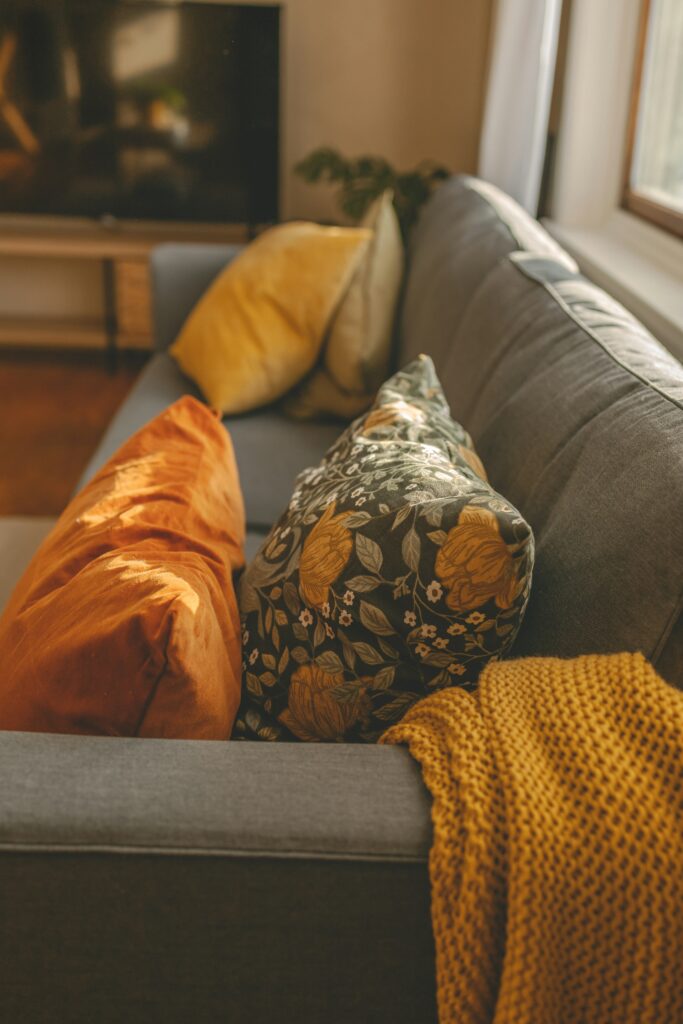
A throw blanket draped over the arm of the sofa costs $20-30 from a thrift store or the Target clearance section and adds texture and color and signals “someone actually lives here.” This is the cheapest way to make a room feel less like a showroom. One blanket. Draped, not folded. Done.
The Real Cost Isn’t the Money
This took a full weekend. Not an afternoon. Not “I’ll just quickly…” A whole weekend. Friday night for prep, Saturday for the work, Sunday for the finishing. And the emotional labor of decluttering first – because you can’t rearrange a room that’s full of things you don’t want to look at. You can’t see what the room needs when it’s cluttered with the old version of what you thought you wanted.
$100 feels like too little and too much at the same time. It’s not enough for new furniture but it’s enough that you feel the loss if you waste it. The difference between cheap and inexpensive is intention. Cheap is the $60 lamp that tips over. Inexpensive is the $28 paint quart that changed how I felt about coming home every day.
A living room makeover under $100 isn’t really about the $100. It’s about deciding that your present space deserves your full attention, even when you’re planning something better for the future. Especially then.
What’s the thing in your current space you’ve been calling “temporary” for longer than you want to admit? I genuinely want to know.
FAQ
Can you really do a living room makeover under $100?
You can transform how a room feels for $100. That’s different from transforming how it looks in a magazine. Paint, lightbulbs, curtains, and rearranging what you already own changes the energy of a space in ways that are immediately obvious and cost almost nothing. But you have to be strategic – one gallon of good paint ($30) plus floor-length curtains ($40) plus frames for a gallery wall ($12) plus 2700K lightbulbs ($9,99) is your whole budget right there. You don’t get new furniture. You get intentional choices about what you already have.
What’s the first thing to buy for a living room makeover under $100?
Paint. Always paint. It has the highest impact-to-dollar ratio of anything you can buy for a room. One painted wall changes how the light works, how the furniture looks, how the whole space feels. Everything else – curtains, frames, accessories – builds on the foundation that paint creates. Skip the paint and you’re just moving around the same problem in a slightly different arrangement.
What mistakes should you avoid in a budget living room makeover?
The temporary trap – buying something cheap you don’t actually like because you tell yourself it’s just for now. I kept a lamp I hated for three years because of this logic. Also: buying accessories before you paint, hanging curtains at window height instead of 6-12 inches above, keeping too many things that are almost right instead of editing down to fewer things that are actually right, and trying to do everything at once instead of doing one or two things really well.
How do you find good furniture on a tight budget?
Estate sales on Sundays – half price day, after the dealers have already taken the best pieces, which means you get what’s left at half off. Facebook Marketplace with specific search terms like “mcm,” “vintage wood,” “mid century” instead of generic terms. And shopping your own space – the piece you need is often already there, just in the wrong spot. Zero dollars spent, whole room feels different.
What’s the single highest impact change for under $20?
Change every lightbulb in the room to 2700K warm white. It costs around $11 for a four-pack and it changes the entire feeling of a space instantly. Cool white bulbs make everything look flat and slightly sad. Warm white makes the same furniture, the same walls, the same room feel intentional and cozy. It’s the most underrated $11 you will ever spend on your home.