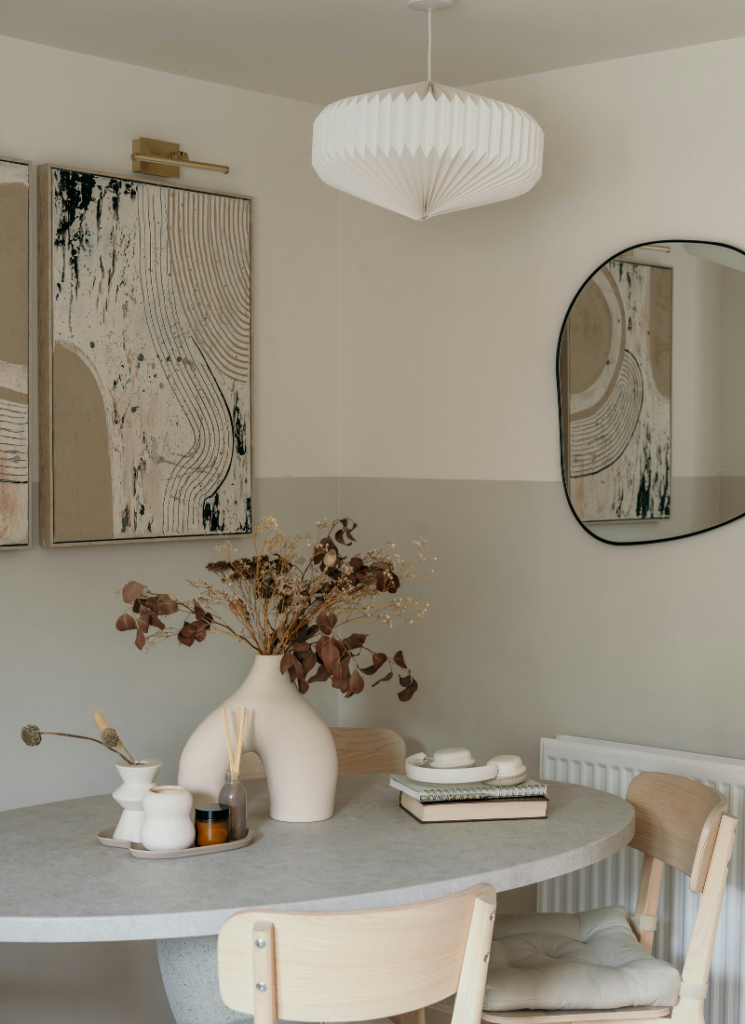
You know when you walk into a room and immediately think, “Oh, this is fancy,” even though you just know half the stuff in there is from a sale section somewhere?
That’s the feeling I’m already chasing for our future home. We’re still in the process of actually building the house right now, so I’m not at the sofa-and-lamps stage yet, but I’m very aware that once we get there… the budget will not magically expand (shame).
So I’m quietly collecting ideas and saving posts, determined to find inexpensive home decor that still feels elevated and intentional when the time comes.
Consider this my mood board in blog-post form: the things I’ll be leaning on later to make our new spaces look pulled together and stylish, without spending ridiculous money.
What Really Makes a Space Look “Expensive”?
It is almost never one big thing. It is usually a combination of balance, good light, texture, and the room not being stuffed like your pantry the week after Halloween.
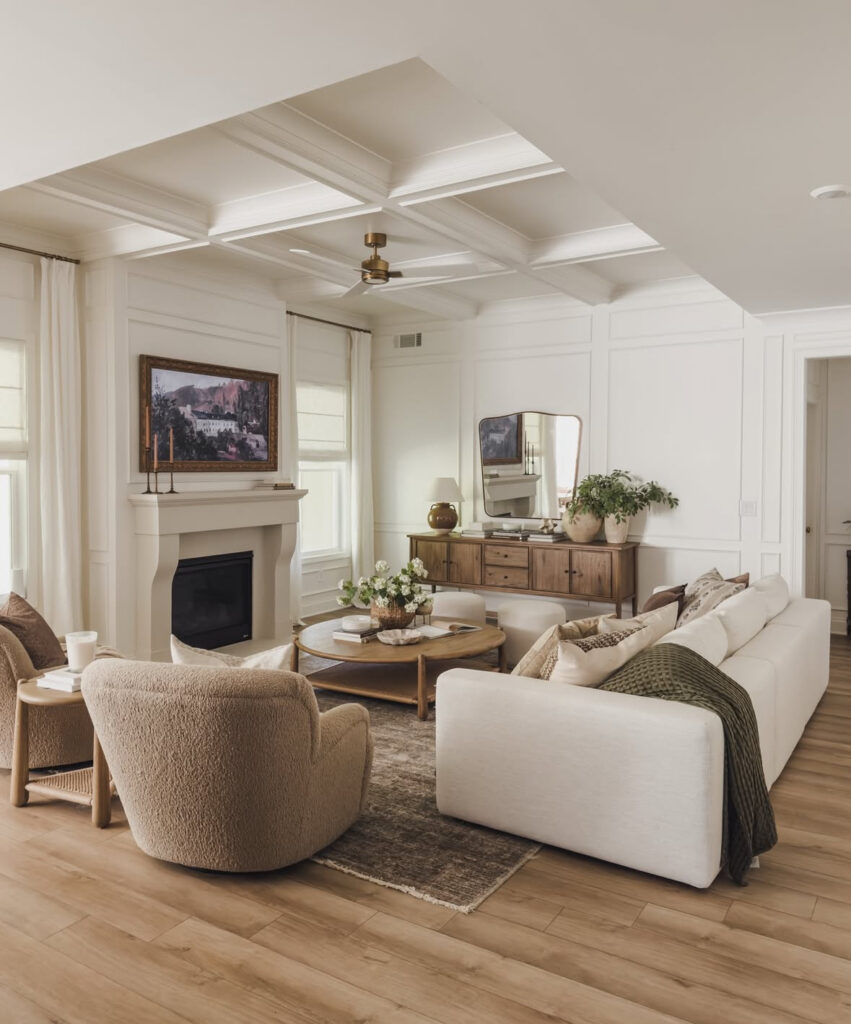
Look at Alexis living room (she’s @alexisandraaustin). The architecture is beautiful, sure, but the magic is in the details. A simple white sofa, two cozy boucle chairs, a round wood coffee table, one perfectly sized rug grounding everything, a landscape over the fireplace, and a long wood console with a mirror and lamp. Nothing is screaming for attention. Everything is quietly talking to each other.
If you break it down, the room has:
- a clear color story (creamy whites, warm woods, soft greens)
- a mix of shapes (round coffee table, squared off sofa, curved chairs)
- repeated elements (wood in three places, soft textiles everywhere)
- breathing room around each piece
That combination is what feels “expensive”. Not the price of any single item.
The Secret to Making Cheap Decor Look High-end
You know all those little things we grab from the clearance aisle and then later wonder why our house feels like a yard sale? The secret is not to stop buying the inexpensive stuff. The real trick is getting pickier about how it all works together — the ingredients can be cheap, but the recipe needs intention.
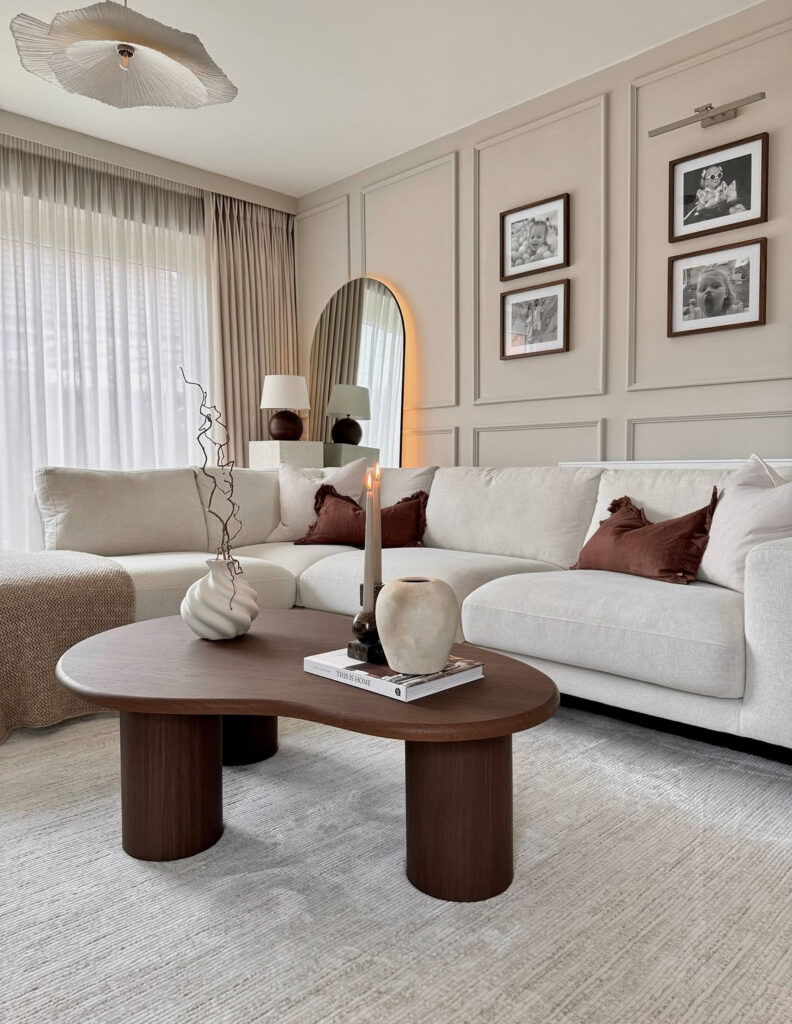
And honestly, when I saw this warm, sculptural living room from Charlie & Dan, it felt like a masterclass in making affordable pieces look incredibly elevated. The creamy sectional, the soft panelled walls, the warm brown cushions, that organic kidney-shaped coffee table… everything feels curated, but not in a “don’t touch anything” way. It’s the mix: the textures, the shapes, the symmetry of the art and lamps, and those perfect little seasonal touches (her autumn tones are chef’s kiss). This is exactly how inexpensive home decor reads as high-end — through thoughtful layering rather than expensive shopping.
For me, it all comes down to three little principles:
1. Balance
If one side of the room feels heavier, try to ground the other. That might be a tall plant, a floor lamp, or even a stack of books that adds visual weight. In my current living room, I have a $25 secondhand lamp balancing out a thrifted cabinet. They look like distant cousins who get along shockingly well.
2. Texture
Cheap decor looks luxe when you layer textures like you’re building a sandwich. Nubby next to smooth. Woven next to sleek. Linen next to ceramic.
3. Symmetry
I’m not a full symmetry queen, but a little mirroring goes a long way. Two lamps flanking the sofa, a pair of candles on the mantle, matching frames around a gallery moment — it all tricks the eye into thinking, hmm, someone planned this.
Low Cost Accent Pieces that Quietly Upgrade Everything
This is where the fun starts. Tiny, affordable decorative pieces can make your whole house feel like a styled shoot, even if you got them while also buying toilet paper and dinosaur-shaped nuggets.
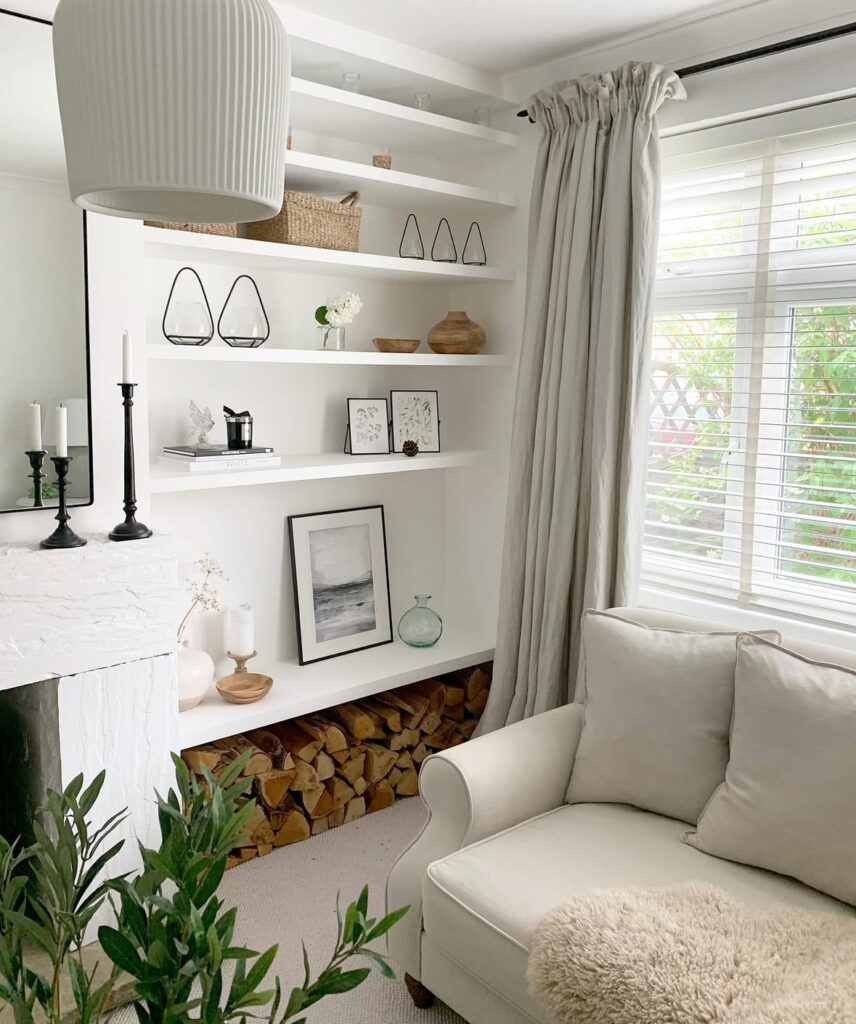
In Katie’s calm little lounge (she’s @simplyscandikatie), the built-in shelves are full of super simple accents. A few black candlesticks, clear glass lanterns, woven baskets, small framed art, a couple of sculptural vases, and a stack of books. None of those things look expensive by themselves, but together they feel curated. The logs tucked under the shelves might be my favorite part. They cost basically nothing and yet they give the whole corner that cozy, cabin-in-the-city feeling.
Here are the small decorative accents that have done the most for me:
- A round tray on the coffee table to corral remotes, a candle, and a little vase
- One or two really good looking candles (even from the grocery store)
- Small bowls or dishes to catch keys, jewelry, or random Lego pieces
- A couple of art prints in simple frames that I can move from room to room
I love browsing the “home decor on sale” section online, but I try to only bring home pieces that can live in at least two spots in the house. If it only works on one shelf, it is probably a no from me.
Budget Wall Decor that Completely Shifts the Mood
If you do nothing else, play with your walls. You can change the entire vibe of a room without touching the furniture.
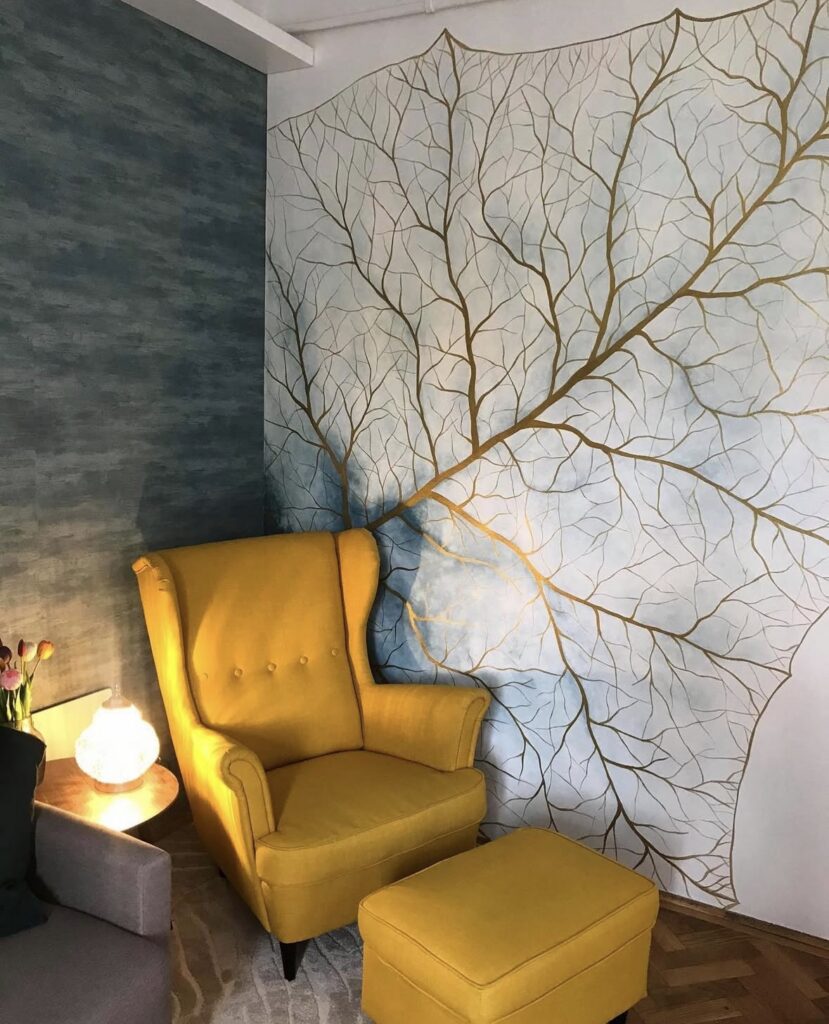
One of my favorite examples is this dreamy little reading corner from @artbyheart.walldecor in Budapest. There is a mustard yellow wingback chair and ottoman sitting in front of a gigantic hand-painted mural that looks like the delicate veins of a leaf stretching across the wall. On the side, a moody blue wall grounds everything, and a small glowing lamp on a wood side table turns the whole corner into a cozy cocoon. The furniture itself is simple. It is the art that makes the space unforgettable.
You do not need to paint a whole mural to get that feeling (unless you want to, in which case, please send pictures). You can:
- Hang one large scale print instead of a bunch of tiny ones
- Frame pages from an old art book or calendar
- Use removable wallpaper on just one wall
- Lean art on shelves or a mantle instead of nailing a hundred holes
- Clip family photos or postcards on a hanging wire or string
Lighting Hacks so Your Room Stops Feeling Like a Waiting Room
Harsh overhead lighting is still my personal villain origin story.
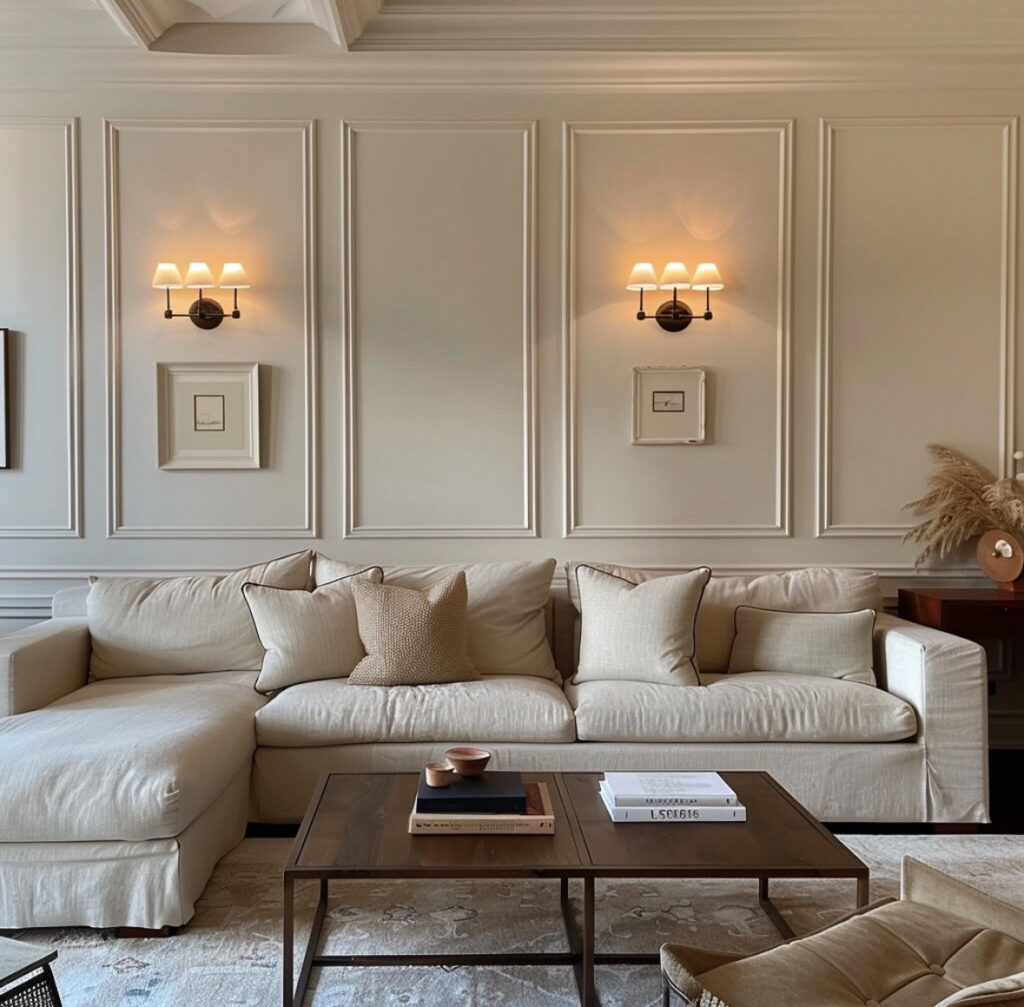
But then I saw this elegant, softly lit space from @libraryladderco, and it reminded me why good lighting is basically emotional support for your living room. Those twin sconces glowing against the shaker-style wall paneling… ugh, it’s like the room is exhaling. The creamy sofa, the warm wood coffee table, the little framed art tucked perfectly into the moulding—it all looks more intentional because the lighting is warm and layered instead of coming from one angry ceiling bulb.
Here is what to do:
- Layer the light. Instead of one bright ceiling fixture, aim for three to five smaller light sources scattered around the room. A floor lamp, a table lamp, maybe a string of fairy lights tucked on a shelf.
- Warm bulbs only. I once stood in the bulb aisle for 14 minutes, texting my man blurry photos of labels while muttering about Kelvin numbers. Now I only buy warm white bulbs (around 2700K), and suddenly every room feels so much softer.
- Cheap shades, big difference. Swapping a too-small or too-shiny lamp shade for a simple fabric one can make a ten dollar thrift store lamp look designer.
Textiles That Instantly Add Warmth and Style
If your budget is tight, this is where I’d put a sneaky chunk of it: textiles. They are the easiest way to cozy things up, and they come with you if you ever move (unlike, say, that wall color you now hate).
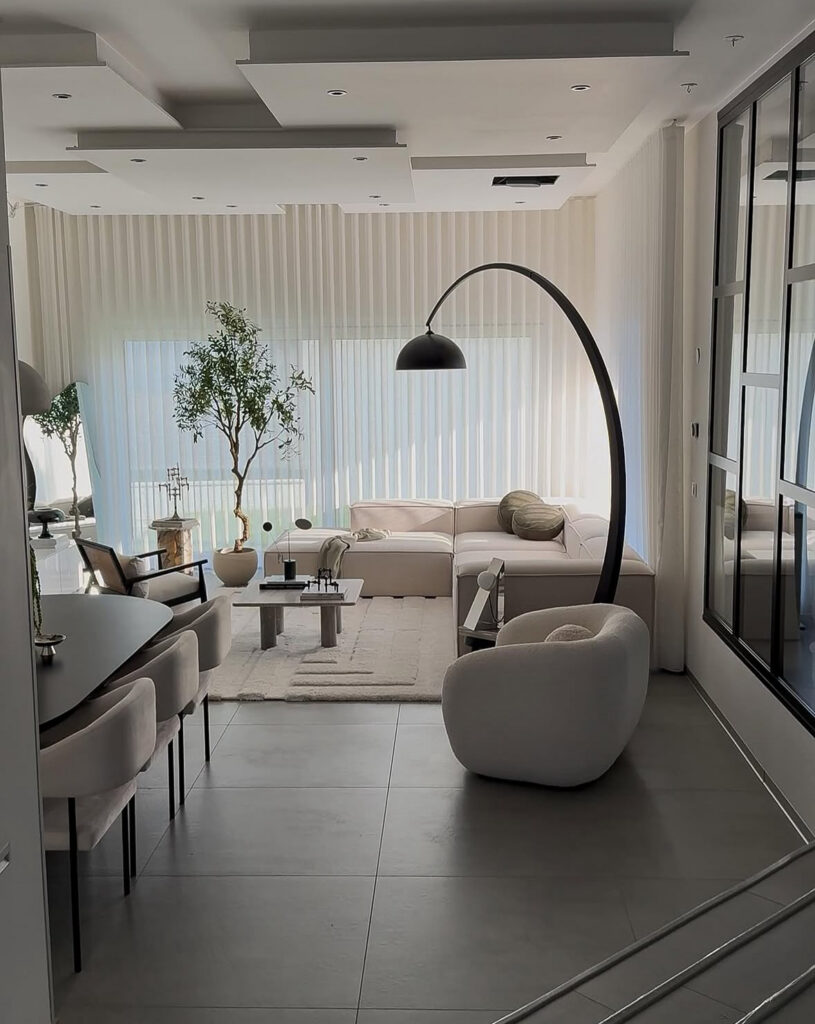
Look at Ela’s Xoxo living room from @interior.ela. The whole space is basically a love letter to soft fabric: the plush corner sofa, the textured rug, the rounded boucle chair, the upholstered dining chairs, even the cushions layered in soft greens and neutrals. Everything is calm and minimal, but the textiles keep it from feeling cold or echo-y. It’s like a very chic cloud you’re allowed to sit on.
When I’m in the textiles aisle (or, let’s be honest, scrolling at 11 pm), here’s what I hunt for:
- Pillow covers instead of whole pillows so I can use good inserts and just switch the “clothes”
- Throws that feel good on bare skin and can survive grape juice and spaghetti night
- Curtains that hang high and long, as close to the ceiling as possible and just kissing the floor
- Simple duvet covers that I can layer with one or two fun shams when I want a little drama
Easy Upgrades for Kitchens and Bathrooms when you Cannot Renovate
Kitchens and bathrooms can feel the most frustrating because the big stuff is expensive. But there are still small, relatively affordable home essentials that make them feel fresher.
In the kitchen, I like to:
- Swap old cabinet knobs for simple black or brass ones
- Decant dish soap into a pretty bottle so it feels like part of the decor
- Add a tiny lamp on the counter for soft light at night
- Use one wooden board and one ceramic crock to corral utensils
I also have a mental list of kitchen essentials that are both practical and pretty. A dish towel I actually like looking at, a little plant by the sink, and a decent cutting board live at the top of that list.
In the bathroom, fresh towels, a new shower curtain, and a matching soap dispenser and toothbrush holder situation can work actual miracles. I am forever tempted to hang art on the shower wall, but my fear of drilling into tile has me using command hooks and leaning frames instead. It looks good enough, and I sleep better not imagining cracked ceramic.
Related posts: Should The Kitchen Faucet Match Cabinet Hardware or Not
If your budget is tiny, start with one category of bathroom essentials and upgrade it across the whole house. All new hand towels, or all new soap dispensers, can instantly make things feel more intentional.
Plants, Shelves, and the Joy of Going Vertical
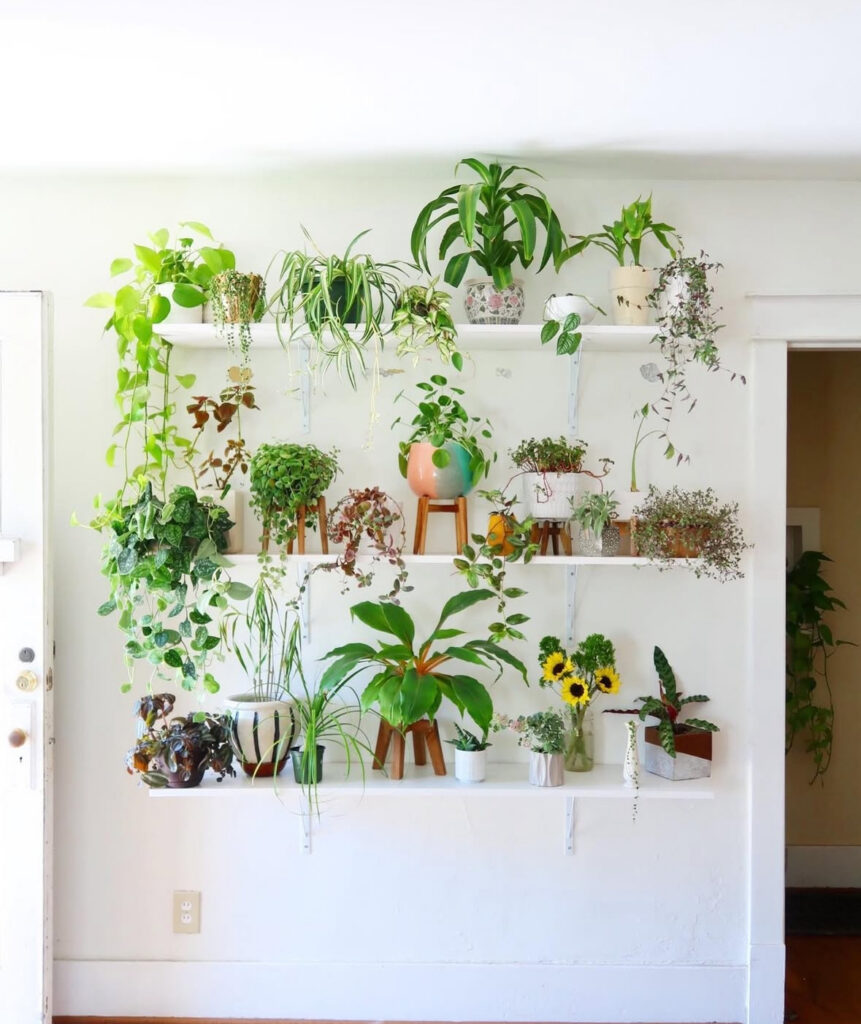
I have to show you this plant wall from @peoplewithplants_official, photographed in a bright Nashville home by @plants_everywhere. Three simple white shelves are absolutely loaded with potted plants. Some trail down, some reach up, some are in tiny terracotta pots, some in cute patterned ones, and there is a little row of sunflowers smiling from the bottom shelf. The whole thing is just shelf brackets, boards, and a lot of green friends, yet it feels like an art installation.
Going vertical is one of the easiest budget-friendly decor moves.
If you do not have floor space, use walls for:
- Plants
- Books
- Small framed art
- Baskets with toys or extra blankets
This is also where home organization accidentally becomes decoration. A tidy row of baskets, labeled or not, can clean up visual clutter and look intentional at the same time.
Quick Seasonal Upgrades that do not Break the Bank
You really don’t need an entire storage unit full of holiday decor to make your home feel seasonal. I promise. One small bin per season is enough (ask me how I know… my man once sighed dramatically when I brought home a THIRD fall bin, so now I behave).
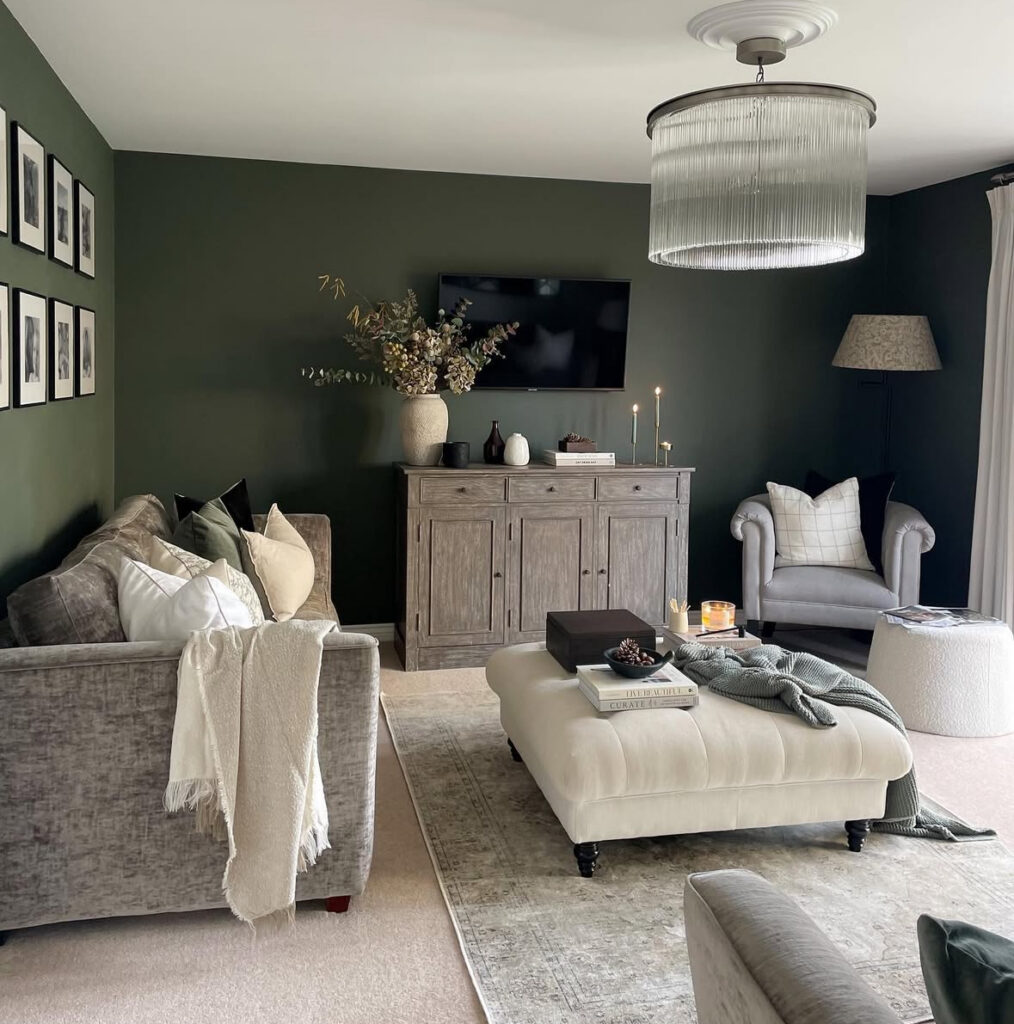
When I saw Hannah Jones’s deep green living room makeover, I instantly thought, oh yes… this is how you transition a room through seasons without buying every garland in the store. Her space has that moody Nomad green on the walls, a soft tufted ottoman acting like a giant coffee-table cloud, and cozy throws casually draped over velvet and tweed textures.
Honestly, the whole room feels like autumn gave it a hug. Add a candle, a vase of branches, maybe one extra pillow in a wintery texture… that’s it. The space just absorbs seasonal decor effortlessly because the base is already warm and grounded.
Tiny Chaotic Intermission: My Coaster Confession
Quick tangent. I have a thing with coasters. I buy cute ones, I style them in little stacks, I feel very proud, and then I never actually use them. My family just puts cups slightly beside them, like some kind of anti-coaster protest.
The only time those coasters get used is when I am photographing a corner and physically place a cup on one. So if you are also living in a world where decorative items are sometimes just for the vibe, welcome, you are my people. And yes, even pointless coasters can make a coffee table vignette look more put together.
A Simple Formula for Elevating any Room on a Budget
If you are feeling overwhelmed, here is the bite sized version I come back to:
- Clear out the clutter.
- Choose a soft color palette plus one accent color.
- Add one decent sized rug or curtain situation to anchor things.
- Layer in texture with pillows, throws, and baskets.
- Upgrade lighting with at least two lamps and warm bulbs.
- Finish with a few decorative pieces that tell a story, not a hundred random knickknacks.
You really can refresh your living room decor, bedroom decor, and even those awkward little hallways with mostly inexpensive decor and a bit of patience.
FAQ
Can you update your home decor on a small budget?
Absolutely. I’d start with the “big three”: textiles, lighting, and decluttering. Swap a couple of pillow covers, add a thrifted lamp with a warm bulb, clear off surfaces, and maybe bring in one plant. Even $20–$40 spread over those things can make a room feel totally different.
What are the cheapest ways to make a room look more stylish?
Clear the clutter, hide as many cords as you can, and give the room one clear focal point (a larger piece of art, a mirror, or a nicely styled shelf). Then add texture with a throw blanket and one or two pretty accessories you actually love. It’s less about “more stuff” and more about a few things arranged thoughtfully.
How can I decorate my home without buying new furniture?
Shop your own house. Move side tables between rooms, swap lamps, try a rug from the bedroom in the living room, pull art from the hallway and lean it on a shelf. Then restyle what you already own: stacks of books, candles, bowls, baskets. Most of my “new” corners are just old pieces in new spots.
How do I refresh my decor without repainting or renovating?
Change everything around the fixed things. New curtains (or just hanging your current ones higher), different pillow covers, a new rug, softer lighting, and some fresh art or photos will distract from walls and tile you don’t love. Think of paint and tile as the background and let your decor do the talking.
How do I make my home look expensive without spending much?
Keep the color palette simple, use larger pieces of art instead of lots of tiny ones, and make sure your lighting is warm and layered. Add in a few textures that feel cozy and “weighty” (a chunky throw, a woven basket, a real plant) and avoid overcrowding surfaces. The more intentional and calm a space feels, the more “expensive” it reads, no matter what you actually paid.