
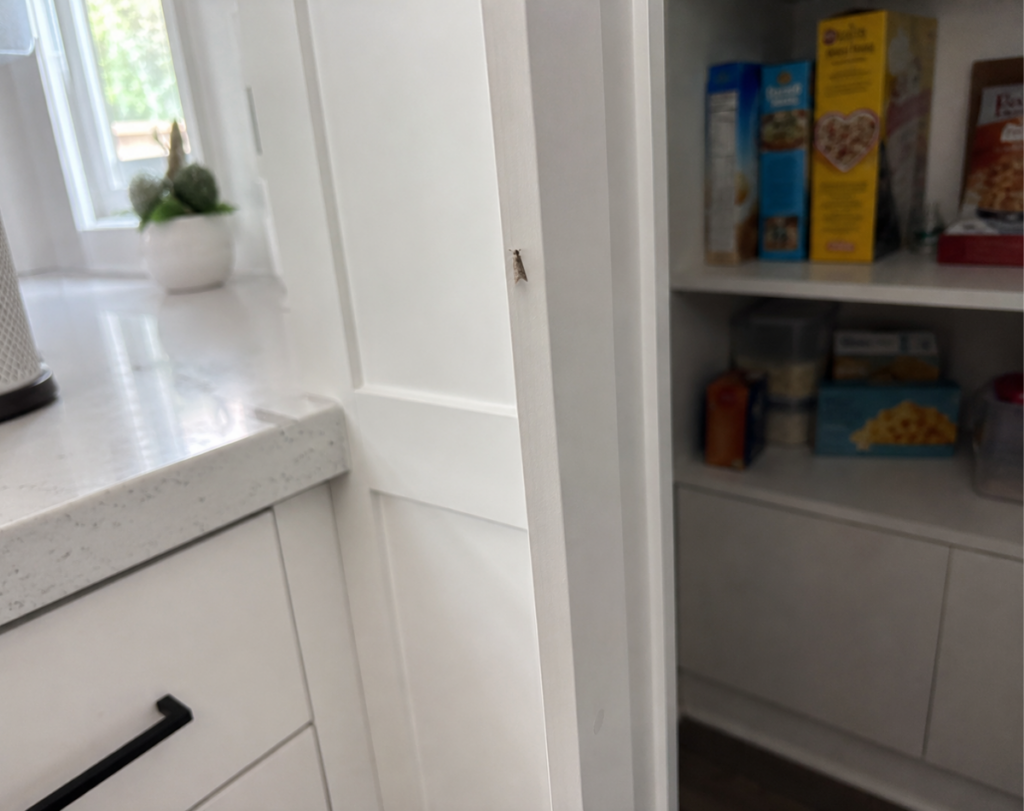
First one I saw, I honestly thought nothing of it. A moth. Moths get in. I flapped my hand at it and went back to whatever I was doing, which, I have since learned, is the single dumbest possible response, because there is no such thing as one pantry moth. There’s the one you spot. Then there’s the rest of it, which you don’t spot, and which has a head start on you measured in weeks.
So. Let’s get into it. What these things are, how you get rid of them properly instead of the lazy way that buys you maybe three weeks of peace, and the one dumb little habit that means you never open a tab like this again.
The Short Answer
To get rid of pantry moths: empty the entire pantry, throw out any infested or open dry goods, vacuum the shelves and cracks (then empty the vacuum outside), wash every surface with warm soapy water, hang pheromone traps, and wait until the traps stop catching moths before you refill. Store everything in airtight glass or hard plastic containers going forward, and freeze new grains for a few days when you bring them home to kill any eggs. Done thoroughly and in that order, this clears an infestation in about two to three weeks.
What Are Pantry Moths?
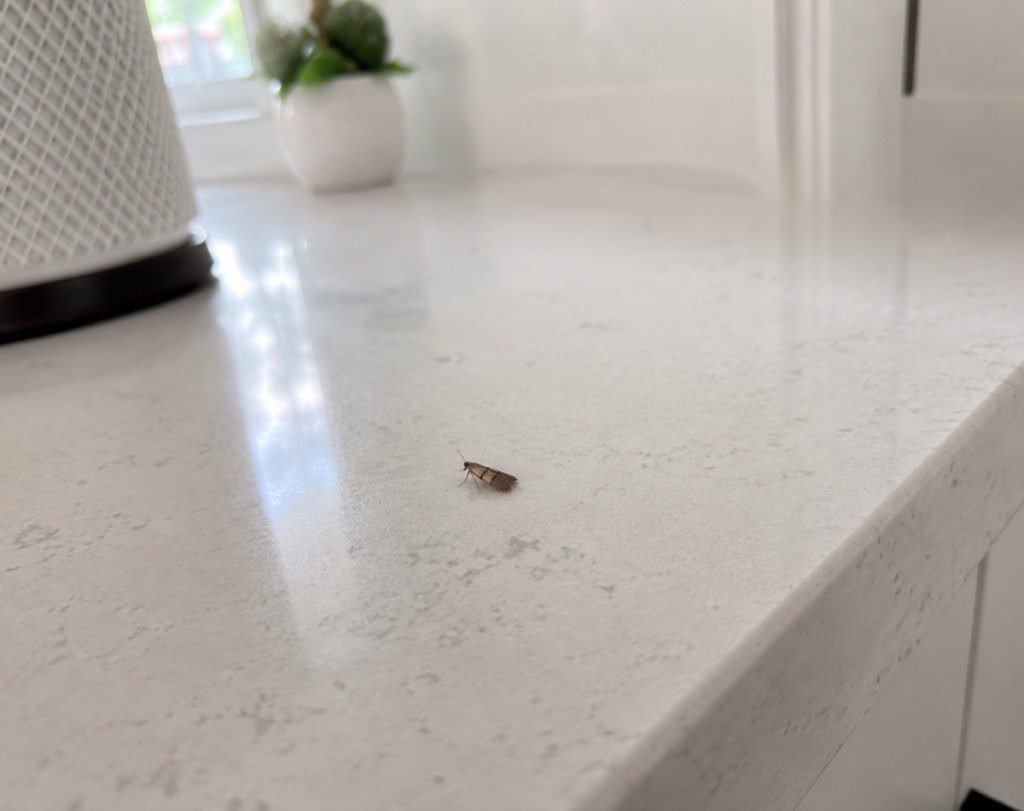
Indian meal moths. Big name, tiny pest. About a centimeter, and the wingtips go this coppery brown while the bit near the body stays pale, so it looks two-toned, almost dipped. That’s your tell. A clothes moth is one boring flat color. The pantry ones did a little ombré.
Anyway here’s the stat that’ll get under your skin. One female drops two to four hundred eggs. One of them. And you’ll never spot the eggs, they’re basically dust, jammed into the folds and glue-seams of packaging, and in summer heat they go from egg to hatched in a few days flat. It’s the larvae doing the eating, by the way – the little pale worms – not the moths. The moths flapping around your face aren’t even hungry. They already ate. As worms. In your rice. They’re just out advertising for a mate now, which, rude.
Places they turn up, some obvious, some less:
- flour, oats, rice, cereal, pasta – the usual crowd
- nuts, seeds, dried fruit
- pet food. birdseed. people skip these every single time and then can’t figure out why it keeps going
- spices, chocolate (yes), and whatever’s in that jar you’ve had since two Christmases ago
And listen, the thing I most want you to walk away with: this is almost never a you-being-dirty situation. The eggs ride in already inside the food. Warehouse, mill, wherever it sat before your cart – sealed bag, eggs already in it. So your kitchen’s fine. Your oats sold you out. Different problem entirely.
How to Get Rid of Pantry Moths Step by Step
Order matters here and I’m not kidding about that. Do all seven of these in a random order, or skip the tedious ones because they feel optional, and you’ll be re-reading this in a month. The boring steps are the ones doing the work.
Take it all out
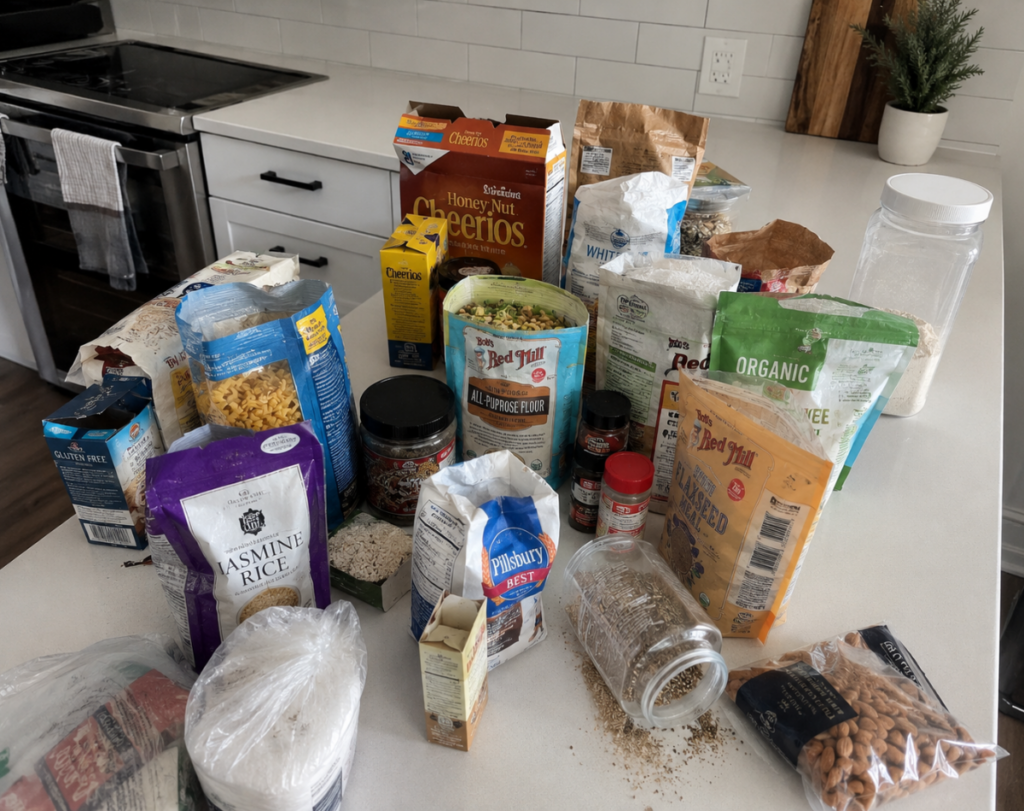
All of it. Not the shelf where the moth was. The whole pantry, top to bottom. Yeah. I know. Still do it.
As things come out, toss anything open in a bag or box. And a lot of the sealed stuff too, because those larvae chew straight through cardboard and thin film and set up inside packages that look completely fine sitting on the shelf. This is where everybody tries to rescue a $4 box of penne and it’s a trap – you’ll happily rebuy that penne rather than run this entire circus a second time. So be merciless. It’s the one spot where merciless actually saves you money.
Real glass, or hard plastic that seals, and it looks spotless? Set it aside. Not cleared yet. On probation.
Vacuum before anything wet touches it
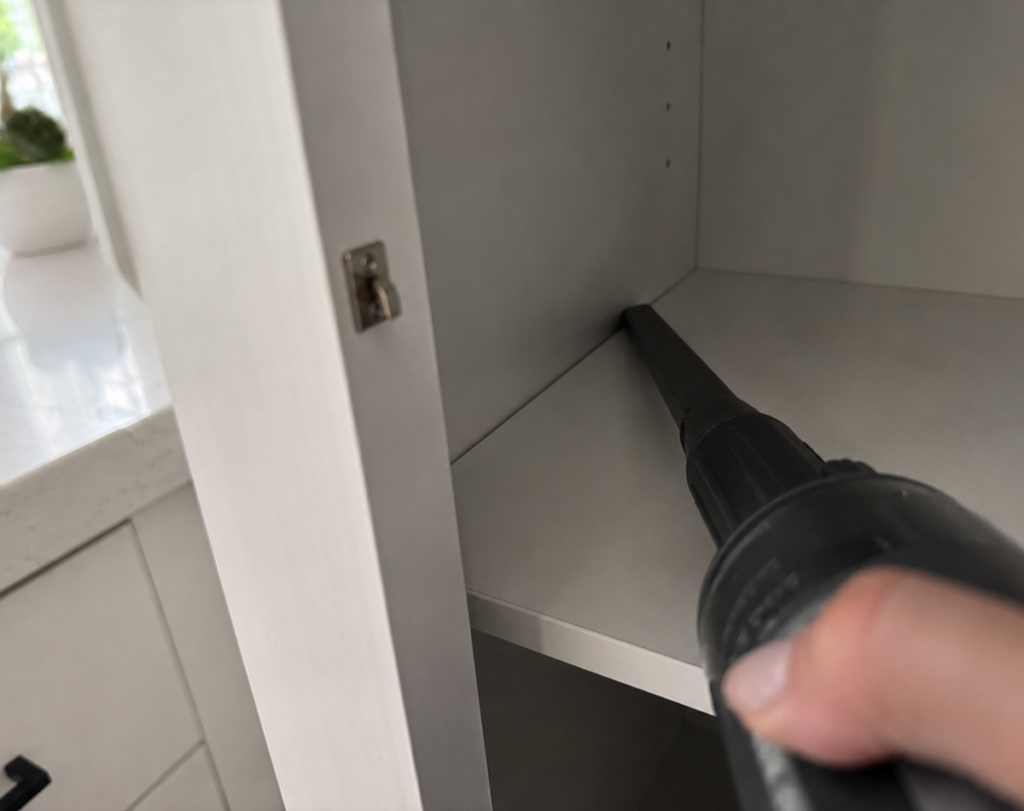
Vacuum, crevice tool, into the empty shelves – and I mean the corners, the seams, the peg-holes, the top lip, the ceiling, all the spots where they tuck up to spin cocoons. You’re pulling out eggs and pupae bodily. Wiping just relocates them.
Then, and this is the bit people breeze past – vacuum straight out to the outside bin, right now, this second. Sounds fussy. It’s load-bearing. Leave that bag indoors and congratulations, you’ve relocated the nursery to your hall closet. Out. Immediately. Rinse the canister with hot water while you’re at it.
Wash it all down
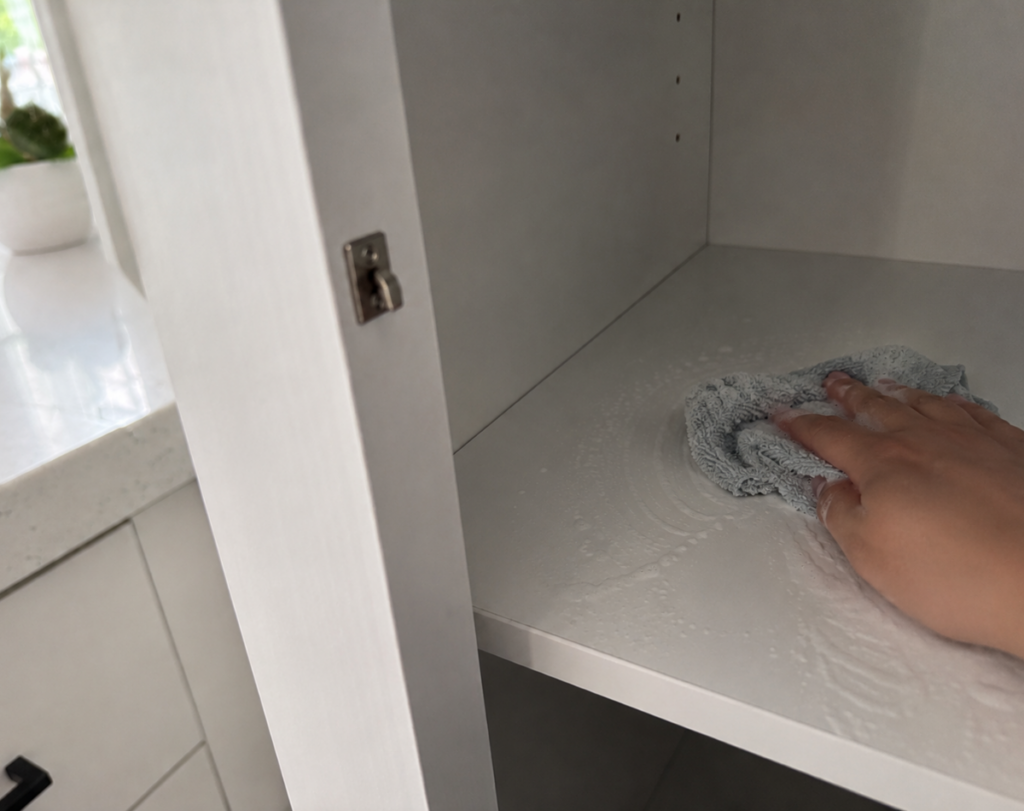
Warm water, a squirt of dish soap. Done. That’s the cleaner. Do not, please, spray insecticide where your food lives – every single person who does this for a living says the same thing, soap and elbow grease beat chemistry here and don’t poison your flour shelf.
Get the shelves top and underside, walls, every corner, the ceiling, the trim, the door, everything. Watch for those little silky cocoon threads wedged in cracks and scrape them off as you go. It is deeply boring work. Put on a podcast and just push through, because this – the tedious wiping – is what finishes off the ones you can’t see.
The tubs. And, look, the baskets
Every bin, jar, lazy susan, riser – hot soapy wash, all of them.
Now. The baskets. I get it, a nice woven basket is great. It is also a larvae Airbnb. They burrow down into the weave where no cloth on earth reaches, and you can scrub till your arm falls off and not get them all. Bake them in full sun for a few days, maybe. Or just let them go. I’m genuinely not going to boss you here. I’ll only say: keep the pretty basket out of spite and don’t act shocked later.
Do Pantry Moth Traps Actually Work?
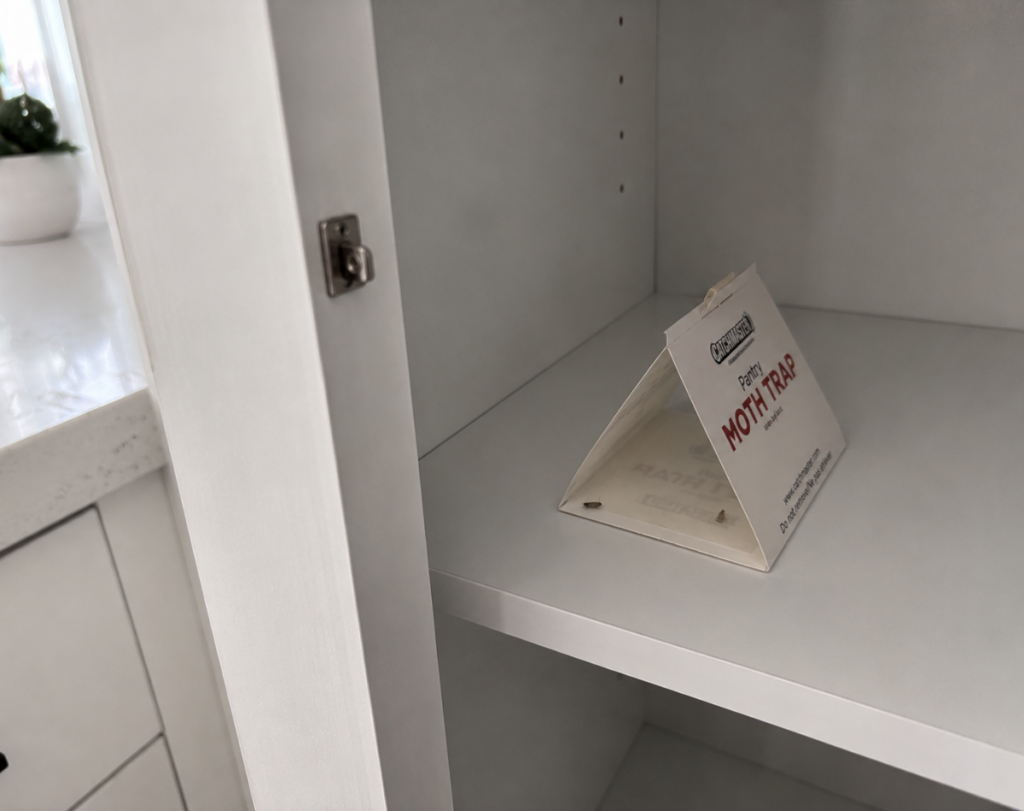
The traps are these little sticky tents loaded with a pheromone that fakes the female’s scent, so the males fly in and glue themselves down. Two real uses. One, mopping up the leftover adult males before they fertilize anything. Two – and this is the actually useful one – telling you whether it’s still going on.
They are not, whatever the box implies, a cure. You can’t just set a trap and skip all the scrubbing. The trap’s your smoke alarm, not your fire truck. Pantry clean and bare, hang one or two, close the doors, walk away. Peek daily. Still pulling in a pile after several days? Not done, keep it empty, keep waiting. And the waiting’s the worst part, honestly, because you want your kitchen back – but that long boring moth-free stretch is the actual proof it worked.
One more wipe
Before anything goes back, run over it all one more time. Not the full deep-clean again. Just a lap. Five minutes. Cheap insurance.
Refill – proper containers this time

Here’s the step that keeps them gone, so don’t flake on the last one. They can’t get through glass, metal, hard sealed plastic. They breeze straight through bags, boxes, flimsy stuff. So flour, rice, oats, nuts, the pet food, pasta – into something that genuinely seals, all of it.
Sneaky upside to sealed jars: even if a stray egg or two slipped past you tucked in some product, the jar boxes them into that one jar instead of letting it spill across the whole shelf. Damage stays contained. And you don’t need thirty containers this afternoon – that adds up fast – just knock out a shelf at a time as the budget allows.
How to Prevent Pantry Moths From Coming Back
This is the actual reason I wanted to write this, because I’d have killed to know it sooner and it’s borderline stupid how simple it is:
Freeze the grains when you get home. Flour, rice, oats, cornmeal, anything dry and moth-friendly – the bag goes in the freezer a couple of days before you decant it into the nice jar. The cold kills whatever eggs came home from the shop. That’s the whole thing. That’s it. It quietly wipes out the problem at the front door before it’s ever a problem, and once it turned into a reflex I just… stopped thinking about pantry moths. Which is the goal.
Want to be extra, a little bundle of bay leaves or lavender on the shelf’s supposed to put them off – do I know for sure it works? Not really. Smells nice, won’t hurt. Just don’t lean on a scent to fix a live infestation, it won’t, nothing scented will. That’s a keep-a-clean-pantry-clean thing, not a rescue.
You’re fine, you’ve got this
In the middle of it, it feels enormous and personal and gross. It isn’t, not really – it’s a common little nuisance with a dull fix, and the fix is: empty it, vacuum it, wash it, wash the tubs, trap and wait, wipe once more, refill into sealed jars. Then freeze your grains from now on and get on with your life.
Won’t pretend it’s a nice way to spend a Saturday. It isn’t. But the pantry comes out cleaner and more sorted than it’s ever been, jars all lined up, and you finally know what you’ve actually got instead of unearthing three half-open bags of the same flour behind the lentils. Strange silver lining for a bug problem. I’ll take it though.
Where do pantry moths come from?
Almost always from the food itself. The eggs are usually already inside the package when you buy it, having gotten in at the mill, warehouse, or store before it ever reached your cart. They can also fly in through open doors, windows, or gaps around vents, but the number one source is contaminated dry goods brought home from the grocery store. It is not a sign your kitchen is dirty.
How long does it take to get rid of pantry moths?
Done thoroughly – empty, vacuum, wash, trap, and store everything in airtight containers – most infestations clear in about two to three weeks. The catch is that it only works if you do every step. Left untreated, or if you skip the deep clean and rely on traps alone, an infestation can cycle through generation after generation and last for months.
Do pantry moths go away on their own?
No. As long as there is any open food for them to feed and lay eggs in, they will keep reproducing indefinitely. They do not die off in winter either – they go dormant and wait. The only way they leave is if you remove their food source and clean out the eggs and larvae, so you have to actively deal with them.
Are pantry moths harmful?
Not to your health. They do not bite, sting, or spread disease, and accidentally eating a few larvae or eggs will not hurt you (unpleasant as that is to think about). The harm is to your food and your wallet – they contaminate dry goods with webbing and waste, so anything infested has to be thrown out.
What is the fastest way to get rid of pantry moths?
There is no true shortcut, but the fastest real method is to do it all in one session: pull everything out, throw away anything infested or in flimsy packaging, vacuum the shelves and cracks, wash every surface with warm soapy water, hang pheromone traps, and move all remaining dry goods into airtight glass or hard plastic containers. Skipping steps to save time is what makes it come back and take longer overall.