Bathroom tiles can feel like a fun pick until you realize you’re also choosing what you’ll scrub, step on wet, and live with every single day. I’m walking you through the decisions that matter first, so you end up with a bathroom that looks good and behaves even better.
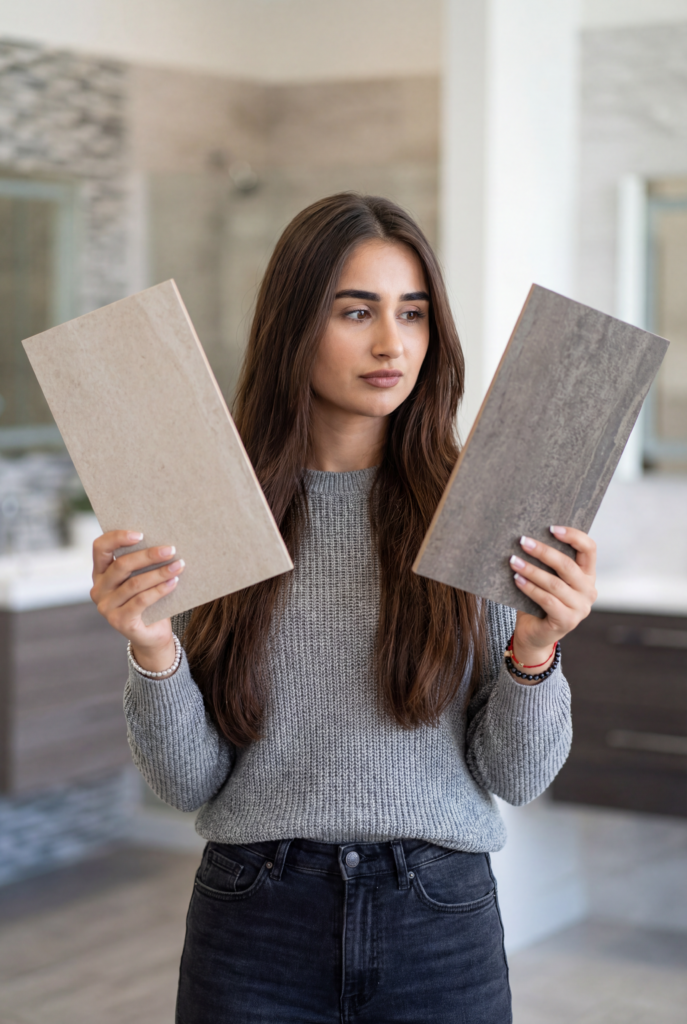
I want to start with a very real scenario.
You’re standing in a tile store. Or scrolling at night. You’ve narrowed it down to “a few good options.” Everything looks fine. Maybe even great. And yet your stomach feels weird. Because this isn’t a pillow or a lamp. This is tile. It’s heavy. It’s expensive. It’s glued to your house.
And you’re thinking, what if I hate this in six months.
That feeling is not you being dramatic. That feeling is wisdom.
Because bathroom tile is one of those decisions that looks simple on the surface and then quietly affects your life every single day. How often you clean. Whether the floor feels icy. Whether you’re annoyed every morning and can’t quite explain why.
So let’s ground this before we spiral.
Bathroom tiles design = material + finish + layout + grout choices that survive water and daily cleaning.
Not vibes. Not trends. Not what looks best in a styled photo taken at golden hour. Survival first. Beauty second.
This is not an inspiration roundup. This is a decision guide for people who are about to spend real money and would like to stay married to their bathroom afterward.
Before we talk color or pattern, here’s the choosing order that actually works. I know it sounds boring. It saves you later.
The order:
- Where the tile goes
- Safety
- Maintenance
- Style
- Budget
Everything below follows that logic.
Tile Placement Cheat Sheet (Screenshot this and thank yourself later)
Here’s the fast answer people actually need before they fall into a 47-tab research hole.
- Shower floor tiles: small matte or textured porcelain mosaic (2 inch or smaller), high traction, lots of grout grip
- Shower wall tiles: porcelain or ceramic, satin or glossy is fine, larger formats work great
- Main bathroom floor: matte or textured porcelain, medium to large format depending on your subfloor flatness
- Backsplash or niche: ceramic or porcelain, glass accent if you want sparkle, mosaics for detail moments
If you only read one block in this whole post, let it be this one. Tile placement is where good taste goes to die if you ignore physics.
Tile Materials and Finishes (Where Most Regret Starts)
This is the biggest decision you’ll make, even though it doesn’t always feel like it at the time. Material controls how your bathroom wears, cleans, ages, and behaves under stress.
Porcelain Tile (The Safest All-Around Choice)
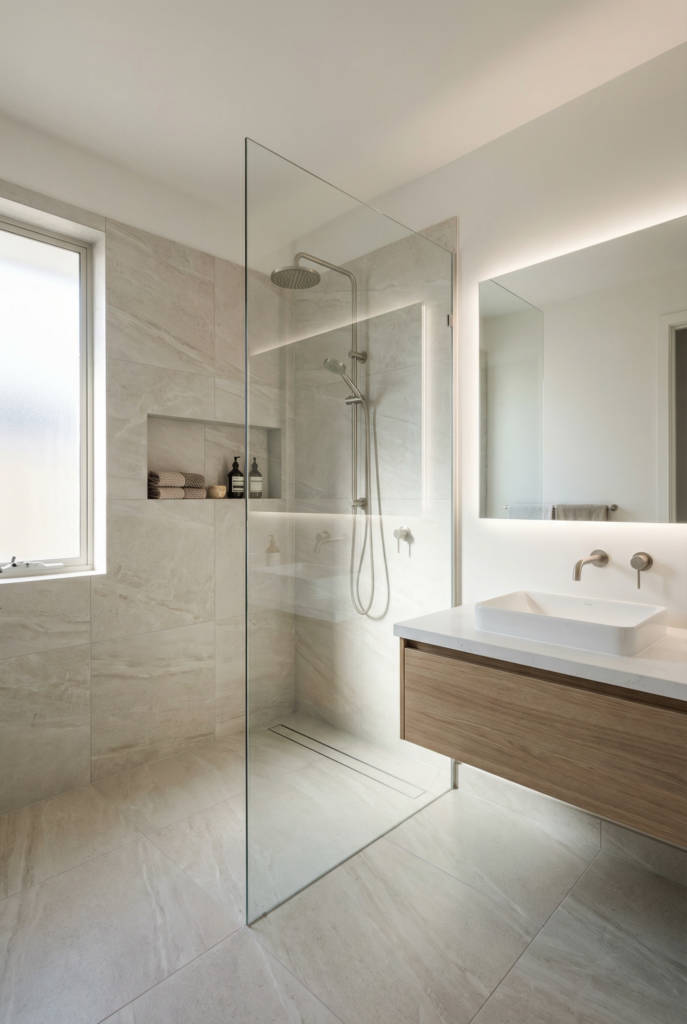
If someone told me I had to recommend one tile for most bathrooms without knowing the person, their lifestyle, or their patience level, it would be porcelain.
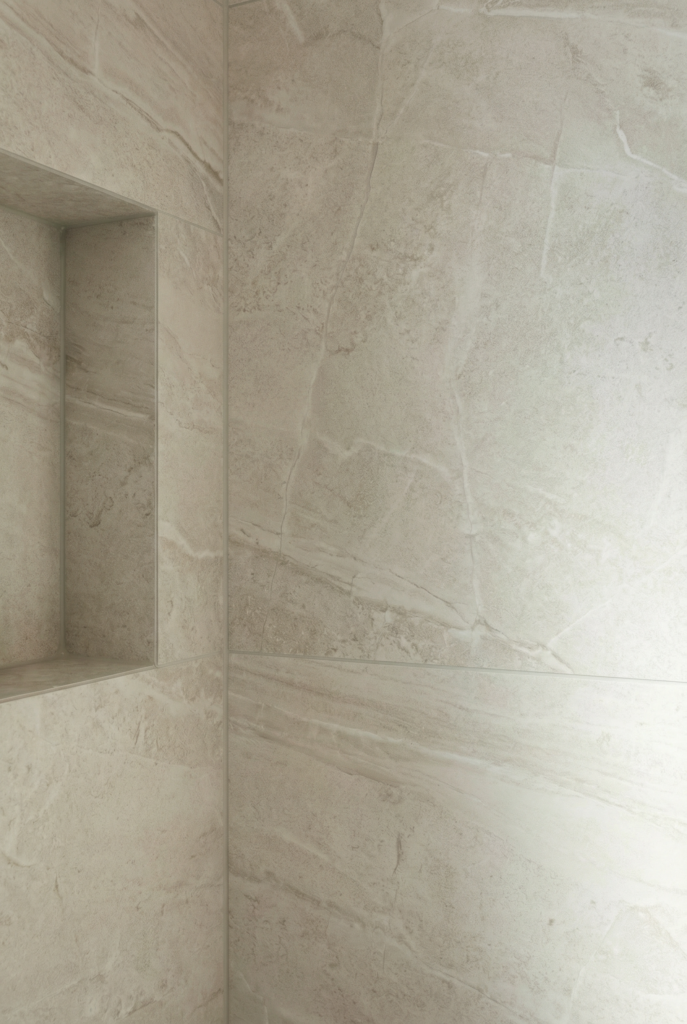
Best for:
Bathroom floors, shower floors, shower walls, basically anywhere water exists.
Don’t use here:
There are very few true “no” zones, as long as you choose the right finish.
Maintenance reality:
Porcelain is dense, water-resistant, and does not need sealing. You can clean it with normal products without fear. It’s the material that quietly handles daily life.
Price band:
Usually around $3–$10 per square foot. The sweet spot for good-quality, good-looking porcelain tends to live in the $4–$6 range.
Porcelain can convincingly mimic marble, limestone, concrete, terrazzo, even wood. You get the look without the maintenance baggage. If you want durable bathroom tiles that don’t demand constant attention, this is the one.
Ceramic Tile (Budget-Friendly, With Boundaries)
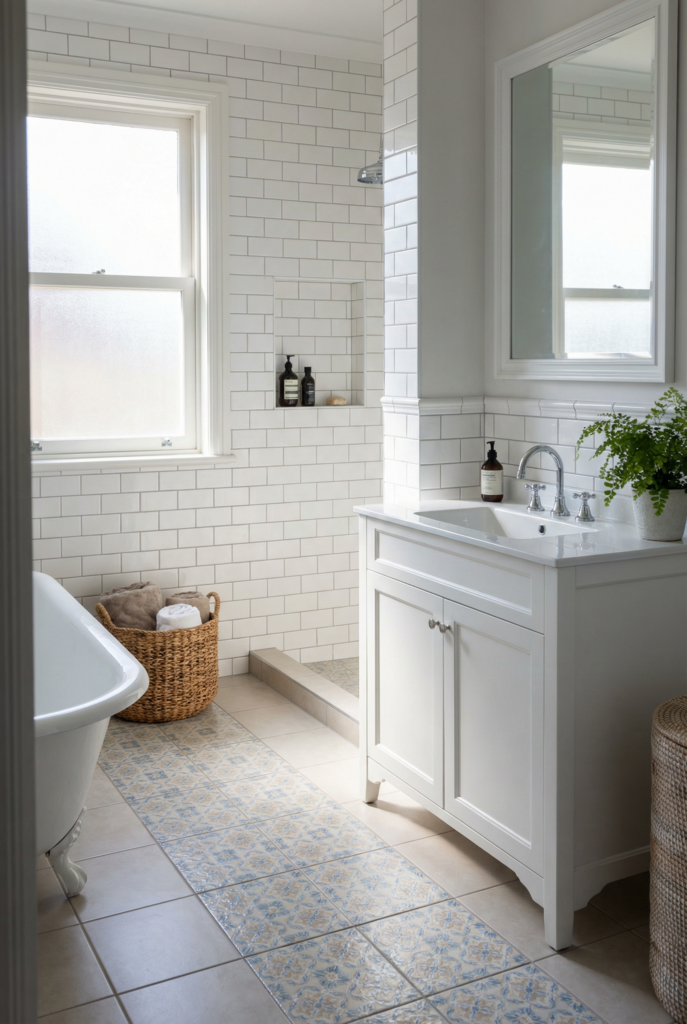
Ceramic is often lumped together with porcelain, but they are not interchangeable.
Ceramic can absolutely be used on floors, but the key is whether it’s rated for floor use and whether your bathroom is a gentle little adult spa or a chaotic splash zone.
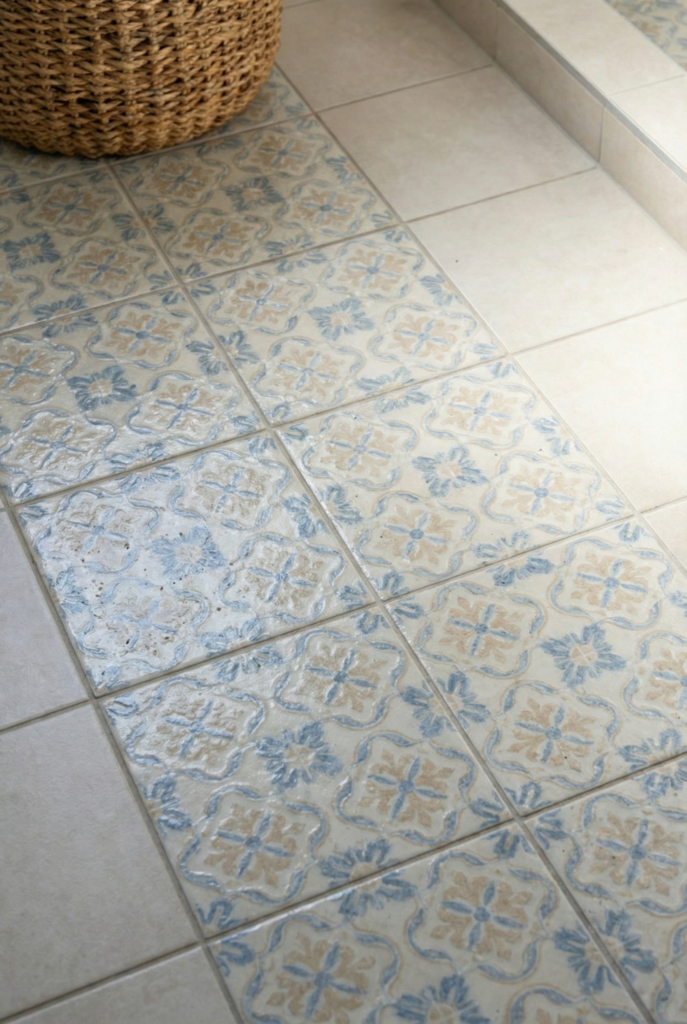
Best for:
Walls, backsplashes, and some floors, especially in lower-traffic bathrooms.
Don’t use here:
I don’t recommend ceramic for main floors in busy bathrooms unless it’s floor-rated and you’re okay with slightly less durability than porcelain.
Maintenance reality:
Easy to clean, but generally more prone to chipping and wear than porcelain. Still a perfectly decent choice when used appropriately.
Price band:
Typically $1–$4 per square foot.
Ceramic is great when budgets are tight or when you want a classic wall tile look. Just don’t expect it to be indestructible if your bathroom sees wet dogs, kids, and the occasional dropped hair tool.
Related: Towel Bar vs. Hooks – Which Is Better for Your Bathroom Routine?
Natural Stone Tiles (Marble, Limestone, Slate)
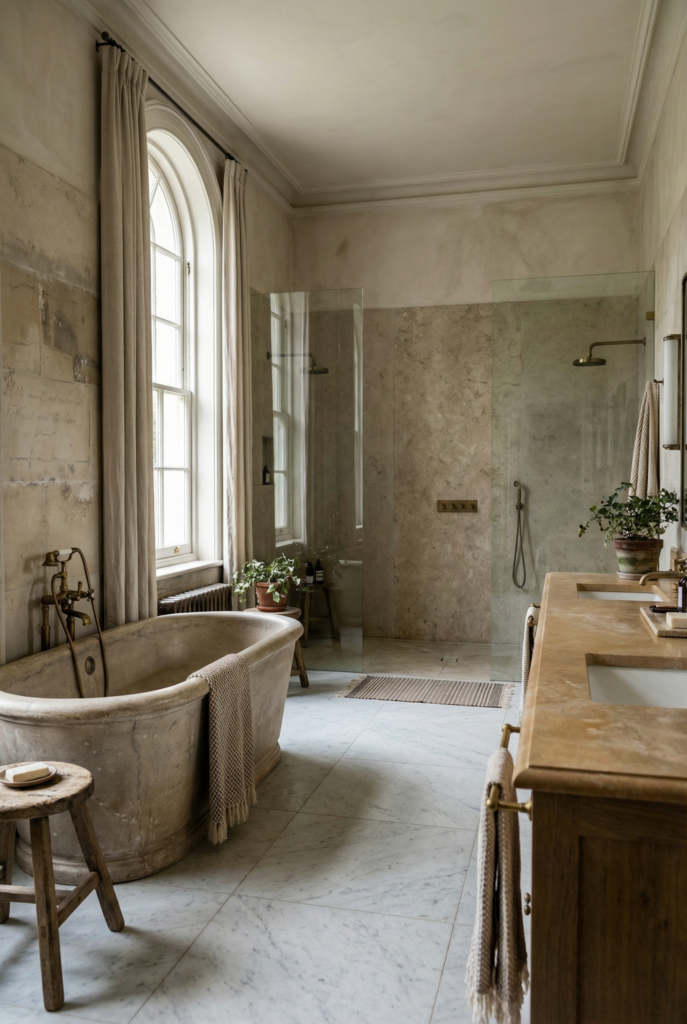
Stone is beautiful. It’s also honest. It will show wear. It will react to water and cleaning products. It will age whether you want it to or not.
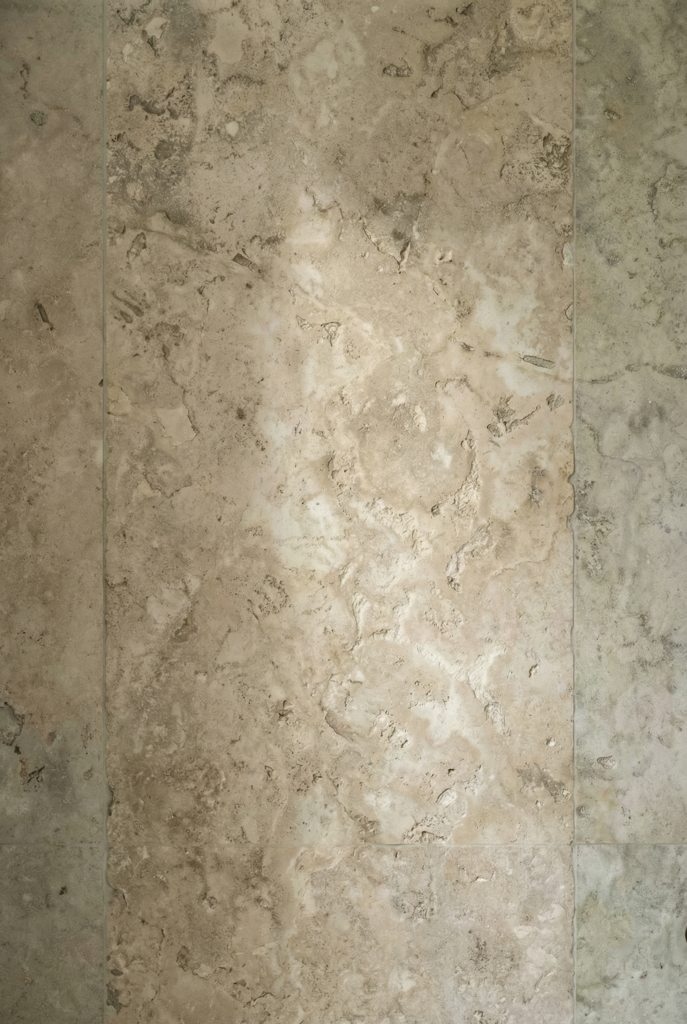
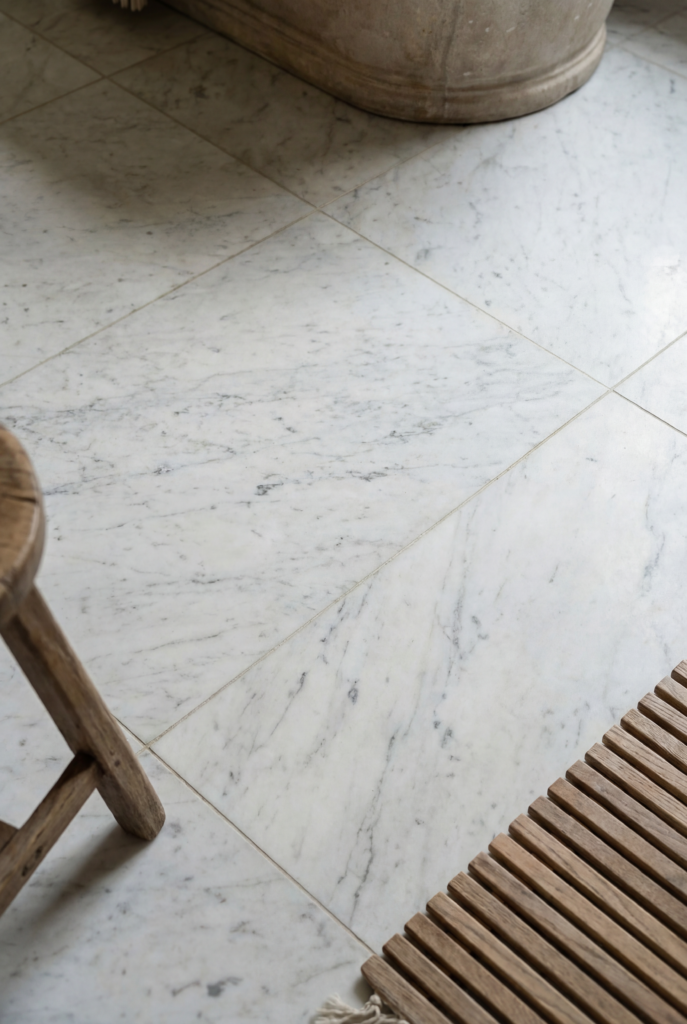
Best for:
Low-traffic floors, feature walls, primary bathrooms where everyone is on board with upkeep.
Don’t use here:
High-use shower floors unless you truly enjoy maintenance and understand what you’re signing up for.
Maintenance reality:
Stone needs sealing and resealing. It can stain, etch, and discolor. Harsh cleaners are off-limits. Patina is part of the deal. And yes, some people love that. They call it “character.” Other people call it “why is there a dark spot by the drain that won’t go away.”
Price band:
Often $8–$25+ per square foot, plus higher installation costs due to cutting, sealing, and fragility.
Marble is the glamorous one. Limestone is softer and often more matte and mellow, but still sensitive. Slate can be moodier and more forgiving visually, but it can have cleft texture that traps soap scum if you go too rustic. Stone is not wrong. It’s just demanding.
Glass Tile and Mosaic Tile
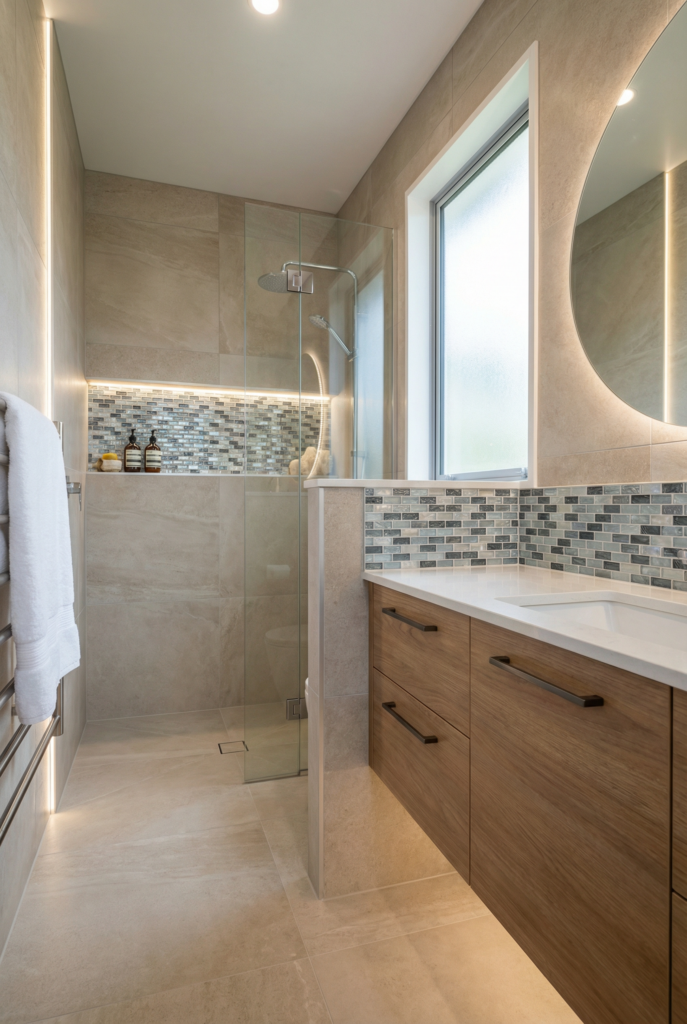
This category looks more practical than it is. It’s the “jewelry” of your bathroom, not the jeans you wear every day.
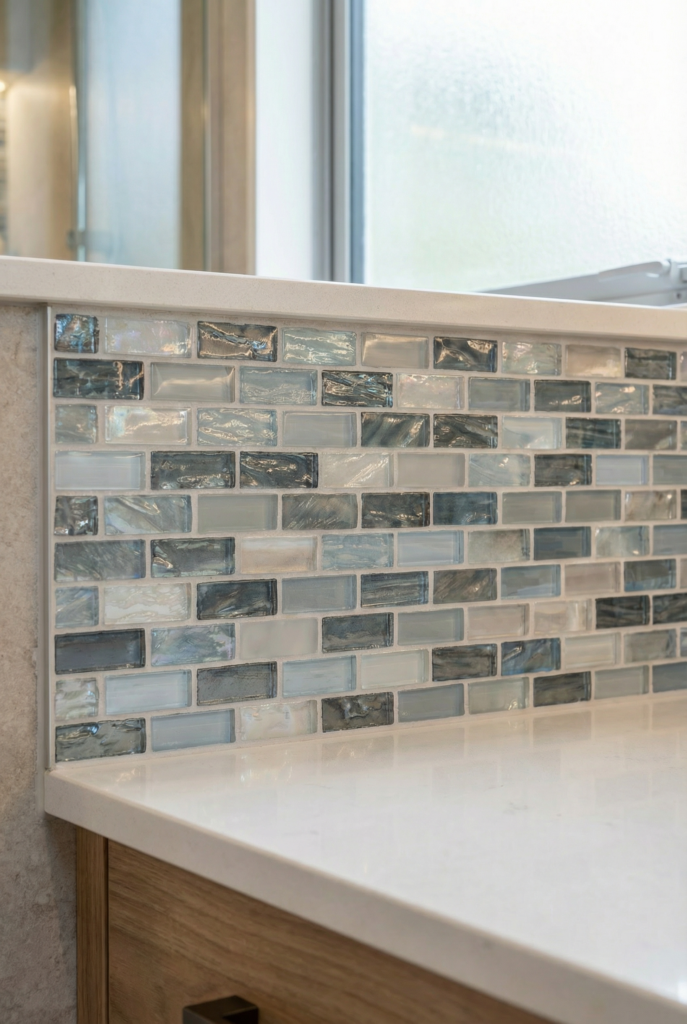
Best for:
Accent areas, backsplashes, niches, decorative moments, little sparkle moves.
Don’t use here:
Large floors or high-traffic zones.
Maintenance reality:
Lots of grout lines, which means more scrubbing than you expect. Water spots can show. And if you pick a glass mosaic with a ton of color variation, it can be gorgeous, but it can also fight your fixtures if you’re not careful.
Price band:
Roughly $7–$20 per square foot.
Glass tile is personality, not structure. Use it in small doses where it can shine without ruining your Saturday mornings.
Wood-Look Porcelain
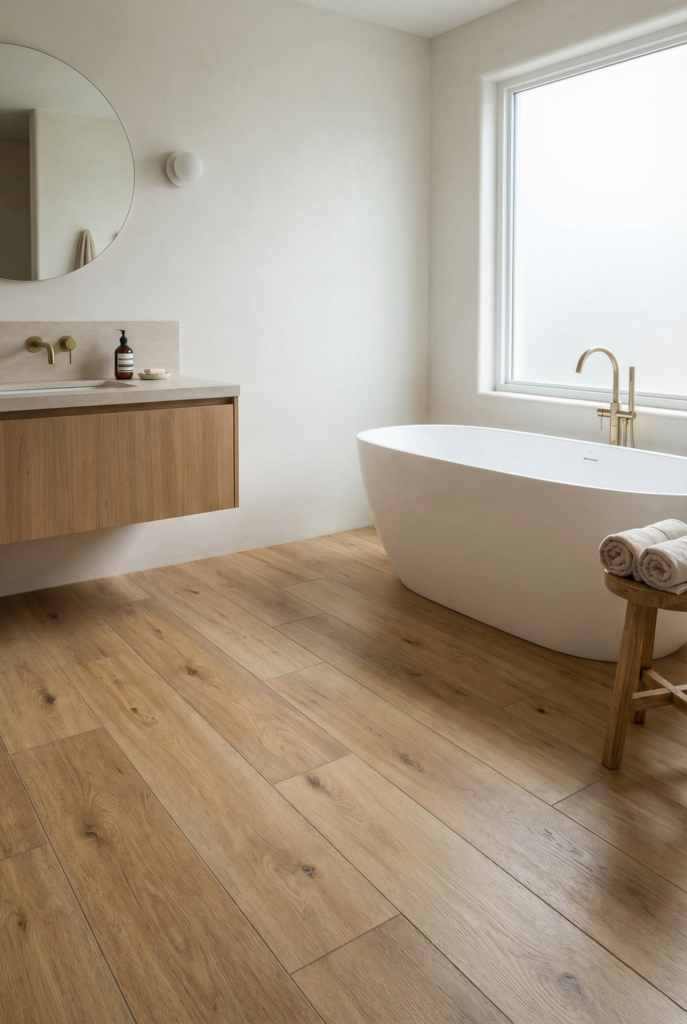
This is one of my favorite modern inventions because it solves the “I want warmth but I’m scared of water” problem.
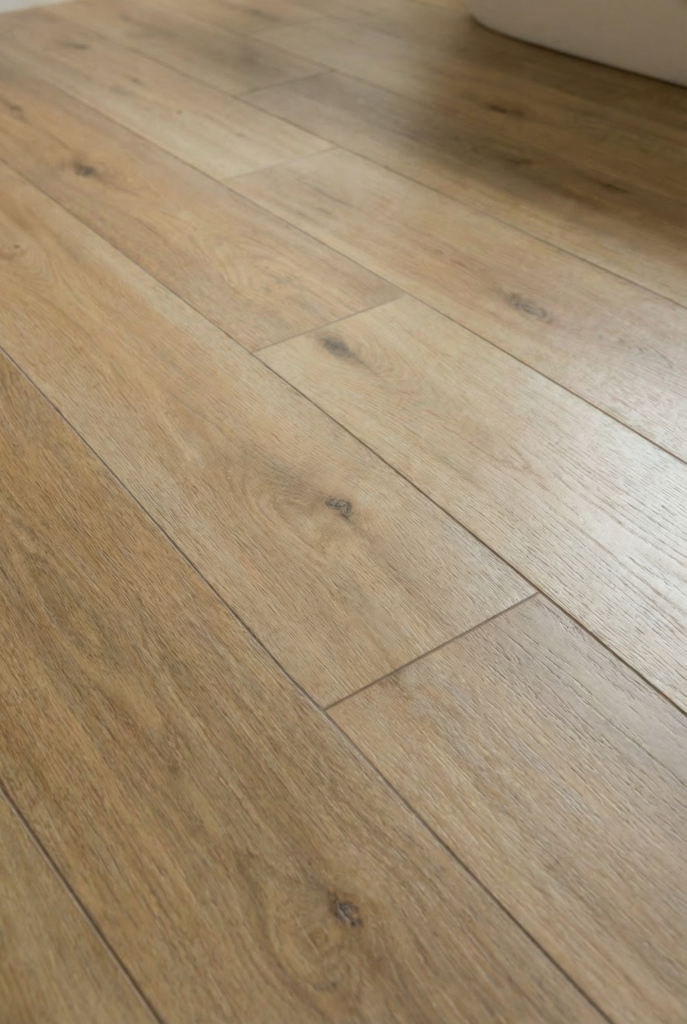
Best for:
Bathroom flooring, powder rooms, spa-inspired spaces, anywhere you want that wood vibe without the wood stress.
Don’t use here:
Shower floors unless explicitly rated for wet traction. And even then, choose carefully.
Maintenance reality:
Acts like porcelain. Looks like wood. Very forgiving. The grout lines can be your only “tell,” so grout color matters a lot here.
Price band:
Around $4–$9 per square foot.
If you’ve been collecting bathroom tile ideas and everything you love looks “too cold,” wood-look porcelain is a genuinely smart way to warm the whole room up.
Why Installation Costs Vary So Much (And Why Your Quote Might Make You Gasp)
This is where people get blindsided.
Installation cost depends on:
- tile size and shape
- pattern complexity
- number of cuts
- subfloor leveling
- waterproofing systems
- stone sealing
And here’s the human anchor: a simple straight-lay is cheaper than herringbone, almost always. Mosaic shower floors cost more because they take longer, plus the sheets need extra fussing to keep everything aligned and flat.
So yes, it’s extremely common for labor to cost more than the tile itself. Especially with patterned tiles, mosaics, or large-format tiles that demand a very flat surface.
Waterproofing Clarification (This is the part that keeps you from a future leak spiral)
This is quick but important.
Tile and grout aren’t waterproof. The system behind them is.
In a shower, you’re paying for a waterproofing method under and behind the tile, and that’s what prevents water from creeping into your walls and subfloor.
Ask your installer what waterproofing method is being used in the shower. If the answer is vague, keep asking. This is one of those “trust but verify” moments.
Slip Resistance and Practicality (Unsexy, Non-Negotiable)
Slip resistance sounds technical, but the reality is simple.
If a tile is smooth and shiny, it will be slippery when wet.
Readers shop by finish names though, so let’s translate.
Tile Finish Mini Guide: Matte vs Satin vs Polished
- Matte: best for floors, hides smudges and water spots, generally better traction
- Satin or honed: the middle ground, softer sheen, easier to live with than glossy, can work on floors if traction is decent
- Polished or glossy: walls only, shows water spots, can feel like an ice rink under wet feet
This is why you’ll see glossy tile on shower walls and matte tile on shower floors. That’s not a trend. That’s safety.
Floors and Shower Floors
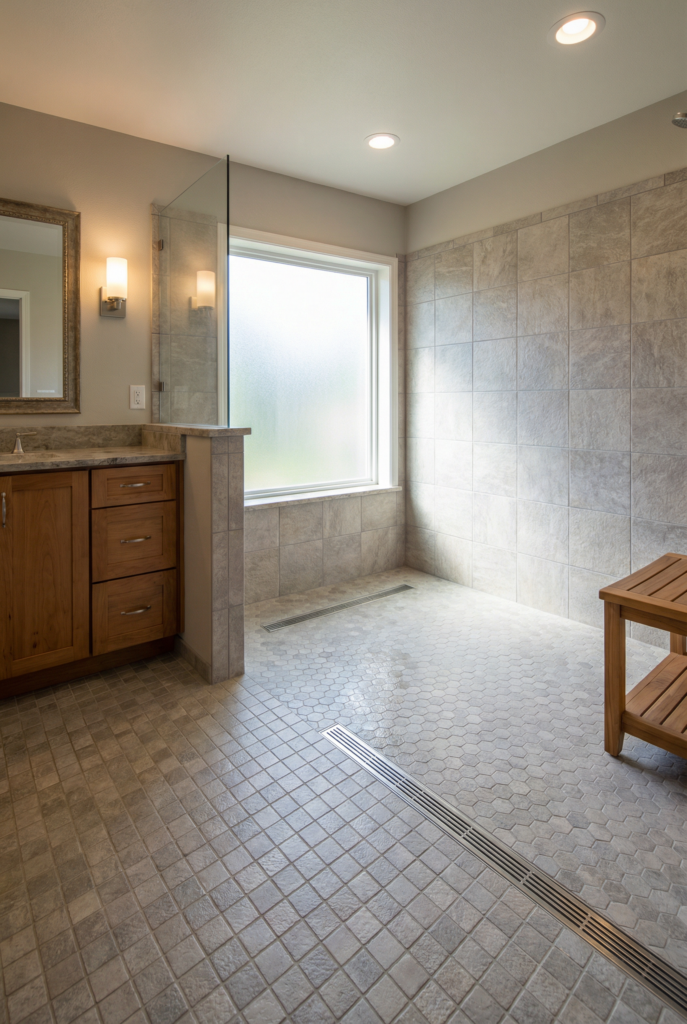
For floors, especially shower floors, choose:
- matte finish tiles
- textured porcelain tiles
- smaller formats that allow more grout lines
Grout adds traction. This is one of the few times more grout is actually your friend.
And yes, I’m saying “smaller tile” while also later telling you “more grout is more maintenance.” Both things are true. Welcome to bathrooms.
Walls
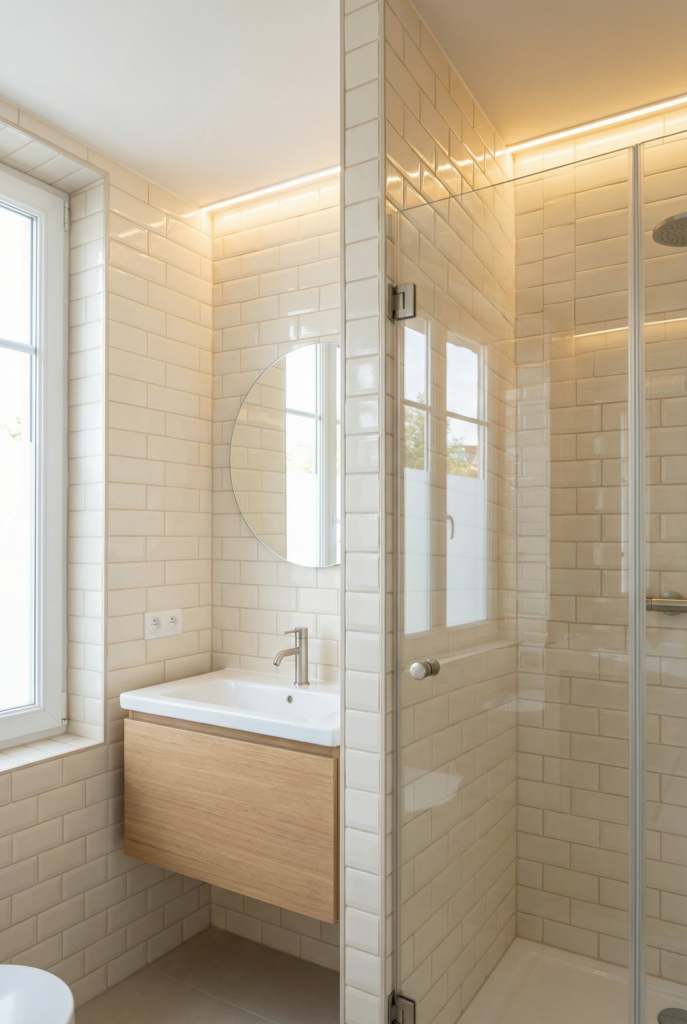
Walls are where glossy tiles shine. Literally.
Glossy tiles reflect light, make small bathrooms feel brighter, and are easier to wipe down. They just don’t belong under your feet unless you enjoy living dangerously.
Tile Size vs Grout Maintenance (Make this decision with your eyes open)
Here’s the actionable version of the truth:
- If you hate cleaning: choose larger format tile plus a mid-tone grout that won’t show every speck or every soap streak
- If you love mosaics: accept more maintenance, because more grout lines means more places for grime to hang out
Grout choice affects cleaning more than tile size ever will, but tile size affects how much grout you’ll be cleaning. That’s the trade.
Quick grout color guide (save yourself later):
- Matching grout: calm, seamless look, hides dirt better
- Mid-tone grout: the most forgiving option for real life
- White grout: classic and bright, but stains easily
- Dark grout: dramatic, but shows soap residue fast (especially in showers)
Related: Guest Bathroom Essentials: The Ultimate Checklist
Pattern and Layout (Where Good Tile Choices Fall Apart)
You can pick the perfect tile and still hate the result if the layout is wrong. Layout is one of those invisible decisions that makes a bathroom feel expensive or accidentally chaotic.
The 1/3 Offset Rule
Many rectangular tiles are slightly bowed due to the manufacturing process. When you install them in a 50% offset pattern, the highest points meet and create lippage, which is that annoying uneven edge you feel with your bare foot and then you can never un-feel it.
A 1/3 offset reduces that risk and creates a calmer visual rhythm. It’s not just about “what looks modern.” It’s about not fighting tile physics.
Why 50% Offset Is Often Discouraged
It’s not banned. It’s just risky. Especially with large-format tiles. Unless your subfloor is very flat and your tiles are very consistent, you can end up with more lippage and more visual wobble.
The frustrating part is you won’t always notice it in the first photo. You’ll notice it when light hits it sideways, or when you clean and the edges catch your sponge, or when you step out of the shower half-asleep and your foot finds a ledge.
Large-Format Tiles
Large-format tiles reduce grout lines and can make a space feel bigger and cleaner. They also demand a flatter subfloor. Prep matters more than ever here.
This is why people choose large tiles to “avoid grout” and then get shocked by the install quote. The floor has to be prepped to a tighter tolerance. That’s time. Time is money.
How to Plan a Tile Layout Step by Step
This is the process that saves regret:
- identify the focal wall first
- find the center lines of the room
- dry lay tiles before committing
- balance cuts on both sides
- avoid tiny slivers at edges
- square the room early
The “avoid slivers” part matters more than people realize. A bathroom can look custom even with basic tile if the cuts are balanced and intentional. And it can look cheap with expensive tile if you end up with a sad half-inch strip by the door.
Color Selection (This Is Emotional, Not Just Visual)
Color is where people get seduced. And I get it. Color is fun. Color is identity. Color is how you want the room to feel.
But it’s also the easiest place to make a decision that looks great for three months and then starts to feel “off” in a way you can’t name.
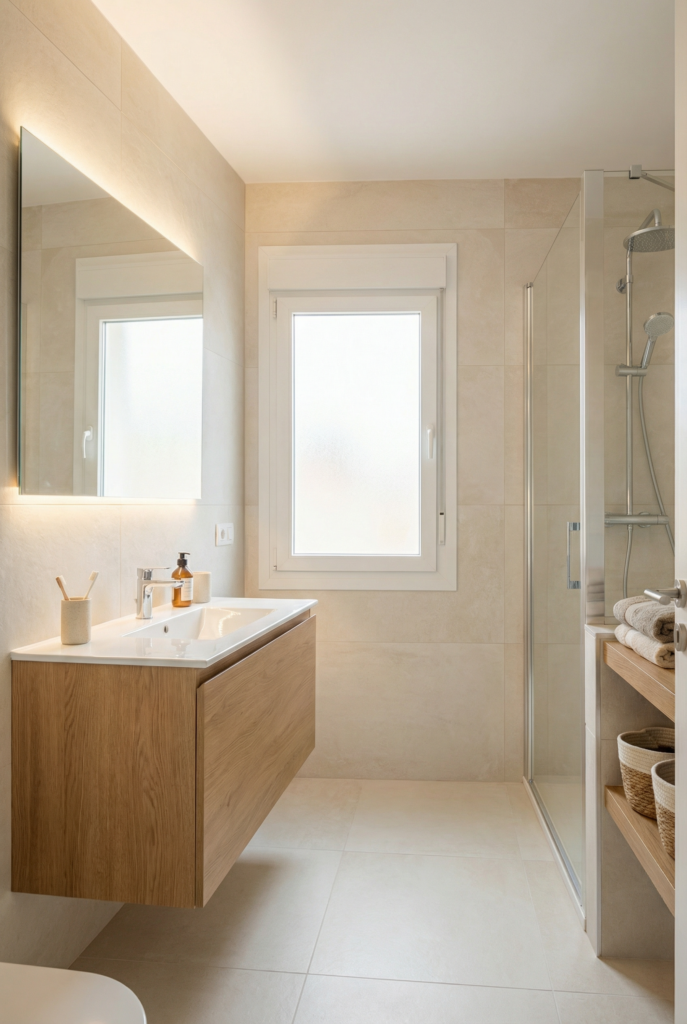
Light tiles make bathrooms feel larger and brighter. They tend to be forgiving with dust, especially if they’re warm-toned.
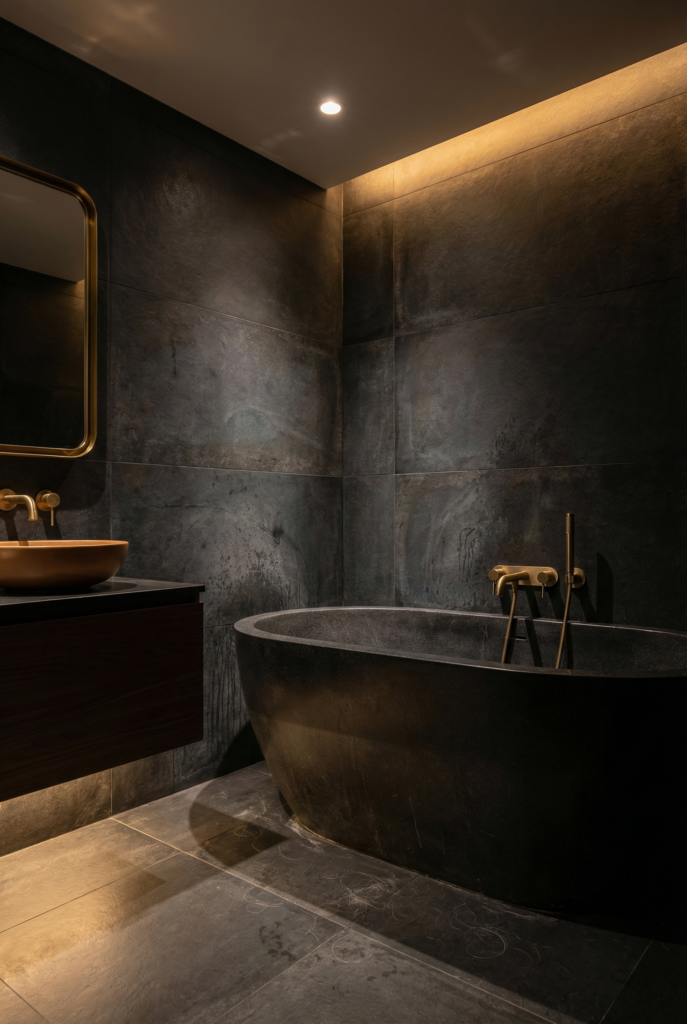
Dark tiles feel moody and dramatic, but they can show water spots, hair, and soap residue more clearly. That doesn’t mean dark is bad. It means dark is honest.
Lighting changes everything. North-facing bathrooms make cool tones feel colder. Warm bulbs can soften neutrals and keep them from feeling flat.
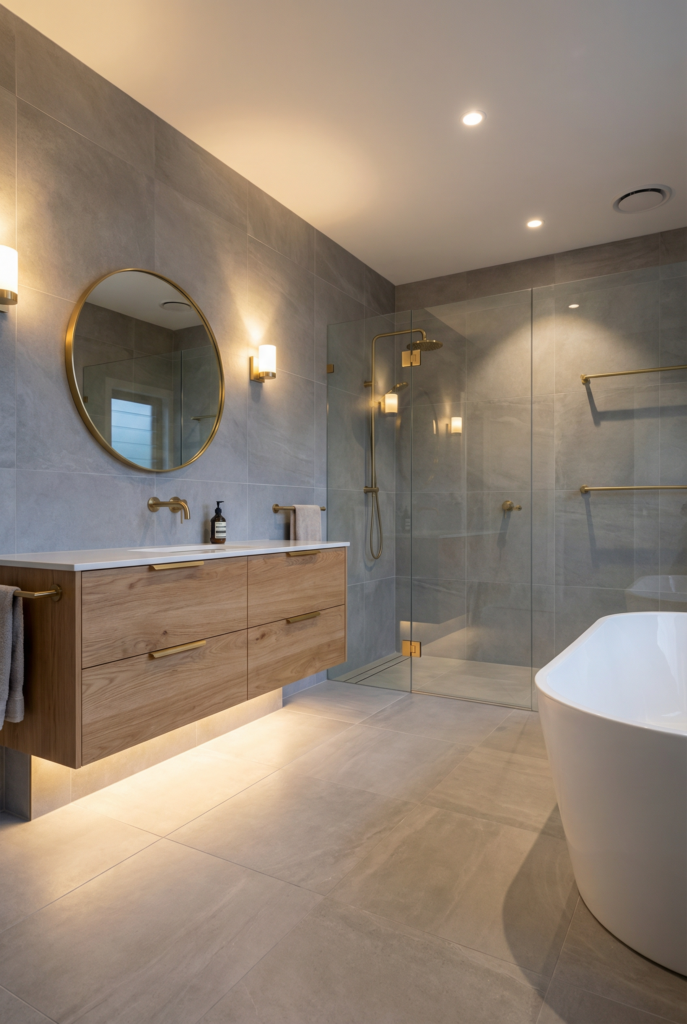
And grout color changes perception more than you expect. A white tile with bright white grout reads crisp. The same tile with warm gray grout reads softer. With charcoal grout it reads graphic and bold. Same tile. Totally different personality.
Timeless Palettes
Warm whites, soft beiges, stone-inspired neutrals. These work with changing bathroom fixtures and decor and age slowly.
They also give you flexibility if you’re the type who changes towels and art and hardware every time you get a new personality.
Trend Colors
Green, clay, charcoal, greige. Beautiful, but commit carefully. Trends date faster than materials.
One honest warning: cool gray tile without warm balance can feel sterile quickly. If you love cool tones, fine. Just add warmth somewhere on purpose. Wood tones. Brass. Warm lighting. Something that says “human lives here.”
Optional 2026 Bathroom Tile Trends (Inspiration, Not Rules)
If you care about what’s coming, here’s what’s sticking around. Not because it’s trendy, but because it’s livable.
- warm neutrals replacing icy whites
- textured surfaces that feel handmade
- subtle patterns over loud geometrics
- fewer grout lines with larger tiles
You do not need to follow trends to have a good bathroom. They’re optional seasoning, not the meal.
Matching Tiles to Decor Style (Practical Recipes)
This is the part where we get into quick, practical combos. Not rules, just reliable recipes that keep you from mixing ten ideas and ending up with a bathroom that feels like a tile showroom exploded.
And yes, I’m calling these bathroom tile ideas, because sometimes you just want to see the “if you like this style, do this” version.
Modern
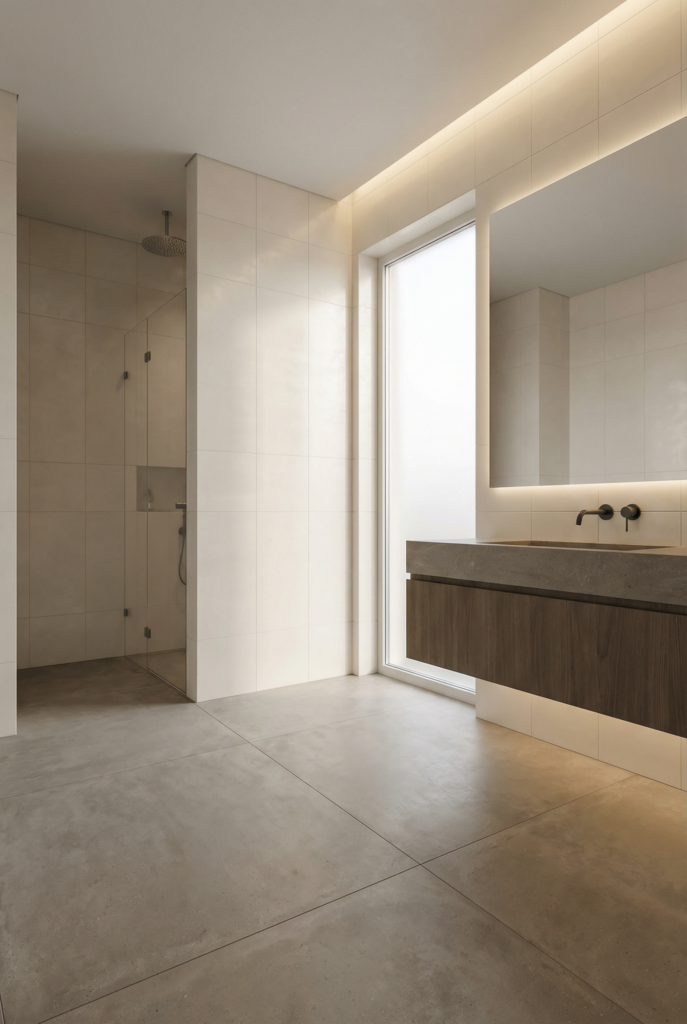
Floor: large-format porcelain, concrete-look or soft stone-look
Wall: simple porcelain in a clean shape
Finish: matte on floors, satin or gloss on walls
Mistake to avoid: too many competing patterns, especially if your vanity is already bold
Minimal
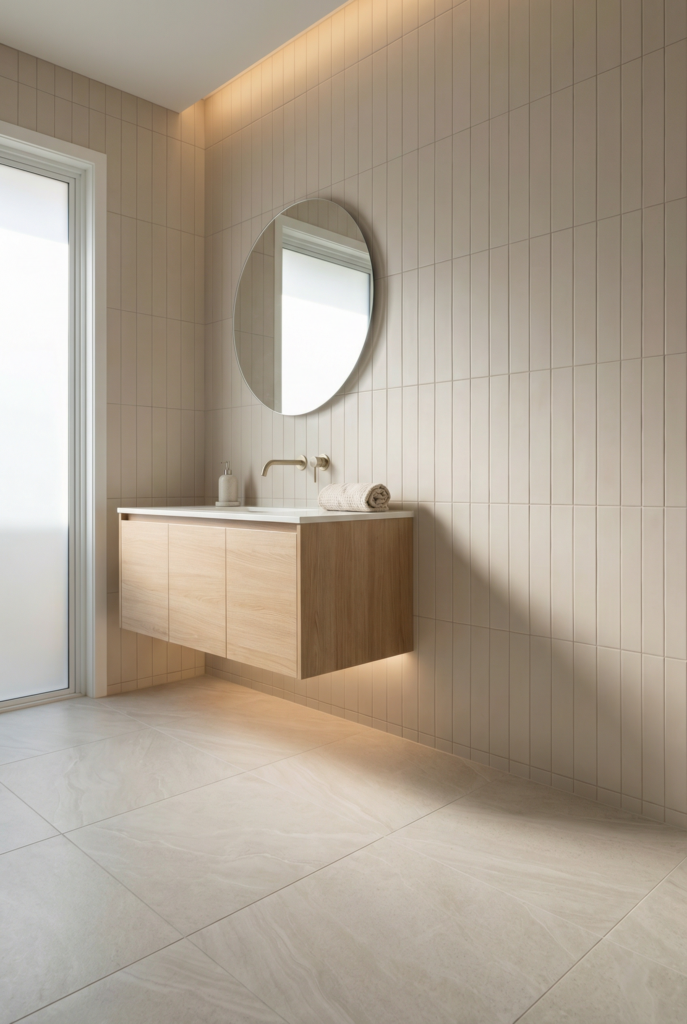
Floor: large-format matte porcelain in a light warm neutral
Wall: stacked rectangular tile with minimal grout contrast
Finish: matte or honed
Mistake to avoid: high-contrast grout everywhere, unless you want a graphic grid vibe on purpose
Spa or Japandi
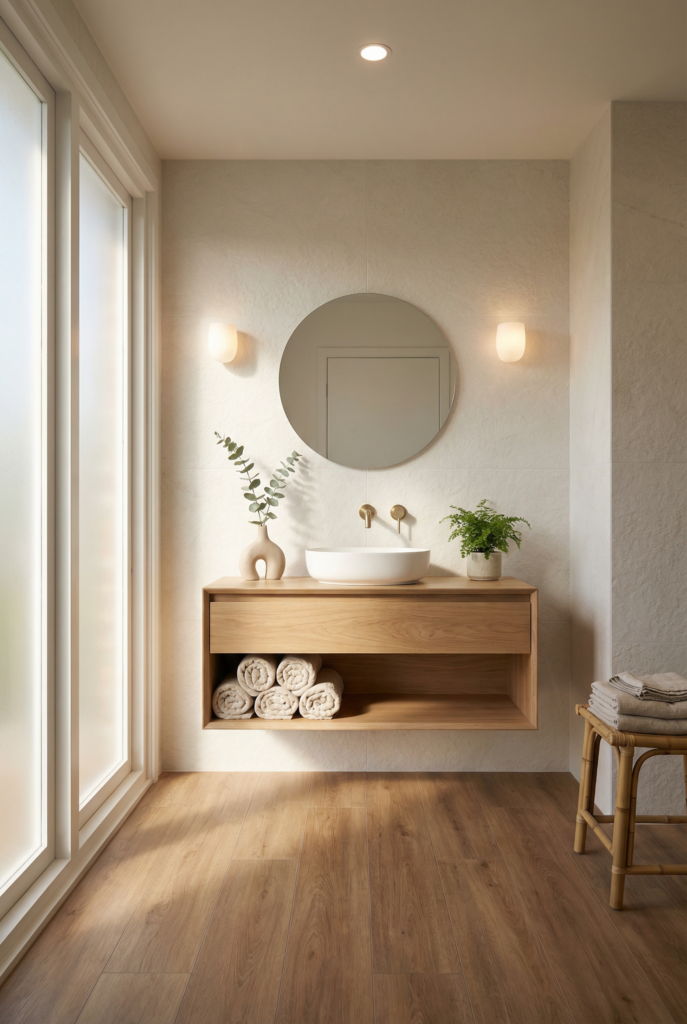
Floor: wood-look porcelain in a medium warm tone
Wall: warm stone-look porcelain or a soft off-white with texture
Finish: soft matte
Mistake to avoid: glossy everything. It starts to feel slippery, shiny, and a little hotel-lobby
Classic
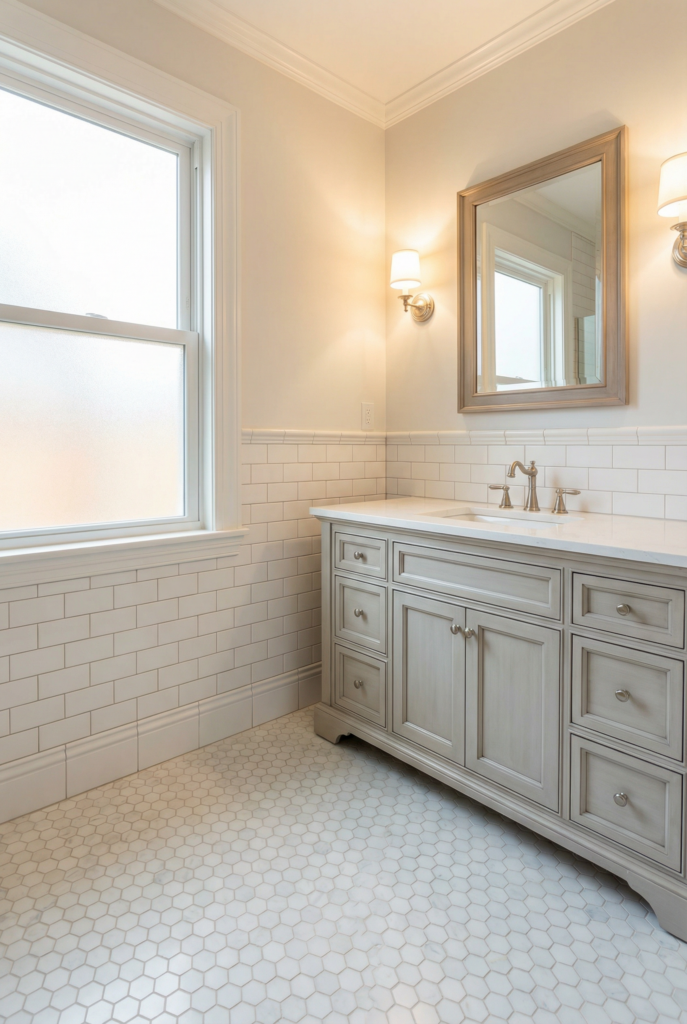
Floor: small-format hex in porcelain or marble-look porcelain
Wall: simple subway, not too trendy in proportion
Finish: satin or gloss on walls, matte on floors
Mistake to avoid: committing to a very specific “trend color” as your main tile, because classic bathrooms want longevity
Farmhouse
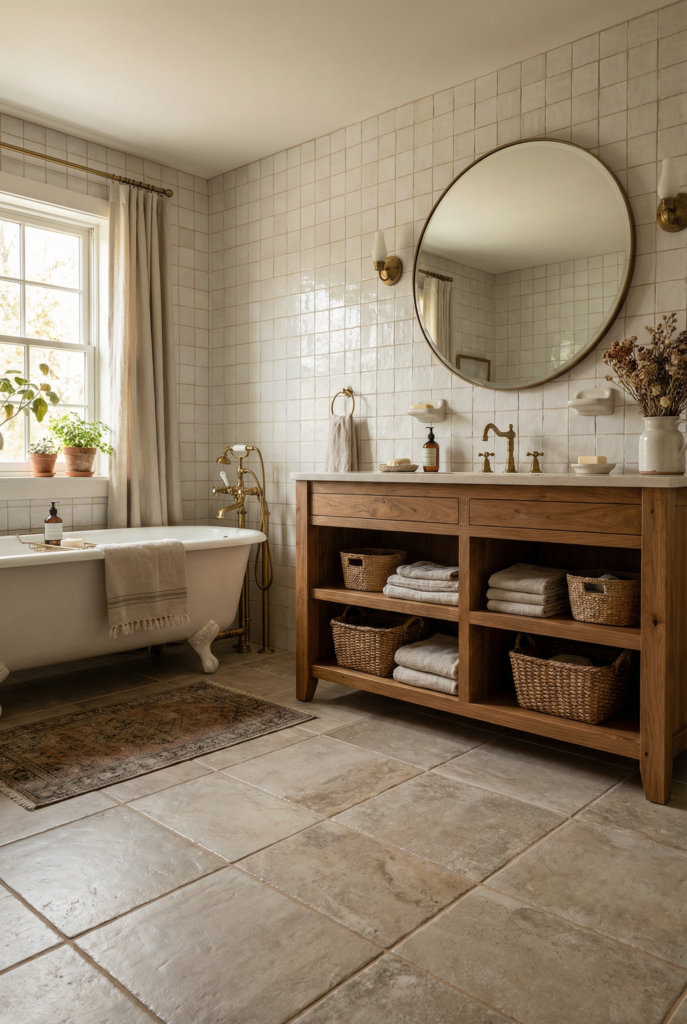
Floor: stone-look porcelain with some visual variation
Wall: handmade-look ceramic with a warm grout
Finish: matte or satin
Mistake to avoid: overly perfect tile plus stark black grout plus harsh lighting. It can read a little costume-y
Luxury Hotel
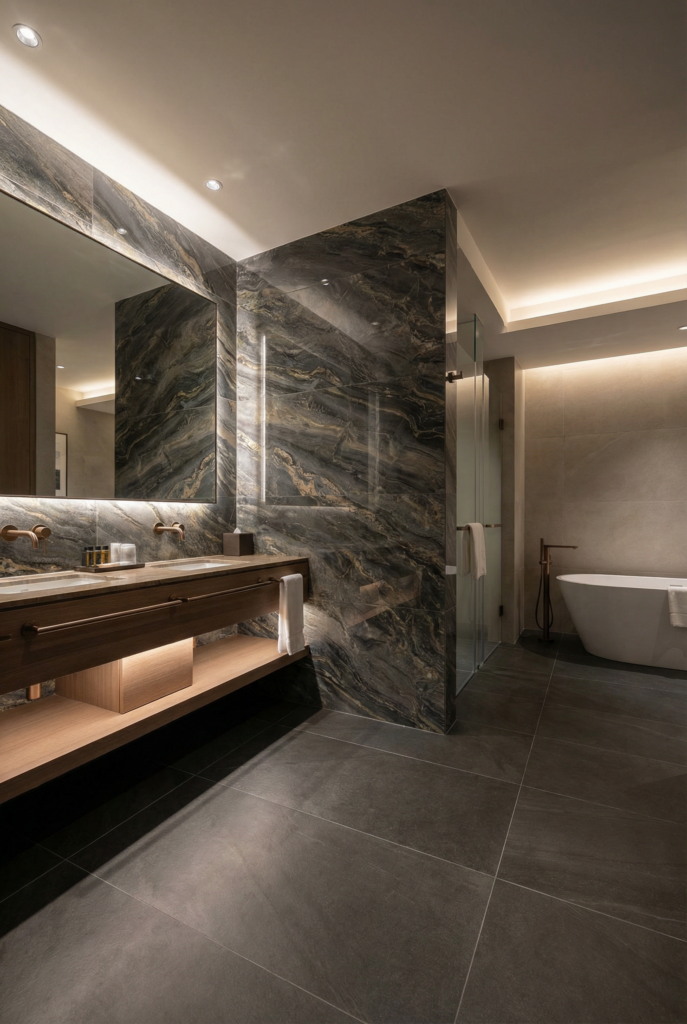
Floor: large-format porcelain that mimics a dramatic stone
Wall: big simple tile, possibly polished on walls only
Finish: polished walls, matte floors
Mistake to avoid: mixing multiple statement tiles. Pick one star and let everything else support it
Small Bathrooms
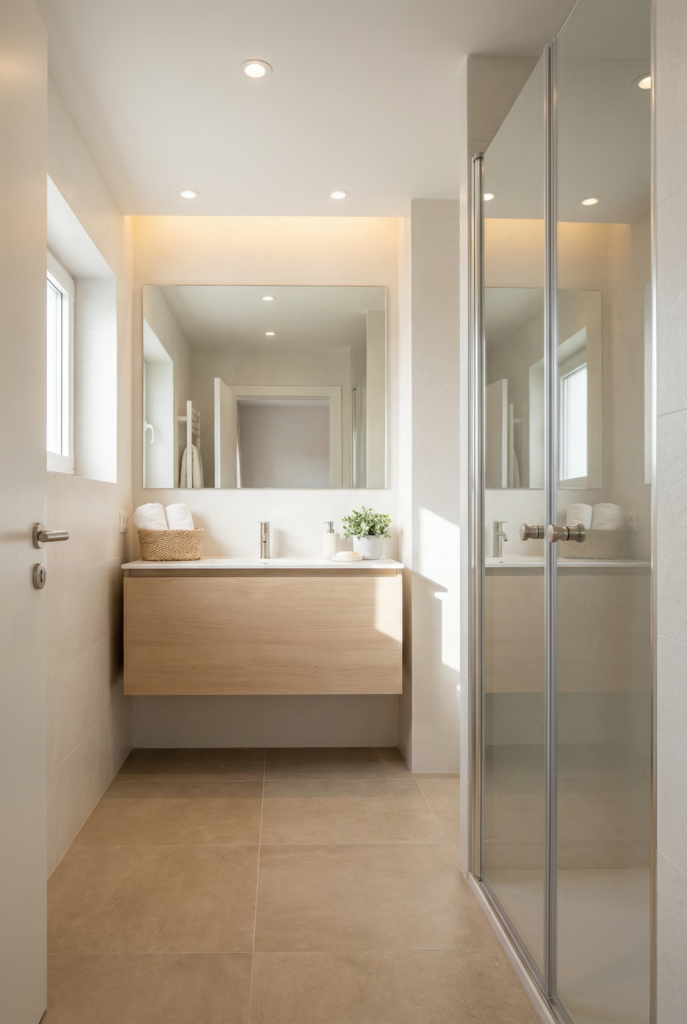
Floor: small-format porcelain for grip, or medium-format matte porcelain if you hate grout
Wall: light tile with a little texture or gentle sheen
Finish: satin walls, matte floors
Mistake to avoid: using a dark grout with a light tile everywhere. It visually chops the room into a grid
Tile vs LVP vs Laminate in Bathrooms (Because People Ask, and It’s Fair)
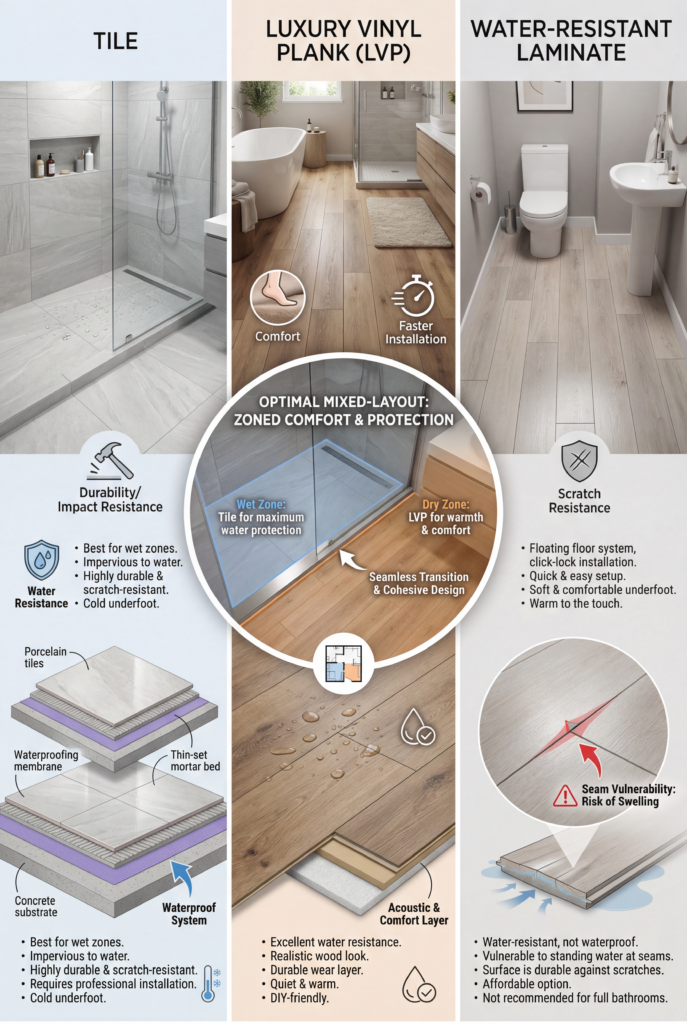
Okay. Not everyone wants tile everywhere, and I get it. Cold floors are real. Budget is real. Install time is real.
Tile: best in wet zones and showers. Most durable. Most waterproof when installed correctly with proper waterproofing behind it. Can be cold and hard underfoot, but it’s the long-game winner.
Luxury vinyl plank: great for main bathroom floors outside the shower, especially if you want warmth underfoot and a faster install. It’s water-resistant, but seams and edges matter. It’s not the material I’d use inside a shower.
Water-resistant laminate: can work in powder rooms or low-splash bathrooms, but it’s the riskiest in genuinely wet environments. “Water-resistant” is not “waterproof,” and if water gets into seams over time, you can end up with swelling.
If you want the safest mix, a lot of people do tile in the shower and something softer like LVP in the main floor area, depending on the layout. Just make sure transitions are planned so it doesn’t feel like two unrelated rooms.
The Golden Rules of Bathroom Tiling (Print This in Your Brain)
- Choose tile by location first, always
- Floors need traction, walls can be glossy
- Tile and grout aren’t waterproof, the system behind them is
- Grout color and type can make or break your cleaning life
- Avoid tiny sliver cuts, they look accidental
- Large tiles reduce grout but demand a flatter subfloor
- 1/3 offset is safer than 50% for many rectangular tiles
- Labor and complex layouts often cost more than the tile itself
FAQ
What is the best tile for a bathroom floor?
Porcelain is the safest choice for bathroom flooring because it’s dense, durable, and water-resistant. Choose a matte or textured finish for better traction and fewer visible water spots. If you want a warm look, wood-look porcelain is a smart option that still behaves like tile. Ceramic can work too if it’s floor-rated, but porcelain generally holds up better long-term.
What bathroom tile never goes out of style?
Simple, neutral porcelain in a classic layout tends to age the best. Warm whites, soft stone looks, and understated textures don’t fight your fixtures or your decor as your taste changes. The timeless part is less about one specific shape and more about choosing a calm base. You can always add personality with paint, art, or towels without ripping out tile.
What color tile is best for a bathroom?
The best color is the one that works with your lighting and doesn’t make you feel weird at 7 am. Warm neutrals are a safe long-term bet because they flatter skin tones and work with many finishes. Cool tones can work too, but they often need warm balance from lighting, wood tones, or hardware. Also remember grout color changes the whole read of the tile.
Are dark or light bathrooms more stylish in 2026?
Both are happening. Dark bathrooms feel dramatic and cocoon-like, and light bathrooms feel airy and classic. The more important question is what you want to maintain. Dark tile can show water spots and dust more easily, and glossy dark surfaces can be extra high-maintenance. Light tile is often more forgiving day-to-day.
What is the safest tile for a bathroom or shower floor?
Small-format matte or textured porcelain is the safest bet for shower floors because it gives you more grout lines for traction. Look for finishes described as matte, textured, or slip-resistant rather than polished. Glossy tile belongs on walls, not under wet feet. If you want a larger tile on the main floor, prioritize a finish with grip.
What is the 1/3 rule for tile layout?
It’s a guideline for rectangular tiles that helps reduce lippage. Many tiles have slight bowing, and a 50% offset lines up high points, which can make edges feel uneven. A 1/3 offset staggers the tile in a way that hides that bowing better. It’s not about style. It’s about avoiding the “why does this feel bumpy” problem.
Why is a 50% tile pattern not recommended?
Because many rectangular tiles aren’t perfectly flat, and a 50% offset pattern can exaggerate that. When the highest parts of two tiles meet, you get lippage, especially noticeable on floors. It can also catch light in a way that highlights uneven edges. Some tile types can handle it, but it’s often discouraged for a reason.
What are the golden rules of bathroom tiling?
Choose tile based on location and function first. Use matte or textured finishes on floors for traction, and save glossy finishes for walls. Plan your layout so cuts are balanced and you avoid slivers. Remember tile and grout aren’t waterproof, the system behind them is. And budget for labor, because patterns and mosaics cost more to install.
How do I plan my bathroom tile layout?
Start by choosing a focal wall and deciding where you want the eye to land first. Then find center lines and dry lay tiles so you can see where cuts will fall. Balance cuts on both sides rather than dumping tiny cuts into one corner. Avoid narrow slivers, they look accidental. Square the room early, especially in older houses that love to pretend they’re straight.
What bathroom tile trends are shaping 2026 design?
Warm neutrals, textured surfaces, subtle patterns, and fewer grout lines are the big themes. Think handmade-feeling finishes rather than perfectly flat glossy surfaces. Larger tiles are popular for a calmer look, but they require more prep work. Trends are optional though. A smart, livable tile choice beats a trendy one you’ll resent.
If you take nothing else from this, take the boring truth that saves you money and stress: tile isn’t just about how it looks today. It’s about how it behaves on your worst Tuesday. Wet hair on the floor. Toothpaste splatter. Someone forgetting to turn the fan on. You, in socks, regretting your choices.
Pick the tile that future-you won’t be mad at. That’s the actual win.