I’m walking you through the home decor trends in 2026 the way I actually experience them: half inspired, half side-eyeing my own living room, and fully obsessed with making a house feel better at 6 p.m. Expect warmer light, softer tech, bolder (but moodier) color, and the kind of “livable luxury” choices that survive kids, dogs, and my ongoing rug issues.
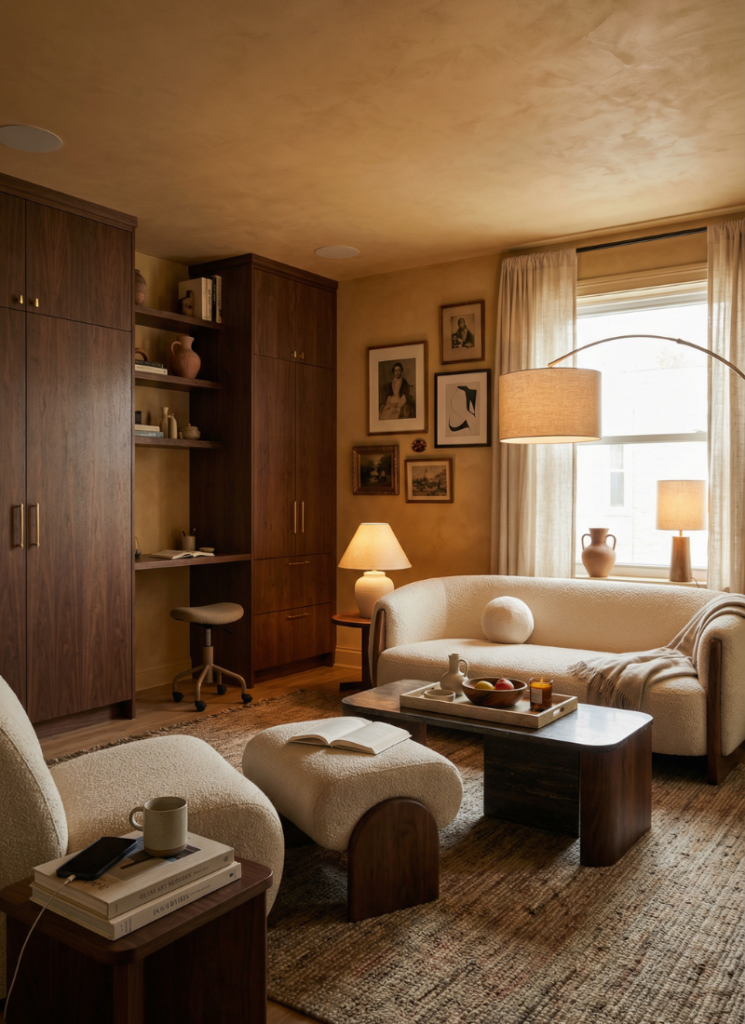
At 7:12 a.m. I was in the kitchen with a coffee that had no business being that full, staring at my living room like it had personally betrayed me.
The dog had already tunneled into the “decor” throw (so now it looks like a lumpy croissant), and the $38 thrifted lamp I was smug about? Flickering. Again.
But honestly, I felt kind of… excited. Because something has shifted. We’re not trying to make our homes look like sets anymore.
We’re trying to make them feel like places where our actual nervous systems can unclench. If you’ve been wondering where home decor trends in 2026 are headed, I think it’s less “one big look” and more “a bunch of small choices that make your life easier.”
Softer tech. More nature. More personality. More color for mood. More warmth, because we are tired.
2026 Home Decor Trends at a Glance
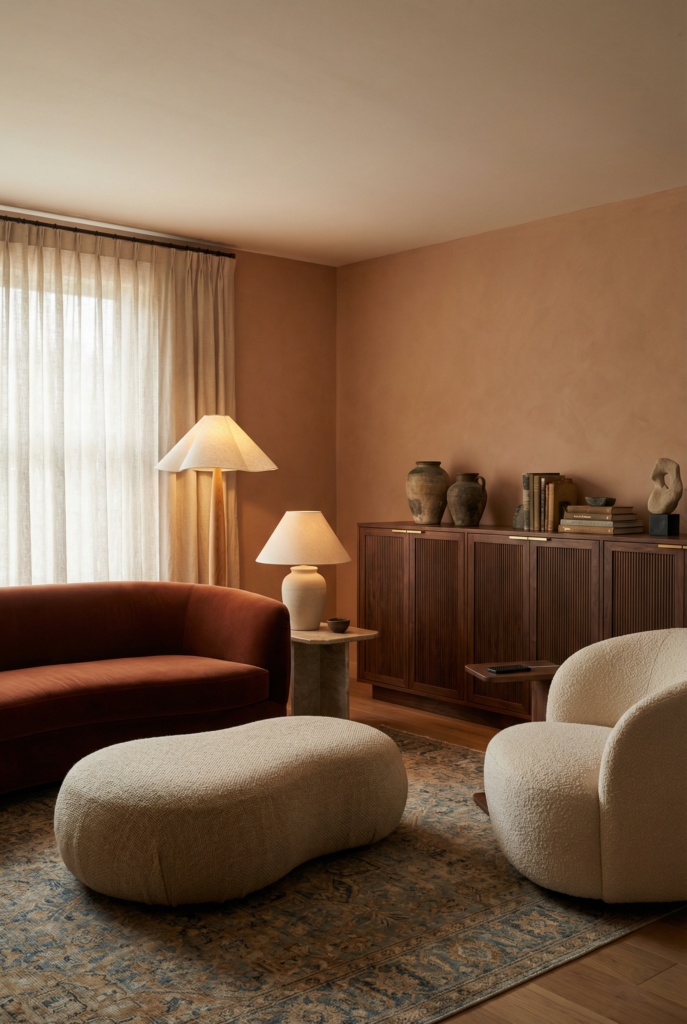
Quick scan version (for my fellow coffee-fueled overthinkers):
- Soft tech that disappears (timers, hidden charging)
- Warm, cozy lighting everywhere (lamps over overhead)
- Dark wood comeback + natural materials
- Curves + comfy sculptural furniture
- Hyper-personalized, collected interiors (no copy-paste)
- Color for mood (color drenching, warm undertones)
- Multi-functional rooms + lazy storage
- Vintage and secondhand as the “luxury flex”
- Wallpaper and texture that feels lived-in
- Livable luxury, not precious museum energy
Why 2026 Feels Like a Big Year for Decorating
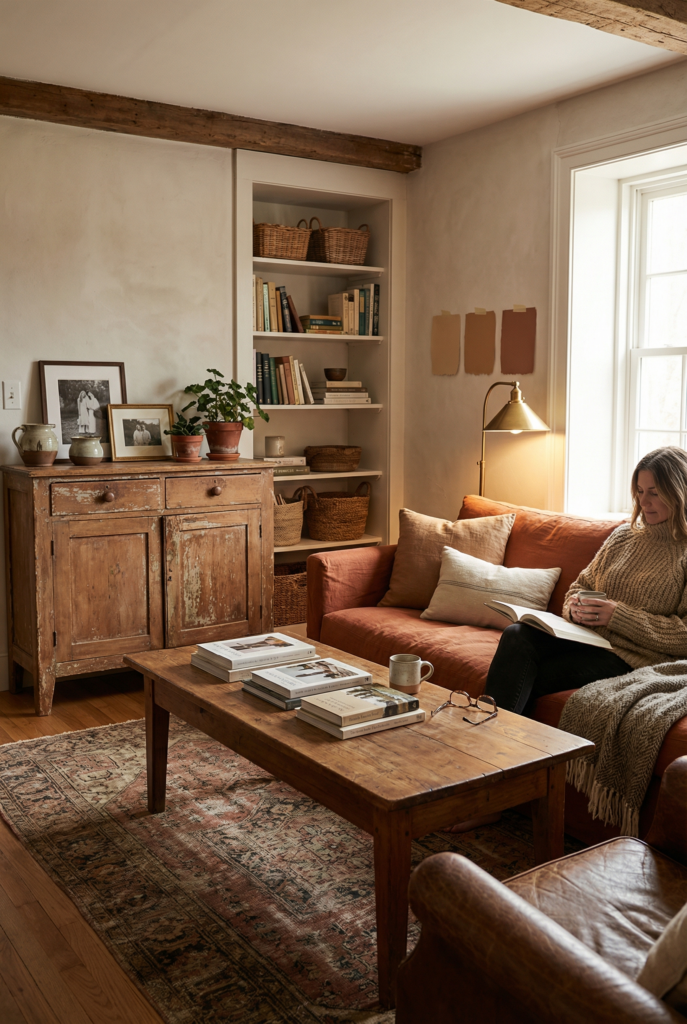
2026 feels like a big year because we’re designing around real routines instead of fantasy ones. We’re coming off a stretch where everything was either super minimal (so nothing could be messy) or aggressively styled (so the mess was just hidden in baskets), and now we’re craving rooms that can take a hit and still feel beautiful.
Bold take: we’re decorating for real life, not for strangers.
I’m noticing more people committing to slow design, which is basically permission to stop panic-buying and start living with choices. Like, I bought three $7 paint samples last month and taped them up for a week, and it was wildly helpful to see them at 9 a.m., 3 p.m., and under my sad lamp light at night.
The other big shift is values. We want things that last, we want less waste, and we want our spaces to feel personal. That’s why vintage furniture is back in a real way, not as a gimmick, but as a “this piece has already survived decades, it can survive my household” kind of flex.
Soft Tech Integration: the gadgets are finally learning manners
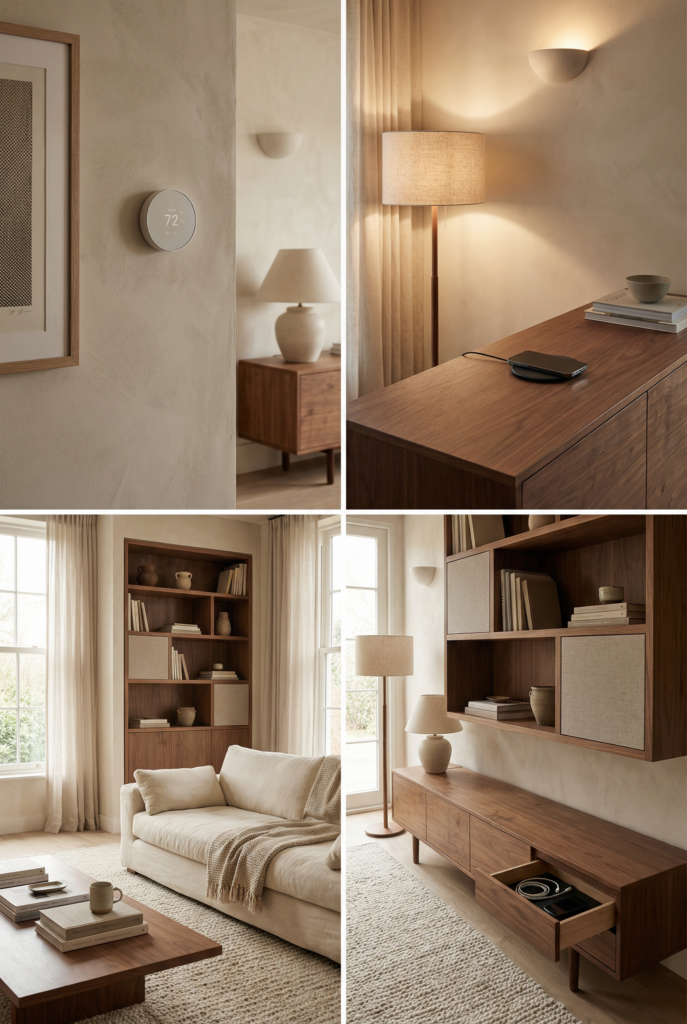
What this means in real life: This is just code for fewer cords, warmer light, and tech that doesn’t make you swear.
Soft tech integration is what happens when the “smart home” stops acting like a tech demo and starts acting like a polite roommate. The goal isn’t more screens. It’s fewer tiny irritations.
The best version of this trend is invisible.
Here’s what I mean, in plain home language:
- Lights that fade down automatically at 9:30 p.m.
- A thermostat you can adjust without an app scavenger hunt
- Sound that comes from the room, not a black puck on the table
- Charging that doesn’t look like a spaghetti crime scene
I’m also seeing more built-in, invisible charging, which is code for “I don’t want to see one more cord draped like it owns the place.”
Try it 3 ways
Try it for $0–$50: Put two lamps on plug-in timers in the living room.
Try it for $200–$800: Swap the main overhead fixture for a dimmable, softer one.
Try it if you’re renovating: Add outlets inside drawers or a hidden charging cubby in the entry.
What it looks like in a real room
- Entryway: hidden power strip + tray + lamp timer
- Bedroom: dimmable bedside lamps + no glowing chargers
- Living room: speaker tucked on a shelf, not the coffee table
Common mistake: buying “smart” stuff that adds friction.
Quick fix: start with lamp timers and stop there.
Organic Luxury: Nature-Inspired Materials and Softer Shapes
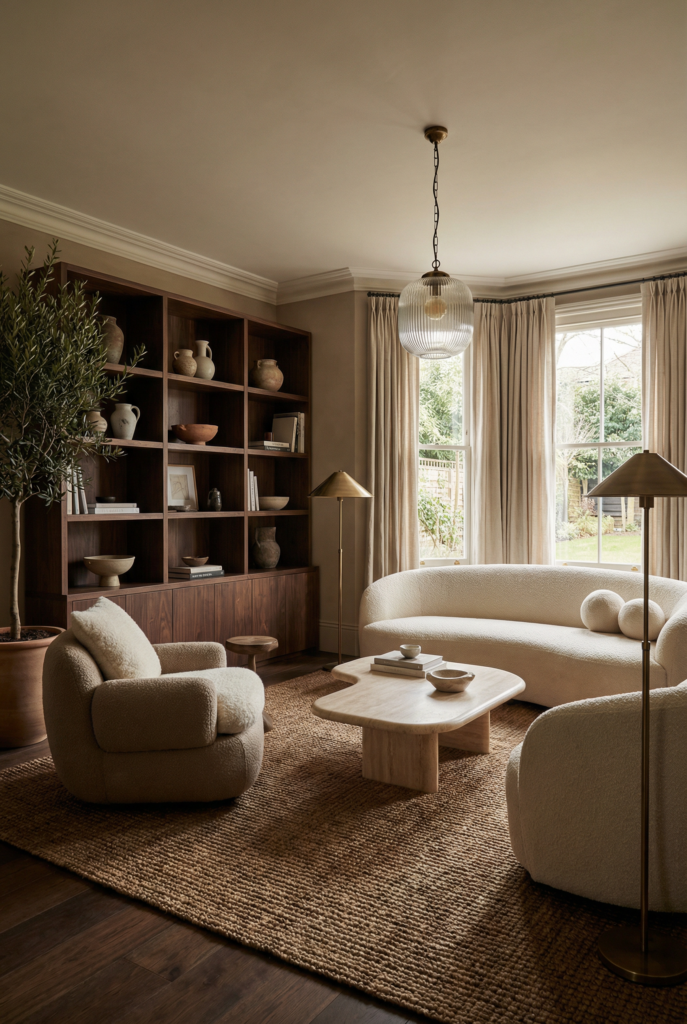
What this means in real life: This is just code for wood, stone, wool, and shapes that don’t poke you.
Organic luxury is basically biophilic design growing up and putting on a linen blazer. It’s still about bringing the outdoors in, but with fewer random baskets and more intentional natural materials: stone, clay, wool, real wood, the kinds of finishes that age nicely instead of peeling.
If it looks better with time, it’s winning in 2026.
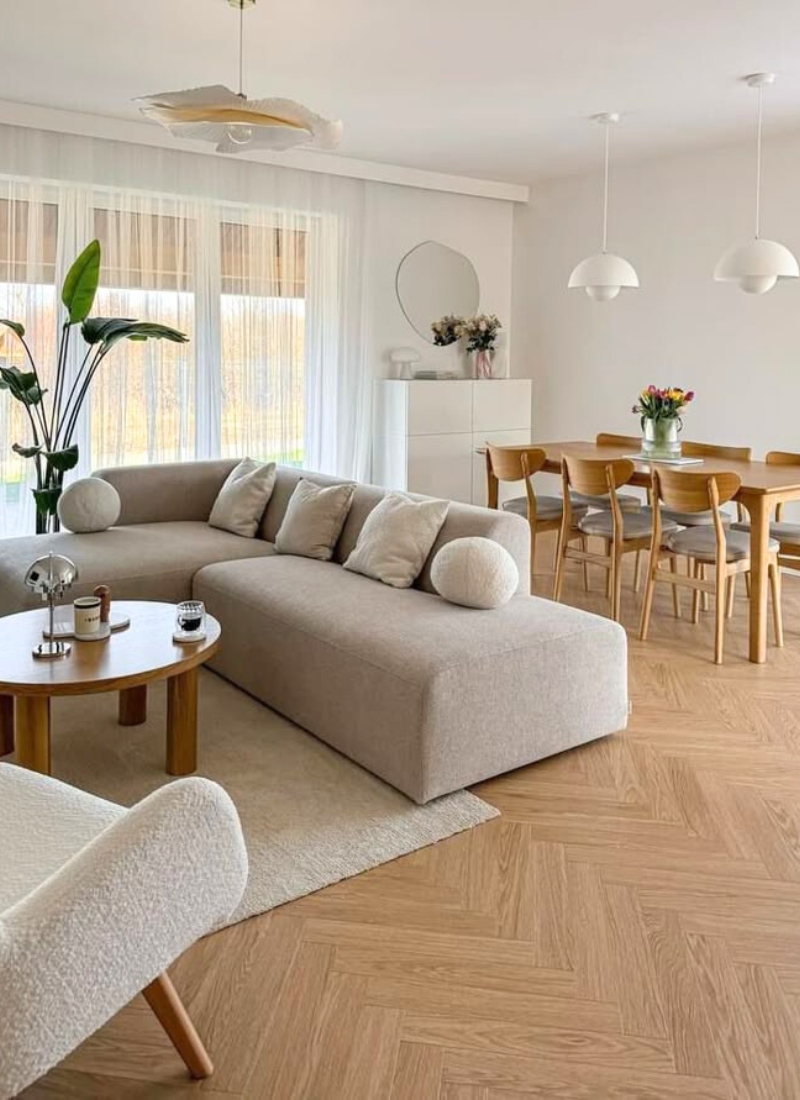
This is where dark wood is having a comeback, and I’m thrilled, because it makes a room feel grounded in two seconds. I’m also seeing more sculptural furniture that’s actually comfortable, like a chunky armchair with curves that makes you want to sit and stay, not just take a photo and flee.
Even the “fancy” stuff feels softer: rippled glass, rounded edges, imperfect ceramics. It scratches that itch for livable luxury without the fragile energy.
And honestly, a lot of it pairs perfectly with vintage and secondhand shopping, because older pieces already have that depth and patina that new stuff tries (and fails) to fake.
Try it 3 ways
Try it for $0–$50: Move one wood or clay object to where you’ll see it daily.
Try it for $200–$800: Add a dark wood coffee table or a wool rug in the living room.
Try it if you’re renovating: Use a natural stone look for counters or a textured tile backsplash.
What it looks like in a real room
- Living room: dark wood table + nubby throw + rounded chair
- Kitchen: wood cutting boards out on display (not hidden)
- Bedroom: linen bedding + a chunky ceramic lamp base
Common mistake: mixing “natural” textures but forgetting warmth.
Quick fix: add one warm metal or wood tone to balance the cool.
Hyper-Personalized Interiors: copy-paste is getting cringe

What this means in real life: This is just code for your house looking like you, not a showroom.
Hyper-personalized interiors are trending because copy-paste homes are starting to feel… boring.
In 2026, the rooms that feel freshest are the ones that feel like a person lives there, like you can tell what they love, what they collect, and what they’re still figuring out.
Your weird little objects are the point.
That can look like collected interiors where the “rules” are mostly vibes:
- A thrifted brass lamp next to a modern sofa
- A kid drawing framed like it’s a gallery piece
- A maximalist moment where you finally hang the gallery wall
- Something slightly odd you refuse to explain (my favorite category)
I’m also seeing little nods to an art deco revival, but done casually. One geometric mirror. One scalloped edge. Not a whole Great Gatsby reenactment.
The magic is in contrasting styles that feel earned, not random, and in authentic interiors that leave room for a little imperfection, like the fact that the “styled” tray still has a Lego on it.
Try it 3 ways
Try it for $0–$50: Frame one meaningful thing and hang it today, not “eventually.”
Try it for $200–$800: Buy one statement vintage piece for the living room, then stop.
Try it if you’re renovating: Build in one display niche or ledge for your collected stuff.
What it looks like in a real room
- Entryway: bowl for keys + one weird art print
- Living room: mixed metals + layered art + one thrift find
- Bedroom: personal photos + mismatched nightstands on purpose
Common mistake: trying to personalize with random clutter.
Quick fix: pick one “collection” category and give it one intentional home.
Color Psychology Takes Center Stage (aka paint is doing therapy now)
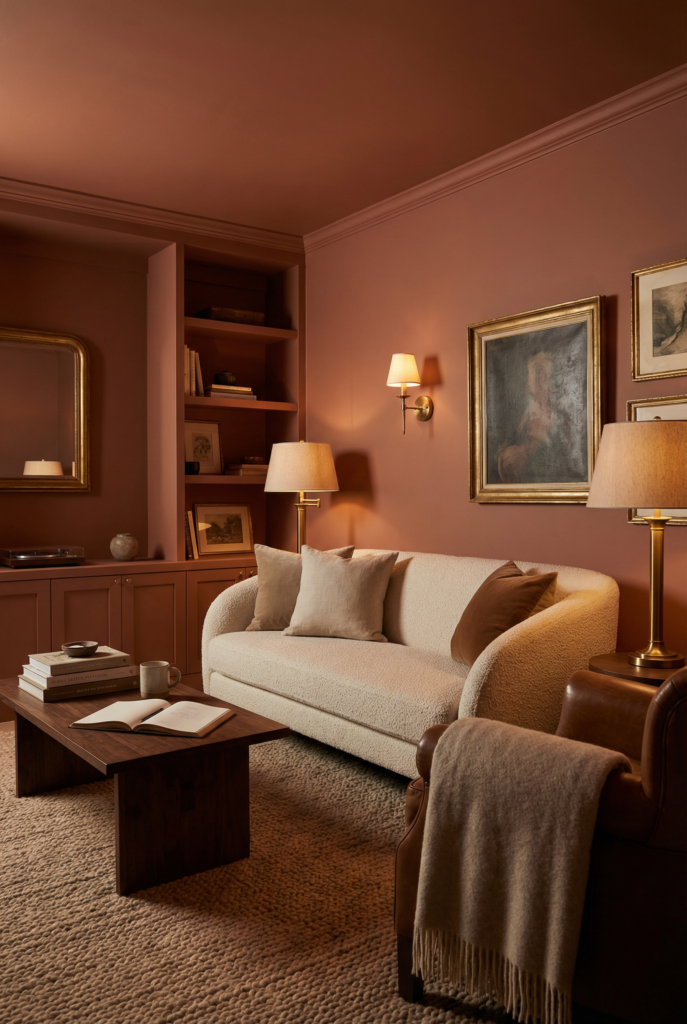
What this means in real life: This is just code for picking color based on mood, not fear.
Color psychology is taking center stage because we’re using paint to change how a room feels, not just how it photographs.
If you want calm, you choose tones that lower the volume and you repeat them so your eyes don’t ping-pong around.
If you want energy, you can go brighter, but you pick a shade that feels like you, not like a dare.
The trend is commitment, not chaos.
The biggest practical shift I’m seeing is people committing. Fewer half-painted accent walls. More full-room decisions that actually work. Color drenching fits here when it’s done thoughtfully, because wrapping walls, trim, and even the ceiling in one tone can make a room feel bigger and quieter at the same time.
Moody color palettes are also sticking around, especially in rooms that are meant to feel like a hug at night. Think deep jewel tones in a den, a powder room, or a bedroom where you want the outside world to stop yelling at you for eight hours.
If you’re going darker, here’s what keeps it from feeling like a cave:
- Softer bulbs (not icy bright)
- Brass or warm metal accents instead of all chrome
- One lighter element: art, a rug, or a pale sofa
- Texture, so it feels layered not flat
Wallpaper trends are shifting in the same direction, away from “statement wall for attention” and toward patterns that feel collected. Softer murals. Quiet geometrics. Textured prints that almost read like fabric.
Try it 3 ways
Try it for $0–$50: Switch to warmer bulbs and add one soft shade or pillow color.
Try it for $200–$800: Paint one small room or hallway in a confident warm tone.
Try it if you’re renovating: Color drench a room with matching trim and ceiling.
What it looks like in a real room
- Living room: warm bulbs + two lamps + deep-toned throw pillows
- Bedroom: moody paint + brass lamp + light bedding
- Entryway: wallpaper + a warm runner + tiny lamp
Common mistake: going bold but forgetting lighting.
Quick fix: make the light warm first, then choose the paint.
Multi-Functional Rooms are the New Normal

What this means in real life: This is just code for one room doing five jobs, calmly.
Multi-functional rooms are the new normal because most of us do not have a spare room for every version of ourselves.
One space has to be a living room, a movie room, a play zone, a work corner, and sometimes the place you eat cereal standing up because you’re late.
The goal is a room that recovers quickly.
In 2026, the smartest rooms are the ones that admit this and design for it. That means smart storage solutions that are easy in real time, not just pretty in photos:
- Drawers you can open with one hand
- Baskets that aren’t so deep everything disappears
- Closed storage for the stuff you don’t want to stare at
- A “drop zone” that doesn’t become a doom pile by Tuesday
Family-friendly design is also getting more honest, like choosing performance fabrics, rounded corners, and a rug that forgives juice spills without making you spiral.
My current rule is: if it takes more than 30 seconds to put away, it won’t happen on a weekday. So I’m building in “lazy storage” on purpose, because future me deserves mercy.
Try it 3 ways
Try it for $0–$50: Add one basket by the sofa for nightly reset stuff.
Try it for $200–$800: Get a closed storage credenza for toys, cords, and chaos.
Try it if you’re renovating: Build banquette seating with storage in the kitchen or dining area.
What it looks like in a real room
- Living room: storage ottoman + tray + basket for remotes
- Kitchen: hooks + catchall bowl + bin for school papers
- Bedroom: bench with storage + hamper that actually fits the corner
Common mistake: buying storage that’s too complicated to use.
Quick fix: choose “open toss” storage first, then refine later.
The Return of Warm, Cozy Spaces (and I am personally relieved)
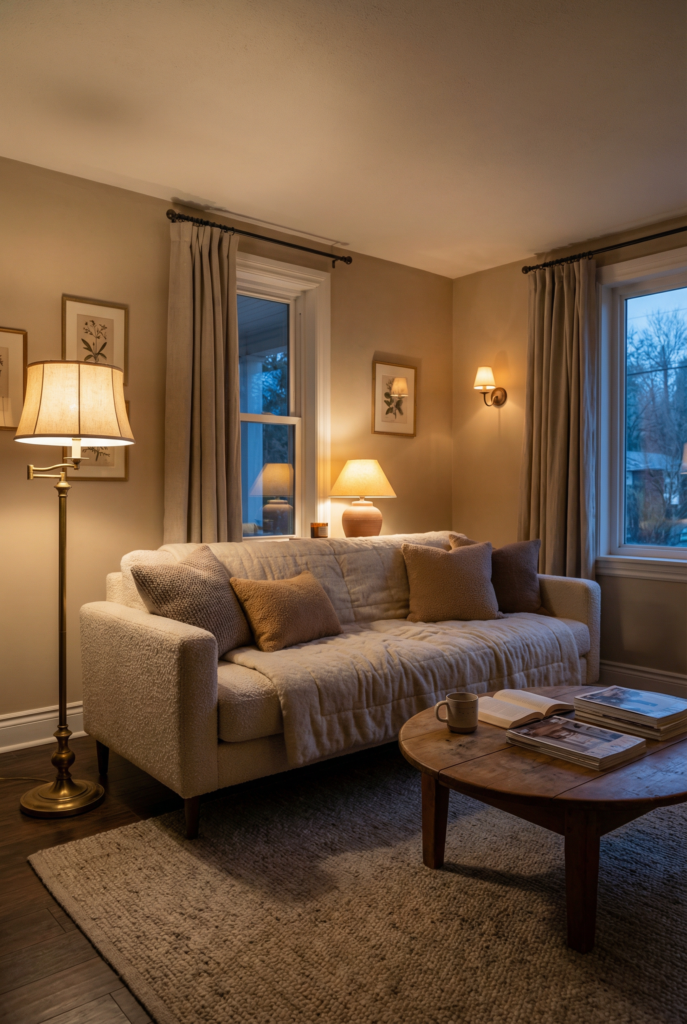
This is just code for softer light, softer textures, and less icy-shiny energy.
Warm, cozy spaces are coming back because we’re over the cold, shiny look that makes you feel like you can’t exhale in your own house. 2026 is leaning hard into warmth and comfort, and the fastest path there is lighting.
Cozy is not a style. It’s a nervous system decision.
Add more than one light source. Use warmer bulbs (I like the kind that makes your skin look alive). If you can, put lamps on a timer so the room greets you instead of glaring at you.
Then you layer texture. Textured fabrics are doing the heavy lifting right now: nubby upholstery, knit throws that look slightly rumpled, and pillows that aren’t just smooth rectangles.
Even adding one big, soft thing, like a quilt folded on the sofa, changes how a room feels at 8 p.m. It’s not fancy. It’s just humane.
Try it 3 ways
Try it for $0–$50: Add one warm bulb swap and one thrifted lamp shade.
Try it for $200–$800: Replace the overhead “glare” fixture and add a second lamp.
Try it if you’re renovating: Add layered lighting, sconces, and dimmers in every main room.
What it looks like in a real room
- Living room: two lamps + warm bulbs + chunky throw
- Bedroom: soft bedside lamps + textured bedding + dimmer
- Entryway: small lamp + runner rug + hooks that feel intentional
Common mistake: trying to do cozy with just a beige paint color.
Quick fix: cozy starts with lighting, then texture, then color.
Vintage and Slow Design: the luxury flex that saves you money (sometimes)
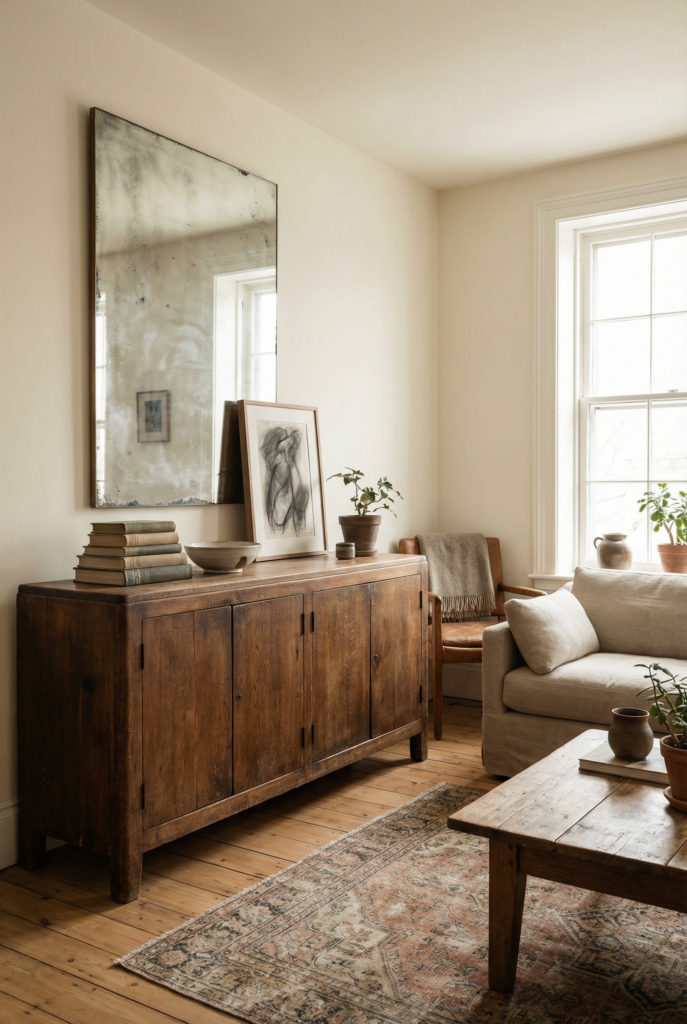
What this means in real life: This is just code for buying fewer things, better things, and letting them stick around.
This is the part of 2026 that feels the most grown-up and the most rebellious at the same time.
Vintage and slow design are trending because we’re tired of buying a thing, assembling a thing, hating the thing, and then storing the thing in a closet of regret.
The new flex is a piece with a past and a future.
I’m seeing more people mixing in vintage furniture not as a quirky accent, but as the foundation. A real wood dresser that weighs approximately as much as a small car.
An old mirror with slightly cloudy glass that makes you look like you’re in a movie. Dining chairs that have survived 40 years of dinners and still look cool.
And yes, this trend can be practical. Vintage often means better materials. More character. And less panic about every little scuff. Which, in my house, is important, because scuffs appear like they’re being manufactured overnight.
Try it 3 ways
Try it for $0–$50: Shop your house and move one “good” piece to a better spot.
Try it for $200–$800: Buy one vintage anchor piece like a dresser or coffee table.
Try it if you’re renovating: Design around one heirloom or vintage piece, then match everything to it.
What it looks like in a real room
- Bedroom: vintage dresser + new lamp + modern art
- Living room: secondhand coffee table + newer sofa + mixed pillows
- Entryway: old bench + hooks + tray for keys
Common mistake: buying vintage randomly without checking scale.
Quick fix: measure once with a tape, once with painter’s tape on the floor.
So What I’m Actually Doing in my Own House this Year
If I had to sum up 2026 in one sentence, it’s this: we’re decorating for how we want to feel, and we’re finally letting that be the point.
Practical is officially pretty again.
Call it emotional design. Call it survival. Call it “I can’t handle another room that looks pretty but functions badly.” I’m choosing fewer things, and choosing them on purpose.
I’m keeping the tech that genuinely helps (timers on lamps, a speaker that doesn’t yell at me), and I’m skipping anything that adds friction.
The one “smart” thing I will defend with my whole chest is our floor heating setup: we’ve got a thermostat in every room that controls its own underfloor heating zone, and when any room calls for heat, the controller opens that zone and kicks the pump on as needed.
And because it’s on Wi-Fi, I can tweak it from my phone, which means the bathroom can be toasty without turning the whole house into a sauna. I can also nudge the bedroom cooler at night while I’m already horizontal in bed (the dream). It’s not flashy, but it’s the kind of comfort you feel in your bones at 6:40 a.m. when you step onto warm floor and briefly believe you’re a person who has it together.
I’m also letting my rooms get more personal, which means the weird little objects stay, the thrift finds get a moment, and the “perfect” styling can take a nap. And I’m doubling down on warmth, because I want my house to feel good at 6 p.m. when everyone is hungry and cranky, not just at noon when the sunlight is flattering.
Also, yes, the $38 lamp is still flickering. I’m ignoring it for today. That is my design philosophy.
If you only do 3 things in 2026
If your brain is like “cute, but I need actionable,” here you go. This is the do-it-this-week version.
- Replace bulbs and add a second lamp. Put it where you sit at night, not where it looks cute at noon.
- Add one warm natural material. A dark wood tray, a wool throw, a clay lamp base, anything you’ll touch.
- Create one lazy storage fix that takes under 30 seconds. Basket by the sofa, tray by the door, closed bin in the kitchen. Done.
FAQs I’d actually answer without sighing
What major decorating trend is on its way out?
The overly sterile, showroom-perfect space that doesn’t allow for living is fading. Minimal isn’t dead. It just needs to feel human.
Are sectionals still in style in 2026?
Yes, because they’re practical, and practicality is having a moment. The “trend” part is choosing one that fits your room, not a giant blob that eats the space.
What is the 60 30 10 rule in decorating?
It’s a simple balance guideline: 60% main color, 30% secondary, 10% accent. It’s not a law, it’s training wheels.
How many colors should a living room have?
Two to three main colors plus a couple accents is plenty. The secret is repetition across paint, textiles, and art so it feels intentional.
What is the 3-5-7 rule in decorating?
It’s a styling guideline that says odd-number groupings often look more natural. I use it on shelves, then real life ruins it immediately, and somehow it still works.