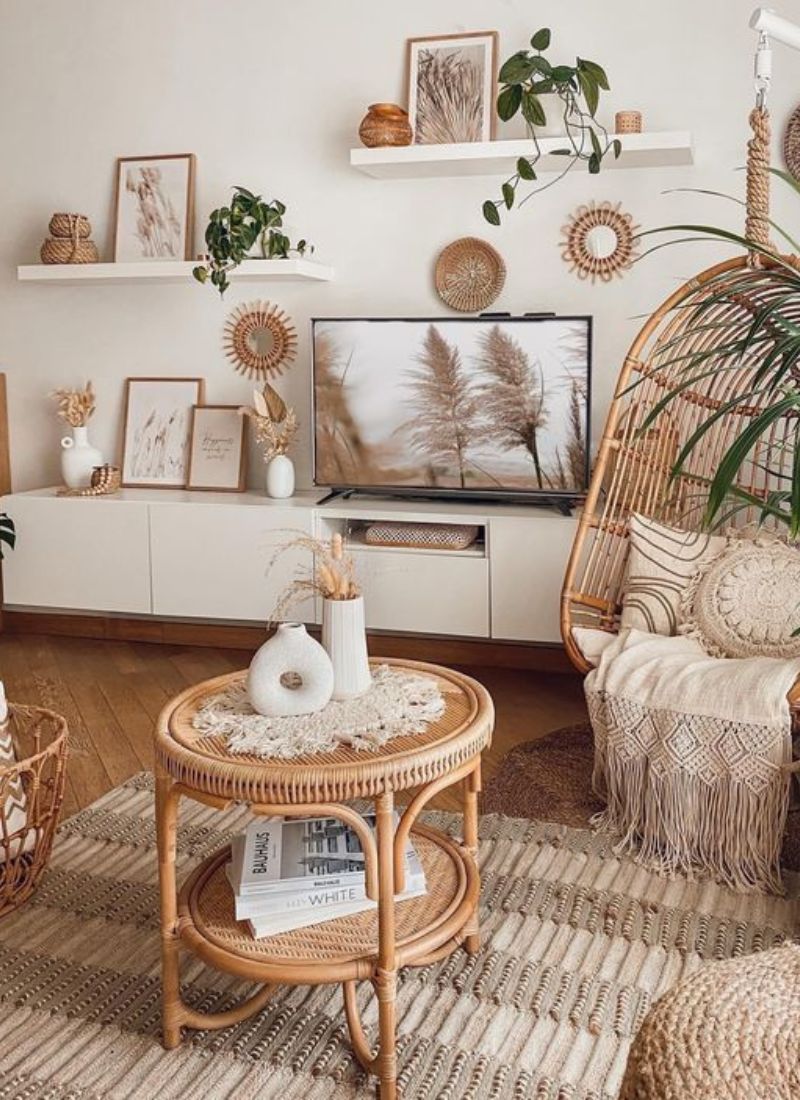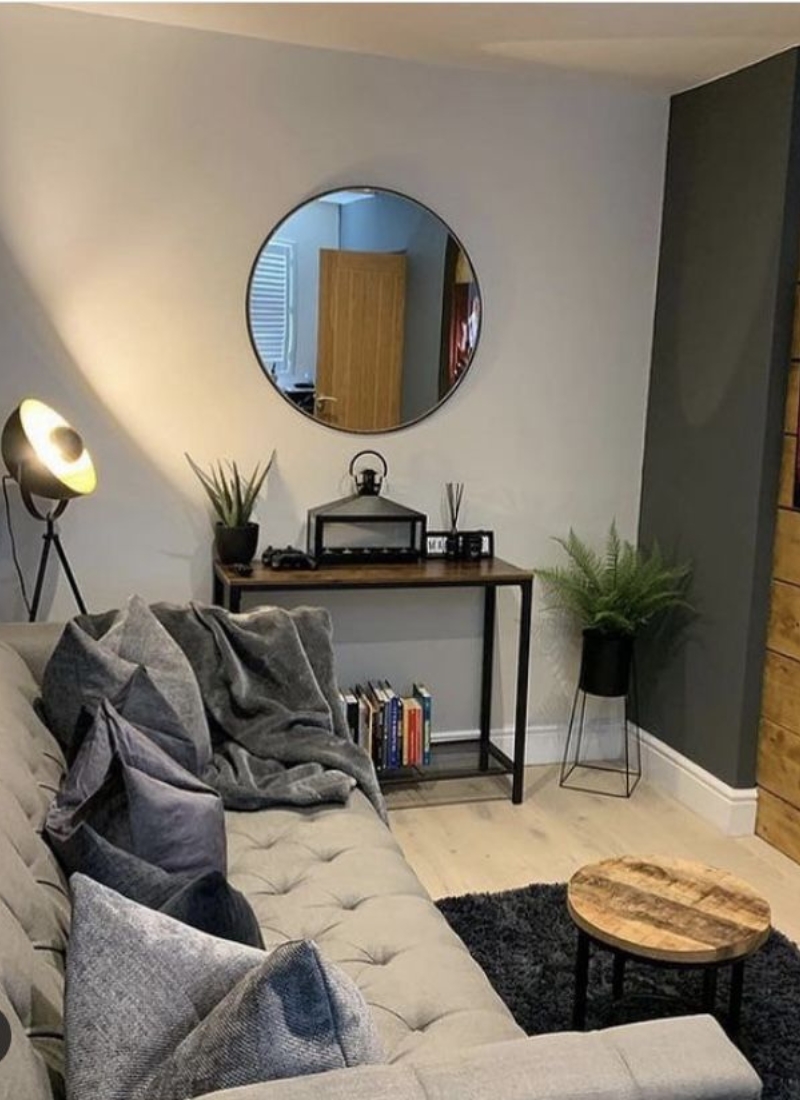
Here’s the thing: visual noise becomes mental noise. You sit down to do one simple task, and your brain is like, “Before we do that, can we panic about the ten unrelated objects in our peripheral vision?”
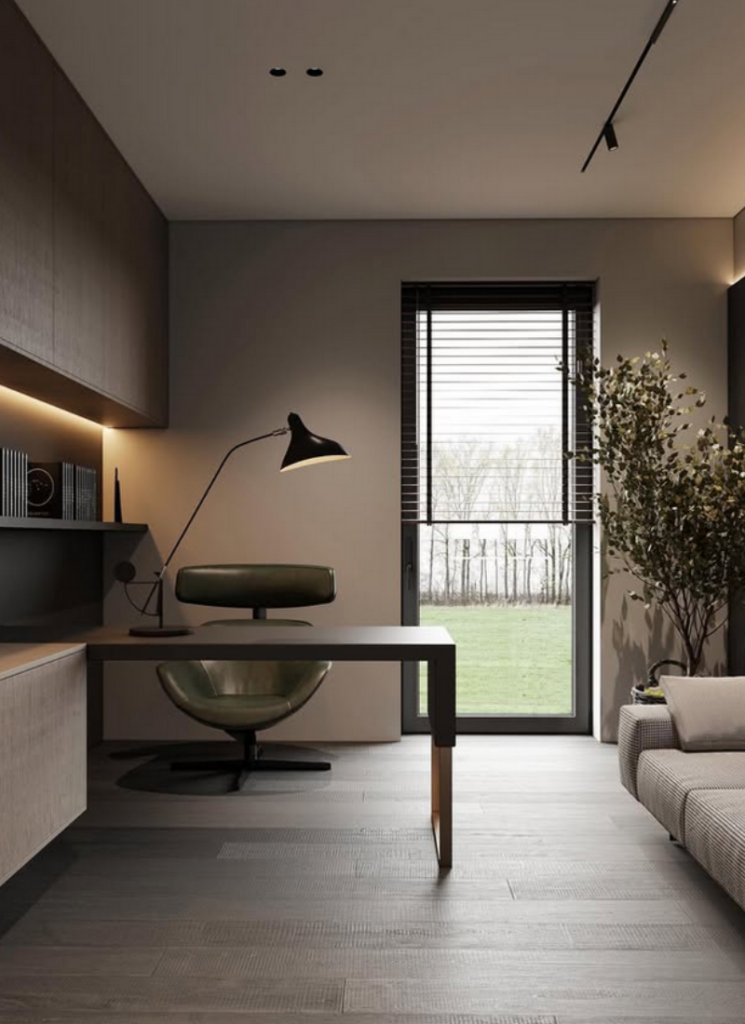
So today we’re doing zen office decor in the most realistic way possible.
Not a full renovation, not a Pinterest fantasy where you apparently never own paper, and not a situation where you buy seventeen matching accessories just to feel calm.
We’re going to use a simple Zen framework that works whether you’re trying to set up a home office, a shared corner of your dining room, or a cubicle with that one overhead light that makes everyone look haunted.
What Zen Office Decor Actually Means
Zen, in decor terms, is less about a specific look and more about a feeling: calm, clear, intentional. It’s the difference between sitting down and immediately starting, versus sitting down and immediately rearranging.
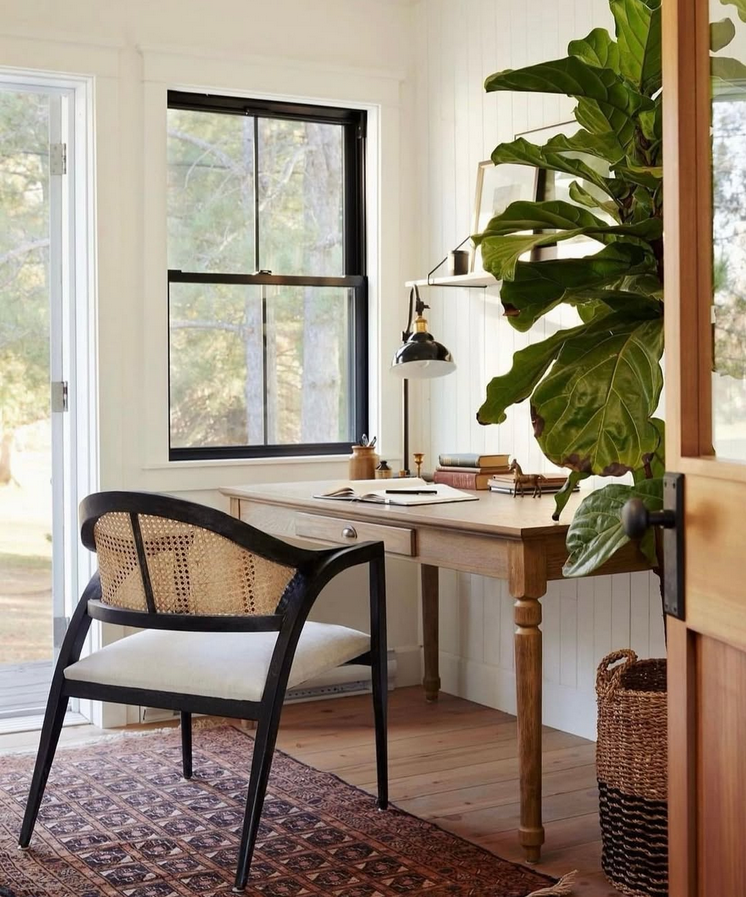
I think the most useful way to picture zen-inspired design is this: your space is edited, your materials are natural, your light is soft, and your “stuff” has a home. You are not fighting your desk all day.
The 3 signals of a Zen workspace: calm, clear, intentional
Calm means your eyes are not ping-ponging around the room. The palette isn’t loud, and the surfaces are not visually busy.
Clear means you can see the workspace you’re supposed to work on. You’re not constantly shifting piles around like you’re playing a game of desk Jenga.
Intentional means the things that are out have a job. Functional, emotional, or both. A pen cup because you use pens. A plant because it makes you feel like a better version of yourself. A small bowl that catches paper clips so they don’t migrate into the void.
Also, I’m going to say this gently: intentional does not mean everything has to match. It means nothing is accidentally screaming.
Minimal Doesn’t Mean Empty: It Means Edited
A minimalist office can still be cozy. The goal is not empty. The goal is “not distracting.”
If you’re trying to create a calming workspace, you’re not subtracting personality. You’re subtracting the things that irritate your nervous system on a low level all day. Like the random receipts. The dried-up markers. The mail pile that keeps whispering “responsibilities.”
Do this first: a 10-minute visual detox
Before you buy anything, do a quick reset. This is the step that makes everything else work.
Set a timer for ten minutes. This is important because it keeps you from spiraling into “I’m reorganizing every drawer in my house at 9:30 pm.” We’re not doing that today.
Grab a tote bag, a paper grocery bag, a laundry basket. This is your temporary chaos container.
Clear surfaces and Remove the “maybe” pile with quick triage
Now clear your desk surface and sort fast:
- Keep on desk: daily-use tools only
- Keep but not visible: important, but not pretty or not daily
- Relocate: this belongs somewhere else
- Trash or recycle: obvious
- Decide later: the “maybe pile” that does not get to live on the desk
You are not making permanent decisions about everything. You are creating immediate breathing room.
This is the part where you will find something weird. Last time I did this, I found a single sock (why), a tiny Allen key (from what), and a sticky note that said “CALL” with absolutely no context. Desk archaeology is humbling.
Hidden Storage Strategy: boxes, drawers, trays
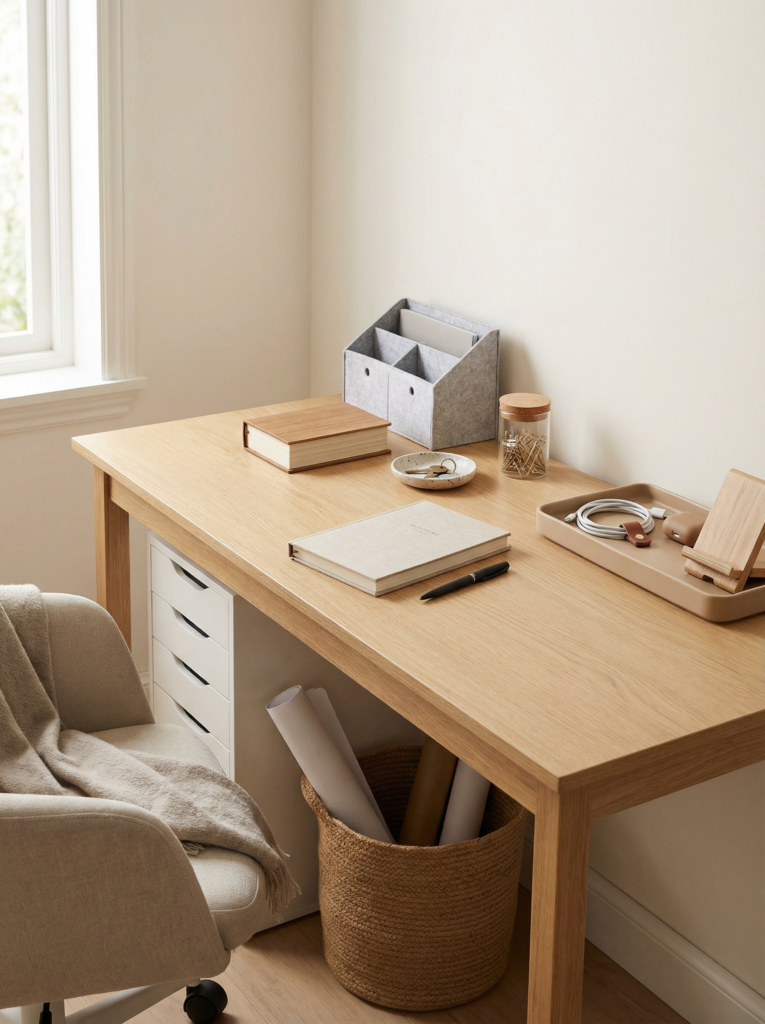
Now that your surface is less chaotic, set up hidden storage so it stays that way.
If you have drawers, amazing. If you don’t, you can fake drawers with a lidded box, a basket, or a slim desktop organizer with closed compartments.
My personal hill to die on is the tray. A tray turns scattered objects into “a contained moment.” Put your daily notebook and pen on it. Put your charging stuff on it. Suddenly it looks styled instead of messy, even if you are still technically messy.
This is the difference between minimal clutter design and “I’m pretending I don’t own anything.”
The 3-Zone Zen Desk Layout (my favorite sanity saver)
If you want your desk to stay calm, it needs zones. Not because you’re rigid, but because your desk is a magnet for random objects.
I use three zones: Focus, Flow, Hide.
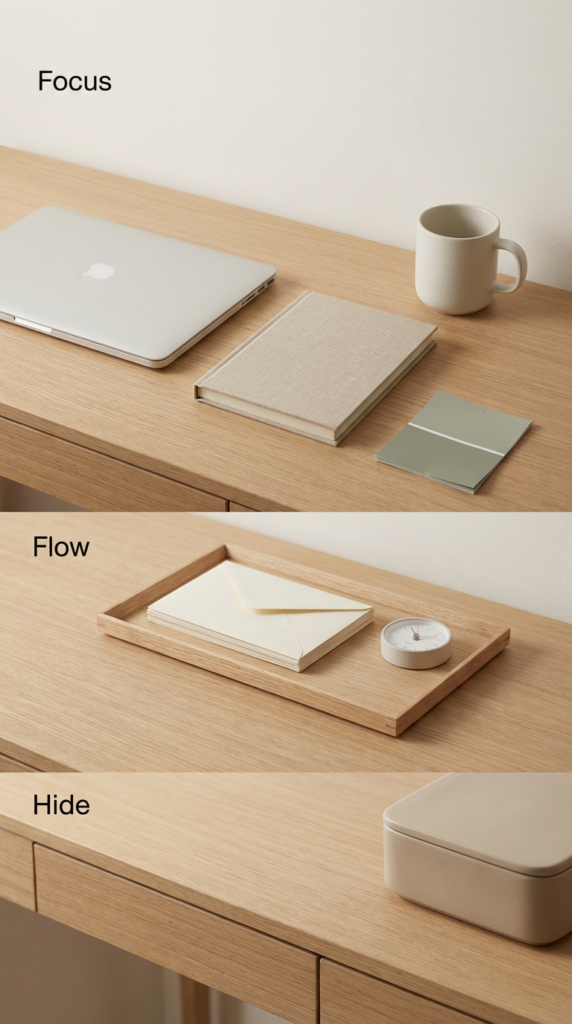
Focus Zone: Only What You Touch Daily
This is the area directly in front of you. Keep it brutally simple.
Laptop, keyboard, mouse. One notebook you actually use. One pen you love. If you’re a “planner person,” it can live here.
The Focus Zone is where you want the most visual quiet, because it’s where your eyes go when you’re trying to think.
Flow Zone: a landing spot for paper and charging
Flow Zone is for the things that come and go.
If paper enters your life, you need one official landing spot. A single tray or a slim vertical file holder. Not five piles, not “I’ll just set it here for now,” because “for now” becomes forever.
Flow Zone is also where charging lives. A charging tray, a small container, or a cord box. Anything that prevents cords from doing the dramatic splay across your desk like they’re auditioning for a spaghetti commercial.
Hide Zone: the not-pretty necessities
Hide Zone is for the stuff you need but don’t want to look at all day: stapler, tape, extra pens, backup chargers, sticky notes, random adapters.
This is where cubicles and tiny desks can get tricky, but you can still make it work. Go vertical. Use under-monitor drawers, a small tower, or a lidded box that slides under a shelf.
The real Zen move is making it easy to put things away. If it’s annoying to put away, you won’t. Ask me how I know.
A Mini Rule Set: the 1–3–5 visible guideline
If you’re trying to keep zen desk decor from turning into “curated clutter,” this helps:
- 1 focal piece
- Up to 3 functional items visible
- Up to 5 total decor touches
One focal piece could be a plant, a lamp, a ceramic bowl, or a piece of art. Functional items are your daily tools. Decor touches are small and intentional.
This keeps your desk from becoming visually loud again.
Calm palette plus texture: how to make it cohesive, not random
A desk can be clean and still feel harsh. This is where palette and materials come in. You want soothing, not sterile.
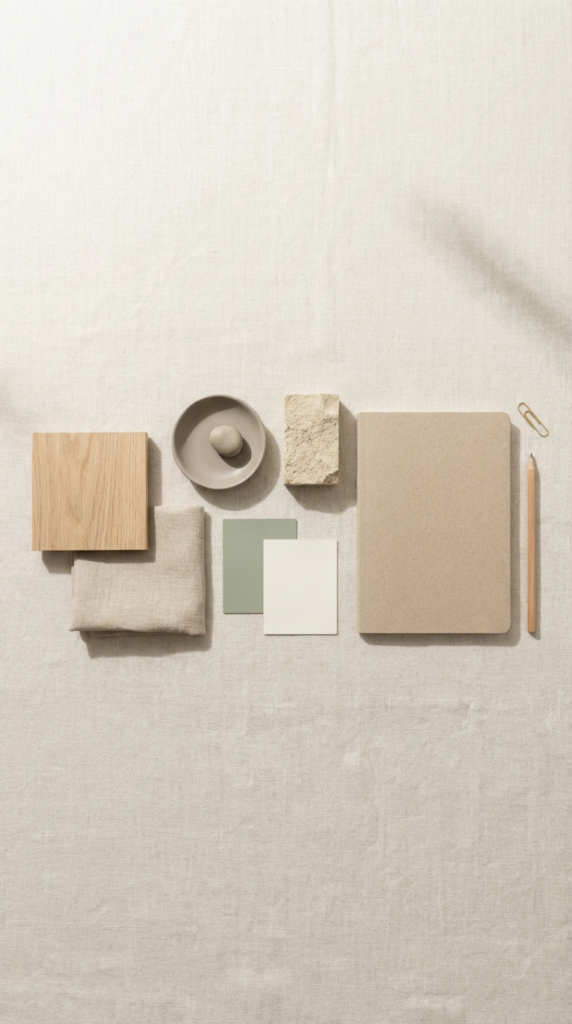
Neutral tones with one soft accent (optional but lovely)
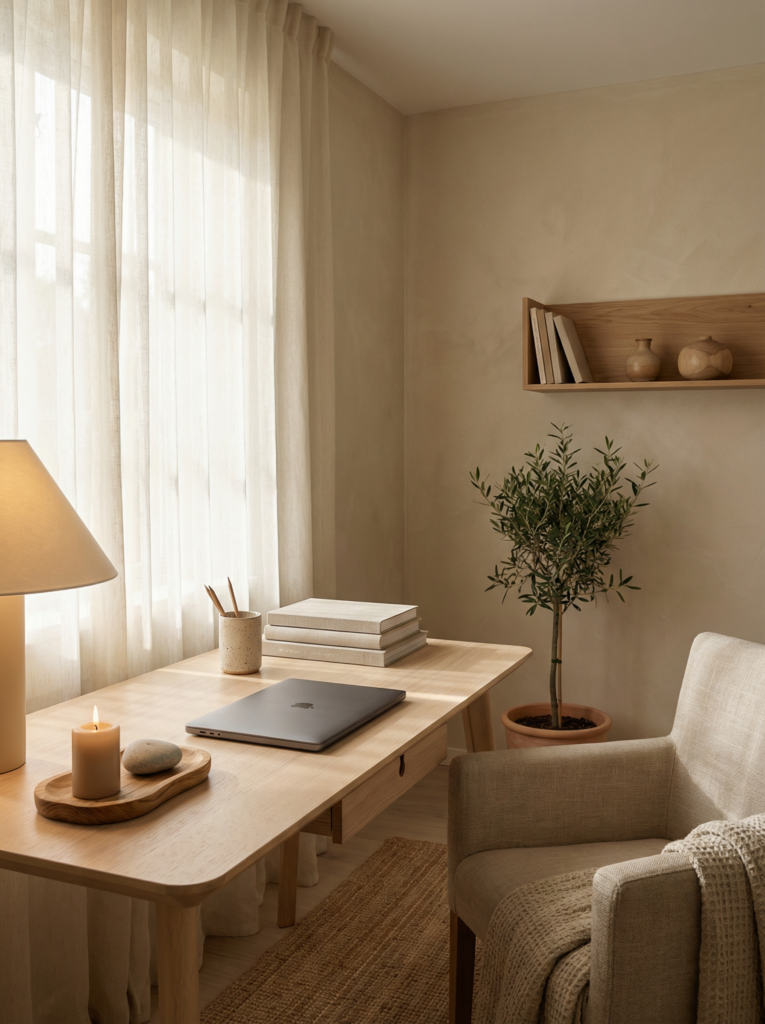
Start with a base of neutral tones decor: warm white, cream, soft gray, sandy beige, muted wood.
Then add one accent if you want. My favorite accent for calm is muted green, because it reads like nature without being loud. But soft clay, dusty blue, or warm charcoal can work too.
If your desk is white and your accessories are all bright white, it can feel clinical. Add warmth with wood or woven texture and it immediately feels more human.
Pick 2–3 Natural Materials and Repeat Them
Natural materials decor is one of the quickest ways to make a workspace feel grounded.
Pick two or three materials and repeat them subtly:
- wood
- linen or woven texture
- ceramic or stone
A wooden tray plus a linen desk mat plus a ceramic pen cup can make even random items feel like they belong together. That’s the trick. You’re not buying a matching set, you’re repeating texture.
If you’re styling indoor plants, this is also where planters matter. Wooden flower pots can look amazing if you want warmth. Cream planters are my favorite for a calming, clean look that still feels soft.
Lighting that Makes Your Brain Unclench
Lighting is one of those “I didn’t realize this mattered until I fixed it” things. A natural light office setup is ideal, but if you don’t have great daylight, you can still create a softer mood.
Maximize Daylight and Soften Harsh Overhead Light
If you can, position your desk near a window. Even side light helps. If you’re dealing with brutal overhead lighting, add your own light source so your eye has somewhere warmer to land.
In an office or cubicle, a simple desk lamp can change everything. It creates a little pocket of comfort inside the fluorescent chaos.
Layered Lighting: Warm Task Light Plus Ambient Glow
I love layered lighting for a calming space decor vibe: a task lamp you actually work under, plus a softer ambient glow.
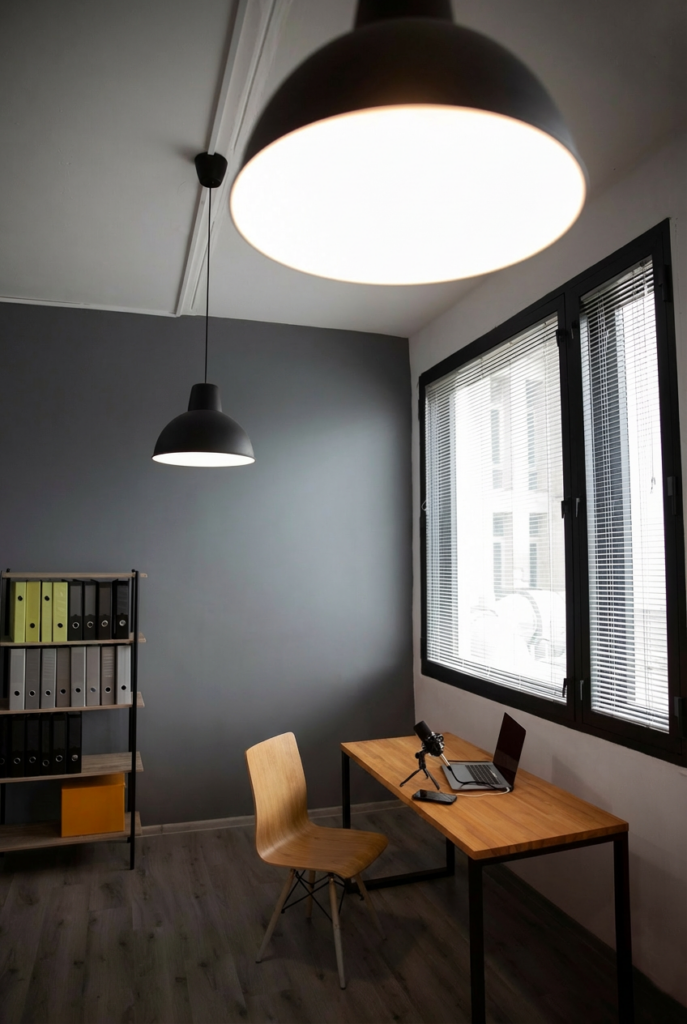
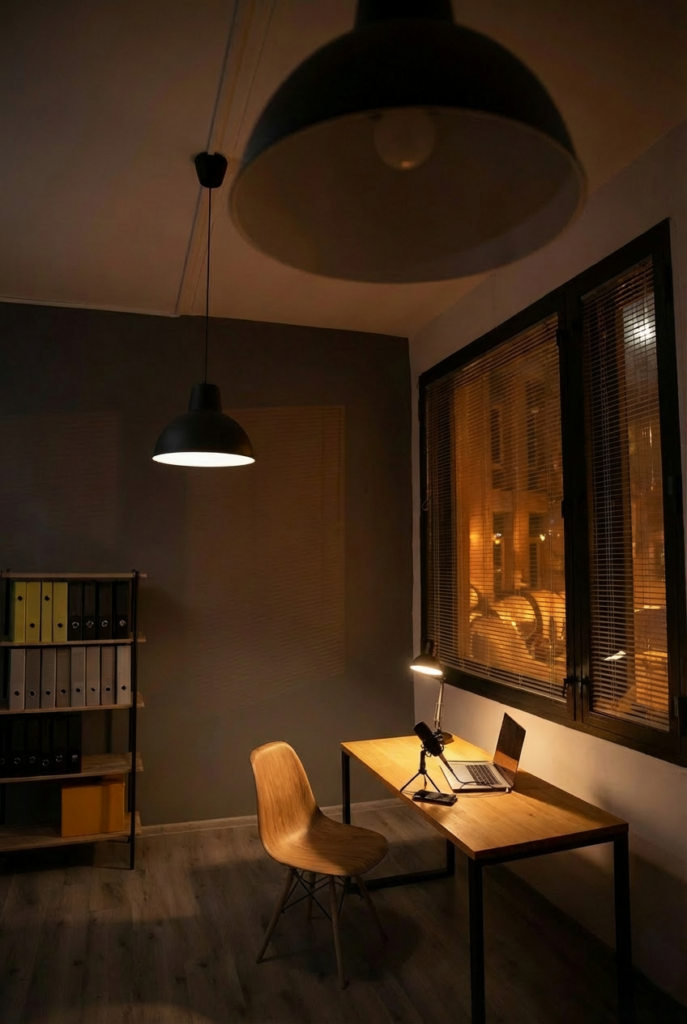
Ambient can be a tiny lamp on a shelf, a soft light behind your monitor, or a gentle corner light. The goal is not “bright,” it’s “cozy enough that your shoulders drop.”
This is also the easiest upgrade that feels like an instant before and after, even if you haven’t touched anything else.
Nature, but Make it Low-Maintenance
A lot of calming workspace ideas include plants, and yes, greenery helps. But I refuse to recommend a setup that becomes another chore you resent.
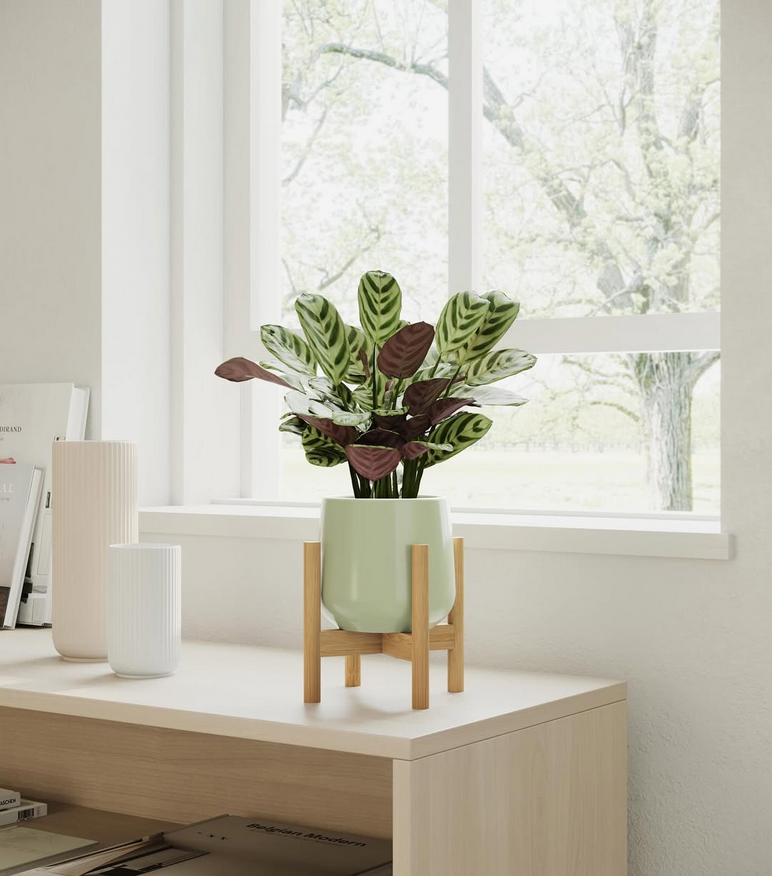
Easy Plants and Where to Place Them for Calm
If you want greenery in therapy spaces or at home, choose plants that are forgiving: pothos, snake plant, ZZ plant, peace lily. You do not need a high-maintenance diva plant unless you genuinely love the care routine.
Placement matters. One plant as your focal piece is enough. Put it slightly off-center so it feels styled, not like you plopped it down in panic.
If you want to get extra calm, place one plant in your Zoom background too. It softens the scene and makes everything feel more intentional.
If you’re arranging plants office-style, think in odd numbers and varied height. One taller plant plus one smaller one feels balanced without looking like a plant store.
Essential Oils, Pests, and Plant Reality
Quick reality check: essential oils for plants are not plant food, and some oils can stress plants if used directly. If you’re trying pest control essential oils in your space, keep it gentle and careful.
Some people use a light peppermint scent nearby to deter certain bugs, but I’d avoid spraying oils on leaves, and I’d be extra cautious if you have pets. The calm vibe is not worth a vet call.
If plants stress you out, you can still bring nature in with wood, woven texture, stone, and a leafy print.
The “Zen cue” ritual: one sensory anchor you’ll actually use
This is where your workspace becomes a feeling, not just a look.
Pick one ritual that signals “work mode” or “done for the day.” One. Not twelve.
Scent: subtle, not overpowering
A diffuser can be great if you like scent, but keep it light. A single calming scent can become a cue your brain recognizes.
If your space is shared, go even lighter. You want “soft background calm,” not “I can taste the fragrance.”
Sound: White Noise, Nature Audio, or a Tiny Fountain if You Really Love it
Sound can help your brain focus, especially if silence makes you hyper-aware of every tiny noise. White noise, rain sounds, soft nature audio.
A small fountain can be soothing if you love it, but I’m going to be honest: it’s a commitment. You have to clean it, and sometimes the sound is less “Zen” and more “aquarium pump.”
Calm Desk Objects that Double as Decor
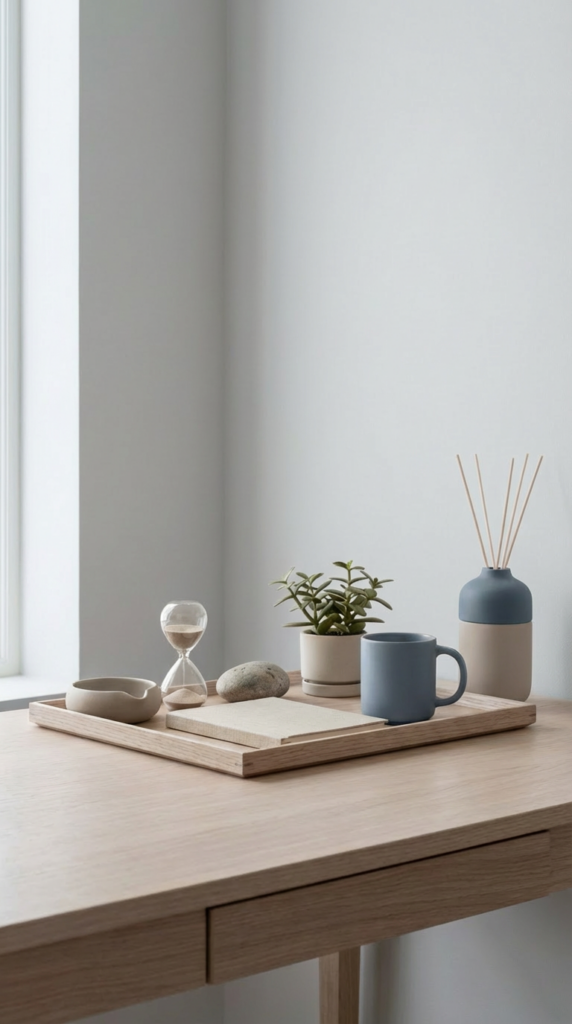
This is where I’ll gently admit there is a bit of a shopping-intent world around Zen accessories, and you can use that without going overboard.
If you want a calm object, choose one you’ll actually touch:
- a mini desk zen garden if you like tactile fidgeting
- a kinetic sand art frame if you want a moving, soothing visual
- a relaxing zen sculpture that feels grounding, not kitschy
If you’re into a spiritual vibe, you could do spiritual wall art or a small namaste meditation figure, but keep it minimal so it doesn’t feel like you’re collecting objects just to fill space.
And if you’re hunting for a unique gift for office situations, this is where it gets fun: a zen art gift can be as simple as a mini garden, a smooth stone bowl, or even a personalized zen bonsai if the person actually likes caring for plants. I’ve also seen things like a meditation scene in jar, which is adorable in a quirky way if it fits your style.
The rule is: one calm object. Not a shrine.
Wall Art, but Make it Quiet
An inspiration wall can be amazing, or it can turn into a visual headache. If you want it Zen, it has to be edited.
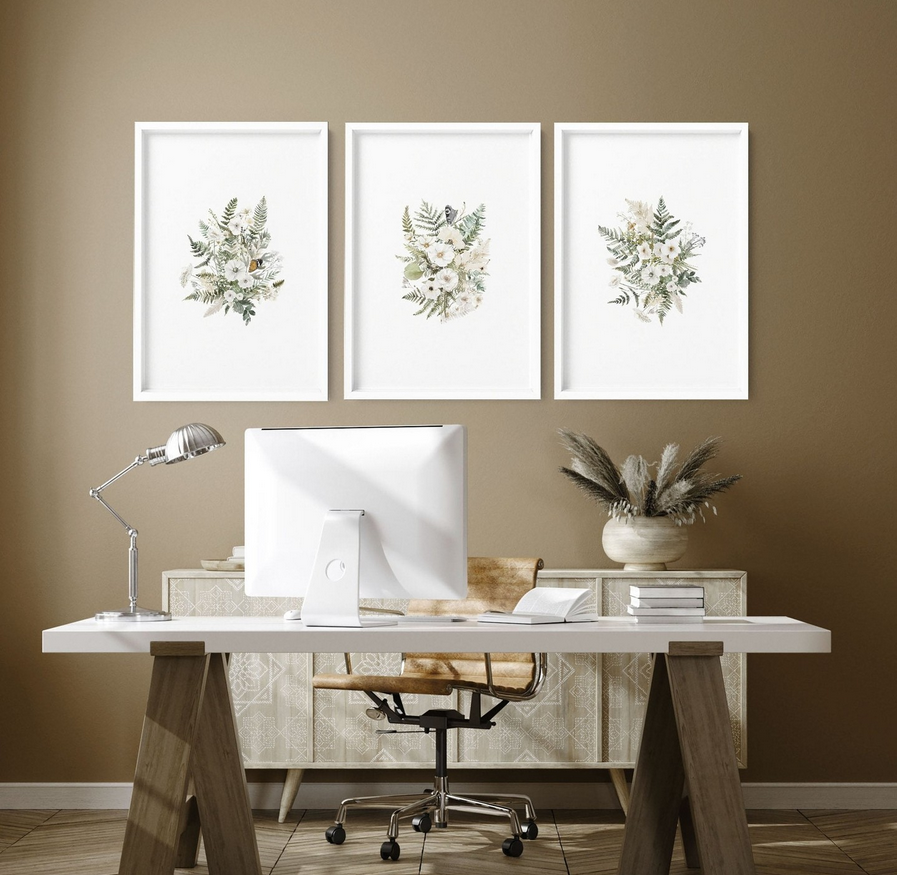
Inspiration That Doesn’t Become Clutter
If you love inspirational office wall art, keep the composition simple. Give it margins. Let it breathe.
Instead of a crowded gallery wall, try two frames with space between, or one larger piece and one smaller piece. Texture helps too. A linen pinboard is one of my favorite ways to add warmth while still keeping things tidy.
If you want a motivational quote print, choose one that actually makes you feel something, not one that feels like corporate wallpaper. And keep it in a simple frame so it doesn’t scream.
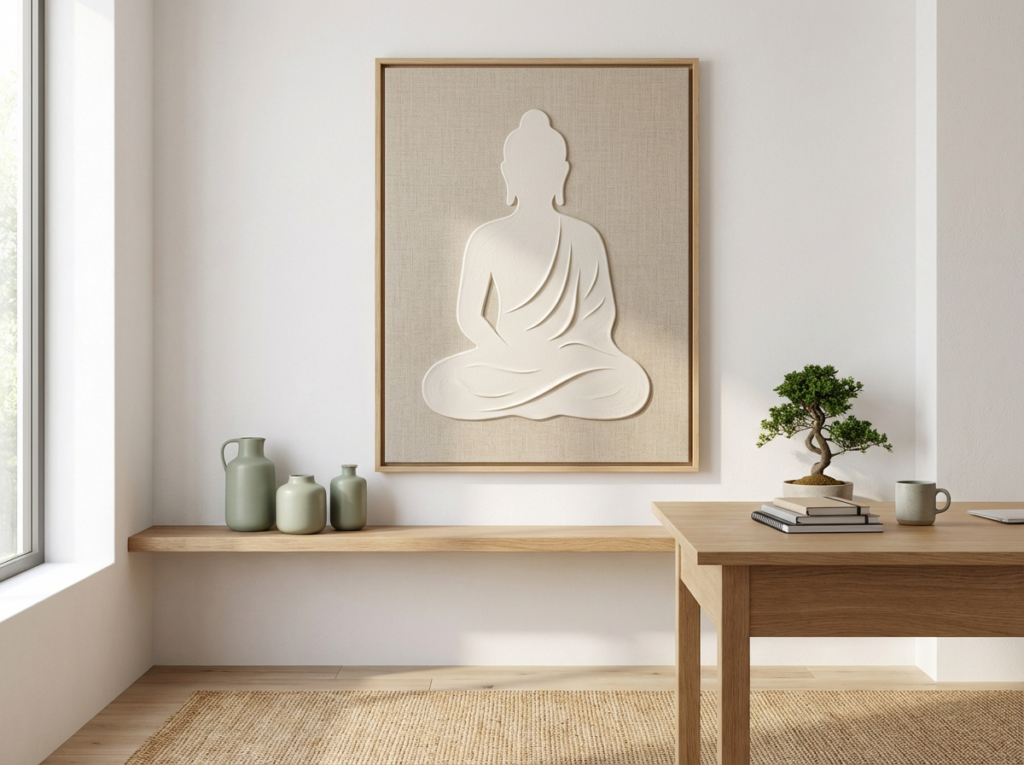
A note on Buddha Wall Art and “Theme-y” Decor
If you’re drawn to a Zen aesthetic, you might see buddha metal wall art everywhere. If it genuinely resonates with you and you’re approaching it respectfully, it can work. I’d just keep it as one intentional piece, not part of a pile of “Zen themed items” that starts to feel like a store display.
One strong piece in a calm palette is more powerful than ten smaller pieces fighting for attention.
Small-space and Cubicle Zen that Actually Works
Tiny desks get messy fast because there’s nowhere for anything to go. So your decor has to be functional.
No-paint upgrades that still feel polished
If you’re in a rental or a shared office, focus on reversible upgrades: peel-and-stick desktop covers, removable hooks, a desk lamp, a soft desk mat.
A desk mat alone can make a workspace feel more cohesive and less chaotic, especially if your desk surface is busy or scratched.
Micro storage that keeps the surface clear
For small desks, think vertical and hidden:
- under-monitor drawers
- a slim vertical file holder
- a lidded box that slides under a shelf
- one tray for daily items
If you can keep your surface clear, the whole space feels calmer, even if the storage is doing the heavy lifting behind the scenes.
If your desk is in a shared room, you need one visual boundary so your brain can separate work from life. A small rug under your chair, a shelf behind you styled simply, a plant that acts as a divider.
It’s not about building a wall. It’s about giving your brain a line.
A quick “real life” Reset Story, Because This is Where it Always Goes off the Rails
Let me tell you exactly how I turn my desk from chaos into a zen working space.
I clear the surface into a tote. Then I rebuild the desk with the 3 zones. Focus Zone stays minimal. Flow Zone gets one paper landing spot and one charging spot. Hide Zone gets everything else.
Then I add one soft light source. Even if the rest is not perfect, the warm lamp makes the whole space feel calmer instantly.
My unresolved annoyance is still cords. Standing desks and cords are mortal enemies. I have tried clips, boxes, under-desk baskets, and I still end up with one rogue cable that insists on being seen. That’s my ongoing project. I’m not pretending I’ve solved it perfectly.
But the desk feels calm because the rules are simple and repeatable.
Therapist Office Calm, Because this Matters in a Different Way
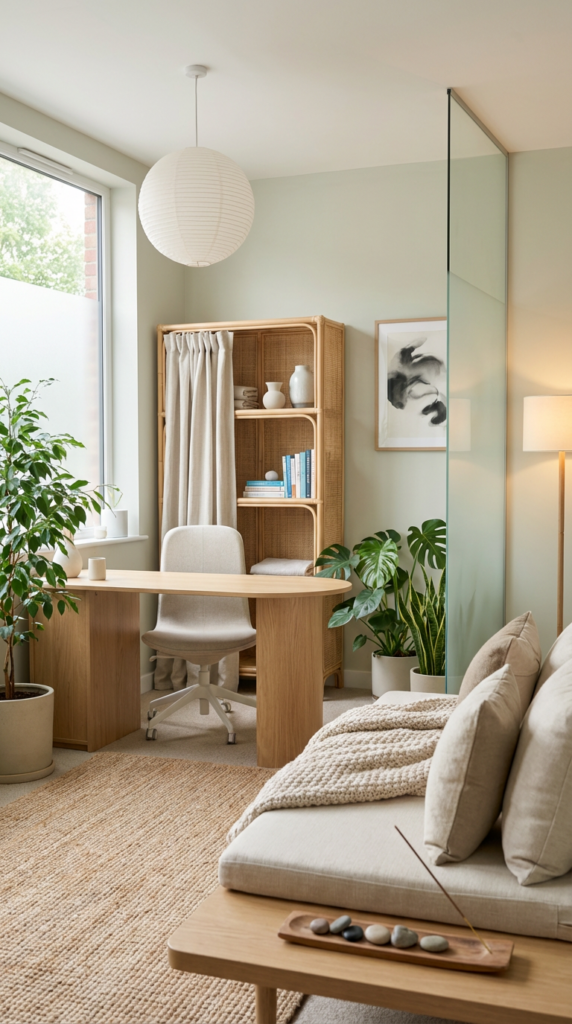
If you’re designing a calming therapist office or a counseling space, the principles are the same but the intention is even more important. You want people to feel safe, not overstimulated.
Therapist office ideas that tend to work well:
- soothing colors therapy palettes like warm neutrals and muted greens
- soft lighting layers rather than harsh overheads
- natural textures that feel grounding, like wood and linen
- greenery in therapy spaces, but low-maintenance so it stays healthy
The goal is not “decorate.” The goal is “reduce nervous system friction.”
And yes, the same “edited and intentional” approach applies. Minimal visual distraction helps everyone feel more settled.
The Zen Office Reset: how to keep it calm without constantly redoing it
This is the unsexy part that makes everything last.
Daily 10-minute close-down reset
At the end of the day, do a quick reset:
- clear the surface back to your baseline
- put paper into the one landing spot
- return tools to Hide Zone
- plug in what needs charging
- set out your first task for tomorrow
It’s five to ten minutes, and it changes the next day more than you think.
Weekly 15-minute refresh
Once a week:
- purge paper, recycle what you can
- wipe down the desk and keyboard
- check cords, re-tame the worst offenders
- water plants if you have them
- refresh your scent cue if that’s part of your ritual
This keeps the calm from slowly unraveling.
Where I want you to start today
Here’s my favorite simple start: pick one zone and one sense.
Pick a zone: Focus, Flow, or Hide.
Pick a sense: light, scent, sound, or texture.
Do those two things and your space will feel different fast, even if the rest of your office is still a work in progress.
And if you take a quick before photo, even just for you, do it. There’s something so satisfying about seeing the visual noise disappear. The calm doesn’t have to be perfect. It just has to be repeatable.
FAQ
How to decorate a zen office?
Start by clearing the desktop until only daily-use items remain, then give everything else a hidden home (drawer, lidded box, or cabinet). Use a calm, limited palette (warm neutrals plus one soft accent) and repeat 2–3 natural textures like wood, linen, and ceramic. Add one grounding focal point, usually a plant or simple art, and finish with soft, warm lighting.
How to decorate a calming office?
Reduce visual distraction first: fewer items on surfaces, one paper landing spot, and cords contained. Choose soothing colors and matte finishes, then add layered lighting (a warm task lamp plus a softer ambient glow). Include one calming sensory cue that is subtle, like a gentle scent, quiet sound, or a textured desk mat.
What is zen interior style?
Zen interior style is an edited, low-clutter look that feels calm, clear, and intentional. It usually uses neutral tones, natural materials, clean lines, and plenty of breathing room, with one or two simple focal elements like greenery or quiet wall art. The goal is visual quiet, not emptiness.
What is minimalist office decor?
Minimalist office decor means keeping only what you need and use, and storing the rest out of sight. Surfaces stay mostly clear, colors stay simple, and decor is limited to a few intentional pieces. It focuses on function, easy maintenance, and reducing visual noise.
What is the most calming color for an office?
Soft, muted colors are most calming: warm white, cream, light taupe, muted green, and dusty blue. If you want the safest “calm for most people” choice, start with a warm neutral base and add muted green as the accent. High-contrast palettes and very bright, saturated colors tend to feel more stimulating.
Is it better to have your desk face a window or wall?
Face a window if you want daylight and a more open, energized feel, but manage glare by placing the window to the side of your screen when possible. Face a wall if you get distracted easily or need a stronger focus zone. Best setup for most people is perpendicular to the window: you get natural light without constant glare or visual distraction.
How to decorate a mental health office?
Keep it steady and non-stimulating: soft lighting, soothing neutral colors, minimal clutter, and a few natural textures for warmth. Use calming wall art (simple nature or abstract, nothing intense), add easy-care greenery, and prioritize comfort and privacy with thoughtful seating placement. Avoid strong scents and visually busy decor, since clients can be sensitive to fragrance and overstimulation