
Hey all! My name is Julia, former college student and a home decor enthusiast who loves DIY home improvement projects and finding creative ways to decorate any living spaces on a budget. Recently moved from my dorm to my new apartment which I renovated from scratch and I am here to help you with tips & tricks about home decor/college and more 🙂
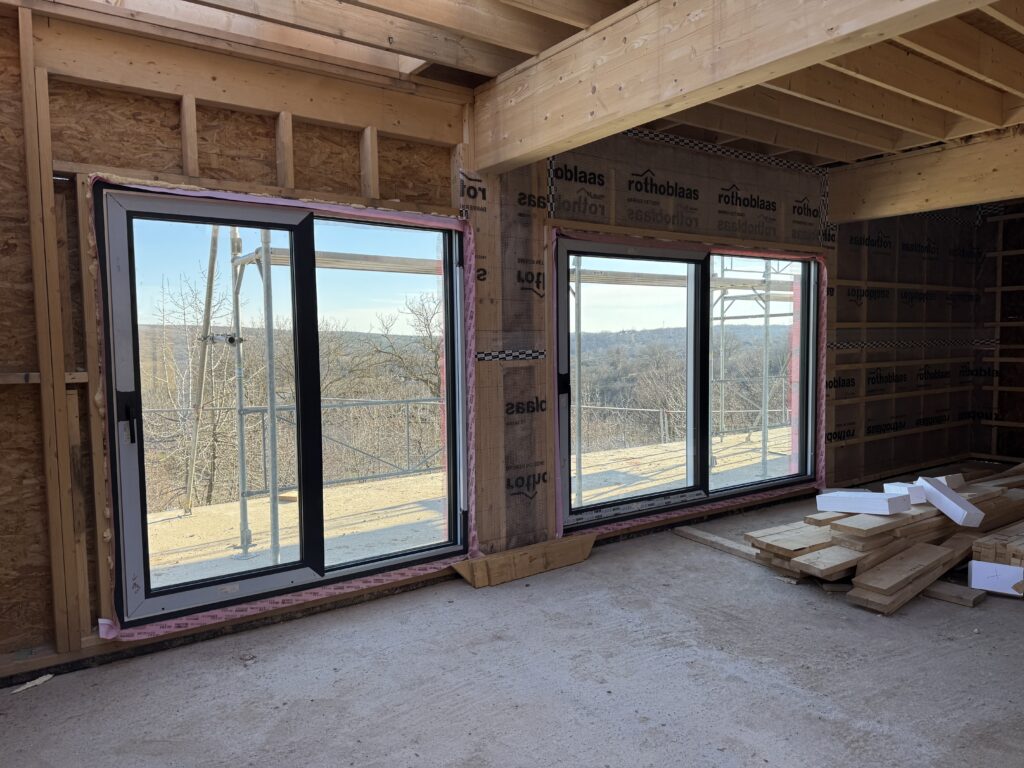
Windows… finally! They were supposed to be one of those straightforward build decisions. You know, pick the shape, pick the color, try not to faint at the quote, move on. But once we got into it, it became very clear that windows were not just a style choice for us. They were tied to comfort, condensation, quiet, airtightness, energy performance, and honestly, the entire outside look of the house. Casual!!
And because we have some pretty big openings, it wasn’t a category where we could just choose the prettiest option and hope our future selves would be fine with it. We needed them to look right, yes obviously, but also to actually perform. So that’s what this whole post is.
Why we chose triple-pane instead of double, why anthracite frames won, why I became weirdly attached to black warm-edge spacer bars, and why the Soudal tape detail around the install ended up feeling almost as important as the glass itself.
Basically, this is the story of how a “just pick the windows” decision turned into one of the most technical, specific, unexpectedly important parts of the build. And now that we’re on the other side of it, I’m very glad we obsessed. Probably too much. But still.
Our Build Context, or Why This Became Such a Big Deal
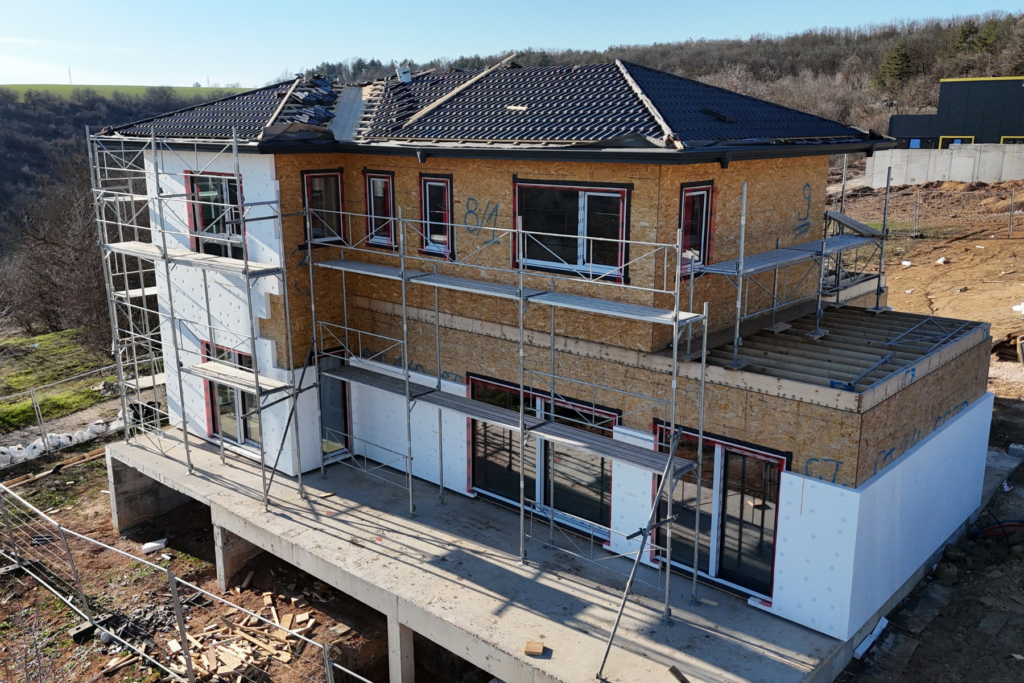
Once you have large openings in a house, windows stop being a trim decision and become an envelope decision. That was the shift for us.
Because yes, big windows are beautiful. They bring in light, they make rooms feel generous, they connect you to the outside in that dreamy “this is why we’re doing this” way. But they also introduce risk. More glass means more opportunity for heat loss, more chance of cold surfaces in winter, and more importance on getting both the product and the install right.
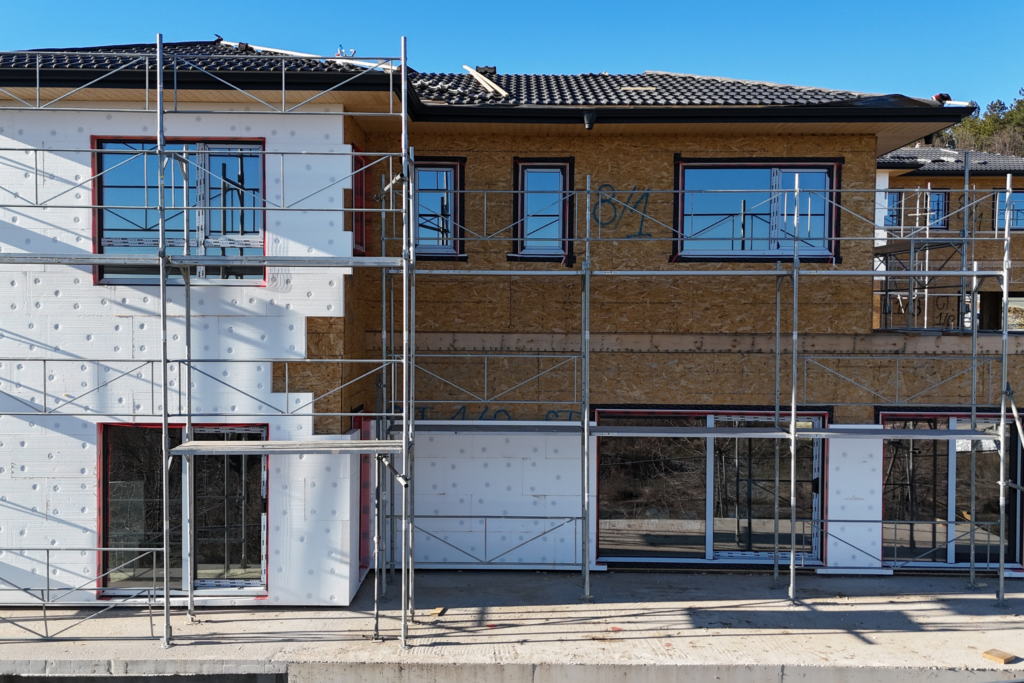
We’re building a house where comfort mattered a lot to us. Not just “good enough” comfort. Not “put on socks and ignore it” comfort. Actual comfort. The kind where the envelope works with you and the room feels stable and calm. So the windows were always going to be make-or-break.
The Window Spec Cheat Sheet That Saved My Brain
At some point I realized I had to stop reading window marketing copy and start looking at numbers like a grown-up. Deeply unfair, honestly, but necessary.
Once we had a simple checklist, everything got easier. Not easy. Just easier.
The four numbers we checked on every quote
U-factor, or Uw/Ug
This was the main one. Lower is better. This is basically the insulation number, and it tells you how much heat is moving through the window. It’s not the only number, but it’s the one that kept bringing me back to reality when I got distracted by color charts and profile shapes.
SHGC, or g-value
This tells you how much solar heat comes through the glazing. Useful, important, climate-specific, and one of those numbers that sounds simple until you realize you can absolutely overthink it for days.
VT, or visible transmittance
This is the daylight number. Higher means more visible light. Also, not to be dramatic, but once you start comparing coatings and panes and frame proportions, you realize how quickly “bright, airy room” can turn into “why does this feel slightly flatter than I imagined?”
Air leakage
This was a huge one for us. Not just the window performance, but the reality that a good window installed badly is still a problem. A tight house with sloppy joints around the frames is just not the energy I’m trying to bring into a new build.
Once we started comparing those four things on every quote, the noise level dropped. It became much easier to see what was actually different and what was just sales language wearing a nice blazer.
Double Pane vs Triple Pane Windows
This was the big comparison, obviously. And I think people often talk about double pane vs triple pane windows like it’s a spreadsheet decision. Like you line up two columns, do some math, and then move on with your life.
That was not our experience.
Why triple-pane felt like a comfort choice more than anything
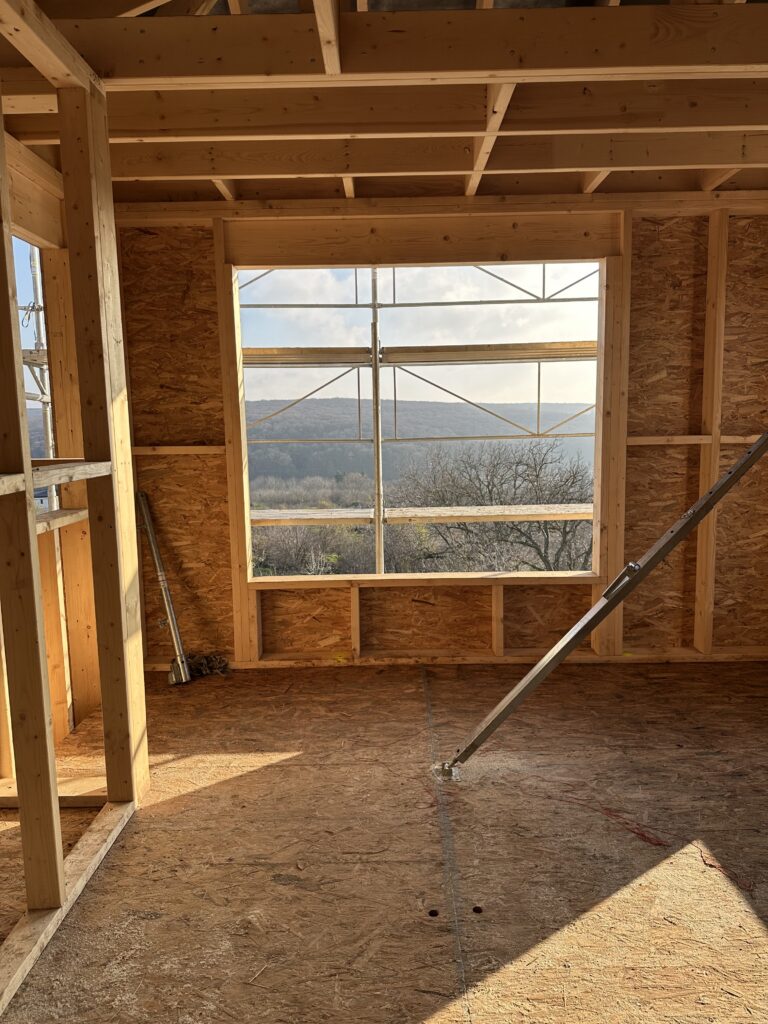
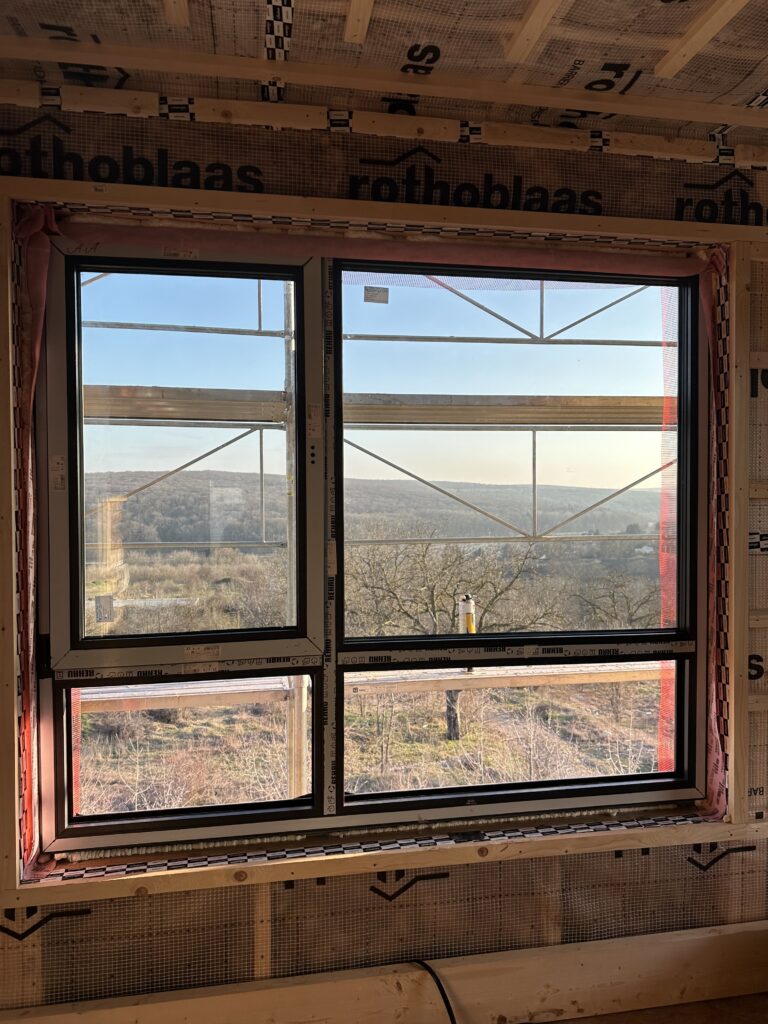
Yes, triple-pane can improve efficiency. Yes, the numbers matter. But for us, this was mostly about comfort.
That was the word that kept winning.
We wanted warmer interior glass in winter. We wanted less chance of that cold-window feeling where the room is technically heated but still feels a little unfriendly near the glazing. We wanted better overall performance because the windows are such a visible, important part of the house. And because we were already caring a lot about the rest of the envelope, it felt strange to go halfway here.
Triple-pane just made more sense within the whole system.
When triple-pane makes the most sense
I don’t think every single house needs the exact same answer. But if you care about a good envelope, if you’re trying to build airtight, if you have larger glazed areas, if winter comfort matters to you, if you hate condensation even a normal amount… triple-pane starts feeling very reasonable.
Not trendy. Not “premium for the sake of premium.” Just reasonable.
Why We Chose Triple-Pane Glass
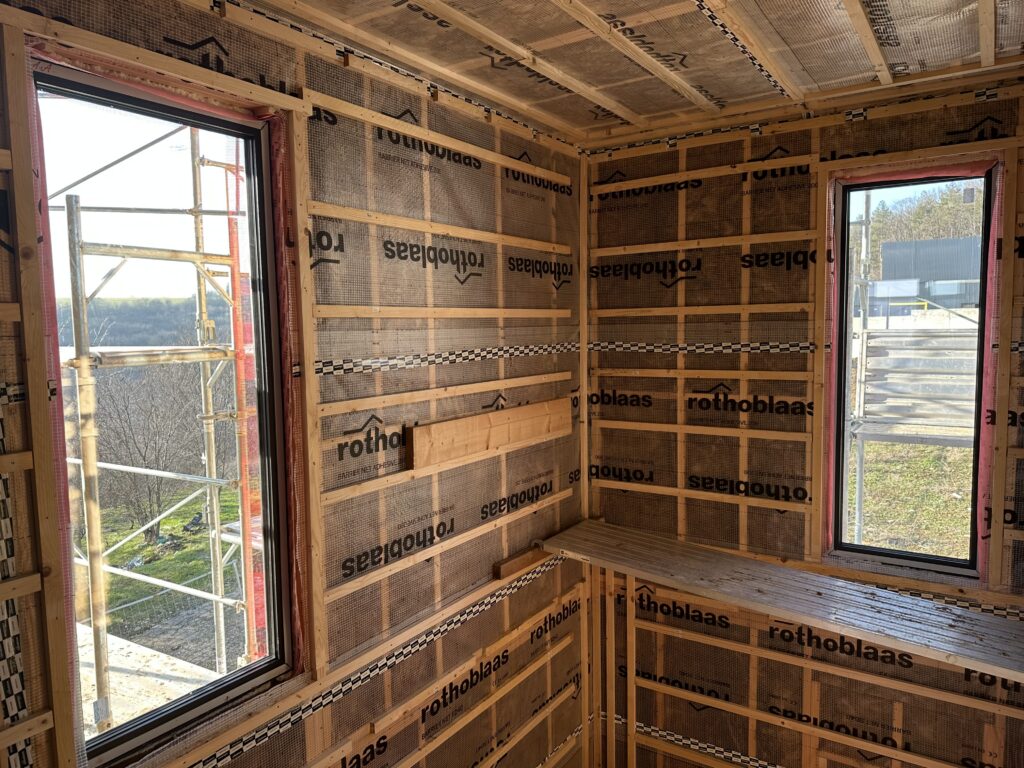
In the end, we chose triple-pane for three pretty straightforward reasons.
First, comfort. I keep coming back to this because it genuinely mattered most. I did not want beautiful windows that looked impressive on paper but still made the inside edge of the room feel colder than the rest of the house.
Second, condensation control. Not because I expected some dramatic foggy-house situation, but because condensation is one of those small recurring annoyances that makes a house feel less well resolved. If you can reduce that risk with better glazing and better edge details, that feels worth doing.
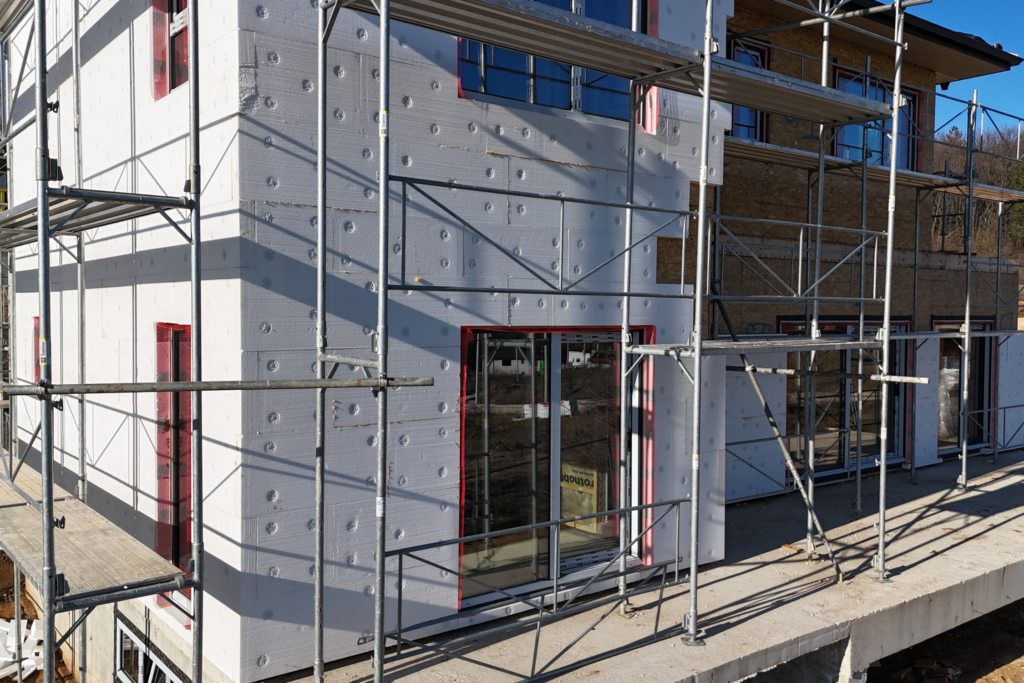
Third, sound. I’m not trying to oversell that piece because sound performance depends on more than just number of panes, but in our heads, this was part of the broader “let’s make the house feel calm” goal. For us the results are actually shocking how quiet is now.
So are triple-pane windows worth it? For us, yes. Very much yes. But mostly because of how we wanted the house to feel, not because we were trying to win some invisible efficiency contest.
Why We Chose Anthracite Frames
And now for the part where the design brain gets to come back into the room.
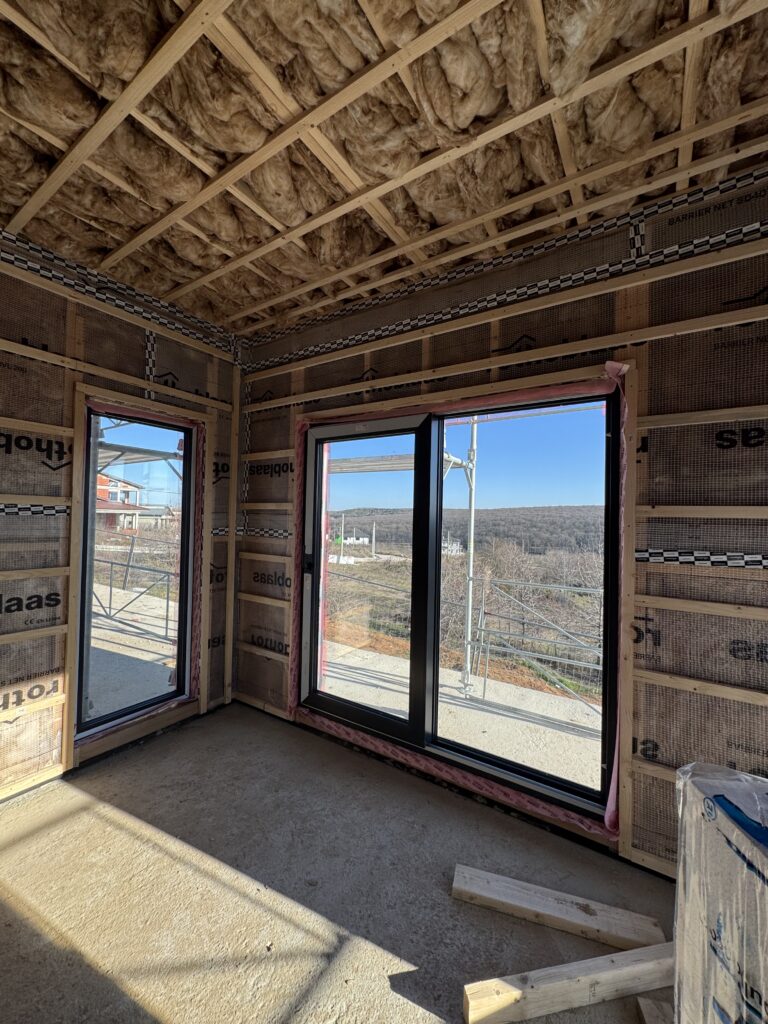
We chose anthracite frames because as you know, I really like gray in decor… They gave the exterior the contrast we wanted without feeling too stark or too trendy or too black-box-modern in a way that can age weirdly. Anthracite has a softness to it. It still reads strong and modern, but it’s not as sharp or severe as true black.
It also worked with the rest of the palette we were building toward. Roof, facade, exterior detailing… it all started to click more once the frame color was anthracite.
And yes, if you’re looking at suppliers, you’ll often see anthracite tied to RAL 7016. That comes up all the time because it’s such a common dark grey in window and facade systems.
One small caveat, though, because darker frames are not just an aesthetic choice. They can absorb more heat in direct sun, so this is one of those moments where “pretty” and “technical” really do need to talk to each other.
Warm-Edge Spacer Bars, AKA the Detail I Did Not Expect to Care About This Much
This one really got me. Because before this build, if you had asked me what a spacer bar was, I would have nodded politely and changed the subject.
Now? Fully converted.
What a warm-edge spacer bar actually does
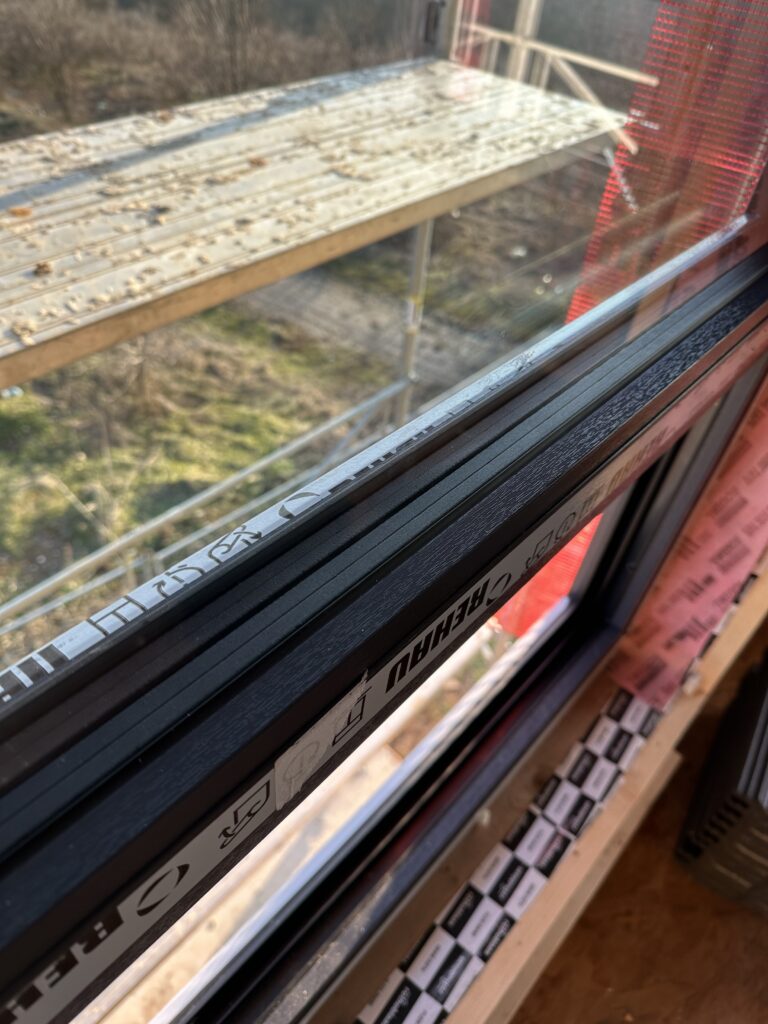
The spacer bar is the thing separating the panes around the perimeter of the glass. Traditional aluminum spacers conduct more heat, which can make the edge of the glass colder. Warm-edge spacers reduce that thermal bridging, which helps keep edge temperatures a bit warmer and can help reduce condensation risk.
So this tiny little detail at the edge of the glass is actually doing a lot more than it seems.
And once I understood that, it became one of those decisions that felt small and big at the same time. Tiny component. Real performance effect.
Why we chose black warm-edge spacer bars
Partly performance, partly vanity. Let’s just be honest.
We wanted the warm-edge benefit, but we also really liked the way black spacer bars visually disappeared against the darker frames. It created this cleaner shadow line at the edge of the glass that felt more resolved and less busy. Grey would have been fine. Black just looked better to us.
It’s a very detail-oriented choice, but those are the decisions that tend to add up into a house feeling considered.
Airtightness at the Window-to-Wall Joint
This is where things get less sexy and more important.
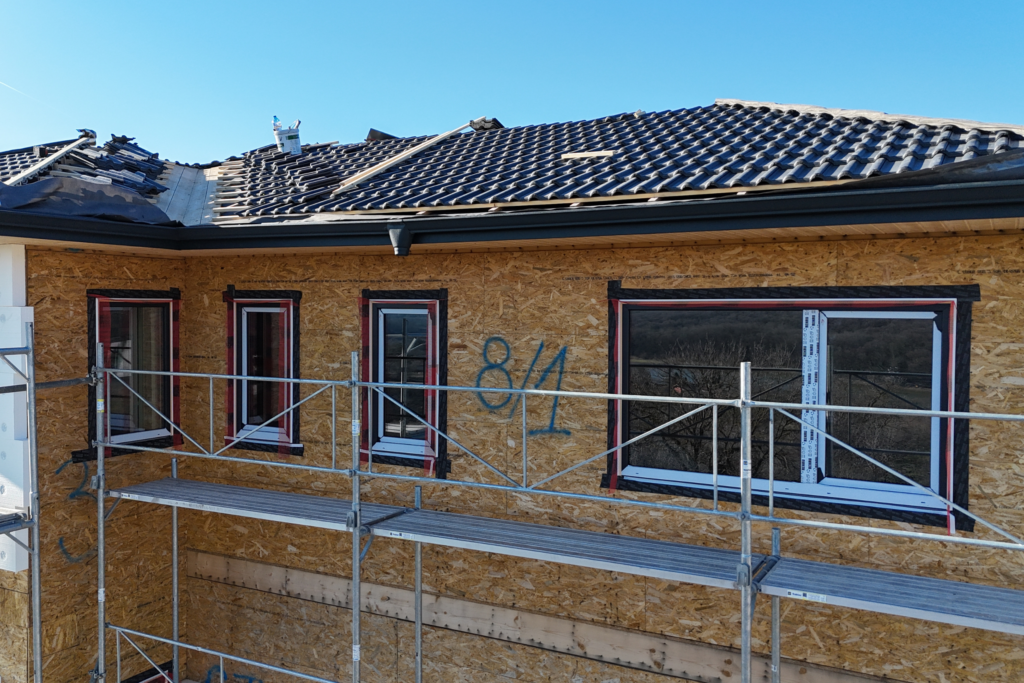
Because the window itself is only part of the story. The joint between the window frame and the wall is one of those places where a house can quietly lose performance if you get lazy or vague. And unfortunately, vague was not really an option here.
We wanted the installation to support the spec. Which sounds obvious, but I swear so many building conversations split into “great product” and “hopefully someone figures out the detail onsite,” and that is not the same thing.
The window-to-wall joint had to be treated like part of the envelope, because it is.
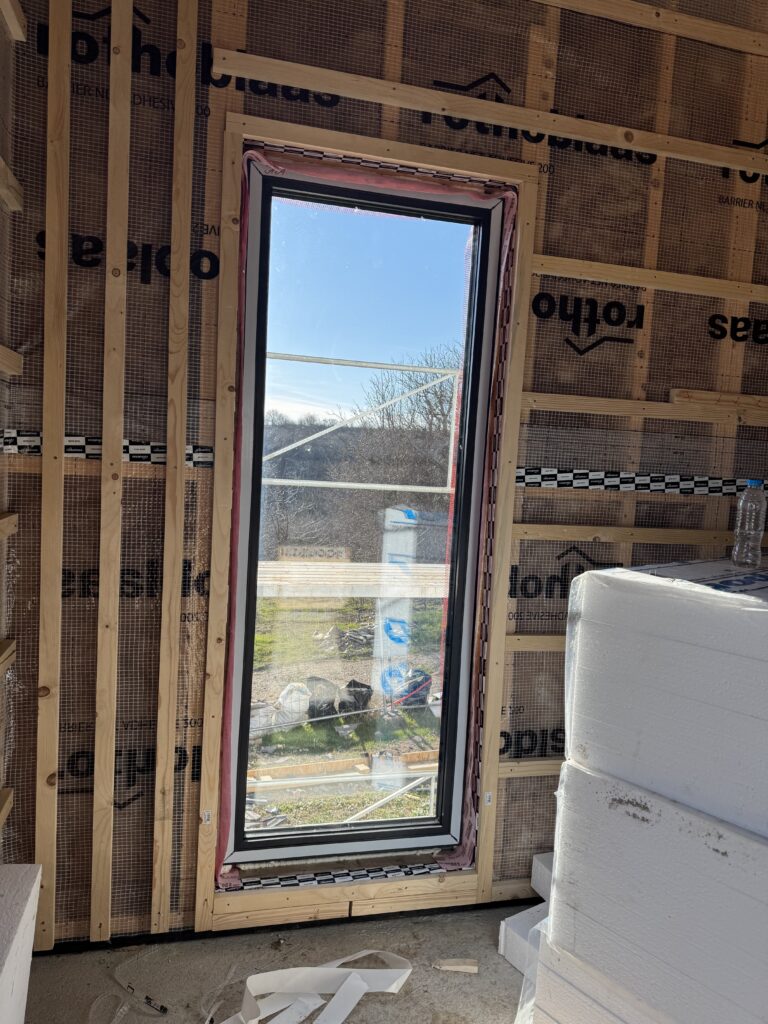
Exactly How We Used Soudal Tape
This was one of those details that felt intimidating until it didn’t. Once the logic clicked, it actually made a lot of sense.
Tight inside, open outside
This was the guiding principle: tight inside, open outside.
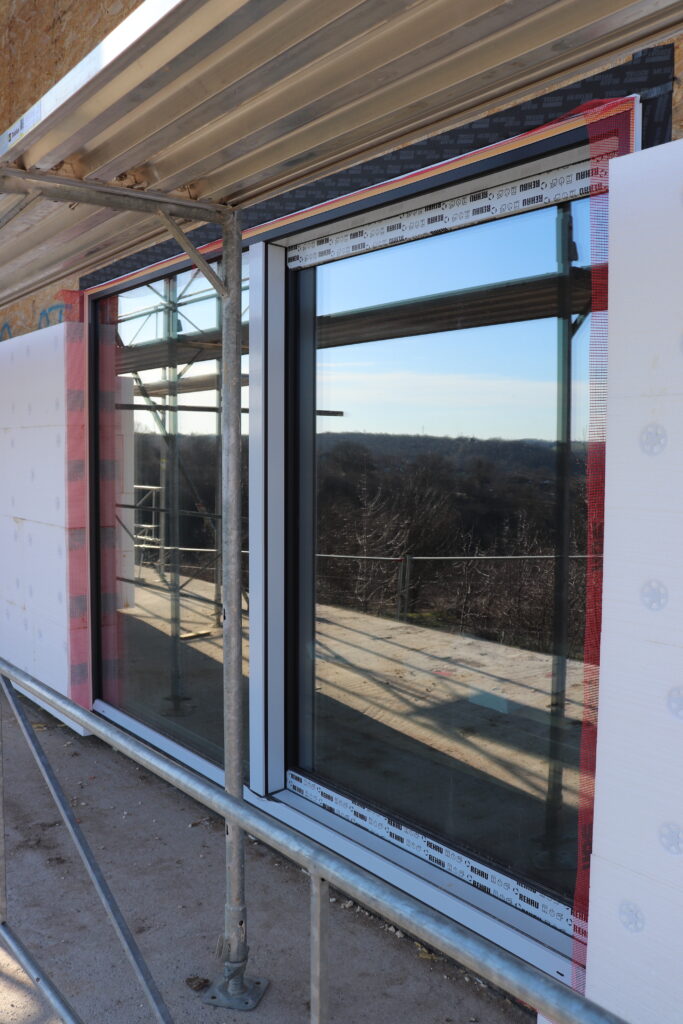
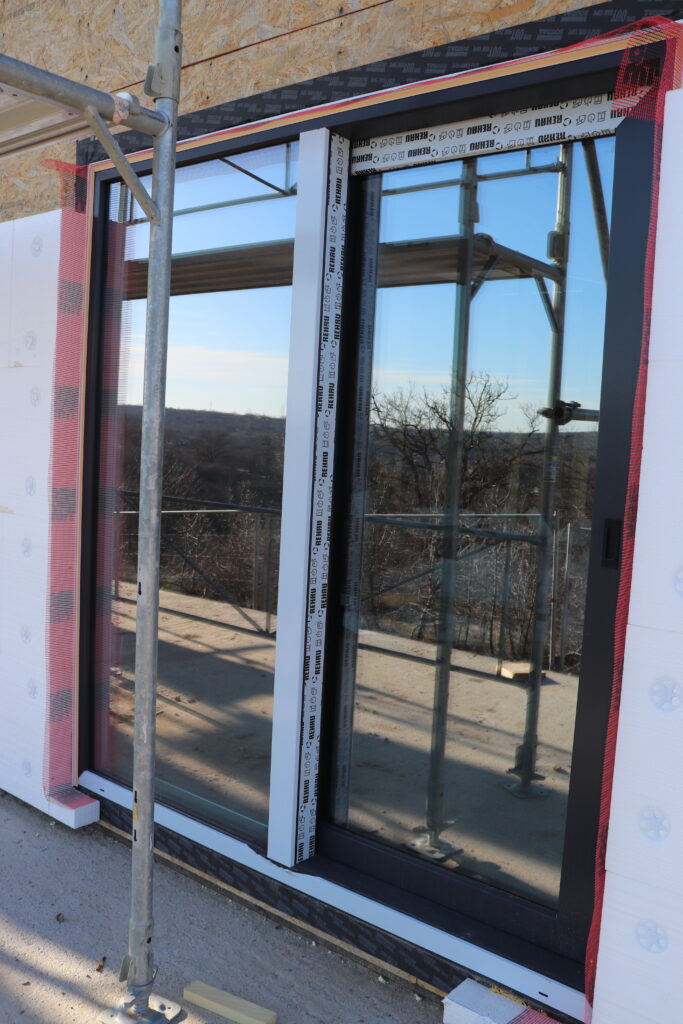
On the interior side, we used Soudal SWS Inside tape, which is designed to be air- and vapour-tight. On the exterior side, we used Soudal SWS Outside tape, which is air- and driving-rain-tight but vapour open.
That pairing is the whole concept, really.
You want the inside joint tighter so warm interior air and moisture are controlled. Then on the outside, you want protection from weather while still allowing outward drying. Once someone explained it to me in those terms, it became very hard to imagine doing it any other way.
And for the Biggest Openings, We Went with REHAU Synego Slide
This felt like the final little plot twist in the window story. Not every opening in the house needed the exact same solution, but those two big living room openings and the one in the bedroom absolutely did need something that felt lighter, sleeker, and a bit more special, because they do so much visually. We wanted that wide, open, glassy feeling without the frames starting to feel too bulky or too busy, and Synego Slide just made the most sense there.
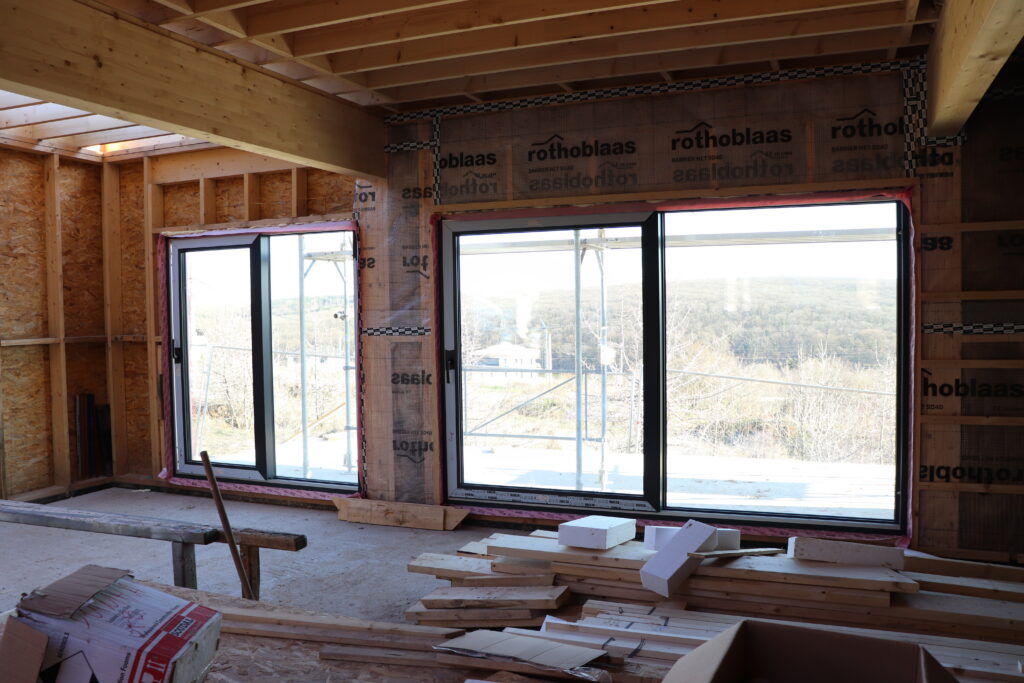
It gave us that cleaner, more generous look we were after, while still keeping everything in the same family, which I weirdly love. There’s something so satisfying about knowing all of our windows are Synego, even though these bigger openings needed their own version of the story.
And Yes, Let’s Talk About the Price
Because I know this is the part people are quietly waiting for the whole time. We paid around ~$20,000 USD for all of the windows, including the bigger Synego Slide openings, and while that is obviously a major line item, it also started to make a lot more sense once all the specs were locked in. Triple-pane glass, anthracite frames, black warm-edge spacer bars, and the airtight installation details were not the “let’s just keep this basic” version of the decision, but we also knew this was one of those parts of the house that affects comfort, performance, and the overall look all at once.
And one important note here: we’re in Eastern Europe, so pricing will likely look different, and honestly probably higher, in the US for a similar setup. This is simply what we paid for our package, in our market, which always feels worth saying because window pricing can get very not-comparable very fast.
FAQs
Are triple pane windows worth it?
For us, yes, especially because comfort and condensation control were big priorities. It felt less like an upgrade and more like the right choice for the kind of envelope we were building.
What’s the difference between double pane and triple pane windows?
Triple-pane adds a third layer of glass and another sealed cavity, which usually improves insulation and interior comfort near the glazing.
What is a warm-edge spacer bar?
It’s the spacer around the perimeter between the panes. A warm-edge version reduces thermal bridging compared with traditional aluminum spacers.
Do warm-edge spacer bars reduce condensation?
They can help, especially at the edge of the glass, because they help keep that area warmer.
Why choose black warm-edge spacer bars?
For us it was partly performance, partly aesthetics. Black created a cleaner shadow line with darker frames.
What is Soudal SWS Inside tape used for?
It’s used on the interior side of the window-to-wall joint to create an air- and vapour-tight connection.
What is Soudal SWS Outside tape used for?
It’s used on the exterior side of the joint as an air-tight, weather-resistant, vapour-open layer.
Do you need inside and outside tapes, or just one?
We wanted the full inside/outside approach because the moisture logic is different on each side of the wall.
Do anthracite window frames get too hot?
Darker colors can absorb more heat in direct sun, so that’s always worth checking with your supplier based on the exact frame material and finish.
Are double pane vs triple pane windows mostly an energy decision?
Not really, at least not for us. It was much more about comfort, condensation risk, and how the house would actually feel day to day.



I’ve never even heard of triple pane windows ! 😮 great decision!!🙌
Hi Stacey xx,
Right? Triple-pane windows are still not super common in a lot of places, so we had the same reaction when we first started looking into them. Once we understood how much warmer the interior glass stays in winter (and how that helps with condensation and comfort near big windows), it started to make a lot of sense for our build.
And since we have some pretty large openings, we figured it was one of those things worth getting right from the beginning 🙂
This was such an interesting read. I love the idea of comfort and considering all the events that came to your making these choices. I found this so helpful. A great read. Becky
Hi Rebecca xx,
That’s so kind of you to say, thank you! Honestly, windows ended up being one of those decisions that seemed simple at first… and then suddenly we were deep in specs, spacer bars, tapes, and all sorts of things we never expected to care about 😅
Really happy it was helpful!
That view though!!! 😍 The windows are just perfect
Hi Ellie xx,
Thank you! The view was actually one of the big reasons we designed those openings the way we did. We really wanted the windows to feel more like framed landscape than just… windows. Still surreal to see it coming together 🙂
Love that you chose comfort over anything. They are beautiful!
Hii Val xx,
Thank you! That was exactly our thinking too — comfort first, and everything else second. Once we realized how much warmer the interior glass stays with triple-pane, the decision got a lot easier.
And of course… it doesn’t hurt that they look pretty good too
It looks soooooo goooooood😍😍😍😍
Thank you so much Ida! <3