
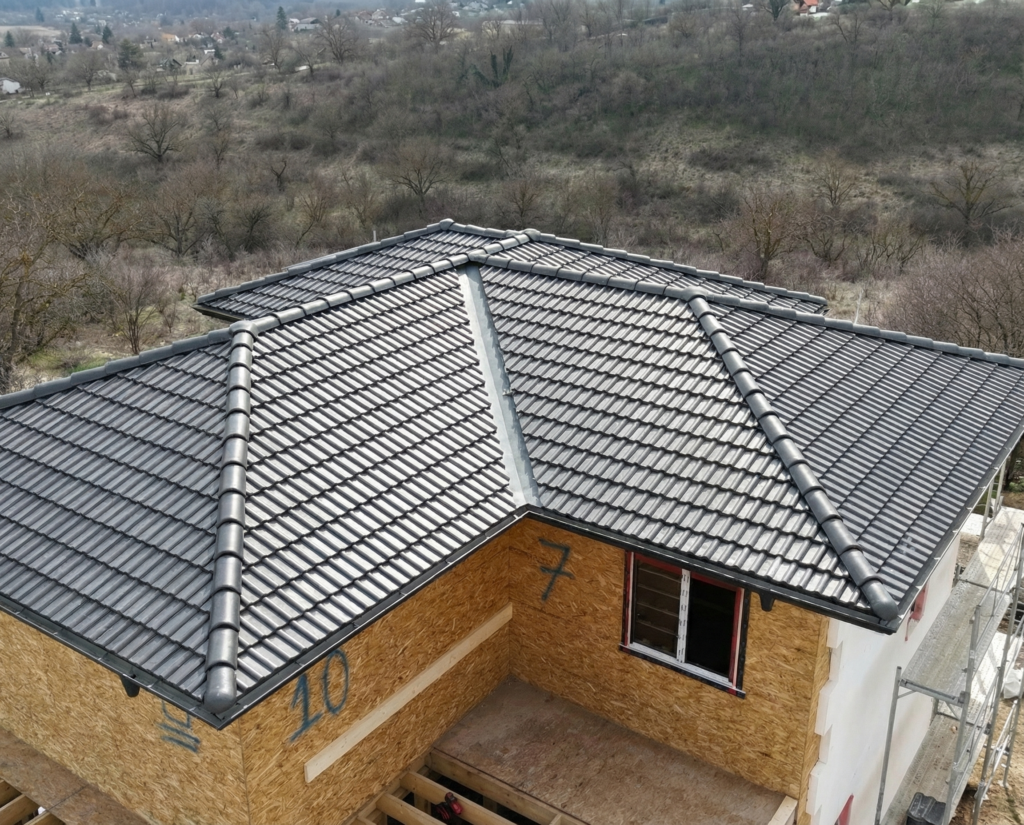
The roof is done. And honestly, I have a lot of feelings about this.
It’s been a long time since we broke ground on this house – longer than we expected, if I’m being completely honest – and when you have so many stages to get through at the same time, some of them feel almost theoretical. Like, yes, the roof will happen eventually. But also… will it though?
ANYWAY. It happened. And I like it so much better than where we were three months ago.
Now – in the name of transparency, and because I know a lot of you are in the middle of your own builds – building a roof on a new house took us three months from start to finish, January through the end of March. Winter, a two-level timber frame, and what felt like genuinely personal weather made every week harder than it needed to be. (The weather was NOT on our side. I don’t know why I expected it to be.) The full story is below, including all the details, all the materials.
When Things Got Hard Before the Roof Even Started
We’ve been through a lot. There were stretches where everything felt manageable and under control, and then there were the other kind – the days that brought us to our knees a little. One of the hardest was when heavy rain flooded our basement completely. I remember standing there watching the water rise and feeling genuinely helpless. All that work. All that effort. Literally underwater.
And then came winter.
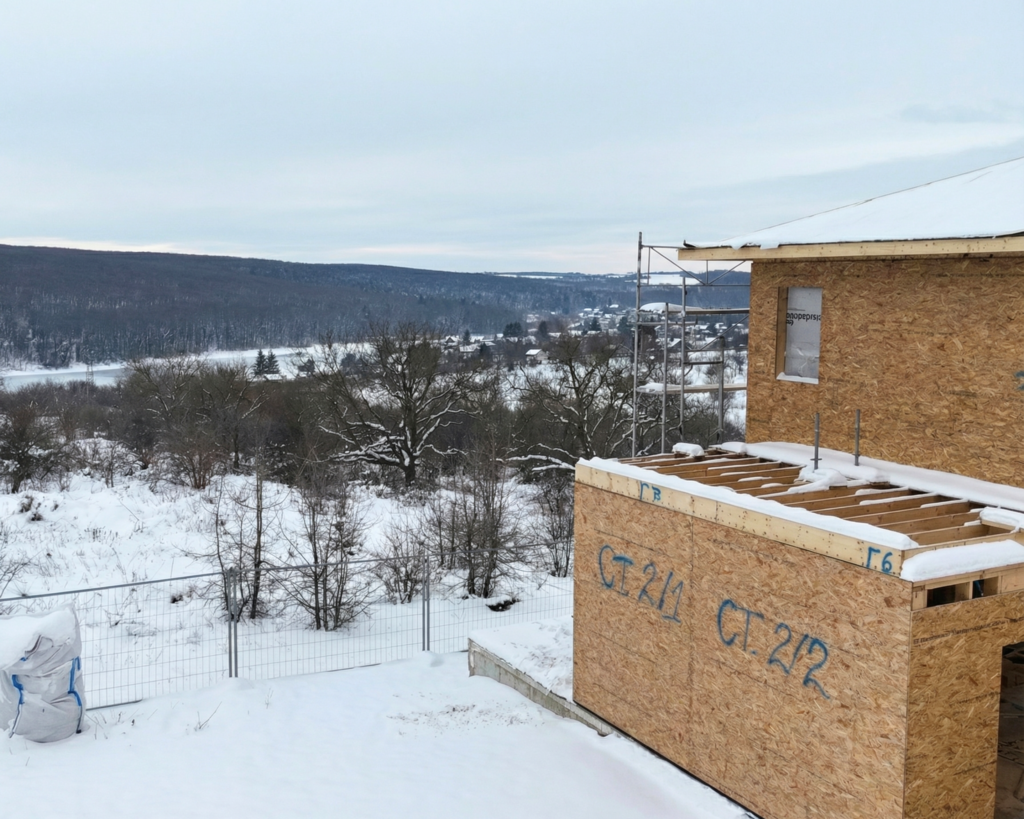
Not a gentle winter. A real one – heavy snow, relentless cold, mud and moisture everywhere. The house had no roof and no windows yet. Just a structure, completely exposed to whatever the weather decided to throw at it. Every site visit was a challenge. Every update from the builders came with a weather caveat. I spent more time checking forecasts than I’d like to admit.
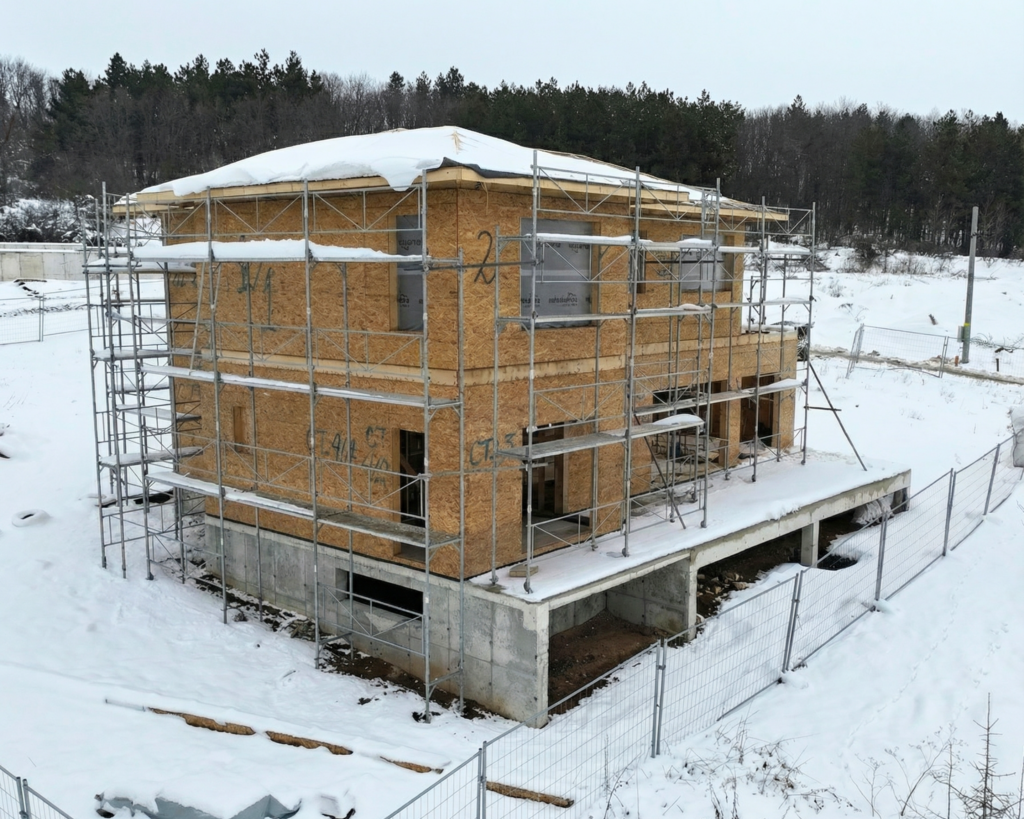
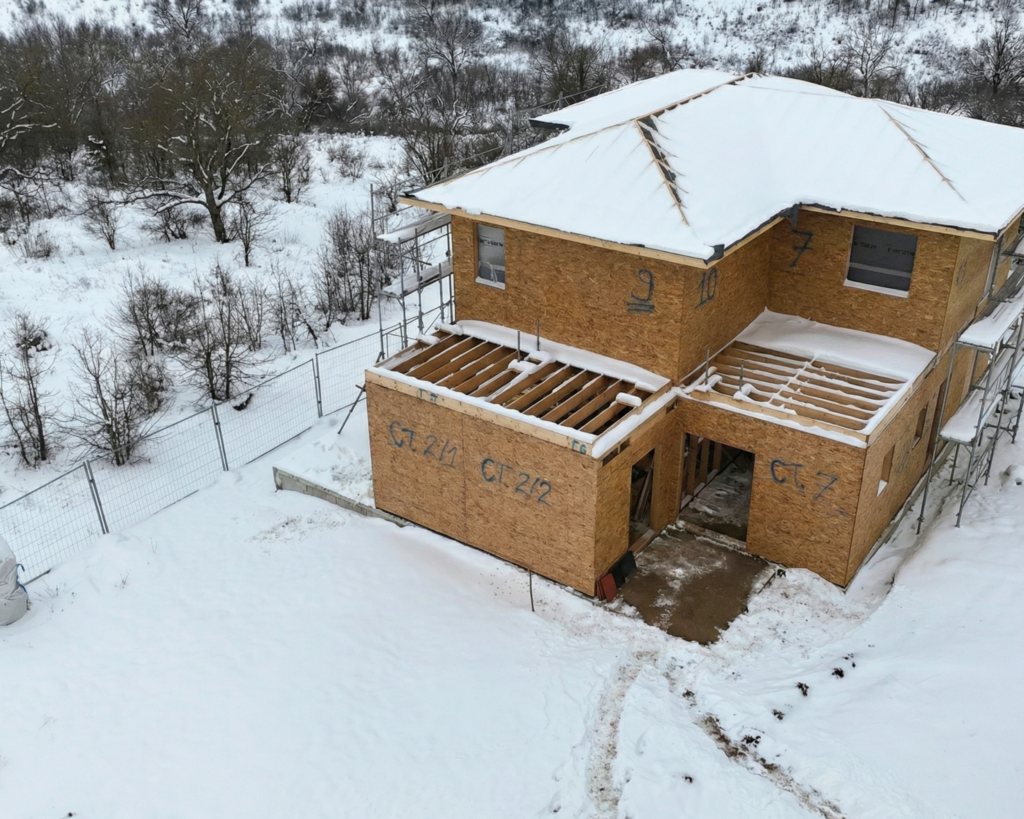
I told you about the windows already – that was its own whole chapter. But if I’m being fully honest, the roof was the moment I was waiting for most. The one that would change everything.
And now I can finally say it – the roof is done.
New Build Roof Timeline – What We Expected vs What Actually Happened
Here’s the thing about timelines when you’re building a house – they are almost never what you expect and you have to make peace with that or you will lose your mind.
When we started the structure I thought the roof was so far away it was almost theoretical. And then suddenly the second floor was done and I remember thinking – oh. It’s time. And because everything had moved so quickly up to that point, I genuinely believed the roof would just happen. That we’d barely notice it going up.
We noticed.
The first and second floors went up from mid-October to Christmas. Fast, exciting, almost magical. The roof took from January to the end of March. Winter, snow, rain – the weather made every single week harder than it needed to be. But it also taught us something we keep relearning during this build: good things require patience. Every time. Without exception.
The Roof Details – Materials, Design, and Everything We Chose
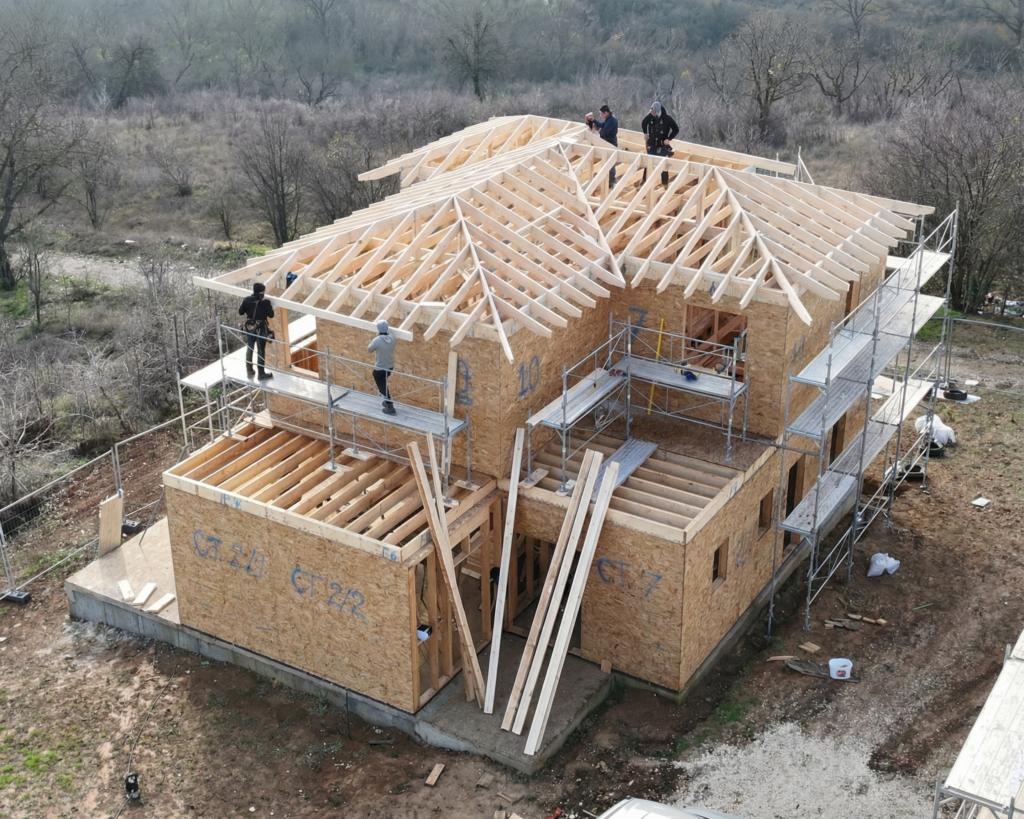
So let me tell you about the roof itself, because I’ve gotten so many questions and I want to share all the details.
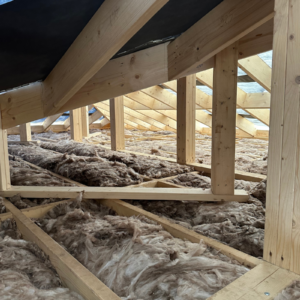
Timber frame structure – warm, natural, and genuinely beautiful even at the construction stage. Between the roof and the second floor ceiling there’s 20cm of insulation, which is doing the heavy lifting for our home’s thermal performance. We went with a cold roof design – a ventilated system that improves airflow and contributes to better energy efficiency overall. (If you want to go deep on what a cold roof actually means and why we chose it, I wrote about it here.)
Above the timber frame there’s a waterproof membrane to prevent any water penetration. Then the counter battens – which create the ventilation gap and serve as the base for the tiles. And the tiles themselves are exactly what we pictured from the beginning.
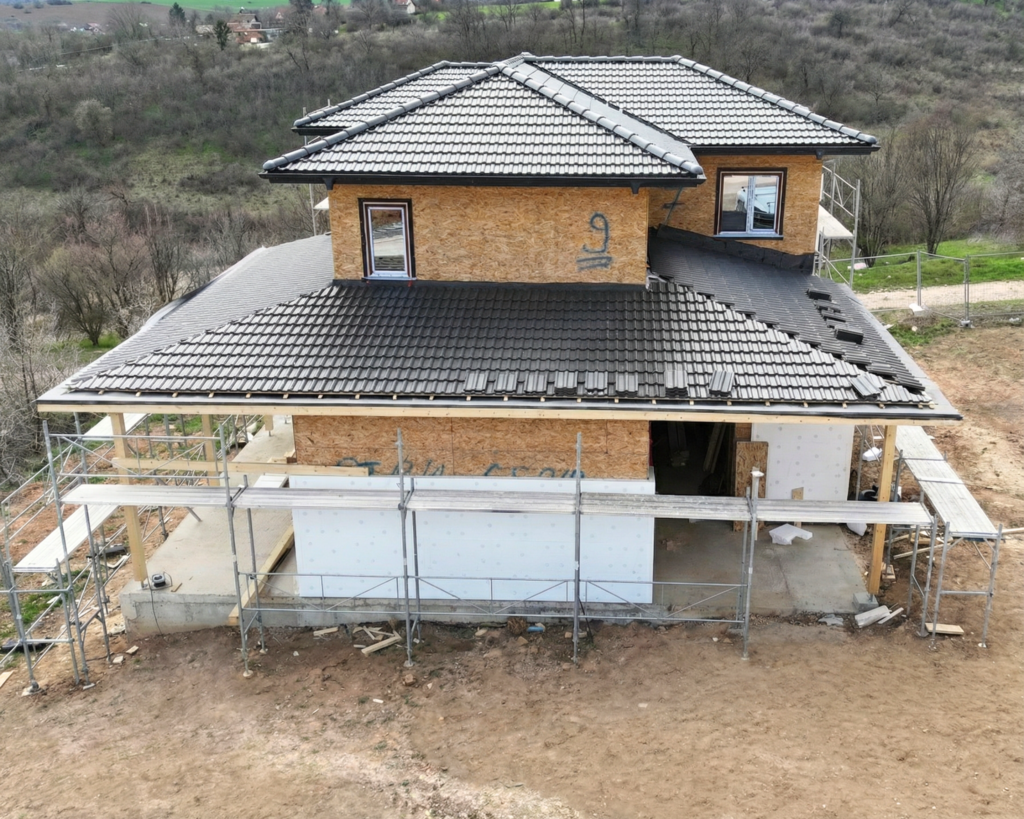
We chose anthracite with a subtle gloss finish. Modern, clean, and perfect for the overall look we’re going for.
How We Chose the Roof Tiles, Gutters and Metal Sheeting
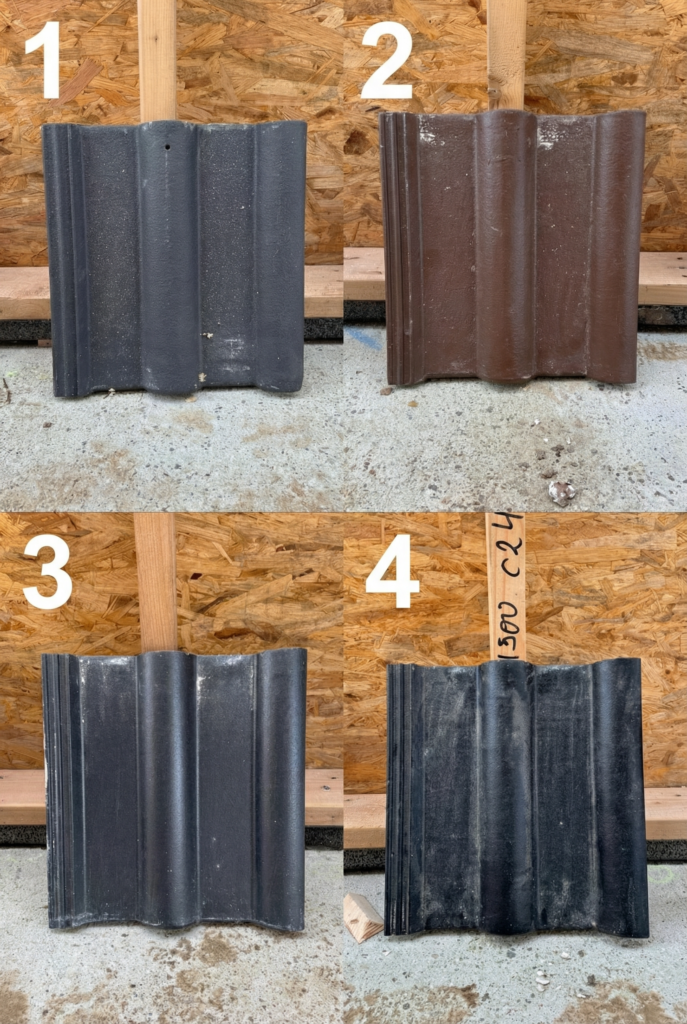
We actually had four samples sitting on the construction site at one point and I photographed all of them because I knew I’d need to compare them properly rather than just going off memory.
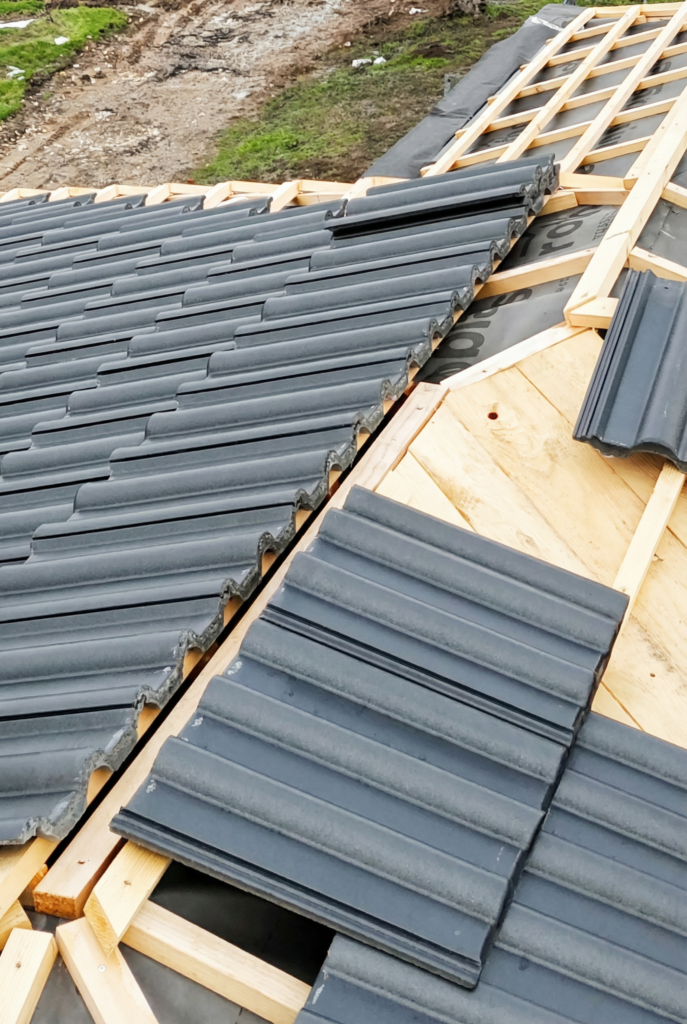
Option 1 was a dark gray anthracite – clean, modern, matte finish. Beautiful honestly. Option 2 was a deep warm brown with a glossy finish/more traditional, completely wrong for what we’re building. Option 4 was almost black, very dark, slightly shiny – dramatic but a little too much.
We chose number 3. And the reason is more practical than aesthetic – although aesthetically it’s also exactly what we wanted.
Number 3 has a subtle gloss coating that does something the matte options don’t – it repels dust and doesn’t hold onto it the way a flat matte surface does. Over time, on a roof that you’re never going to be cleaning regularly, that matters enormously. The coating is also designed to last for years without fading or deteriorating, which when you’re building a house you plan to live in for decades is the kind of detail that actually justifies a decision.
So yes, we chose the tiles that look the best. But we also chose them because they’ll perform the best. Both things can be true and in this case they were.
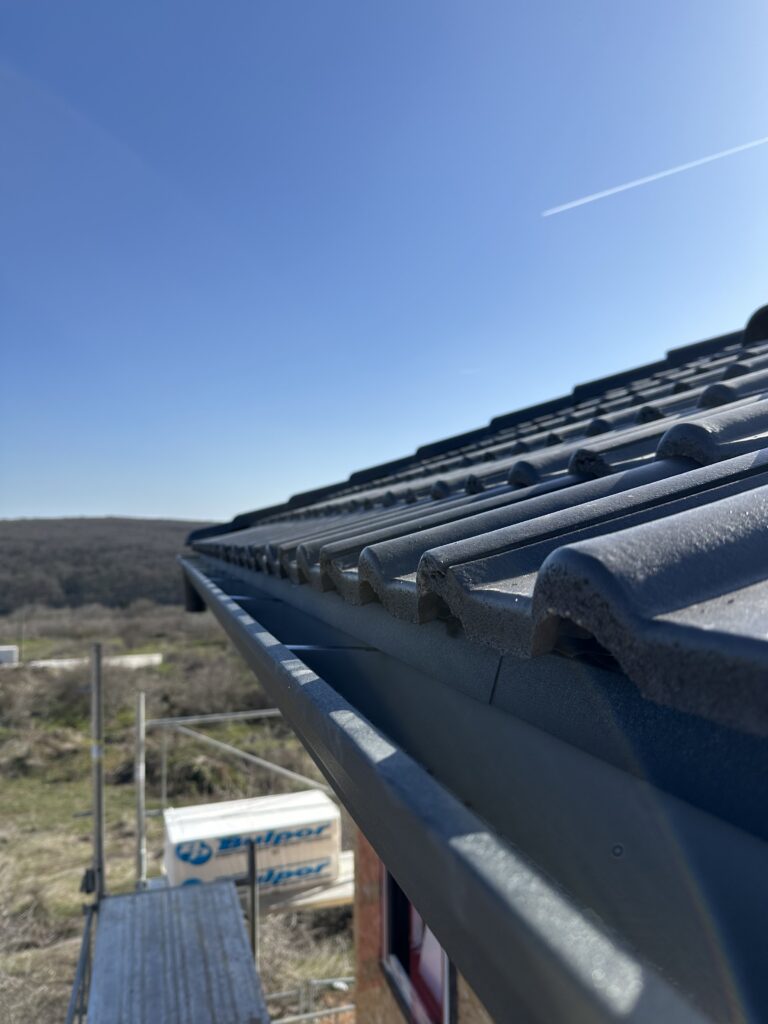
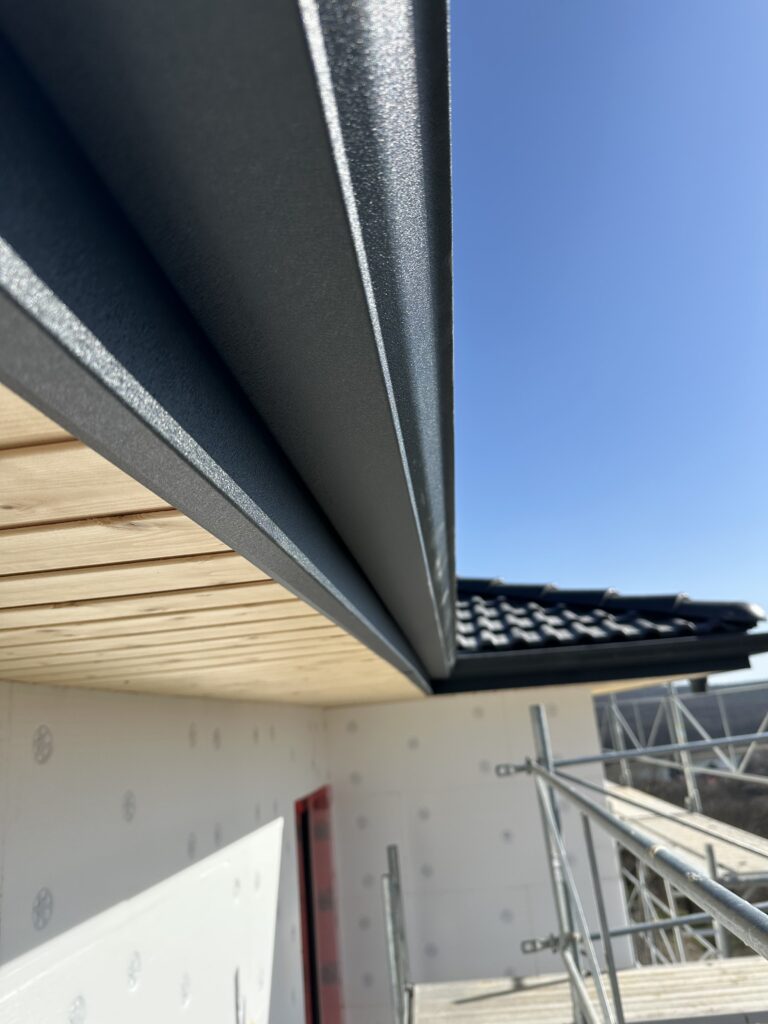
The gutters and metal fascia sheeting are anthracite too – matching the tiles exactly rather than contrasting. It’s one of those details that sounds minor until you see a roof where they don’t match and suddenly you can’t unsee it. We wanted the whole thing to read as one cohesive decision from every angle, and getting the gutters and trim in the same color family was part of that. It’s not the exciting part of a roof. But it’s the part that makes the whole thing look finished rather than assembled.
Two Levels, One Roof – Why We Love the Design
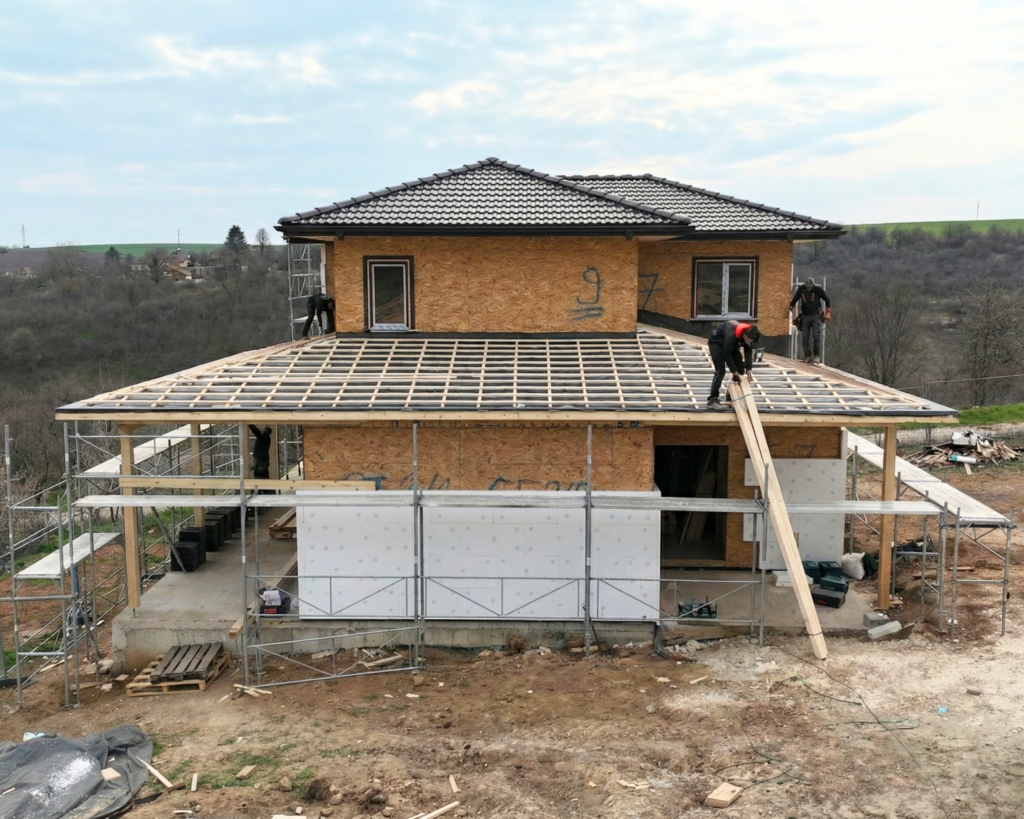
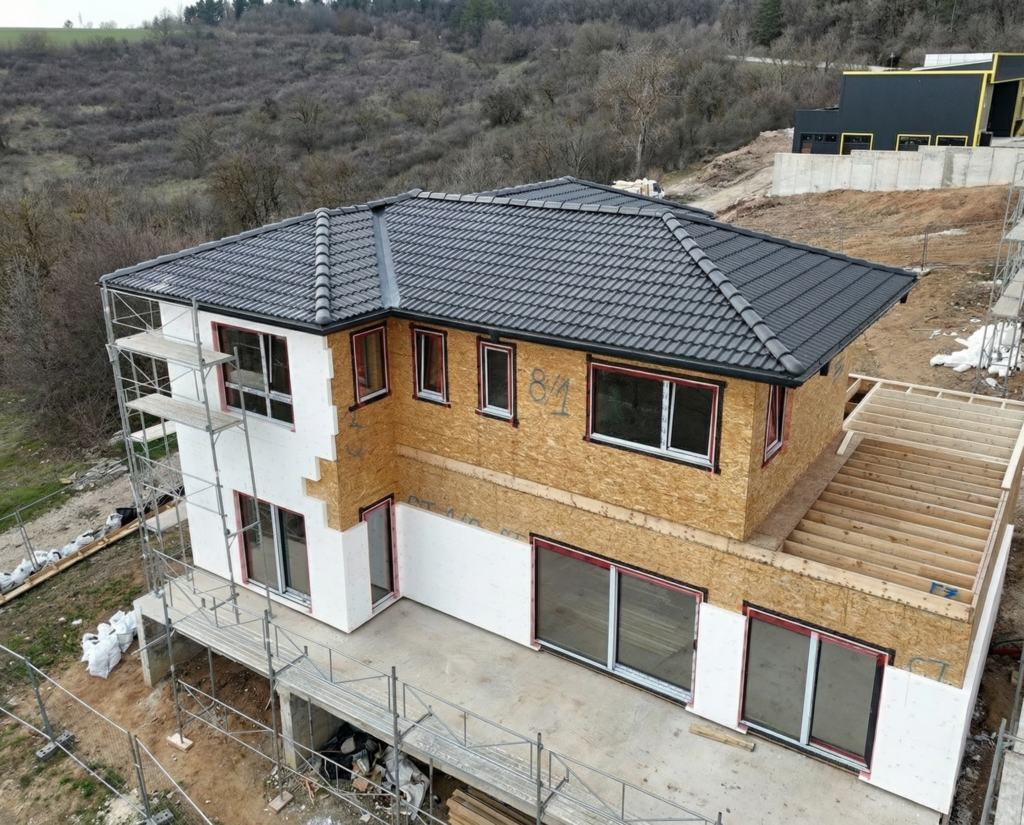
The roof itself is built on two levels – a main roof covering the entire second floor, and a lower secondary roof that covers the veranda, part of the dining room, and the first floor corridor. That two-level structure gives the house so much character from the outside. It’s one of those details that photographs beautifully and that I genuinely couldn’t be happier about.
Was It Worth the Wait?
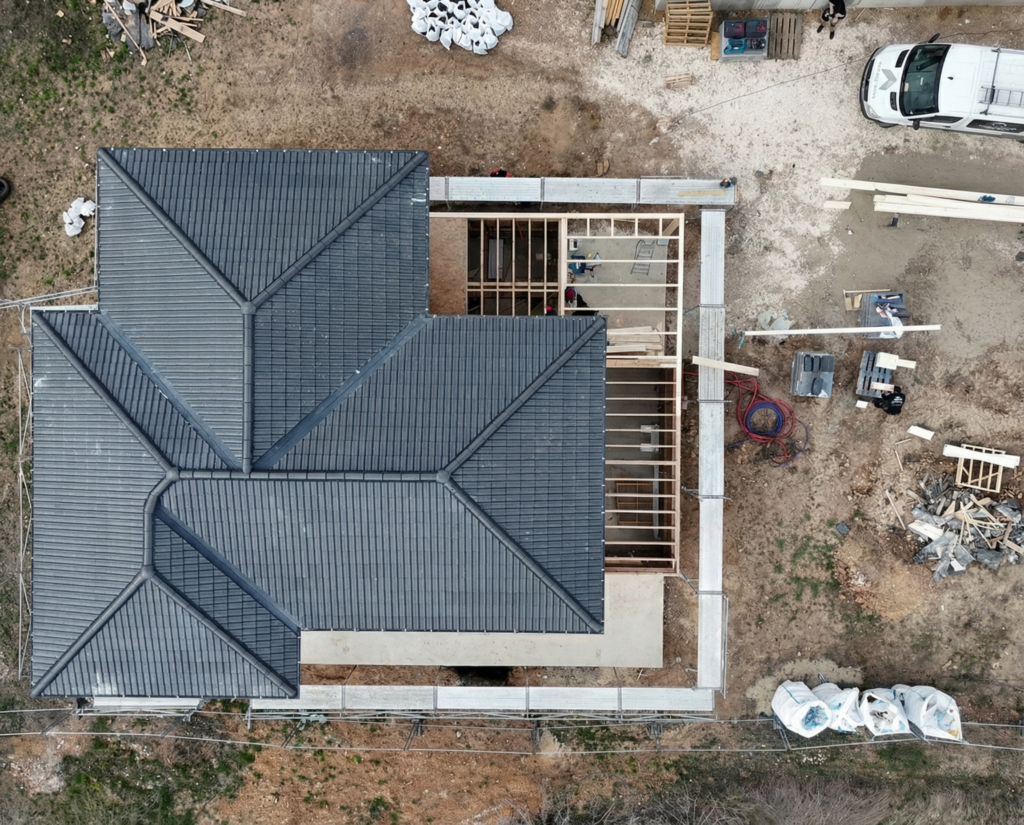
Did it take longer than we expected? Yes. Significantly. Did every extra week feel frustrating in the moment? Also yes.
But standing here now looking at it – the anthracite tiles, the two levels, the whole thing finally complete and protecting everything underneath it – I wouldn’t change any of it. Not even the hard parts. Maybe especially not the hard parts.
If you’re on your own building journey and you’re in the middle of one of those hard stretches right now – the flooded basement moment, the endless winter moment, the when-will-this-ever-be-done moment – I just want to say: it gets to this point. The point where you look at what you built and it feels worth every single difficult day.
The roof is done. The house is protected. And we are one step closer to home.
FAQ
How long does it take to build a roof on a new house?
Honestly – longer than anyone tells you, especially if you’re building in winter. Our roof took three months from start to finish, January through end of March. The actual installation work is only part of it – weather delays, material deliveries, and the sheer complexity of a two-level timber frame structure all add time. For a new build, I’d budget at least 6-10 weeks minimum and add a weather buffer on top of that.
What is a cold roof and why would you choose it?
A cold roof is a ventilated roof system where the insulation sits at ceiling level rather than at the roof level, and air circulates freely in the space between. We chose it for the ventilation and energy efficiency benefits – it helps regulate temperature and prevents moisture buildup. If you want the full explanation of what a cold roof actually means and why we landed on it.
Are glossy roof tiles better than matte?
For us, yes – and the reason is purely practical. Glossy tiles with a protective coating repel dust and dirt in a way that matte tiles don’t. On a roof you’re never going to be cleaning regularly, that self-cleaning quality makes a real difference over time. The coating also protects the tile surface from fading and deterioration for years longer than an uncoated matte finish. We looked at four options and the gloss coating was the deciding factor.
What are the layers of a new build roof?
Starting from the timber frame up – waterproof membrane, counter battens to create a ventilation gap, battens as the base for tiles, and then the tiles themselves. Below the timber frame at ceiling level is the insulation layer – in our case 20cm of insulation wool. Each layer has a specific job and skipping or cutting corners on any of them creates problems later. Getting all of it right is genuinely one of the most important decisions in the whole build.


Leave a Reply