I honestly still can’t believe I’m writing this… but YES — the roof is DONE (almost). And I’m writing it just a few hours before Christmas, which makes it feel even more surreal — like the best kind of “end-of-year” checkpoint.
After what felt like a long (or… maybe not that long?) stretch of time, we’re officially here. Step by step — and suddenly much faster — things just started clicking into place. Can we keep this pace going? I REALLY hope so… because spoiler alert: we’re going to need it.
Let’s be honest for a second — the next challenges? Not exactly for people with weak nerves. But you know what? When the result is literally right there in front of you, every drop of sweat, every “OK, just ONE more screw,” and every tiny renovation drama suddenly feels… worth it. Even with the exhaustion, the noise, the chaos (SO much chaos), there’s something genuinely magical about watching a project come alive.
And here’s the best part — every bit of progress gives us a fresh boost of motivation. Like fuel. The good kind. The kind that makes you forget how tired you are for at least five minutes… These are the moments when it really hits you: yes, all of this effort mattered. And that feeling of a job well done? Truly one of the sweetest feelings in the world.
The Craftsmen Were Next-level
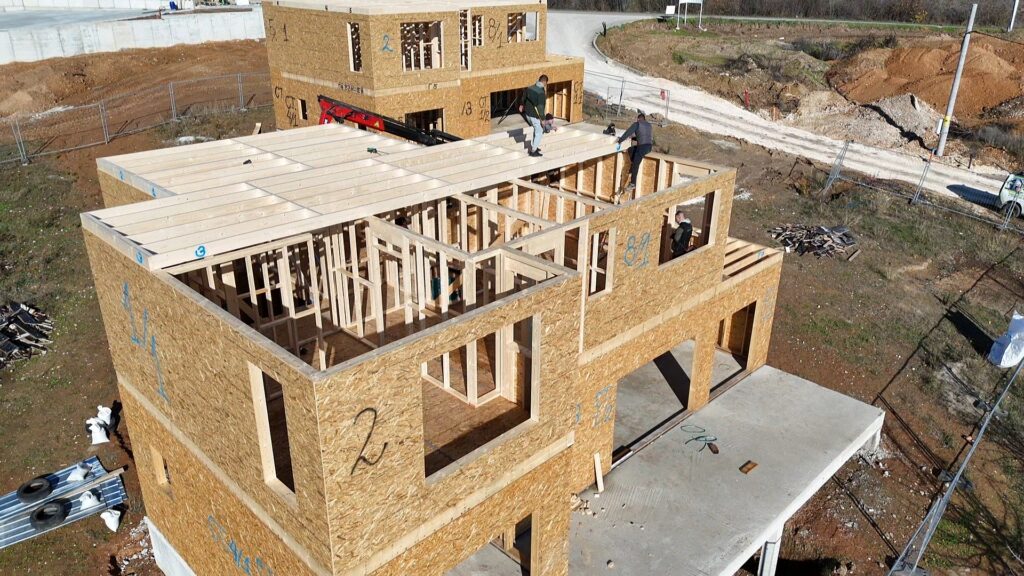
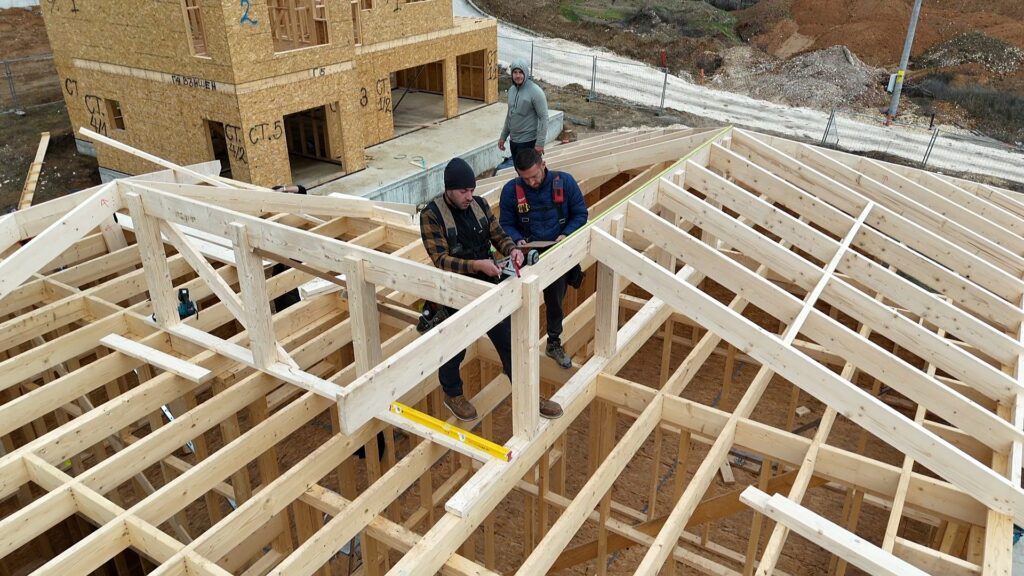
Now — can we talk about the craftsmen for a minute?? Because WOW. They built the timber frame roof structure in what felt like actual seconds. You watch them and think… superpowers? Or just years (and years) of experience? Every beam — perfectly placed. Every detail — finished down to the LAST millimeter. No hesitation. No “uhh, was this right?” energy. Even the tiniest details were thought through, as if every single centimeter of the roof had its own backstory. That’s the moment you realize: you’re in VERY good hands. Pure professionalism. Top level.
And as if that wasn’t enough — the weather tried its best to make everything harder… haha. Cold, rain, fog — the full winter package (the only thing we didn’t get was snow (EDIT: we got it)). It wasn’t exactly comfortable, and it definitely wasn’t “easy mode,” but the work still kept moving. If anything, watching them stay focused and consistent in those conditions made it even more impressive.
That reality made us even more detail-obsessed. The team worked fast — but never rushed. Big difference. Every beam, every screw, every bracket got the attention it deserved. And in moments like this, you really understand how valuable experience and perfectionism are. This is the kind of work you trust — without question.
This Roof is not “Standard” (and that’s why we love it)
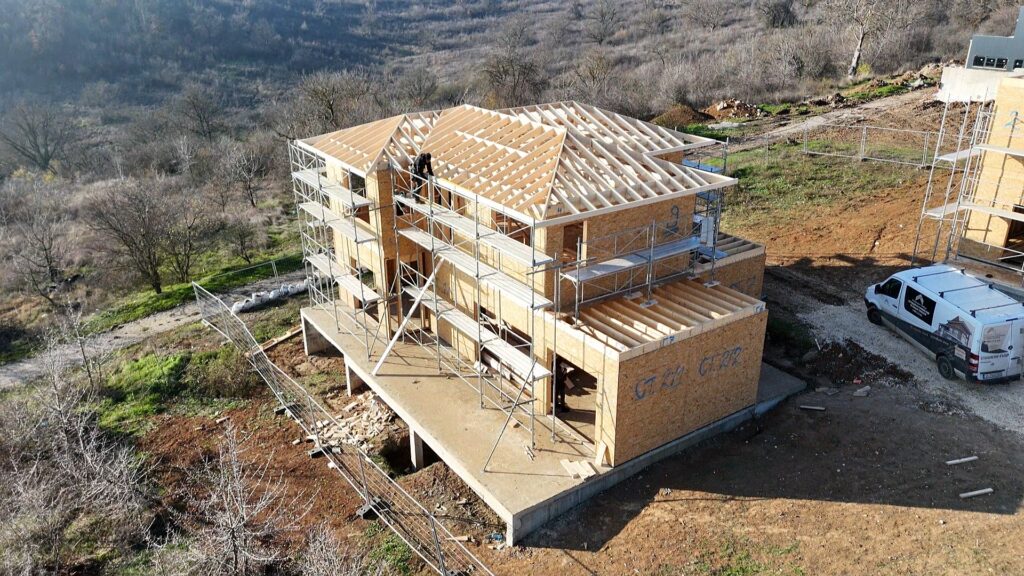
Now — let’s get into the roof itself. Because no, this is NOT a standard, straight roof. Not even close. It’s multi-level (because the first floor is larger than the second), AND we added the veranda roof into the mix… so yes — it’s a bit of an architectural puzzle.
Intimidating at first? Absolutely.
But once everything starts falling into place, you realize why the challenge was worth it — and why the timber frame roof design mattered from day one.
From “It looks done” to “It’s Done Properly”
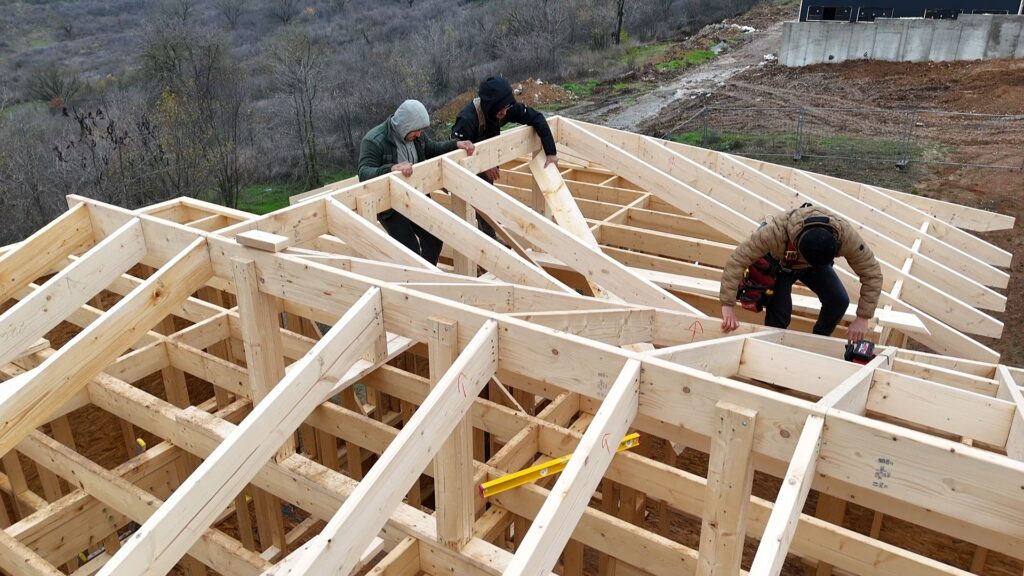
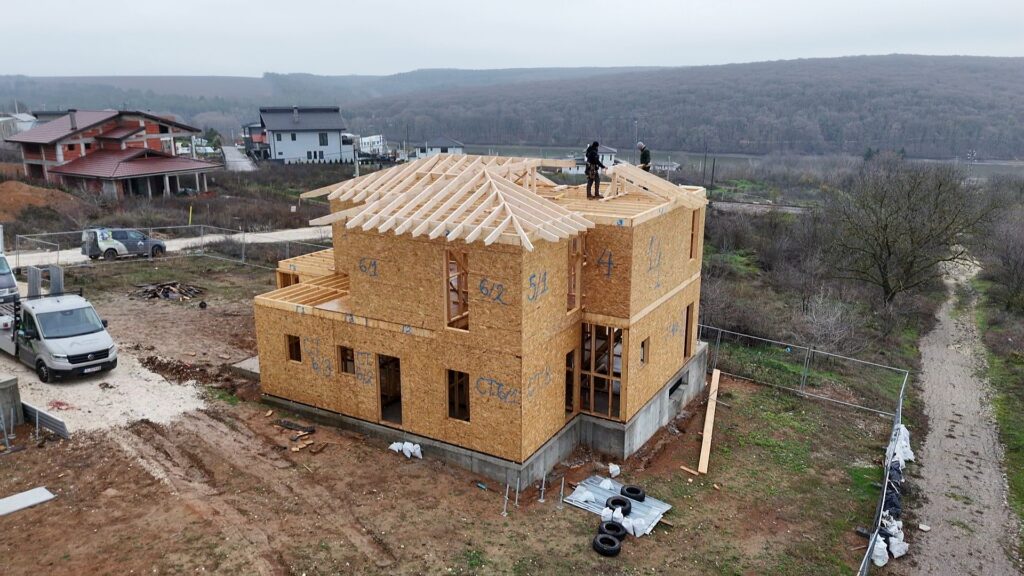
And here’s where the “it looks done” part meets the “it’s actually done properly” part. Once the structure was finished and the geometry finally made sense from every angle, it felt like a natural pause — not a stop, but a shift. That moment when the framing is no longer just a collection of beams, but a real, readable form.
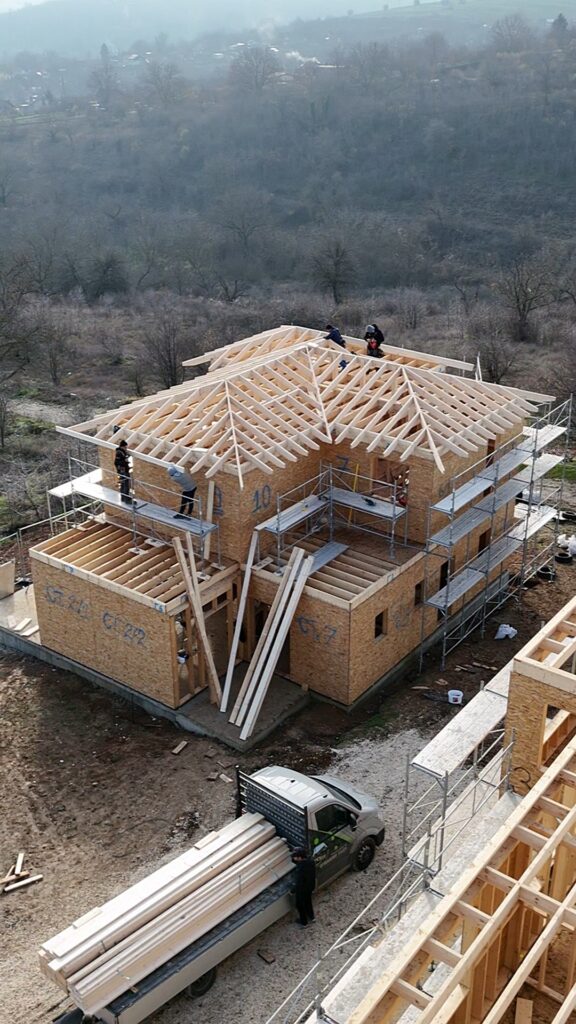
Walls, floors, roof — the entire house is built from the same spruce C24 structural timber, and at this stage you really start to appreciate that consistency. Everything feels intentional, solid, and calm in a way that’s hard to describe unless you’ve watched it come together piece by piece.
The Roofing Membrane (the quiet hero)
With the shape locked in, the focus moved almost immediately to protection. Not the flashy, final kind — but the quiet, essential layer that makes everything else possible.

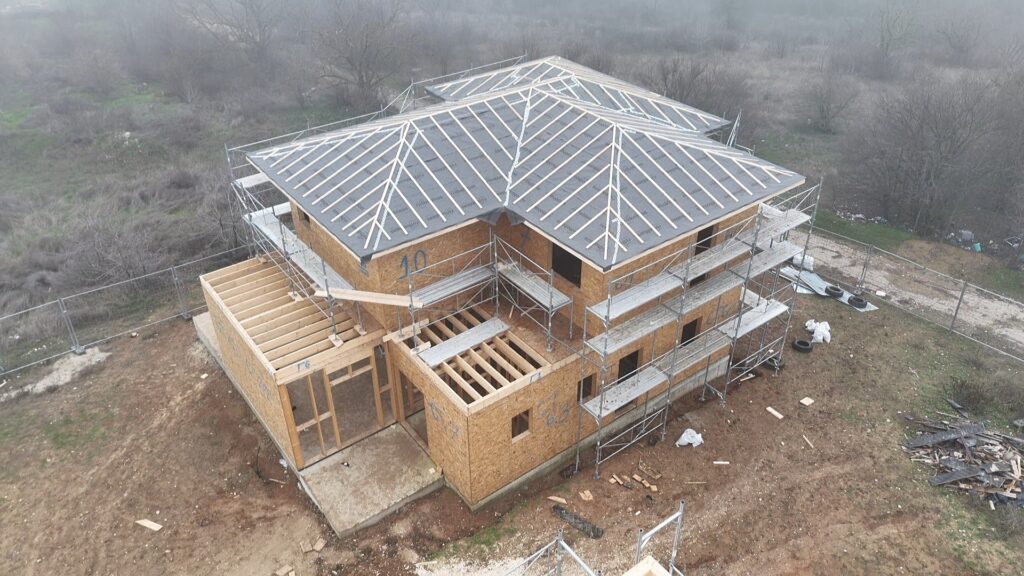
This is when the roofing membrane went on. We used a Rothoblaas breathable membrane, laid directly over the rafters, starting from the lower edges and working upward, following the roof lines exactly as they’re meant to shed water. Each layer overlaps the one below it, because that’s how roofs are supposed to work — no clever tricks, just physics and experience doing their thing.
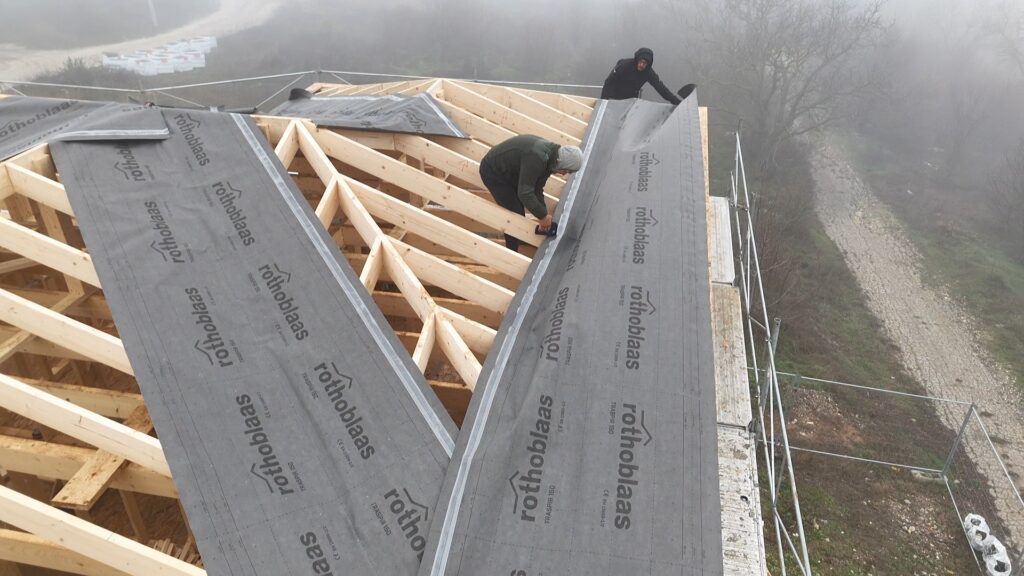
Watching this part of the process is oddly satisfying. There’s a lot of care involved, especially around the hips and valleys, where the membrane is shaped and fixed with extra attention. These are the spots that matter most, the places where water would try to test the system first. Done right, they simply don’t allow it. And that’s the point.
What I really appreciate about this membrane is that it does two jobs at once. From the outside, it’s completely waterproof — rain, fog, snow, all handled. From the inside, it stays vapor-permeable, letting moisture escape instead of trapping it inside the structure.
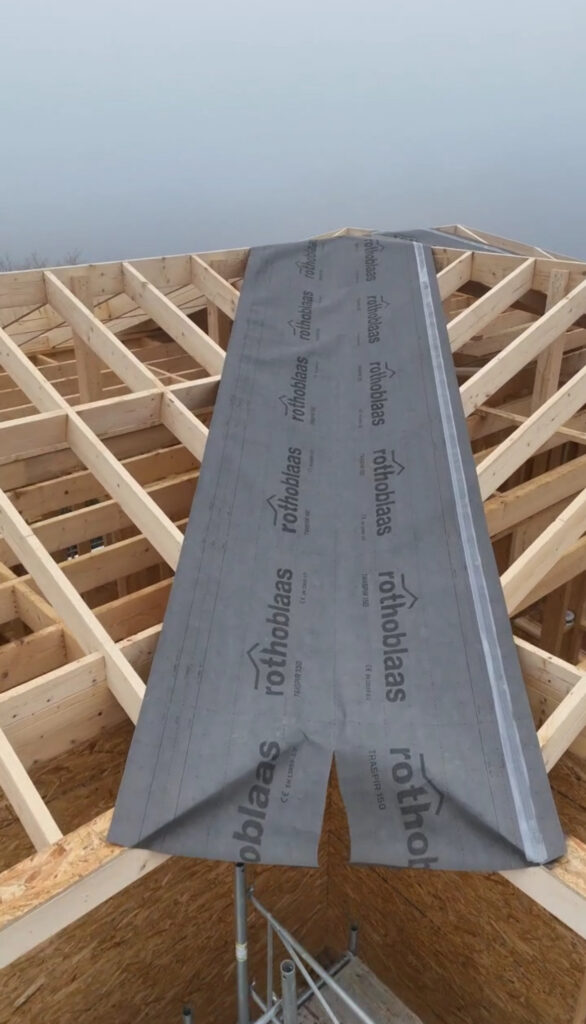
That balance is crucial, especially with a fully timber house. It protects the wood long-term and keeps the roof build-up healthy. Even without tiles, the house is already dry and secure, which honestly brings a lot of peace of mind.
Counter-Battens + Smart Build-up Details
On top of the membrane, the counter-battens went in, running vertically along the rafters. They’re not something you ever see once the roof is finished, but they’re doing important work behind the scenes.
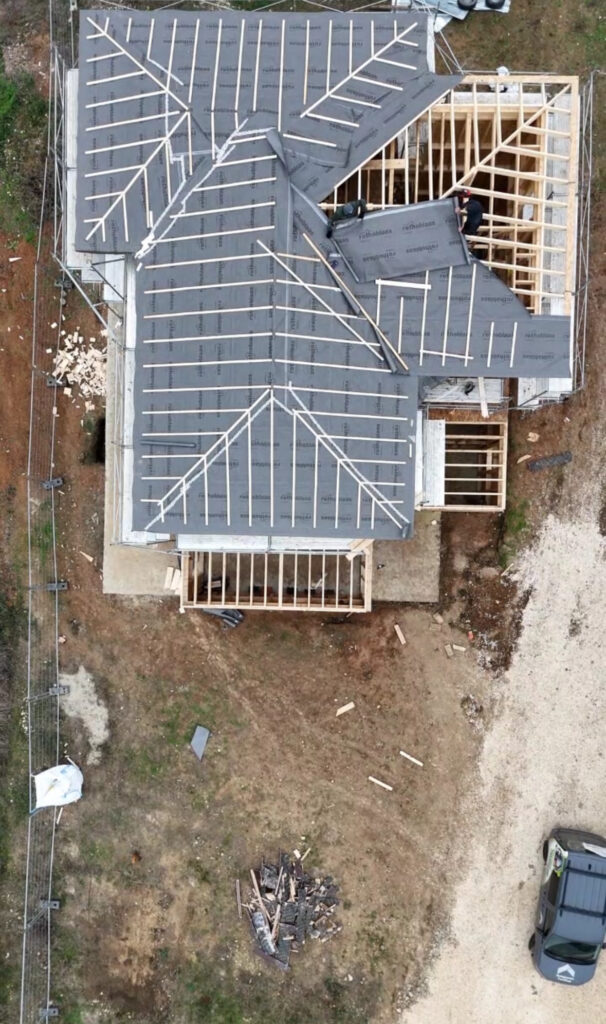
They create a ventilation gap, allowing air to circulate and any moisture to evaporate or drain safely downward. It’s one of those timber frame roof construction details that isn’t flashy, but makes a huge difference long-term.
You’ll notice that not all roof areas were closed at once. Some of the lower sections are still at the structural stage, with the joist grid exposed. That’s intentional. Those areas will receive a different roofing system later, suited for low-slope surfaces, and closing them prematurely would only complicate things. This whole phase is about sequencing — doing things in the right order, not rushing just to say something is “finished.”
The Tile Decision (we’re leaning option #4)
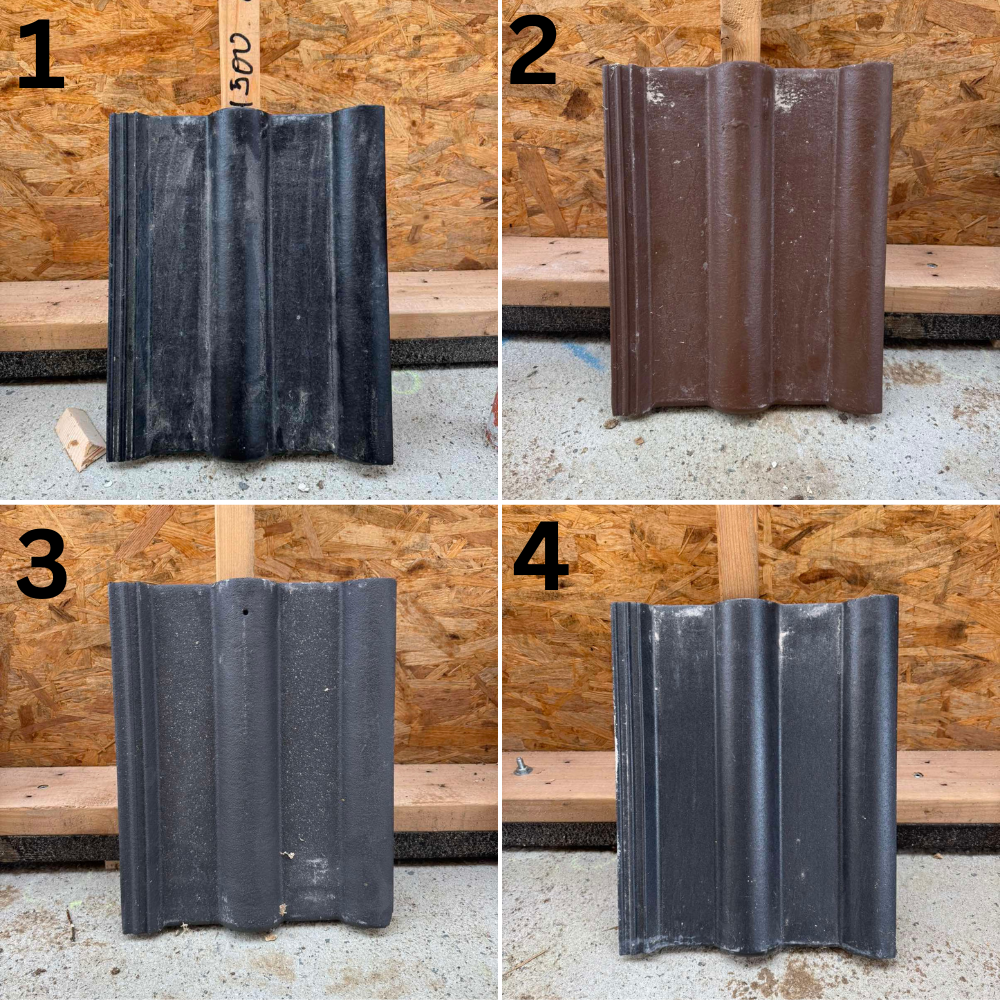
Somewhere between all of this, another decision quietly started taking shape — the roof tiles. Tile color? Surprisingly easy. No long debates. No back-and-forth. We both knew immediately: gray — that modern anthracite tone — was THE color. Clean. Stylish. Timeless. Perfect for the overall look of the house. And most importantly? Not a trend that fades quickly.
Another thing we liked right away is that the tiles come with a protective outer coating. It’s one of those practical details that doesn’t scream for attention, but makes a real difference over time — it helps reduce dirt buildup, slows down moss and algae growth, and generally keeps the surface looking cleaner and more even for longer (aka less maintenance, less “why does it already look tired?” a few seasons in).
But picking the exact tile? That’s where we slowed down and actually looked. We’ve narrowed it down to a few options and have been comparing them side by side, looking at color depth, surface texture, and how each one would sit on the house as a whole.
Right now, we’re leaning most toward option number 4. It has that deep, calm, dark tone that feels modern but not trendy, strong without being heavy, and very much in line with the overall character of the house. Still, this is one of those decisions where different eyes see different things, so if you have an opinion — now’s the time. Feel free to share what you think, we’re genuinely curious to hear it.
And yes, the tiles will come later, after the New Year. With the membrane in place, there’s no urgency — and with the holidays here, everyone’s taking a well-earned pause until January 5th. The house is protected and can comfortably sit like this through winter conditions without any risk. The final layer deserves the right timing and attention, not to be squeezed in for the sake of a deadline.
A Peek Inside: Second Floor Insulation Starts
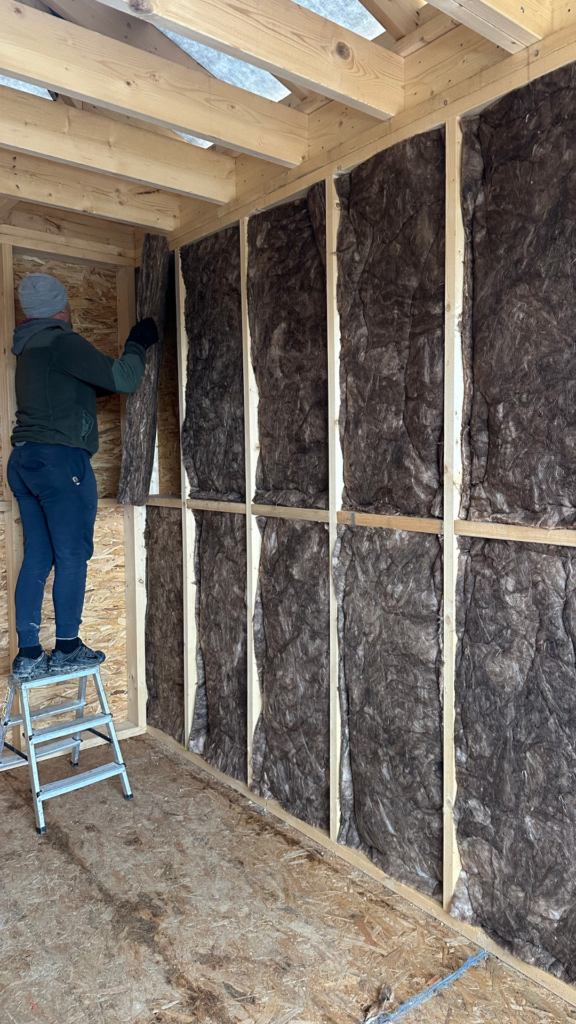
While all of this was happening outside, there was also quiet progress on the inside. If you peek up to the second floor, you can already feel the shift. This is where structure starts turning into living space.
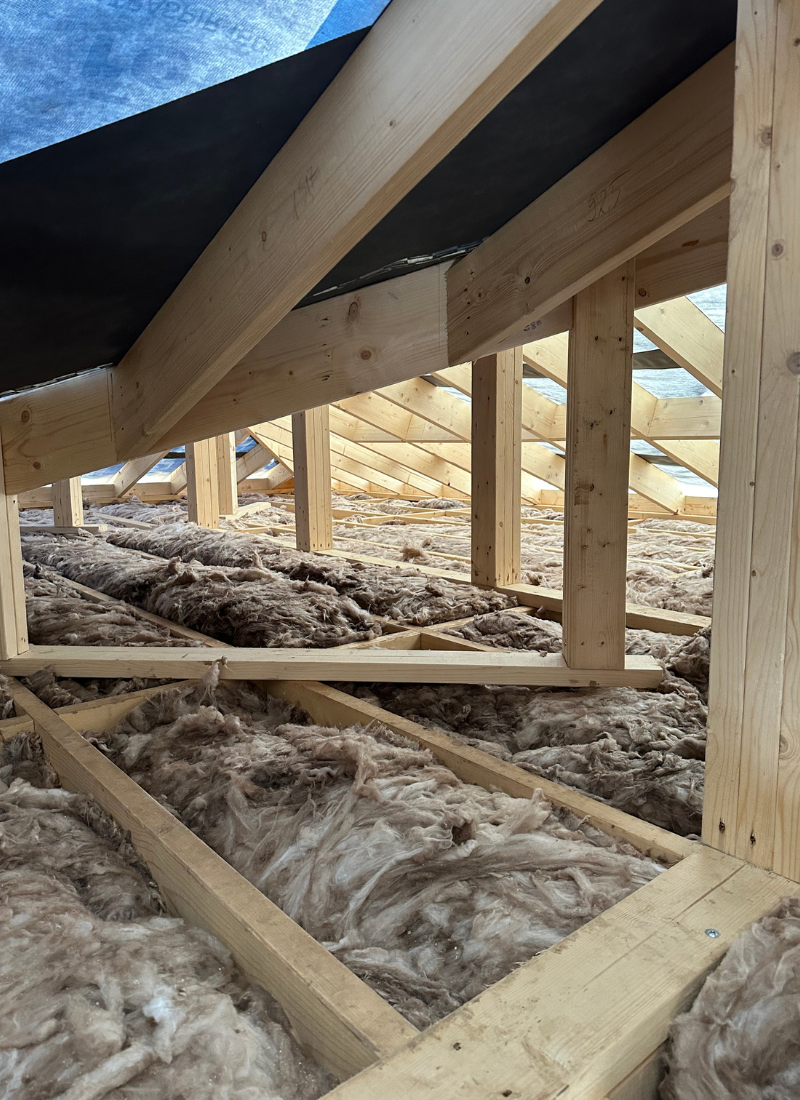
They’ve begun installing 100 mm mineral wool insulation between the studs, fitted carefully so it sits tight and even — and yes, this is the start of the timber frame roof insulation layer that will define comfort later on.
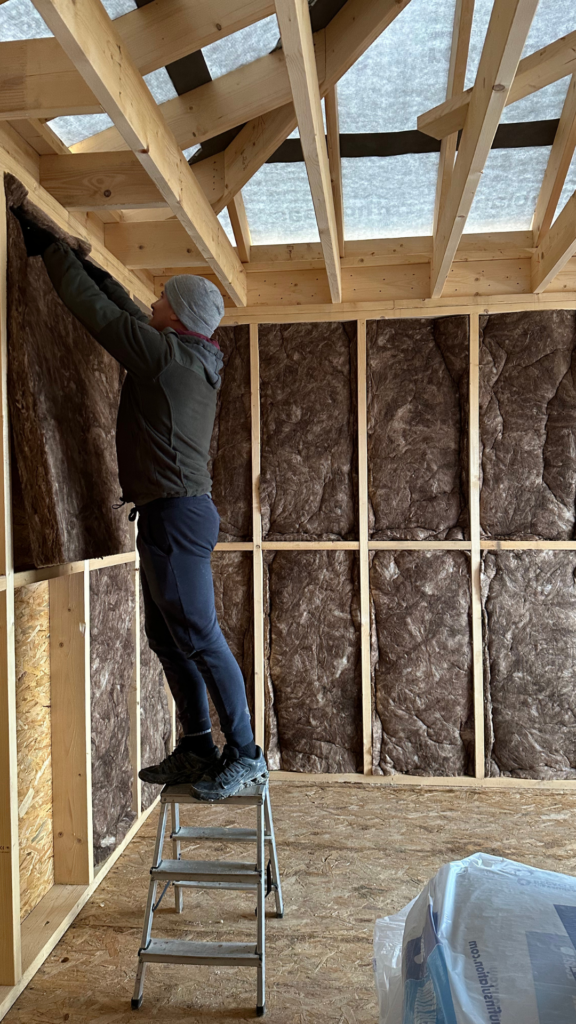
Once the insulation is in place, the interior Rothoblaas membrane follows, installed continuously with proper overlaps and taped seams. Its role is subtle but critical: controlling air movement and moisture so the insulation stays dry and effective over time.
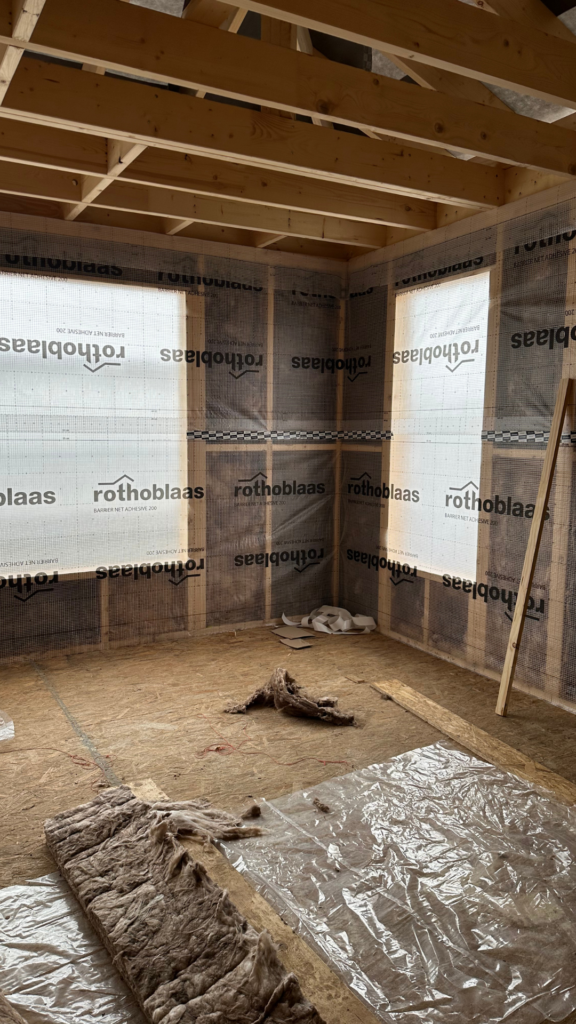
After that, a service cavity will be created, and then drywall will close everything in. It’s a clean, logical build-up, done in the right order, without unnecessary shortcuts.
Solid is the Word
If I had to describe the roof structure with just one word, it would be: SOLID. Not flashy-solid. Real, heavy, dependable solid. Despite all the angles, levels, and architectural “tricks,” the structure turned out incredibly stable and well reinforced.
Nothing was left to chance — and you can feel that immediately. Every wooden element was measured and cut on site. Carefully. Precisely. No rushing. No “close enough.” Everything fit together like it was custom-made… which, well — it was.
Once all the wood was in place, the house was wrapped in a special membrane — and honestly? This part surprised us. A LOT. The sealing was so good that for a second we joked the roof could just… stay like that forever. Rain? Wind? Nice try. Nothing was getting inside. This stage might not look the most dramatic in photos, but the peace of mind it brings is HUGE.
Because when the base is done right, everything else just follows. And suddenly — we’re calmer. And one step closer.
Quiet progress, done right
So yes — the adventure continues. Not always easy, but absolutely one of our favorites: “Our Home.” The road isn’t short. It’s not always smooth. But it’s full of emotion, decisions, lessons, and growth. Some days we’re excited like kids. Other days we’re deep in thought, mentally juggling plans, deadlines, and ideas. But the best part? We can finally SEE it. Not just on paper. Not just in our heads. Right there. In front of us.
Every finished step brings a new wave of satisfaction — and motivation to keep going. Even when we’re tired (VERY tired), building something that’s truly ours… something with soul… is priceless.
This stage might not be the most dramatic visually, but it’s one of the most reassuring. The structure is complete, the house is sealed, and the inside is quietly taking shape. Everything that comes next will build on a solid, well-thought-out foundation. Quiet progress, done properly — which, honestly, is exactly how we want this whole project to feel.
And I already know what writing the next article will mean: another stage done — and one step closer to saying:
“THIS… is our home.”
And since I’m writing this right in the holiday season, I just want to wish you a warm, peaceful Christmas and a beautiful end of the year — wherever you are and whatever your days look like right now. Thank you for following along, and I hope the New Year brings you cozy moments, fresh energy, and exciting progress on all the things you’re building too.