If you’re shopping for kids playroom furniture and your brain is already spinning (cute, but will it survive a juice cup… safe, but will it take over the room… tidy, but will my kid actually use it), you’re in the right place. This guide covers the furniture that makes a playroom feel easy: safe, durable, simple to clean, and flexible enough to grow with your kids.
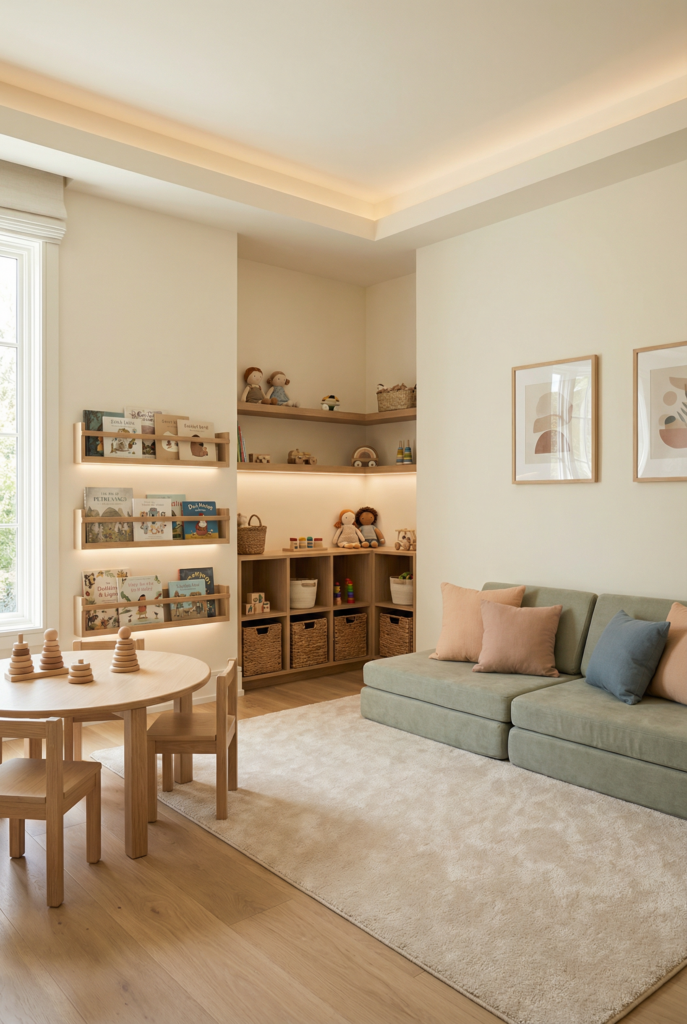
My promise: we’re not building a museum playroom. We’re building a real one. The kind where toys get used, messes happen, cleanup is possible, and you don’t have to rearrange your entire life every night to reclaim the floor.
What to Look for When Buying Kids Playroom Furniture
Before you pick the cutest tiny chair you’ve ever seen, zoom out and think about the job this room needs to do. A playroom is basically a tiny universe: big energy, constant movement, and a rotating cast of toys that somehow multiplies overnight.
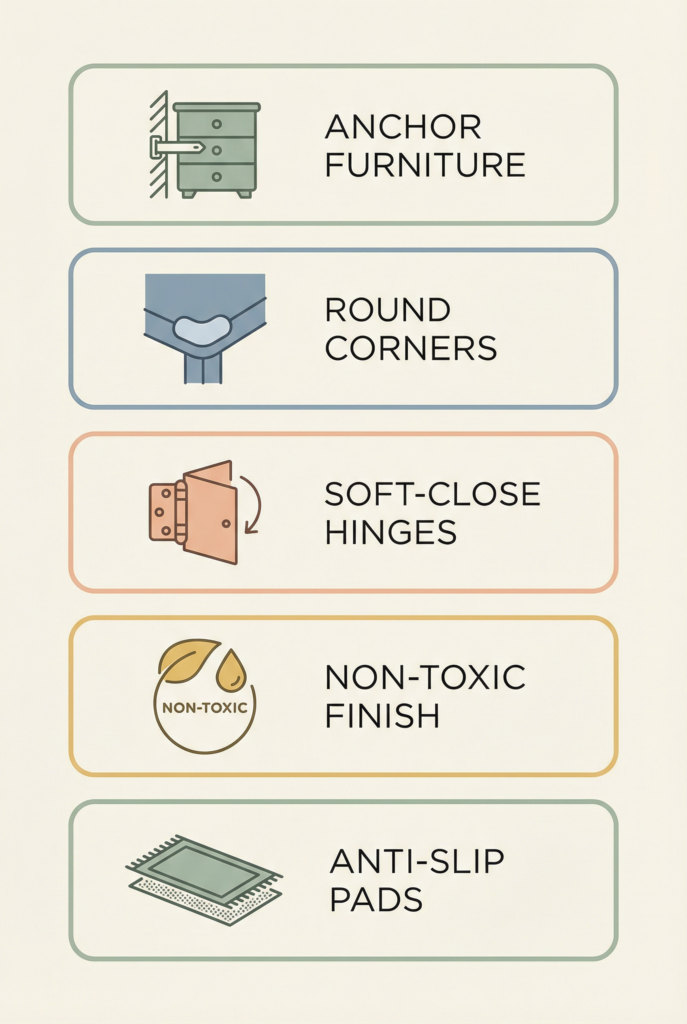
Safety first (rounded edges, tip-over risk, soft-close hinges, anchored shelves)
This is the unglamorous part, but it matters most.
Look for rounded corners and softer edges on tables and storage pieces. Anything tall needs to be stable, and ideally anchored. Tip-over risk is real, especially when kids decide shelving is secretly a ladder (why are they like this).
If you’re buying toy chests or cabinets, soft-close hinges or lid supports are worth it. Finger pinches happen fast. Same with heavy lids that slam. If it can slam, it will slam. Usually right when you turn your head.
Anchoring tall furniture is not optional in my book. It’s the quiet trust-builder move that makes the whole space safer without changing the look.
Durability and easy cleaning (washable covers, wipeable finishes)
Playroom furniture has to survive real life: crayons, sticker residue, mystery smears, kinetic sand that travels in packs, and that one marker you thought was washable (it was not).
I prioritize wipeable finishes for tables and shelving. For seating, removable washable covers are the gold standard. If a cushion cover can go in the wash, you just bought yourself peace.
And if you’re choosing wood, look for sealed surfaces. Raw wood is pretty, but it’s also basically a sponge for apple juice.
Right-size furniture (kid-height tables, reachable shelves)
A playroom works best when kids can actually use it without asking you for help every three minutes.
Kid-height tables and chairs let them sit and create without climbing. Low shelves make it easier for them to grab toys and put them back. And yes, reachable shelves also mean the room stays tidier because cleanup feels possible.
A good rule: if your child can’t reach it, it’s not really “their” storage. It becomes your job, and that’s how resentment is born (ask me how I know).
Flexibility (pieces that adapt as kids grow)
The best kids playroom furniture is the stuff that doesn’t become obsolete in a year.
Look for pieces that can adapt: modular seating, storage that can shift categories as interests change, tables that work for crafts now and homework later. If you have multiple kids, flexibility matters even more because the room will constantly be serving different ages and phases.
This is also why I love furniture that can move around easily. If you can re-zone a room in ten minutes, you can keep up with how your kids actually play.
Modular Seating
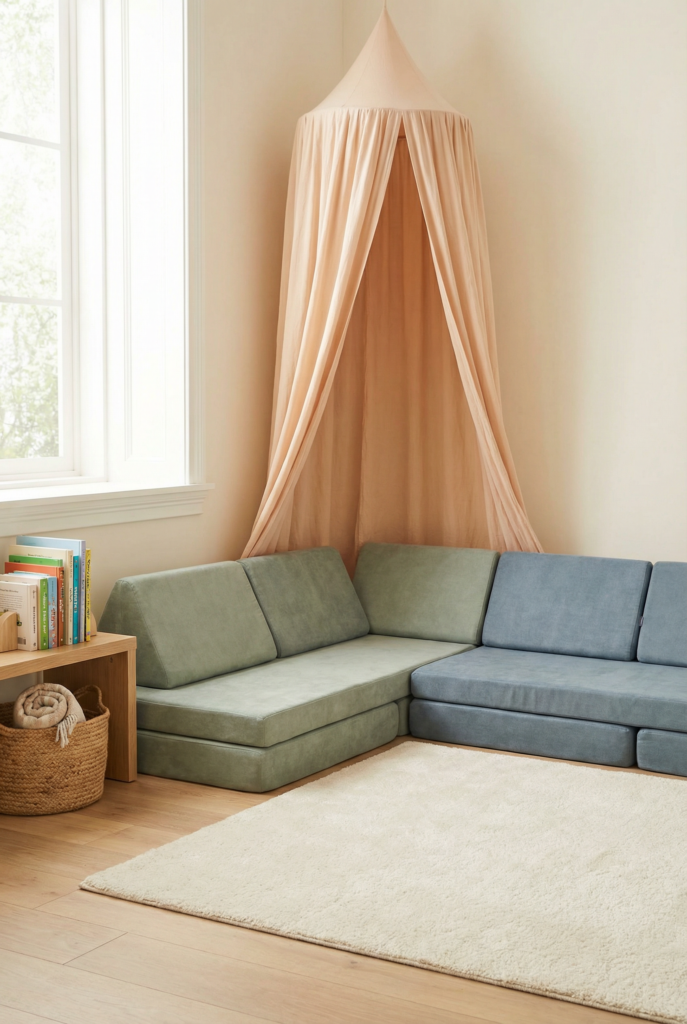
This is the category that makes the playroom feel inviting. Kids are drawn to soft seating like moths to a lamp. Also, it’s where you’ll end up sitting too, pretending you’re only there for a minute, then realizing you’ve been reading the same picture book for 27 minutes.
Foam play couches vs. bean bags vs. floor cushions
Foam play couches are the MVP if you want something that can be seating one minute and a fort the next. They’re flexible, they handle rough play well, and they encourage imaginative movement without you needing to buy extra “stuff.”
Bean bags are cozy and fun, but they can be tricky in small spaces because they sprawl. They’re also not always supportive for long sits, depending on the fill.
Floor cushions are the simplest solution, especially if you’re tight on space. You can stack them, tuck them under a bench, and pull them out for extra seating during playdates. They also make reading corners feel instantly cozy.
If you’re choosing one and you want maximum use, I’d lean foam couch first, then a couple floor cushions as backup.
Washable covers and stain-resistant fabrics
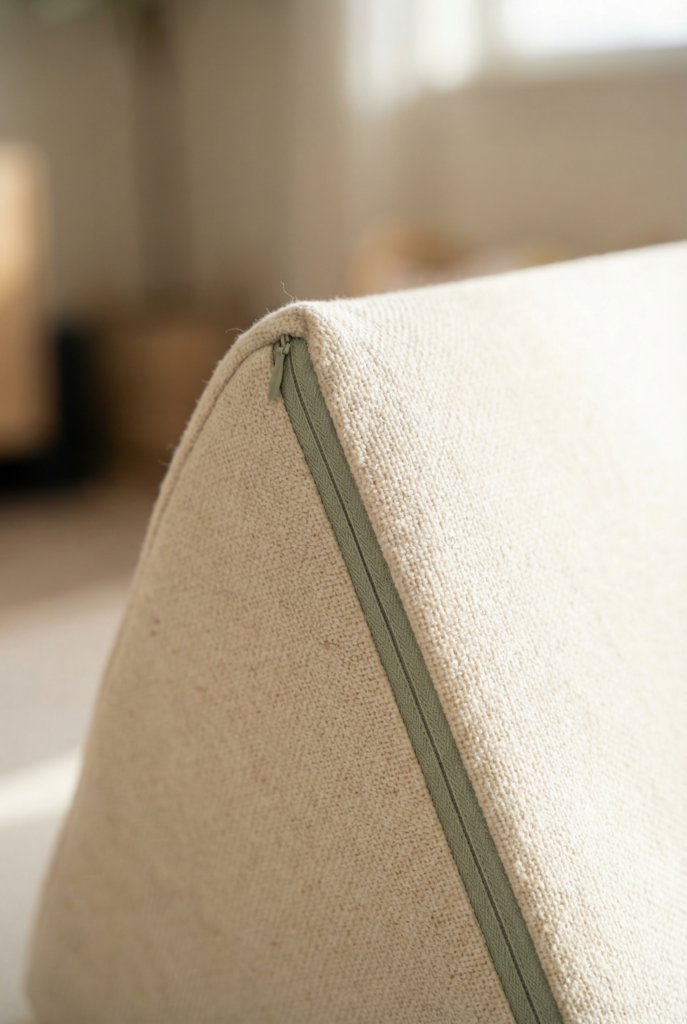
I’m going to say this gently: the best playroom seating is the one you’re not afraid of.
Washable covers are the dream. Stain-resistant fabrics are also helpful, especially if your playroom doubles as a snack zone (and I know it does, even if you don’t want it to).
If you can, choose darker mid-tones or heathered fabrics for the seating. They hide small stains better than bright white. White looks amazing for approximately six minutes, then a child touches it with a hand that has been holding a popsicle, and it’s over.
Creating a reading nook with seating
A reading nook does not need to be a complicated Pinterest production. It needs:
- a comfy seat option (foam couch, cushion pile, small chair)
- a soft light source nearby (lamp, wall sconce, even string lights if you’re feeling whimsical)
- books within reach
If you want it to feel extra inviting, add a small rug and one basket of “favorite books right now.” This is one of my favorite recurring tricks: contain the moment with a basket. It’s a boundary and a reset button.
Multi-Use Tables
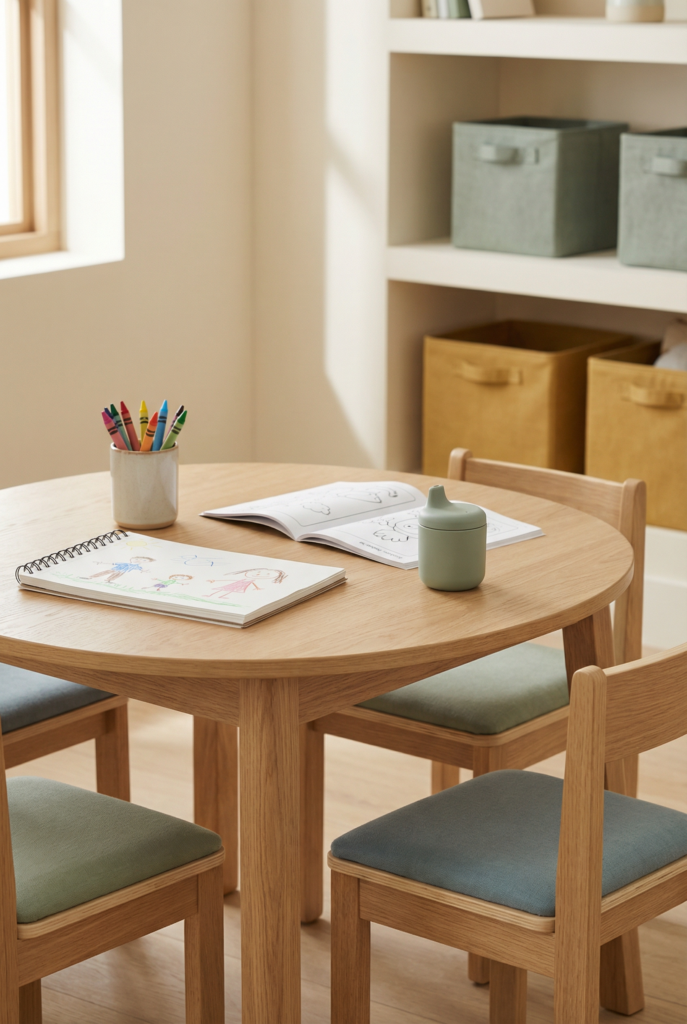
Tables are the underrated playroom hero. They’re where so much happens: puzzles, coloring, blocks, slime experiments you didn’t agree to, and later, homework.
Activity table + craft table + homework station
If your kid is little, a small activity table is perfect for coloring and building. As they get older, the same table becomes a craft zone, then a homework spot.
The key is choosing something sturdy with enough surface area to spread out, but not so huge it takes over the room. In small spaces, a wall-adjacent table or a narrow desk-style table can work better than a big round one.
Also, if your kid likes LEGO, that table will be covered in LEGO. It’s fine. Just accept it early and you’ll feel calmer.
Tables with built-in storage
A table with drawers or cubbies can be amazing for keeping supplies close. Think crayons, glue sticks, scissors, playdough. The goal is not to store every toy in the table, it’s to store the tools that help play happen.
If the table storage is open, use small bins inside it. Otherwise it becomes a visual junk drawer. And I say that as someone who loves an “easy toss” system but still wants the room to feel calm.
Kid-safe chairs and stools that tuck away
Chairs that tuck under the table are a small-space win. Stools are great too, especially if you can slide them under or stack them. Look for stable legs and rounded edges.
If you’re buying chairs, check the weight and sturdiness. Lightweight is great until it tips easily. The playroom chair should feel steady enough that you’re not constantly saying, “Careful with that.”
Storage That Makes Cleanup Easier
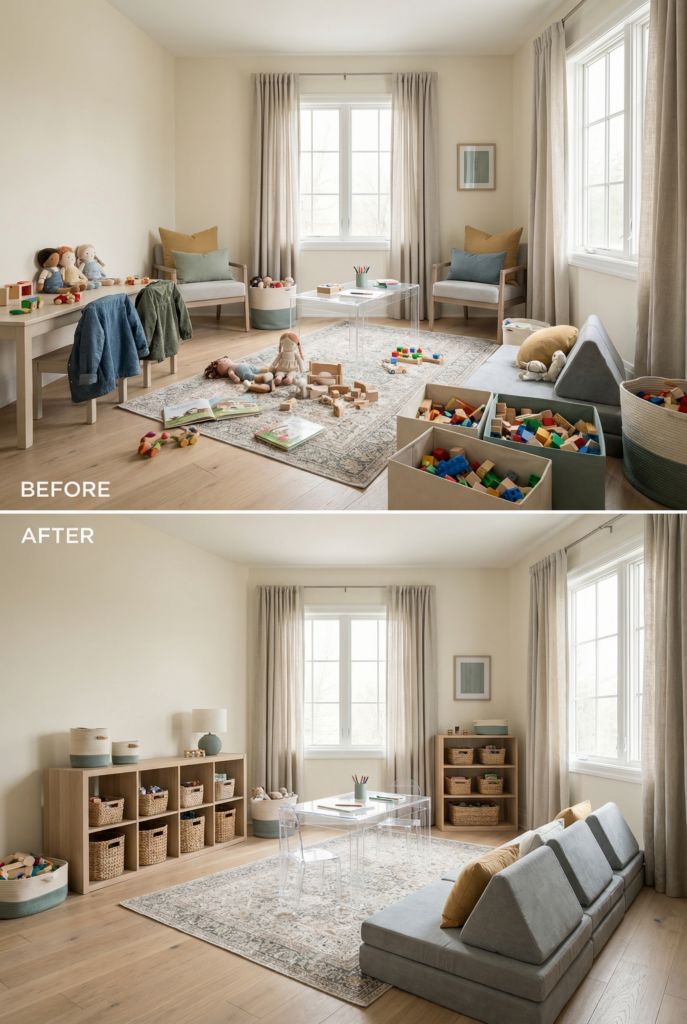
Storage is the part that determines whether you’ll enjoy this room or silently resent it at 8:45 pm when you’re doing the nightly toy sweep.
The goal isn’t perfect. The goal is easier.
Foldable storage bins
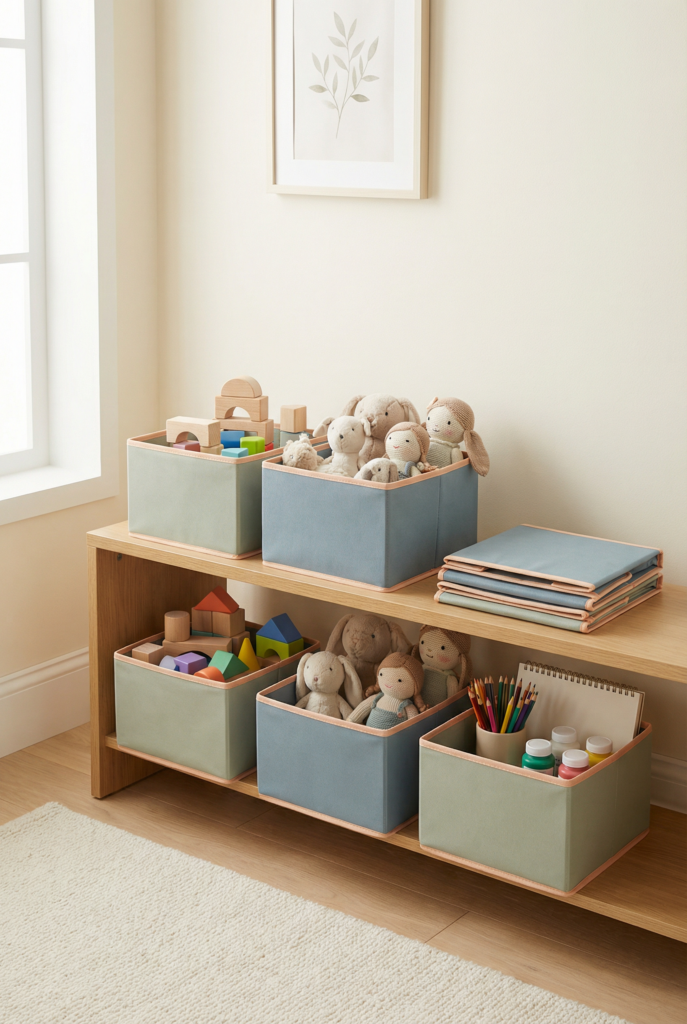
Foldable bins are one of those simple wins that make a playroom more flexible. You can pop them open when you need them, fold them down when you’re rotating toys or reclaiming space, and they’re great for small rooms where you don’t want permanent bulky storage.
They also make “quick cleanup” possible. I love a system where kids can toss toys into a bin without sorting every single piece. Sorting is a later skill. Survival is the current skill.
Cube organizers and labeled baskets
Cube organizers are popular for a reason: they’re the easiest thing to maintain.
The bins hide visual clutter, and kids can learn categories quickly. Labels help. Picture labels help even more for younger kids. If you want it to look cute and not like a classroom, use simple fonts and neutral labels, or woven baskets with small tag labels.
One honest note: cube storage can turn into chaos if you try to categorize too much. Keep categories broad. “Blocks.” “Dolls.” “Cars.” “Art.” If you start labeling “tiny accessories for the tiny accessories,” you will lose your mind.
Toy chests: what to choose (and what to avoid)
Toy chests are tricky. They’re great for quick cleanup, but they can also be a safety hazard.
If you use a toy chest, look for:
- a lid that stays open (hinge support)
- soft-close or slow-close
- ventilation holes
- no heavy slam lid
What to avoid: heavy lids that can pinch fingers or slam shut. Also avoid using one giant chest for everything if your goal is calmer cleanup. When everything lives in one huge chest, kids dump it all out to find one thing, and suddenly your floor is a toy avalanche.
Rolling carts for art supplies and small toys
Rolling carts are a secret weapon, especially for art supplies. You can roll the cart to the table for crafts, then roll it away when you’re done. It’s also great for small toys like magnets, playdough, sticker books, and puzzles.
If your playroom shares space with another room, a rolling cart can act like a portable “play station” that disappears when you need your living room back.
Vertical Shelving and Wall Storage
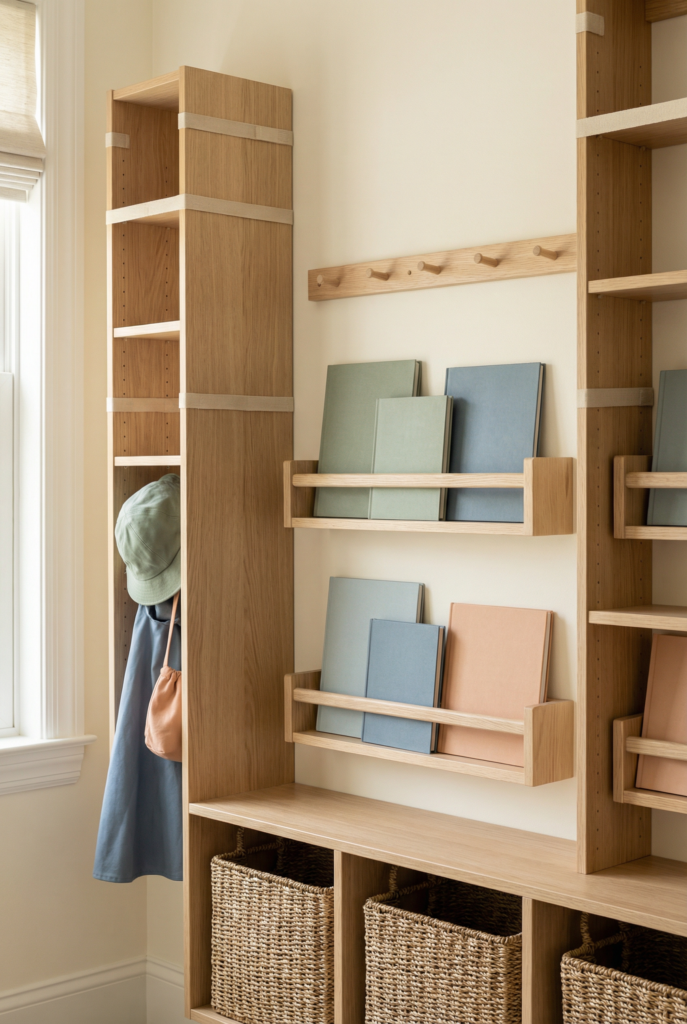
When you’re short on floor space, you go up. Vertical storage is how small playrooms stay functional.
Forward-facing book ledges for little readers
Forward-facing book ledges are such a win for kids. They can see the covers, they can choose books easily, and it makes reading feel accessible.
You don’t need a huge library wall. A couple ledges at kid height is enough. Rotate books seasonally or monthly to keep interest high without buying more books every week (I am saying this while also admitting I am the kind of person who cannot leave Target without a children’s book).
Pegboards and hooks for dress-up + backpacks
Dress-up clothes, backpacks, hats, costumes, sports gear… all of that is wall storage’s moment.
Hooks are simple and they work. A pegboard can be great if you want a flexible setup for changing needs. Keep it low enough that kids can hang their own stuff. The dream is they do it. Sometimes they do. Sometimes they throw it on the floor directly under the hook. We’re aiming for progress.
Anchoring tall furniture (important trust-builder section)
This is worth repeating: anchor tall furniture.
Shelves, wardrobes, tall bookcases, anything top-heavy. Use wall anchors. It takes a little time, and it’s one of the most important safety steps you can take.
I know it’s not the fun part. But it’s the part that lets you relax. And a playroom should let you relax at least a tiny bit.
How to Arrange Playroom Furniture Into Zones
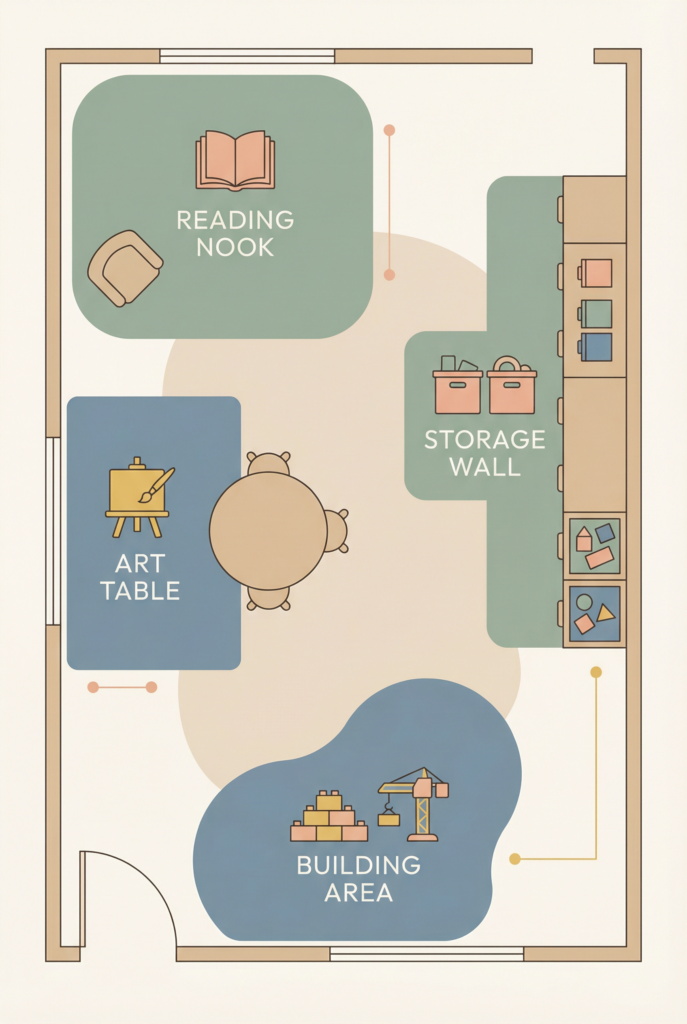
Zoning is how you make a playroom feel organized without demanding constant perfection. Kids naturally play in clusters. Your job is to support that.
Reading nook
Put soft seating in one corner. Add a small lamp. Keep books nearby in a basket or on ledges. A rug helps define it.
This is also the zone that can double as a calm-down spot if your kid needs a quiet moment. Softness matters here.
Building or LEGO zone
This zone needs a hard surface and easy cleanup.
A table works great. A low shelf or bin storage nearby is key. Keep the building toys contained so they don’t migrate across the entire room and attack your feet later.
Unresolved annoyance confession: stepping on LEGO is still one of my least favorite household experiences. There is no furniture solution for that. Only emotional coping.
Art and creativity station
This is table plus supply storage. Rolling cart, drawers, or a small bin system. If you can, keep art supplies separated from toys because once crayons mix with everything else, they are everywhere forever.
Also, if your kid uses paint, have a designated “wipeable surface” plan. A vinyl tablecloth, a wipeable mat, something. Your future self will thank you.
Pretend play storage + rotation
Pretend play creates the biggest mess because it comes with accessories. Tiny food pieces. Tiny dolls. Tiny shoes for tiny dolls. Tiny drama.
The trick is to rotate. Keep a few pretend play sets out, store the rest. You can do it in a closet, a high shelf, or a cabinet. Rotation keeps the room calmer and makes toys feel “new” again without buying more.
Kids Playroom Furniture Ideas for Small Spaces
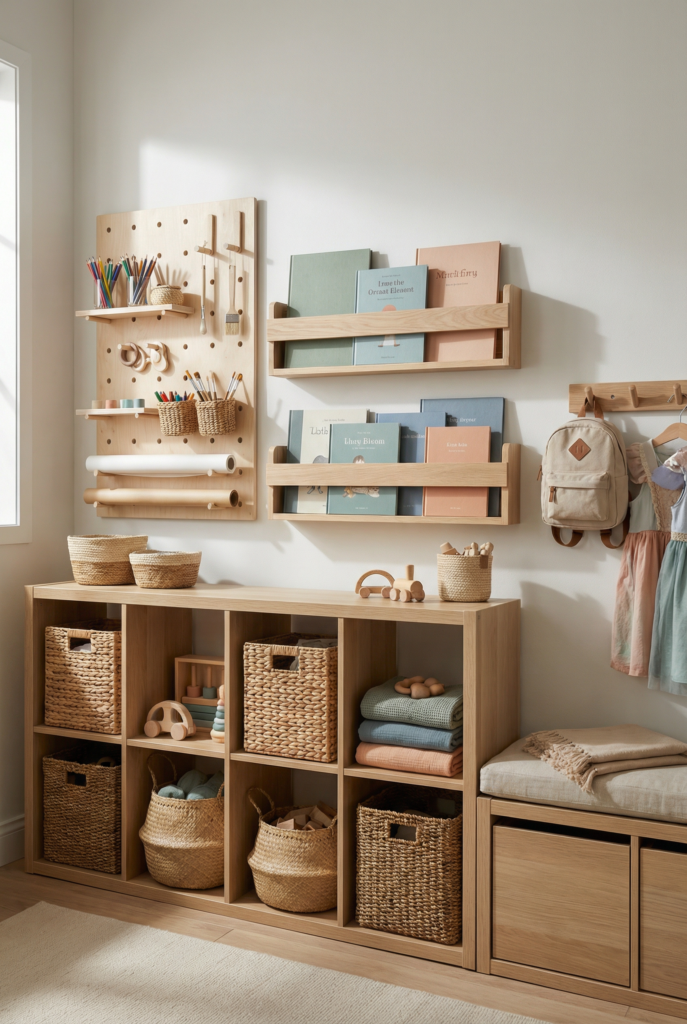
Small playrooms can be amazing. Sometimes they’re easier because you’re forced to be intentional.
Foldable or stackable seating
Floor cushions that stack, stools that tuck away, foldable chairs for playdates. These pieces let you open up floor space quickly.
If you’re using a foam couch in a small space, keep the rest of the seating minimal. One big soft piece plus one or two small cushions is enough.
Under-bench and under-table storage
Benches with storage are a small-space hero. Under-table bins can work too if the table has clearance.
Just be mindful of what goes under there. If it’s too hard to access, it becomes the forgotten zone where puzzle pieces go to disappear.
Use one wall “storage command center”
Pick one wall and make it the storage wall. Cube organizer. Book ledges. Hooks. Maybe a pegboard. This keeps the rest of the room more open.
When storage is concentrated, the room feels less scattered. It’s a visual calm trick, and it helps kids understand where things go.
Best Playroom Furniture by Age
Kids’ needs change fast. Here’s how I think about it by stage.
Toddlers (soft, low, minimal pieces)
For toddlers, keep it simple and safe:
- soft seating
- low shelves
- a small table if they like drawing
- very few big pieces so there’s room to move
Toddlers need open floor space. They also need furniture they can’t easily climb and tip. Low and sturdy is the vibe.
Preschool (more storage + tables)
Preschoolers need more “stations” because they do more activities:
- table for crafts and puzzles
- more storage for categories
- book ledges
- dress-up hooks
This is the stage where labels help a lot. Preschoolers love being in charge of cleanup if the system is clear.
School-age (desk option + display shelves)
School-age kids might need a desk moment for homework or projects. They also start wanting to display things: creations, trophies, collections, all the little personality stuff.
Add:
- a desk or larger table
- a comfortable chair with good support
- shelves for books and display, but keep it curated so it doesn’t become visual chaos
This is also where flexible furniture matters. Interests change. Storage needs change. Let the room evolve.
Quick Styling Tips to Make the Room Feel Calm
A playroom can be fun and still feel calm. The secret is not fewer toys, it’s fewer competing visuals.
Fewer colors, more texture
If every toy is bright, keep the furniture and storage calmer. Neutral bins, wood tones, soft rugs, simple curtains. The toys already bring the color.
Texture adds warmth without adding chaos. Woven baskets, soft rugs, fabric cushions. It makes the room feel homey, not like a plastic play zone.
Labeling that looks cute (and works)
Labels can be adorable. They can also look like a sticker explosion if you go overboard.
Pick one label style and stick with it. Use picture labels for little kids. Keep categories broad. If you want it to look cohesive, match label colors to the room’s palette.
Also, this is my recurring thing: I love a container that makes life easier. Baskets, bins, trays, whatever. Contained mess is still mess, but it feels calmer. That counts.
Toy rotation system
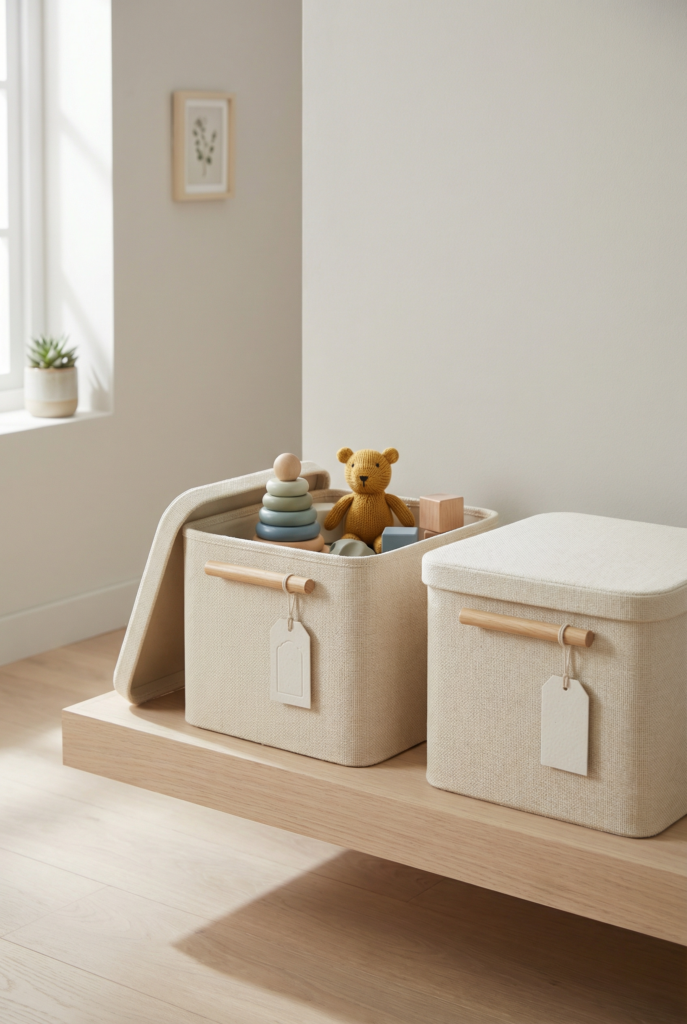
Rotation is the calmest playroom hack. Fewer toys out means easier cleanup, less overwhelm, and kids actually play longer with what’s available.
Store rotated toys in labeled bins in a closet or on a high shelf. Swap every couple weeks, or whenever you feel the room getting chaotic. You’ll be shocked how “new” the toys feel.
Chaotic tangent moment: I once tried to do a toy rotation while my kid was watching, and it turned into a negotiation like I was an international diplomat. Now I rotate after bedtime with a cup of tea and a lot of sneaky energy.
FAQ
What furniture works best in a small playroom?
Choose a few hardworking pieces: low cube storage with bins, a compact kid-height table, and soft seating that can fold, stack, or move. Keep floor space open for play and use vertical storage for books and hooks.
How do I choose space-saving playroom furniture?
Look for multi-purpose pieces like benches with storage, tables with built-in cubbies, and stackable stools. Avoid bulky single-purpose furniture and pick items that tuck away easily when you need the room to flex.
What storage furniture helps reduce clutter in playrooms?
Cube organizers with labeled bins are the easiest to maintain, plus a rolling cart for art supplies and small toys. Broad categories and a toy rotation system keep the room from feeling constantly messy.
What furniture is safest for young children?
Low, sturdy pieces with rounded edges are best. Avoid heavy slam lids and choose toy chests with lid supports or soft-close features. Anchor tall furniture to the wall and skip anything that can tip, pinch, or trap fingers.
How do I arrange playroom furniture for better flow?
Create simple zones (reading, building, art) and keep a clear walking path through the room. Use rugs or low shelves to define areas, but keep the layout flexible so it can change with different activities.
Can foldable or modular furniture help save space?
Yes, especially in small or shared rooms. Foldable seating and modular pieces let you open up floor space quickly, and they adapt as kids grow or interests change.
Conclusion: Start with seating + table + storage, then build from there
If you’re building a playroom from scratch, start with the basics: seating that invites play, a table that supports activities, and storage that makes cleanup possible. Once those pieces are in place, the rest gets easier, and the room starts feeling like a fun space instead of a constant mess.
If you want, tell me what age your kid is and how big the room is, and I’ll help you pick the best “starter trio” for your space. Also, if you’ve already found a magical solution for the tiny-toy explosion problem… please share it in the comments. And if you’re planning the next room, you might also like my guide on setting up a functional home office, because apparently we’re all just rearranging our houses forever.