Japanese garden decor has a way of making a backyard feel quieter without adding more stuff. This is a real-life, livable take on slow paths, simple plants, stone moments, and calm water features that actually work.
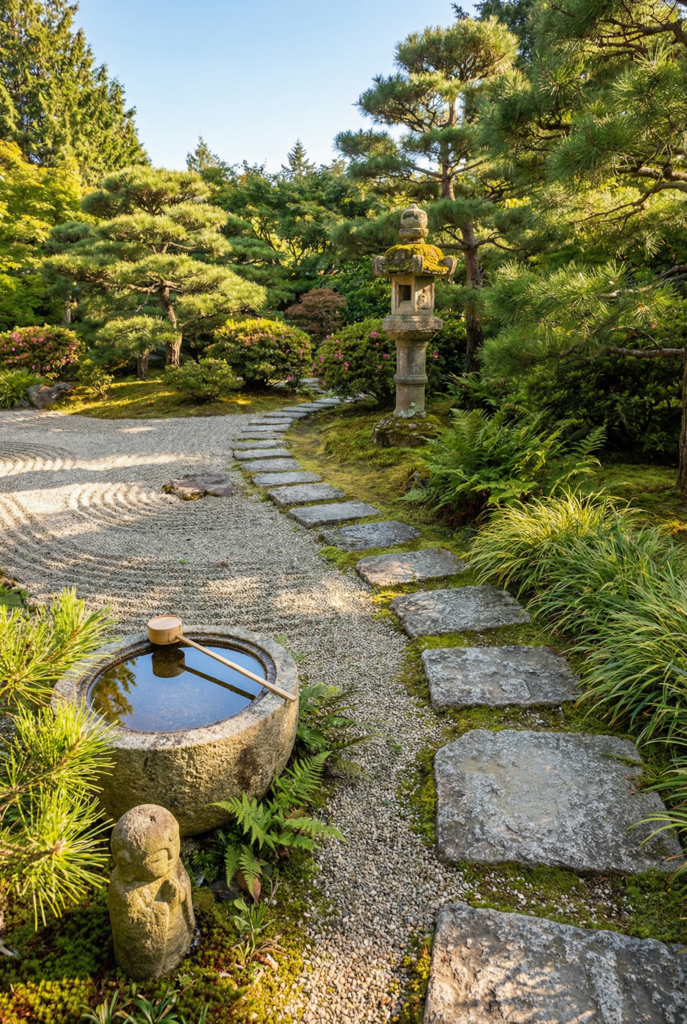
I didn’t wake up one morning and decide to become a Zen Person. This started as a low-level annoyance.
The kind you don’t notice until you’re sitting near a window with coffee at 7:18 a.m., looking at whatever outdoor space you do have and thinking, “Why does this feel… loud?”
Everything was technically fine. There was green. There was space. Nothing was actively wrong. But my brain didn’t switch into calm mode when I looked at it.
It stayed in “scan for problems” mode. And if you’ve ever tried to relax while your mind is mentally rearranging a messy shelf, you know how pointless that is.
That’s how I landed on japanese garden decor. Not as a theme park, not as a strict replica, but as a set of principles that make a space feel quieter. Less stuff. More intention. Nature doing the finishing touches. And yes, a little bit of obsession over stones.
Whether you’re working with a small patio, a shared yard, a side space, or just a view you want to soften, this is how I’d approach creating a Zen-ish retreat that actually calms your nervous system.
What Makes a Garden Feel Japanese (and not just “decorated outside”)
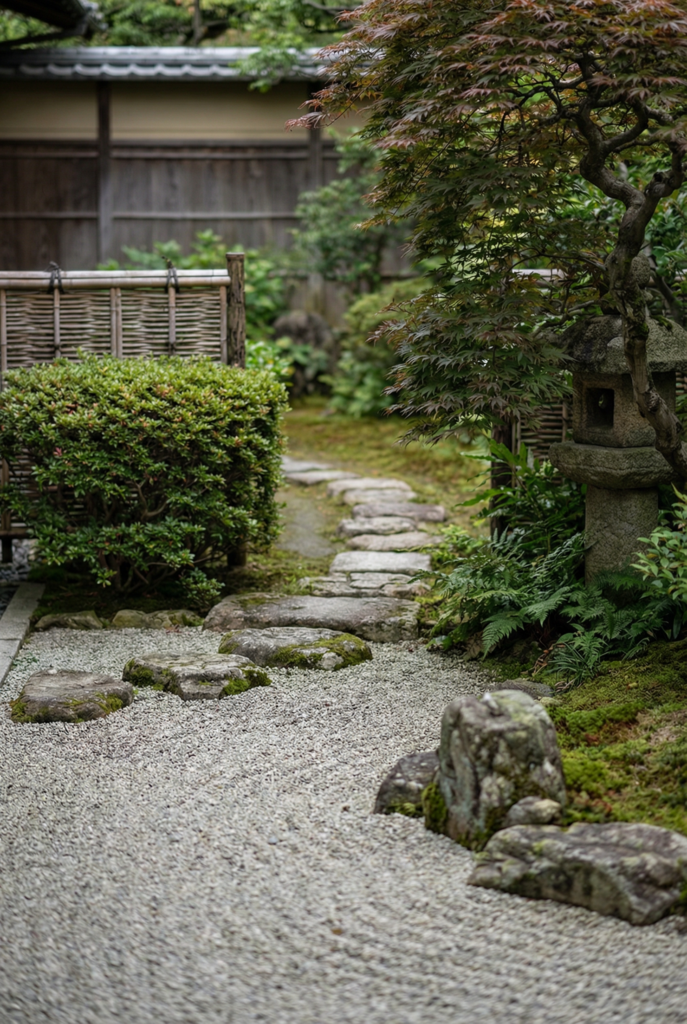
A Japanese-style garden feels Japanese because it’s edited. It’s not trying to show you everything at once. It’s not crammed with “features.” It’s composed the way a great room is composed, with pauses and negative space and one or two moments that actually matter.
The first shift is accepting that simplicity is not emptiness. It’s a design choice. That’s where wabi-sabi sneaks in too. Beauty in imperfection. Weathered stone. Moss that shows up where it wants. A little unevenness that reads like time, not neglect.
People sometimes lump everything into “asian zen garden decor,” which I get, but I’ve found it helps to be specific.
Japanese gardens have particular rhythms and cues. Asymmetry. Natural materials. A sense of mystery. “Hide and reveal” is a big one, where you don’t see the whole garden at once. You have to move through it, or sit and let it unfold slowly.
And because skimming is real life, here are the clean comparisons that kept my brain straight when I was planning.
Related: 26 Japandi Bedroom Ideas You’ll Want to Copy (Like, Tonight)
Japanese Garden vs Zen Garden (karesansui)
| Feature | Japanese garden | Zen garden (karesansui) |
|---|---|---|
| Core vibe | Naturalistic, layered, often strollable | Minimal, abstract, meditative |
| Water | Often real water (ponds, basins, streams) | Usually symbolic (raked gravel as water) |
| Planting | Trees, shrubs, moss, seasonal accents | Very limited, sometimes almost none |
| Movement | Often designed for walking through | Often designed to view from one spot |
| Key materials | Stone, wood, water, plants | Stone, gravel, negative space |
| Best for | Yard that feels like a small landscape | Outdoor zen garden corner, calm and simple |
Kyoto-style vs Edo-style vs Tea garden vs Stroll garden
| Style | What it feels like | Typical elements | Best fit for |
|---|---|---|---|
| Kyoto-style | Quiet, refined, temple-like | Carefully framed views, restraint, contemplation | Small to medium yards, calm mood |
| Edo-style | Scenic, expansive, “take a walk” energy | Ponds, bridges, lanterns, bigger vistas | Larger yards, strolling paths |
| Tea garden (chaniwa) | Ritual pace, intimate, grounded | Tsukubai basin, stepping stones, subtle gates | Courtyards, side yards, entry paths |
| Stroll garden | Storytelling through movement | Meandering paths, layered focal points | Any yard where you want exploration |
This isn’t about rules you can fail. It’s about choosing a lane so your choices feel cohesive.
Paths and Stones that Slow Your Body Down on Purpose
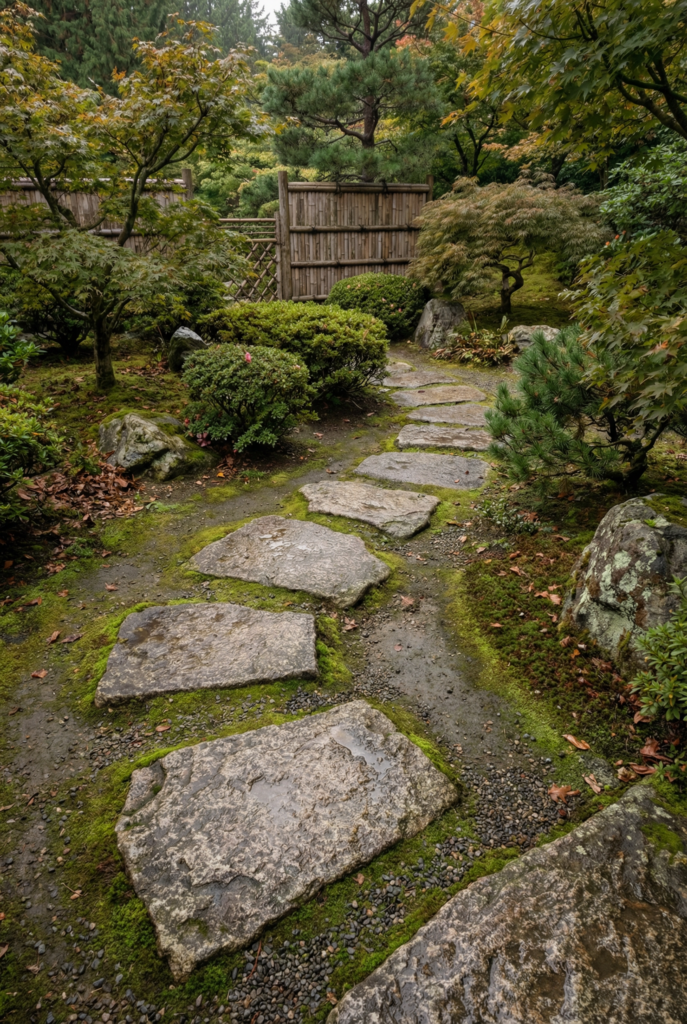
The fastest way to change how your yard feels is to change how you move through it.
Paths are basically body language. A straight line says “get it done.” A meandering line says “you can breathe here.”
I’m obsessed with stepping stones for this reason. Japanese stepping stones make you pay attention without feeling precious. You place them. You test-walk them. You adjust the spacing until it feels natural for your stride, not like you’re doing agility training.
Then you leave a few inches between stones for moss or gravel so the edges soften over time. That soft in-between space is what keeps it from looking like patio leftovers.
If you’re picking materials, natural stone is the dream. Granite paving for gardens is durable, it ages well, and it looks grounded even when the rest of the yard is in a slightly chaotic “still establishing” phase.
In my area, granite stepping stones can land around $20 to $50 per stone depending on size and source, and something roughly 12 by 18 inches is a nice manageable option.
Concrete pavers can absolutely work on a budget, but keep them simple. No fake textures. No loud patterns. Let weather do its thing.
Also, do not underestimate how much a path changes your mood. It sounds dramatic, but it’s true.
Gravel, Raking, and the Outdoor Zen Garden Moment that Surprised me
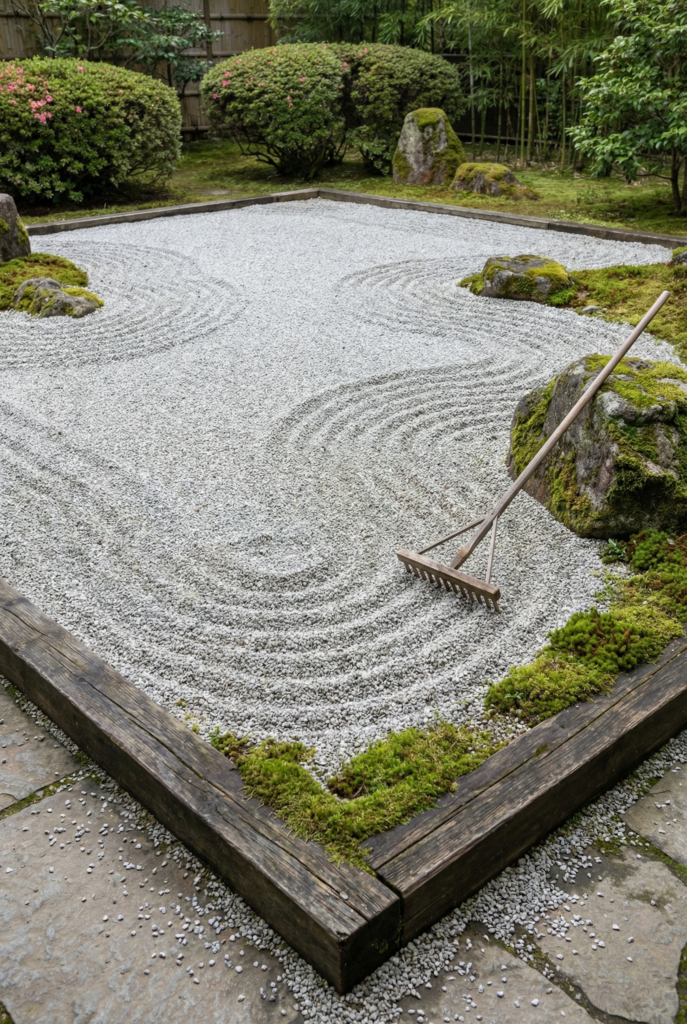
If you want that outdoor zen garden feeling without building a pond or becoming a full-time gardener, gravel is your best friend.
A dry landscape area, even a small one, instantly reads calm. Raked gravel is the classic move, where gravel becomes symbolic water and the lines become visual breath.
The trick is containment and edges. Pick one gravel type. Edge it cleanly so it looks intentional. Level it well so you don’t feel like you’re walking on marbles. Put down weed barrier, then gravel, then accept that you’ll rake it sometimes and ignore it other times. Both are valid.
A wooden rake is the tool that makes this feel satisfying instead of annoying.
I’ve seen Japanese garden tools online that are simple, well-made, and oddly motivating. You rake a few lines. Your brain quiets down.
Then your dog walks through it like a tiny chaos gremlin and you stare into the middle distance for a second. That’s the real wabi-sabi experience.
Related: Zen Office Decor : How I’d Make Your Desk Feel Calm Without Turning It Into a Sad Beige Museum
Lanterns, Pagodas, and Statues Without Turning Your Yard into a Souvenir Shop
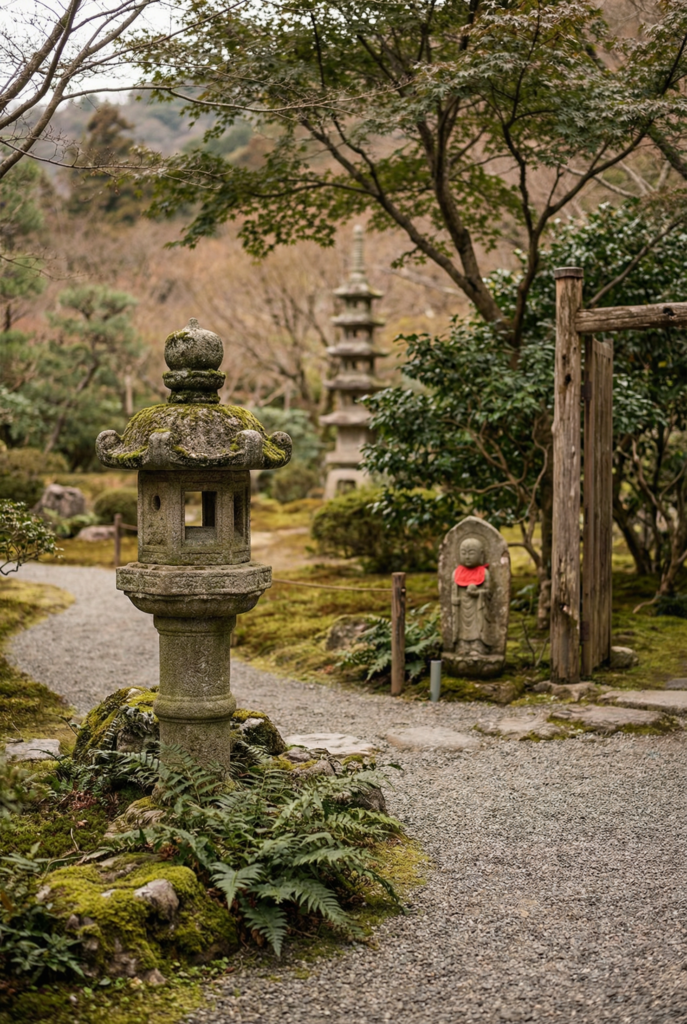
Ornaments are powerful in this style, which is exactly why restraint matters.
A japanese stone lantern can be a gorgeous anchor near a path turn or beside water. A japanese stone pagoda or japanese pagoda temple statue adds vertical emphasis and works best as a distant focal point, not something you plop next to your patio chair.
Material changes everything. Granite feels permanent and develops real patina. Resin is lighter and cheaper, but it can read plasticky up close.
There’s no moral hierarchy here, just tradeoffs. If you’re in a windy area or you have kids who treat the yard like a parkour course, heavy stone has practical benefits too.
For statuary, think meaning over quantity. A jizo bodhisattva sculpture can feel protective and sweet, especially near an entry.
A komainu garden statue makes sense at thresholds. A buddha garden sculpture can be calming near water or under a tree, and a small garden resting buddha tucked into planting feels discovered, not staged.
If you love the aged look, a japanese antique statue or antique buddha outdoor statue brings instant gravitas.
Japanese Ornamental Rock Placement, Symbolism, and the “buying boulders is unhinged” confession
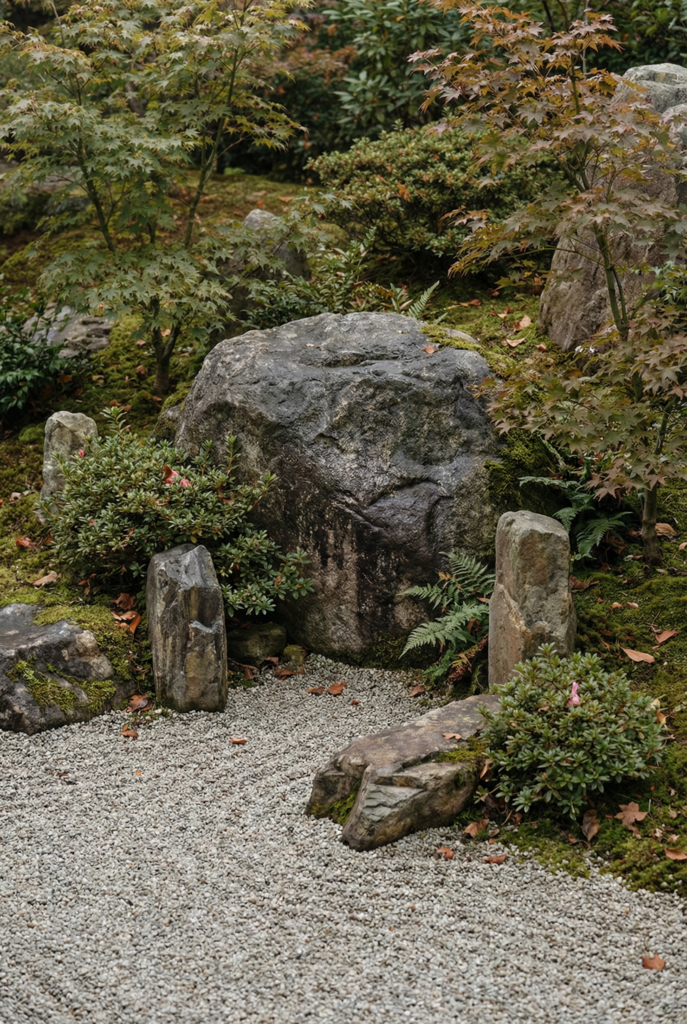
Rocks aren’t filler here. They’re structure. Japanese ornamental rock placement is about creating visual gravity, like putting a solid sofa in a room that feels floaty. A focal boulder or strong rock grouping makes the whole garden feel anchored.
The most important practical tip is burying the base. If a rock looks like it’s sitting on top of the ground like a prop, it will always feel fake. Sink it slightly so it looks like it belongs, like it’s been there for years.
If you like symbolism, rocks can suggest landscape elements. Vertical stones can read like mountains or strength.
Horizontal stones can suggest islands or earth. Gravel can represent water. You don’t need to memorize meanings to do this well, but thinking in those terms helps you build balance.
Also, buying boulders is absolutely unhinged. You’ll be standing at a landscape yard at 7:38 a.m. debating “medium” versus “large” while a forklift guy watches you with polite concern. Then you place it and suddenly your yard feels intentional. It’s annoying how effective it is.
This is also where “hide and reveal” works. Place rocks and shrubs so you can’t see everything at once. Mystery makes small spaces feel larger.
Related: 24 Japandi Kitchen Ideas To Steal
Minimalist Planting that Still Feels Lush

Minimalist planting doesn’t mean empty. It means curated. Fewer plant types, repeated thoughtfully, shaped intentionally, with enough negative space for your eye to rest.
Build it in layers. Structure, then softness, then a little seasonal drama. You don’t need fifty varieties. You need a handful that look good together and can be maintained without resentment.
Evergreens are the backbone. Japanese black pine garden tree and japanese white pine garden tree are classics if your climate supports them, but don’t force a plant that will suffer just because it’s “authentic.”
Holly, yew, compact conifers, and even certain junipers can stand in for that year-round structure in many regions. The key is form, repetition, and pruning.
Then you add groundcover and soft texture. Moss if it thrives. Ferns. Hakone grass. Sedges. Anything that creates a calm green carpet feeling.
Then you add 30 percent seasonal interest, like a Japanese maple for fall color, cherry blossoms for spring, azaleas, camellias, that sort of thing.
And yes, pruning is the whole thing. Shape matters more than volume in this style.
Plant Picks by U.S. Region (so you’re not guessing and crying later)
This is the part where people actually skip, and it’s the part that actually saves you time and money. Your region matters. Heat, humidity, wind, winter burn, and water access change everything.
Northeast
In the Northeast, winter and wind are the main characters. Evergreens can get winter burn, especially if they’re exposed. Pines can work in the right conditions, but shelter matters.
I’d focus on hardy evergreens, protected placement, and mulch that looks natural, not dyed. Japanese maple can be stunning, but give it some protection from harsh winds. Moss can work if you have shade and consistent moisture. If you don’t, lean into ferns and shade grasses instead.
Midwest
The Midwest can swing wildly between hot summers and brutal winters. Choose plants that can take those mood swings. Hardy conifers, yew, and resilient shrubs can provide structure. Japanese maple can work in some areas but may need protection from extreme cold and scorching wind.
Pay attention to drainage. Freeze-thaw cycles can shift stones, so set stepping stones and edging carefully and expect minor adjustments over time. This is also where gravel areas shine because they’re less fussy than delicate groundcovers.
South
In the South, heat and humidity are your reality. Pick plants that won’t melt. Camellias and azaleas can do well depending on exact conditions, and evergreen structure matters a lot because the growing season is long and things can get overgrown fast.
Watering consistency is key, especially if you want moss. If your sun is intense, consider shade trees and layered planting to create cooler microclimates. Also, watch your materials. Dark gravel can get hot. Stone can hold heat. Place seating and contemplation spots where afternoon sun won’t roast you.
West Coast
West Coast conditions vary a lot, but generally you’re thinking about drought tolerance, wind, and sometimes salt air depending on location.
Drought-wise, consider plants that can handle less water once established. Gravel, stone, and sculptural pruning can look incredible here.
Japanese maples can work in many coastal or mild zones. Moss may be harder without consistent moisture, so focus on grasses and groundcovers that give that soft movement without demanding constant watering.
Bamboo Containment, Because this Can go Very Wrong
Bamboo can be gorgeous and perfectly on-theme, but you have to be smart. Choose clumping bamboo rather than running bamboo whenever possible.
If you use running bamboo, contain it with proper barriers, raised planters, or dedicated beds with root control. I would rather you have no bamboo than bamboo that takes over your life and your neighbor’s yard too.
A bamboo screen or fence gives you the look without the underground chaos. That’s the move.
Water Features for Gardens that Feel Soothing, not like a Second Job
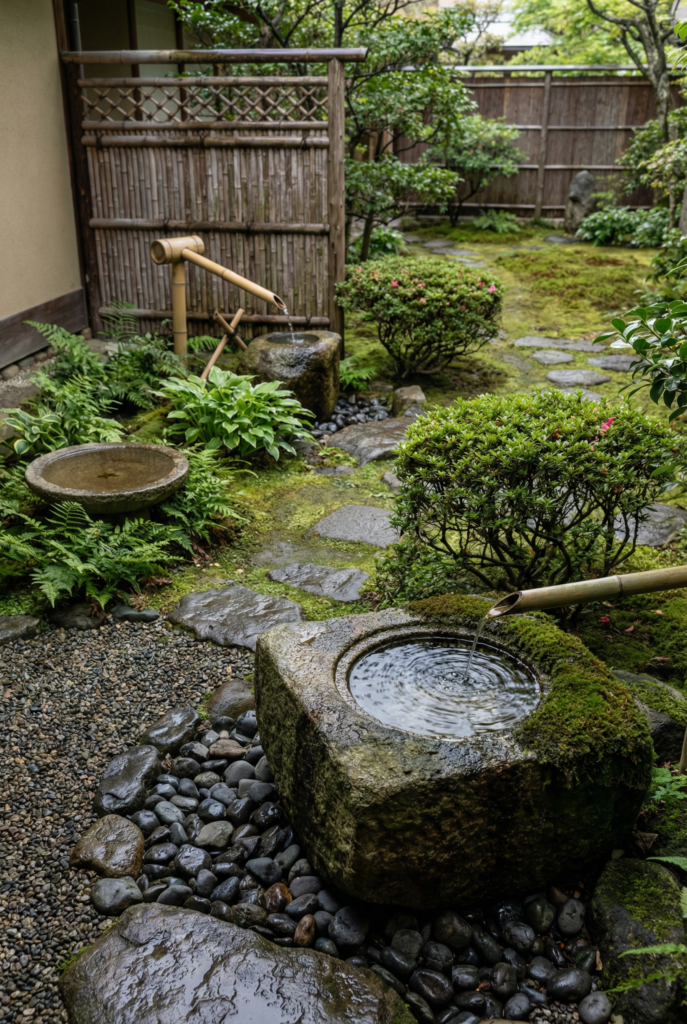
Water is one of those elements that changes the whole mood instantly. You don’t need a pond to get the effect. Even a small circulating basin can shift your yard from “nice” to “I exhale when I step outside.”
A japanese tsukubai water basin is my favorite entry point. Traditionally used in tea gardens, it’s grounded and simple.
You can use a carved stone basin, or you can use a large bowl planter that looks heavy and substantial, then add a hidden reservoir and pump so the water circulates. The sound is the point.
A japanese style birdbath is another low-commitment option, especially if you want birds and movement without plumbing. I like low, simple forms over tall pedestal styles. They feel calmer and more integrated.
Bamboo products for gardens pair beautifully with water. A bamboo spout. A shishi-odoshi fountain element. Bamboo fencing that creates privacy and that hide-and-reveal mystery.
It’s texture and sound, which are the two things that make a yard feel like an experience instead of a collection of objects.
One unresolved annoyance: pump noise. Some hum quietly. Some whine. If you’re sensitive to sound, spend more on a quieter pump. Your future self will thank you.
Japanese Style Buildings, but Make it Realistic

When people hear japanese style buildings, they imagine a full teahouse. You do not need a teahouse.
You need a threshold. A small gate. A screen. A pergola with natural wood. Something that changes how you enter the space.
Sukiya style is the inspiration here: refined rustic simplicity. Natural materials. Nothing shiny. Nothing loud. It’s the quiet confidence of design. The garden does not need a centerpiece structure. It needs rhythm and pacing.
This is also where I confess my recurring Jully thing: fear of drilling. Indoors it’s tile. Outdoors it’s concrete. I will stare at a masonry bit like it’s cursed. If that’s you too, start with freestanding screens, heavy planters, and stone placement. You can create structure without making holes you can’t un-hole.
Where to buy Things and What’s Worth Splurging on
I’m not trying to make your yard a shopping cart, but I do want you to buy smart. Here’s how I’d break it down in real life, with budget, mid, and premium paths.
Stone lantern
- Budget: resin lantern from big-box garden stores or major online retailers
Pros: lightweight, affordable. Cons: less believable up close. - Mid: cast stone or concrete lantern from a local garden center
Pros: better texture, more weight. Cons: not the same patina as granite. - Premium: granite lantern from a stone yard or specialty garden seller
Pros: ages beautifully, feels permanent. Cons: heavy, pricey, delivery logistics.
Pagoda
- Budget: resin pagoda statue online
Pros: easiest entry point. Cons: can look “new” forever. - Mid: cast stone pagoda from garden centers
Pros: more believable texture. Cons: still not true stone aging. - Premium: japanese stone pagoda from specialty stone suppliers
Pros: timeless, heavy, grounded. Cons: expensive, placement matters a lot.
Tsukubai basin
- Budget: large bowl planter with pump and hidden reservoir
Pros: flexible, easier to source. Cons: needs careful styling to feel intentional. - Mid: preformed basin kits from garden centers
Pros: straightforward setup. Cons: can look generic if not styled well. - Premium: japanese tsukubai water basin carved stone
Pros: authentic, gorgeous. Cons: heavy and often pricey.
Pump
- Budget: basic submersible pump from big-box stores
Pros: cheap. Cons: can be louder. - Mid: adjustable-flow pump from a pond supply retailer
Pros: better control, often quieter. Cons: costs more. - Premium: quiet-rated pump from specialty pond suppliers
Pros: sound matters. Cons: you pay for peace.
Bamboo screen or fence
- Budget: rolled bamboo fencing from hardware stores
Pros: fast privacy. Cons: can weather quickly. - Mid: framed bamboo panels from garden centers or specialty shops
Pros: cleaner look. Cons: higher cost. - Premium: custom bamboo screening
Pros: tailored. Cons: $$$, and you may need installation help.
Gravel and rake
- Budget: pea gravel and a basic rake
Pros: accessible. Cons: doesn’t read as refined without good edging. - Mid: decomposed granite from landscape suppliers + wooden rake
Pros: better texture, more “Zen.” Cons: needs good containment. - Premium: specialty gravel + quality Japanese garden tools
Pros: the feel is chef’s kiss. Cons: more maintenance expectations.
Buddha, Jizo, or komainu statue
- Budget: resin zen garden statue online
Pros: affordable. Cons: can look too crisp. - Mid: cast stone Buddha or Jizo from garden centers
Pros: weight and texture. Cons: limited styles. - Premium: japanese antique statue, antique buddha outdoor statue, or stone komainu from specialty sellers
Pros: patina, character, meaning. Cons: sourcing takes time.
Where to buy in the U.S. without getting weird about it: big-box garden centers for basics, local landscape supply yards for stone and gravel, specialty Asian garden retailers online for specific pieces, and sometimes surprisingly good finds at local nurseries with curated garden decor sections.
Mistakes I See All the Time (and how to avoid them)
Here’s the blunt truth: most “Japanese garden” attempts go wrong because they add too much.
- Too many ornaments competing for attention
- Straight paths that rush you through the space
- Bright mulch or dyed gravel that looks unnatural
- Too many plant varieties instead of repetition
- Ignoring pruning, then wondering why it feels messy
- Symmetry that reads stiff and formal
- Over-lighting at night like it’s a parking lot
- Running bamboo planted in the ground with no containment plan
- Water features placed where they’re awkward to access or maintain
- Trying to finish everything at once, then burning out
The fix is almost always the same. Edit. Simplify. Create one strong focal moment, then let everything else support it.
Three Layout Recipes with “what goes where” and Rough Costs
These aren’t rigid plans. They’re starting points that prevent decision overload.
Small yard (about 10×20 feet)
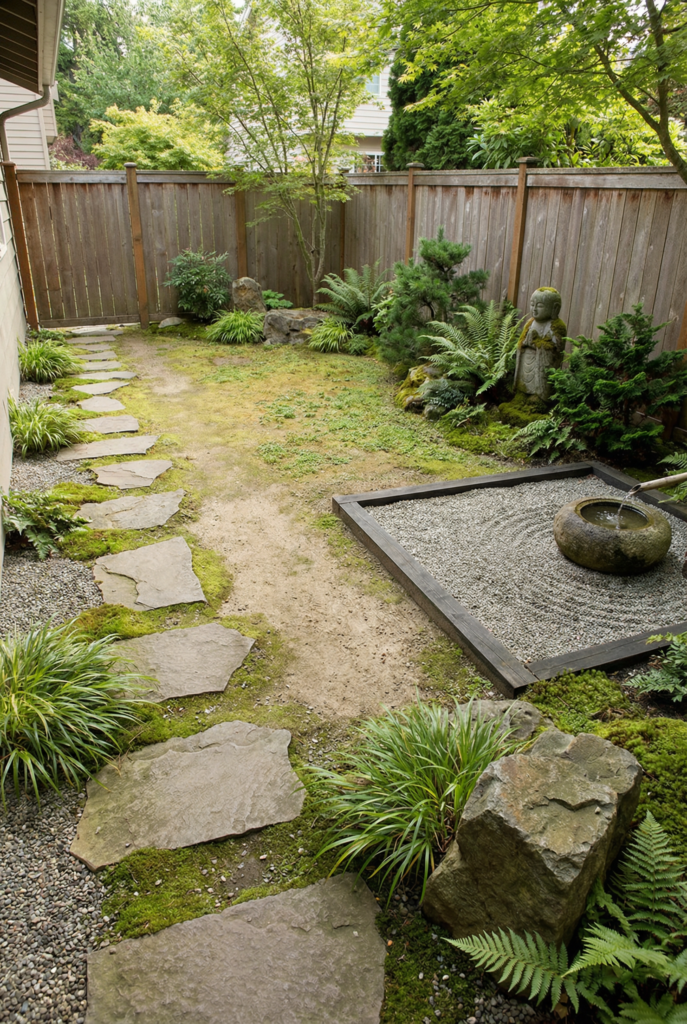
You want one clear path and one calm destination. Place japanese stepping stones along one edge so you still have open space. Add a small gravel area as a mini outdoor zen garden moment, edged cleanly.
Put a large bowl planter water feature or japanese style birdbath near the destination corner. Add one statue, either a small garden resting buddha or a jizo bodhisattva sculpture, tucked slightly into planting so it feels discovered.
Approximate cost: $600 to $1,500 depending on stone and basin choices.
Medium yard
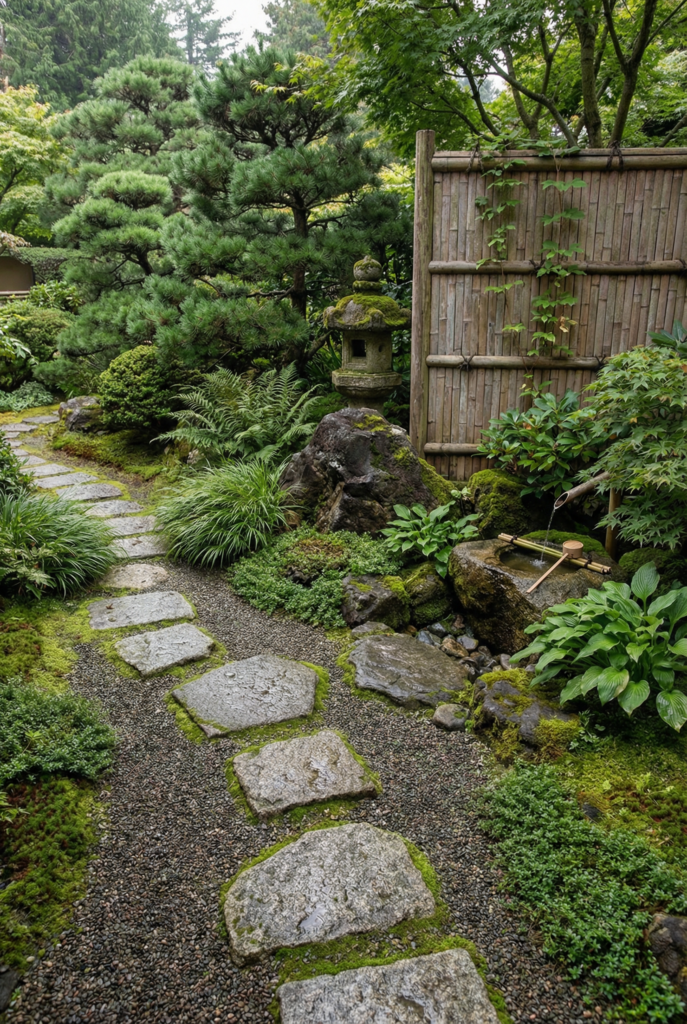
Create a meandering path that curves, not zigzags aggressively. Use granite paving for gardens or stepping stones with gravel between. Place a tsukubai basin setup near a turn, so you hear water before you see it. Add a japanese stone lantern as a quiet anchor near water.
Plant evergreen structure along the edges, then soften with groundcover. Use a bamboo screen to create hide-and-reveal, especially if you have a fence you hate looking at.
Approximate cost: $1,800 to $3,800 depending on stone and pump quality.
Large yard
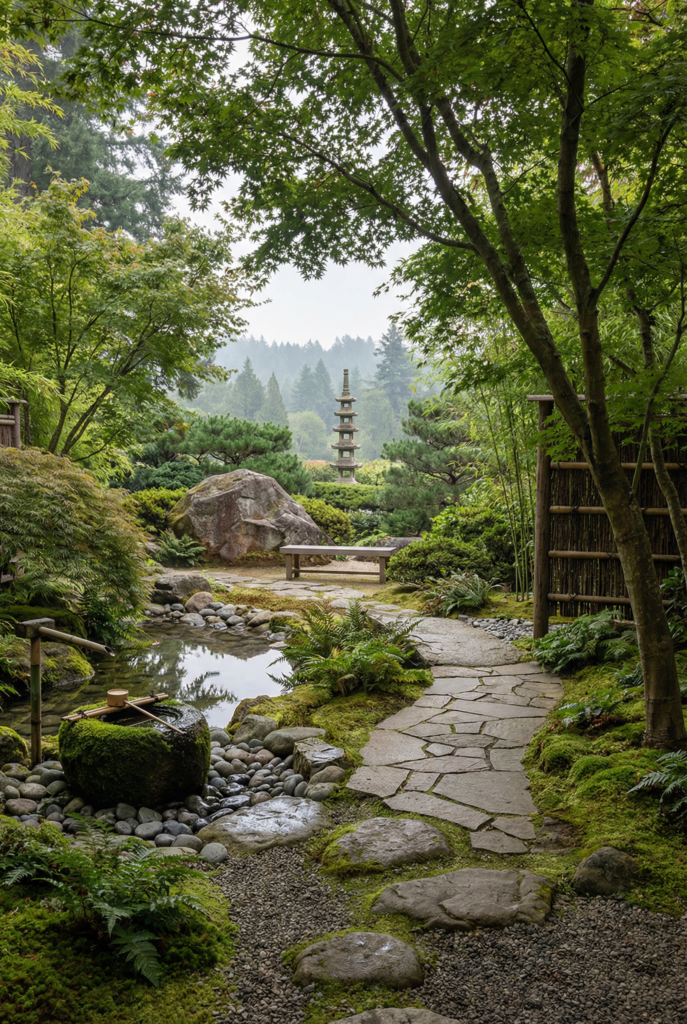
Think in zones. A walking zone with paths and reveal moments. A water zone, possibly a basin or pond if you actually want the maintenance.
A contemplation zone with seating and a strong rock grouping.
Place a japanese stone pagoda or japanese pagoda temple statue as a distant focal point, not next to your patio. Use planting to frame borrowed scenery and create depth.
Approximate cost: $4,000 and up, mostly depending on stone and hardscape.
The Part Where I Tell You to Start Small and Let Time Finish the Design
This is not a one-weekend makeover. It’s a relationship. Which sounds dramatic, but it’s true.
Start with one path. One rock grouping. One evergreen anchor plant. Live with it for a season. Notice where shade falls at 3:00 p.m. Notice where water pools after rain. Notice which corner becomes your favorite place to stand without thinking.
And yes, real life will mess with your perfection. Gravel will travel. Moss will get stepped on. A dog will flatten something you just arranged.
A kid will redraw your raked gravel pattern like a treasure map. You will have a day where you look at it all and think, “Why did I do this to myself?” and then the light will hit the stone at 5:11 p.m. and you’ll feel your shoulders drop.
That’s the goal. Not perfection. Not a finished look. A feeling.
FAQs
How do I make my garden look Japanese?
Edit first. Create a slow path. Use stone, water, and restrained planting. Add one or two focal elements like a japanese stone lantern or a simple basin, then let everything else be quiet support.
What are the three essential elements of a Japanese garden?
Stone, water, and plants. You don’t need a lot of each, but you do need balance between them.
What are the rules for Japanese garden design?
There aren’t strict rules, more like guiding principles: simplicity, asymmetry, naturalness, mystery, and tranquility. If your garden feels calm and intentional, you’re on the right track.
What is a wabi-sabi garden?
A wabi-sabi garden embraces imperfection and time. Weathered stone, patina, moss, slightly uneven edges, and materials that age gracefully are part of the beauty.
What is the 70/30 rule in gardening?
Roughly 70 percent of your planting should provide year-round structure, and 30 percent can be seasonal interest. This keeps the garden stable while still allowing moments of color and bloom.
What are the six qualities of a Japanese garden?
Spaciousness, seclusion, aged beauty, clever design, water, and good views. In a small yard, that can look like open gravel space, screening, weathered materials, a smart path turn, a basin, and a framed view.
What colors are in a Japanese garden?
Muted greens, browns, grays, charcoal, black, and natural wood tones, with restrained accents like red maple leaves or white blossoms. The overall palette should feel quiet and natural.
What is the difference between a Japanese garden and a Zen garden?
A Zen garden is a specific type, usually karesansui, a dry landscape focused on meditation with raked gravel and rocks. A Japanese garden is broader and can include water, richer planting, and strolling paths.
What are the seven principles of a Zen garden?
Simplicity, austerity, naturalness, asymmetry, mystery, unworldliness, and stillness. Think less decoration, more intention.
What are the three types of Japanese gardens?
Hill-and-pond gardens, tea gardens, and dry rock Zen gardens. Most home gardens borrow a blend, but choosing a dominant vibe helps keep decisions cohesive.
What do rocks symbolize in Japanese gardens?
Vertical stones often suggest mountains or strength, horizontal stones suggest earth or islands, and gravel represents water. Even if you don’t follow symbolism strictly, it helps you place rocks with balance.