Organic modern decor really comes to life when wood, stone, and soft textures are layered with intention instead of just placed side by side. When you understand how each material plays its role, rooms stop feeling flat and start feeling like somewhere you actually want to land.
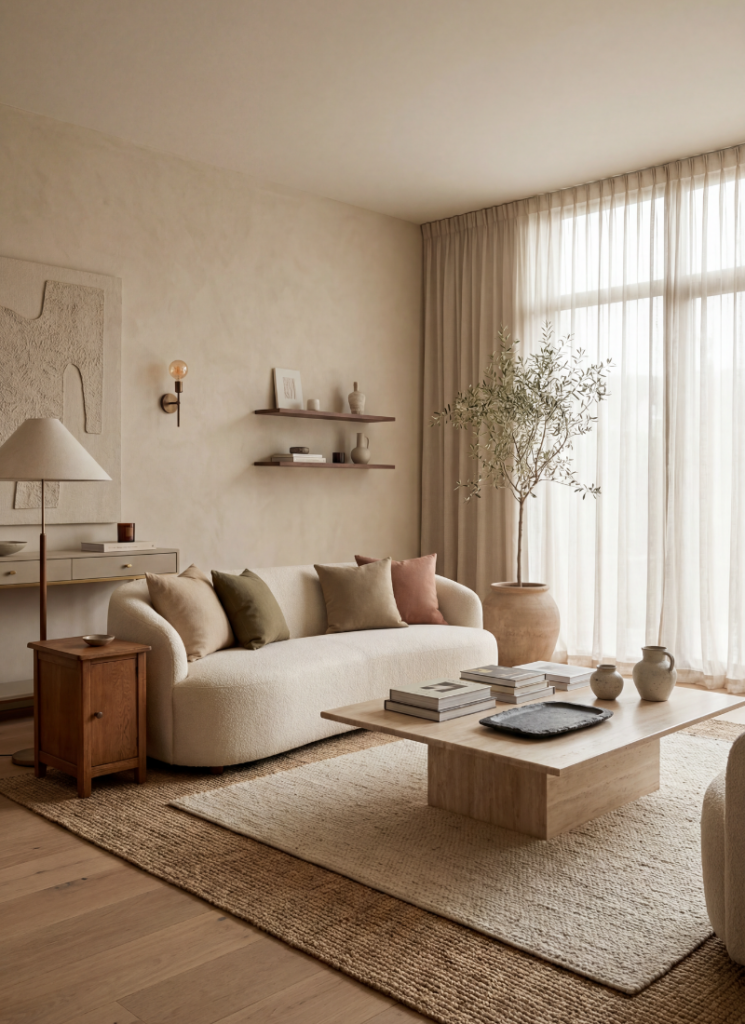
Let’s start with this: “organic modern decor” sounds like one of those phrases people throw around while pointing at beige walls and ceramic vases.
But when it’s done right, it feels like the design version of a deep exhale. It’s warmth without clutter, simplicity without sterility, and a quiet invitation to stay awhile.
The magic, I realized, was in the mix, wood, stone, and soft textures layered just enough that your eyes and hands have something to rest on, but nothing shouts for attention.
So here’s exactly how I approach it, materials, color, texture, balance, even the “don’t overdo it” part that took me a few mistakes (and one regretted marble tray) to learn.
What Organic Modern Decor Actually Means (In Real Life)
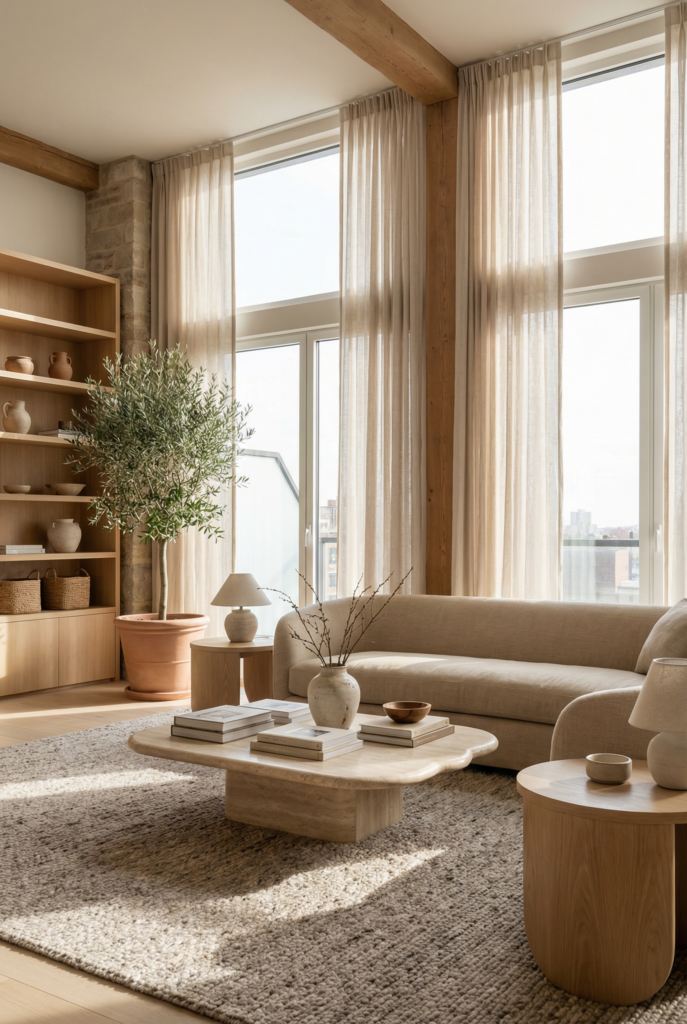
Organic modern is basically modern design with a pulse. It’s clean lines and simple silhouettes, but softened by materials that feel like they came from the earth, not a plastic mold pretending to be “stone-look.”
Designers describe it as nature meeting contemporary design, and that’s exactly it. A calm room with edges smoothed out by texture, grain, and a little imperfection.
And the reason mixing wood, stone, and soft textiles works is honestly kind of… logical.
Wood adds warmth and makes a room feel lived-in fast. Stone adds visual weight, stability, that grounded feeling you get when something looks solid and not flimsy. Textiles bring comfort, they absorb the sharpness and keep the space from feeling like a showroom where you’re scared to sit down.
Put them together and you get balance. Rough against soft. Warm against cool. Smooth against nubby. It’s the yummiest kind of contrast, and once you see it, you can’t unsee it.
Natural Material Combinations
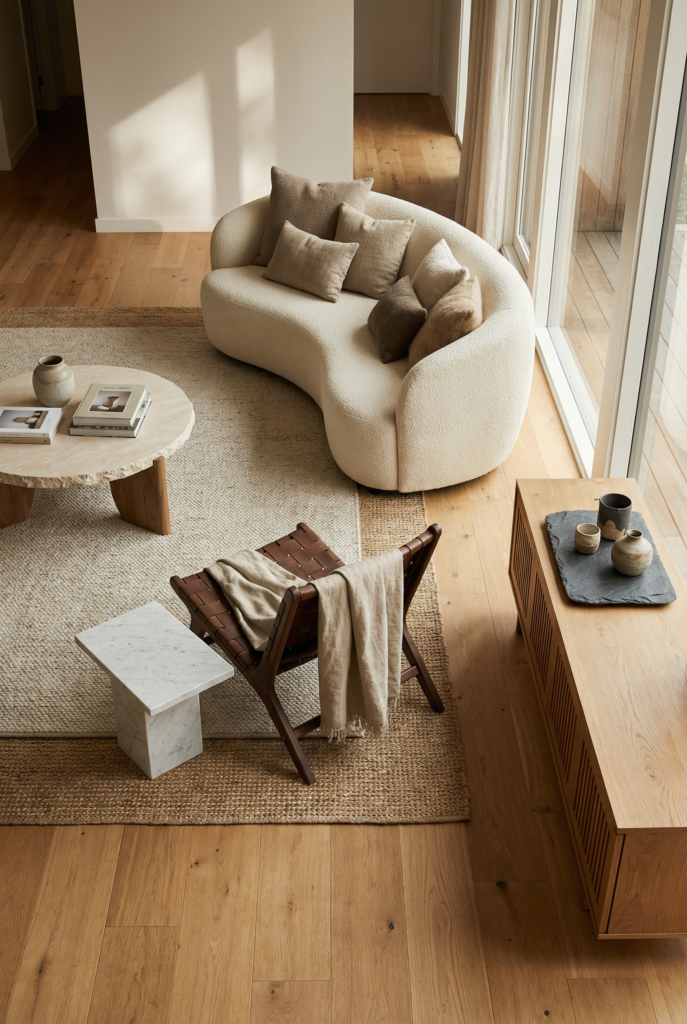
If you take nothing else from this, take this: contrast is what makes natural materials come alive. Wood, stone, and soft textiles are all “neutral,” but they each have their own temperature. Mixing them is about balancing warmth and coolness until it feels grounded.
Start with one dominant wood tone. Like medium oak, think somewhere between honey and almond butter. It’s warm without veering orange.
If your floors are already wood, that’s your base.
Then, add stone as the grounding counterpoint: a limestone coffee table, a marble slab side table, or even a rough slate tray on a console. Stone instantly cools the warmth of wood and gives the room weight.
Then layer in soft textures to keep it from feeling like a builder-grade showroom. Bouclé, linen, nubby cotton, mohair, each adds a different kind of coziness.
For example, I have a $90 linen throw from H&M Home that’s somehow the perfect “casual drape over the armchair” weight. The sofa? It’s a creamy bouclé from Sixpenny that I saved up for (worth it, spot cleans like a dream).
If you’re mixing wood species, stay within a similar undertone family, oak with maple, walnut with mahogany. I promise, it’s less about exact matching and more about how the tones talk to each other.
A reclaimed pine bench next to a matte walnut credenza can look beautiful if there’s a soft, neutral rug bridging them.
And speaking of rugs: wool or jute are your best friends here. Wool brings a plush, lived-in vibe; jute adds that organic crunch.
Earthy Palettes and Calming Tones
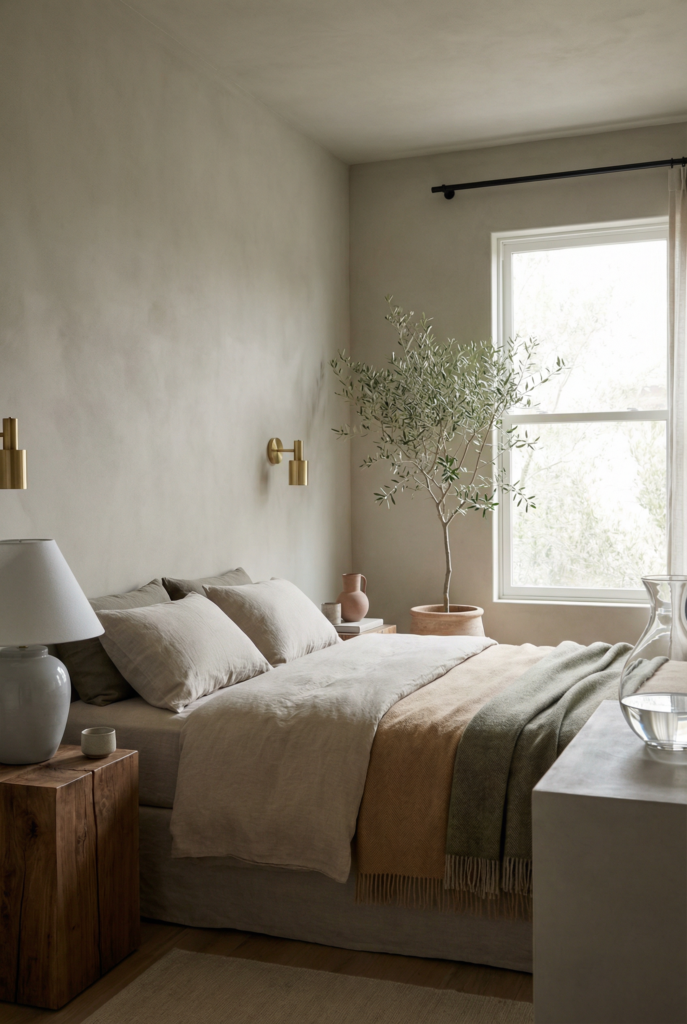
Every good organic modern space starts with restraint. Not minimalism (too cold), but thoughtful editing. Think of your color palette like a beach in fog, muted, layered, with one or two warmer notes peeking through.
Here’s what actually works in real rooms (check 25+ earthy bedroom ideas), not just Pinterest grids: start with neutral walls, warm white, greige, or the softest putty tone.
My go-to is Swiss Coffee by Benjamin Moore (but cut 50% for less yellow). Then layer in natural tones: stone beige, camel, olive gray, muted terracotta.
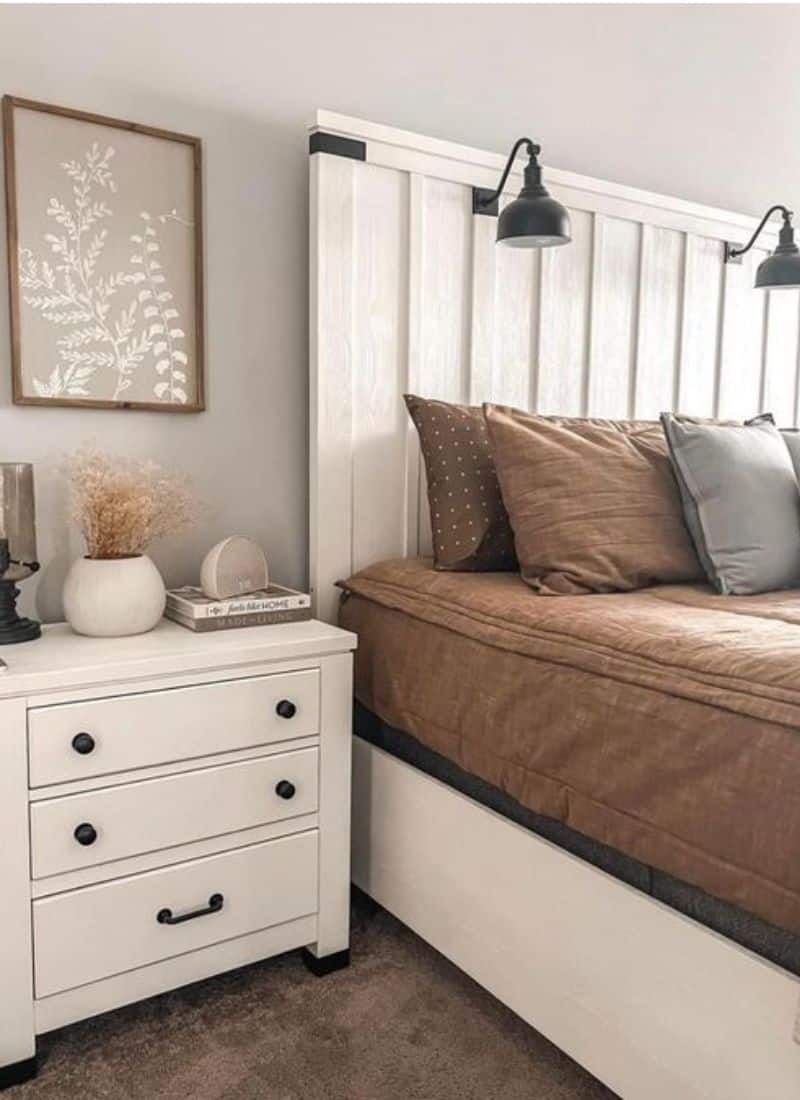
I found that pairing a sandstone linen duvet with a walnut nightstand was almost too cozy, until you add a pale gray ceramic lamp. That hint of cool tone will make everything feel more balanced.
That’s what people miss: organic modern isn’t all warm; it’s the dance between warm and cool, smooth and rough.
Metals belong here too, but sparingly. Go for brushed brass or matte black, not chrome.
A black curtain rod, a brass pull, maybe a single bronze sconce, small punctuation marks that keep it from feeling too soft.
And if your room starts leaning a little too “all matte everything,” a touch of glass can be the reset.
A clear vase, a glass lamp, even a barely-there glass top on a side table adds lightness without breaking the natural vibe.
And please, don’t forget plants. Not the fiddle leaf (we’ve all been there). Try a wispy olive tree or a sculptural monstera.
Real greenery brings an unpredictable, alive quality that no designer can fake. A $30 olive tree from Trader Joe’s in a $60 unglazed pot has been the best “decor moment” in my living room for three years running. It’s basically my emotional support plant at this point.
Layering Textures for Warmth
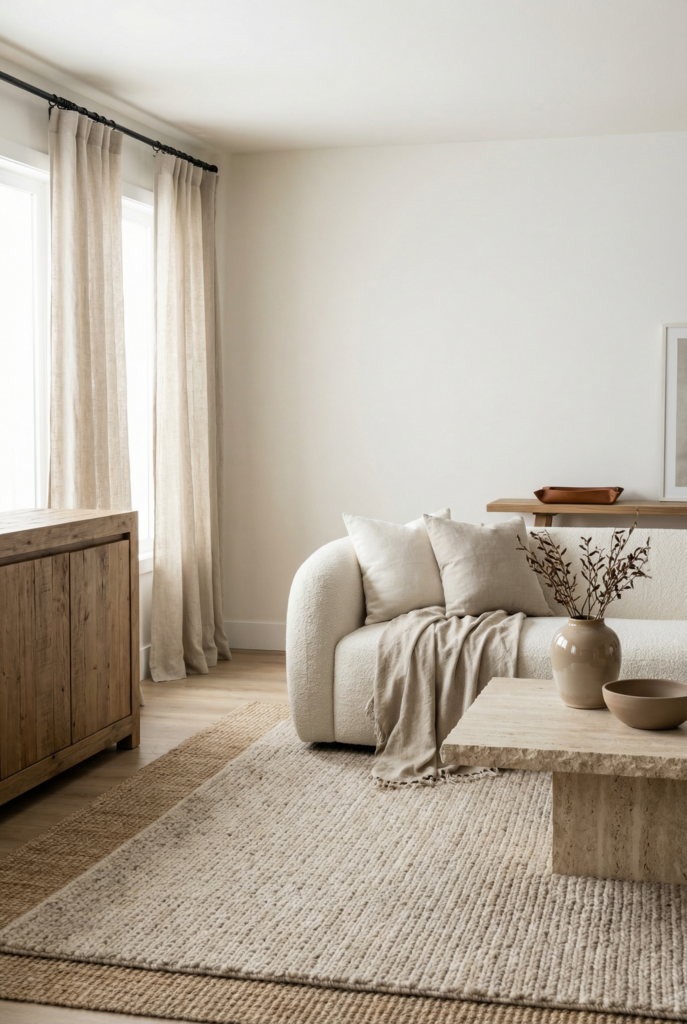
You can’t buy “cozy” in a single object, it’s the result of layers.
And before I get into my texture buffet situation, here are the three design principles I accidentally learned by making the same mistakes over and over (fun hobby, highly recommend).
You don’t have to be precious about these. You just need them in the back of your mind while you shop and style.
First: contrast. Rough stone next to a plush sofa is the yummiest contrast. You need hard and soft, smooth and nubby, matte and a tiny bit of shine.
Second: balance. If you add one heavy, dark, grounding piece (like a chunky stone table), you probably want something airy nearby (like linen curtains) so the room doesn’t feel like it’s wearing a weighted blanket.
Third: scale. Tiny decor on a big coffee table looks sad. Giant decor on a petite console looks like it’s eating the room. Scale is the quiet rule that makes everything feel intentional.
The key is contrast, but within a cohesive palette. If every surface is smooth, your space feels flat. If everything is rough, it’s chaos.
So here’s my general formula:
- Smooth + Rough + Soft. If you have a smooth marble table, pair it with a rough jute rug and soft linen pillows.
- Shine + Matte. Mix a glossy ceramic vase with a matte clay bowl. It’s subtle, but it makes the room breathe.
- Light + Heavy. Counter a chunky oak credenza with an airy linen curtain.
One of my favorite combinations is a travertine side table (mine was $280 on sale at CB2) next to a reclaimed wood stool. The table feels luxe; the stool feels humble. Together, they feel intentional. Add a linen throw that’s slightly wrinkled and suddenly you’ve got that “effortless but styled” look people spend hours trying to stage.
Textiles are where you can play the most. My bed is an ongoing texture experiment: gauzy cotton sheets, velvet lumbar pillow, bouclé throw. All in tones that whisper rather than shout. That mix gives you dimension without screaming “look at my bedding layers!”
And if you ever feel like something’s missing, it’s probably weight. Add something stone or wood, a bowl, tray, or lamp base, to ground all that softness.
Bringing Balance Without Clutter
Okay, real talk: this is where organic modern design can easily go wrong. It’s so easy to cross from “peaceful minimalism” into “soulless beige desert.”
Here’s my trick: every room needs visual anchors and moments of rest.
If everything’s textured or interesting, nothing stands out. So let some pieces fade into the background. A plain oak side table beside a statement travertine console, for example. Or a soft neutral rug under a sculptural black chair.
And don’t be afraid of empty space. A corner without art? Fine. A wall without shelves? Glorious.
Negative space is part of the design, it lets your eyes breathe. (Also it gives you a place to land when you inevitably buy one more vase and need to “figure out where it goes.”)
If you’re editing a room, ask yourself: does each item earn its place? A good test is to remove one thing and see if the space feels calmer or emptier. Calmer = good. Emptier = maybe bring it back.
A note on clutter: organic modern doesn’t mean hiding everything. It’s about curated visibility. Display that hand-thrown mug, the artisan candle, the wood bowl your kid made in art class. The mix of refined and sentimental is what gives it life.
A Quick Organic Modern “Room Recipe” (For When You Just Want the Formula)
If you’re the kind of person who loves the story but also wants the cheat sheet, this is the part you screenshot.
Organic Modern Living Room Recipe:
- Base: warm white walls (Swiss Coffee is my safety net)
- Textures: jute or wool rug + bouclé or linen sofa + stone coffee table
- Accents: matte black curtain rods, linen throw, ceramic or clay vase
- Palette: sand, taupe, warm wood, soft gray, muted olive
- Lighting: 2700K warm white bulbs with linen or fabric shades
This formula keeps you grounded when you’re tempted to overbuy. If each piece plays one of these roles, the room almost always works.
Organic Modern Decor: Quick Reference
This is the part I wish I had taped inside my phone for those moments when I’m about to impulse-buy a chair at 9:47 pm.
It’s not meant to limit you, just to keep everything speaking the same language. When pieces agree on texture and tone, the room does the heavy lifting for you.
| Element | Best Choices for Organic Modern |
|---|---|
| Sofa | Linen or bouclé in warm neutral tones |
| Rug | Wool or jute, low pattern or solid |
| Accent Pieces | Travertine, ceramic, wood bowls |
| Lighting | Linen shades, ceramic bases, 2700K bulbs |
| Palette | Warm white, sand, camel, olive gray |
The Organic Modern Home in Practice
Let’s walk through a few spaces so you can actually picture it.
The Living Room
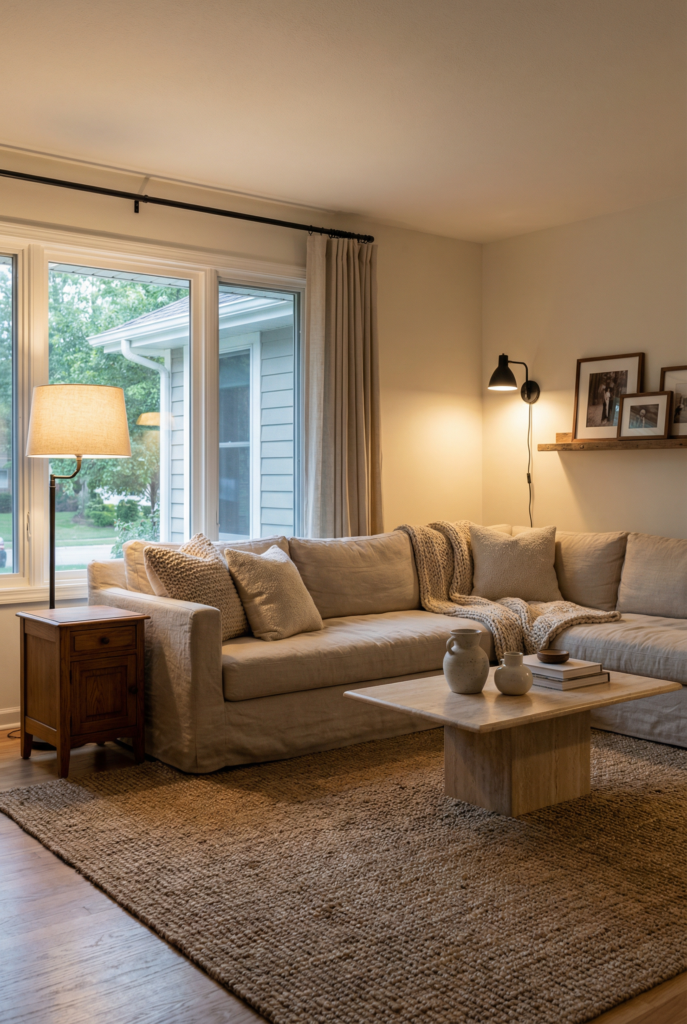
Start with the foundation: a neutral rug in wool or jute, around $300–$700 depending on size. Add a sofa in a soft natural fabric, linen or bouclé, something with low, modern lines. Mine’s slipcovered (because, dog). A stone coffee table anchors everything; look for travertine, marble, or concrete composite.
Layer in wooden accents: a vintage oak side table, walnut picture frames, maybe a reclaimed shelf. Keep your metals consistent, either all brass or all black, not both. If you want to mix metals, pick a “main” one and let the other show up in tiny doses, like a side character, not the star.
Then finish with texture: nubby pillows, a chunky knit throw, and a couple of clay or ceramic pieces that feel handmade.
My favorite ceramic vase was $45 on Etsy and looks ten times that. (And yes, I have broken one identical vase before by knocking it off the table with a throw blanket. Stylish and clumsy, my brand.)
Lighting matters more than any single object. A linen shade diffuses light beautifully; a dimmable sconce can change the mood from “showroom bright” to “wine-with-friends warm” instantly.
I always use 2700K warm white bulbs here, anything cooler makes stone feel harsh and flattens wood and fabric fast. Warm light softens edges and makes even budget pieces look more expensive, which feels like a tiny life hack.
The Kitchen
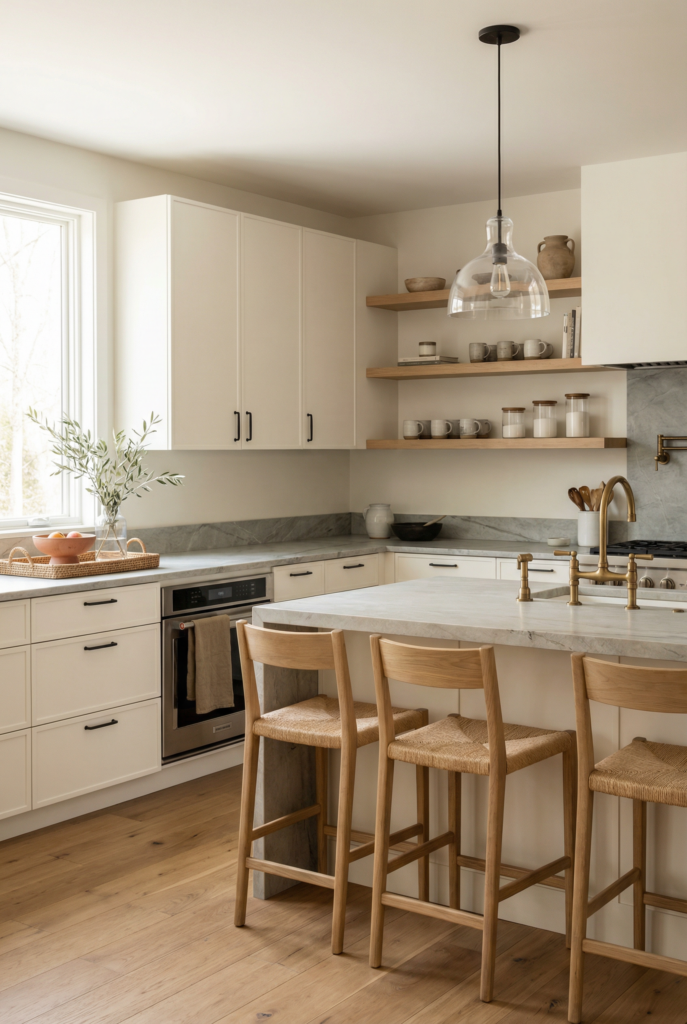
If you’re refreshing an existing kitchen, skip trendy marble and look at soapstone or honed quartzite, they age gracefully and feel more tactile. Add warmth with wood stools or open shelving in white oak. Keep hardware simple: matte black or antique brass.
One small swap that changes everything: linen dish towels instead of microfiber. $25 for a set, but they make your counters look styled even when you’re just drying dishes.
And if you want one “modern edge” without making the room feel cold, this is where glass can shine. A clear pendant, a glass canister, a vase that catches the light, it’s like adding a breath of air.
And if you can, bring in texture through art or small decor: a clay fruit bowl, woven tray, or unglazed pottery near the window. Organic modern doesn’t mean sterile countertops, it means intentional layers.
The Bedroom
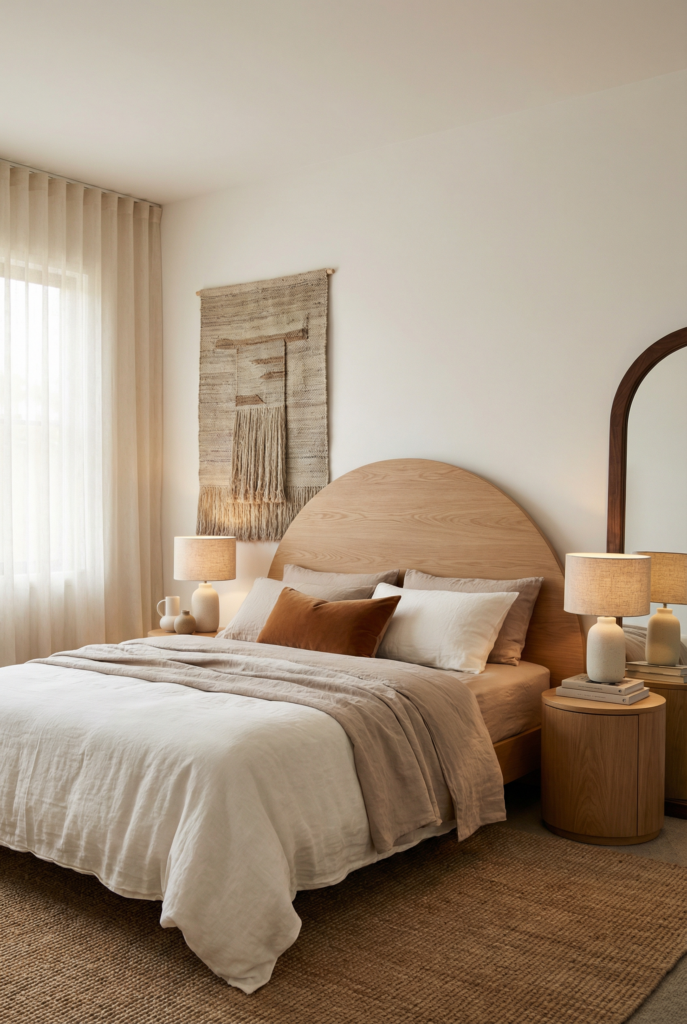
The goal here is soft edges and breathable fabrics. Start with linen bedding in muted neutrals, $150–$250 for a good set that lasts years. Mix in one accent material: a velvet pillow or a wool blanket.
Wood furniture keeps it grounded. Look for rounded corners and organic shapes, a curved oak headboard, an arched mirror, a nightstand with soft edges. Sharp, glossy pieces break the flow.
Lighting again does the heavy lifting. I swapped my old glass lamp for a ceramic one with a linen shade ($130 from Rejuvenation’s sale section). Instantly softer. (Also, dimmers are worth the minor headache of installing them. I said what I said.)
And remember: not every wall needs art. Sometimes a single large canvas or textured wall hanging says more than a gallery grid.
The Bathroom
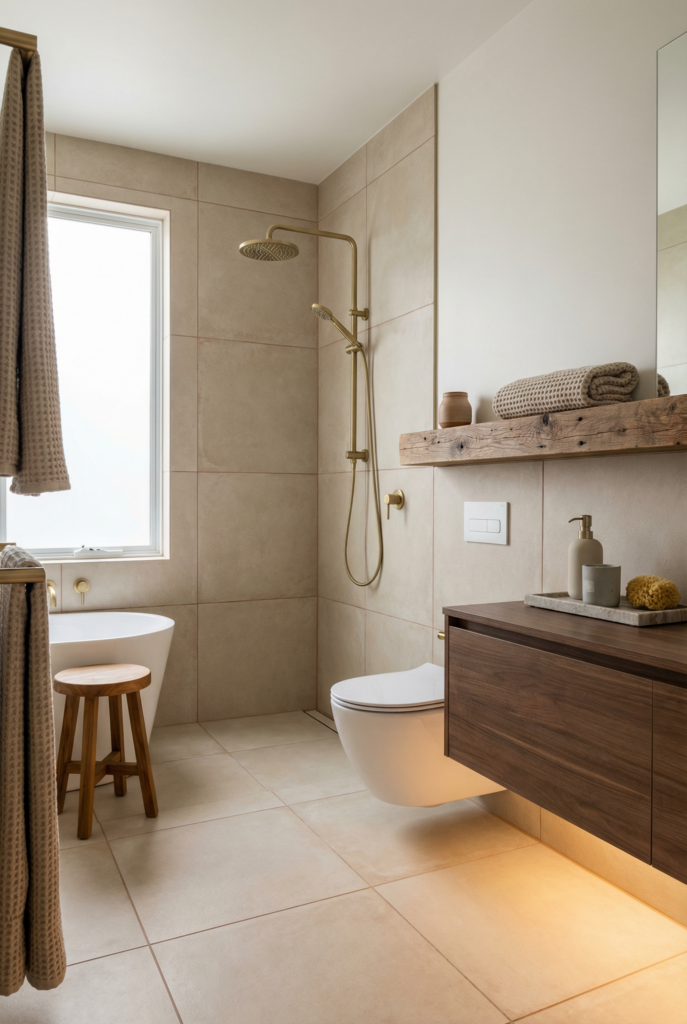
Even the most sterile bathroom can feel organic with the right materials. Trade chrome for brushed brass or black fixtures. Add a stone tray, a wood stool, and some textured towels, boom, spa energy.
One of my favorite “design cheats” is using a reclaimed wood shelf above the toilet (mine was $65 from a local market). It brings instant warmth.
And yes, you can go earthy even with tile. Try matte finishes instead of glossy, and if you’re choosing grout, slightly darker reads more natural.
Pro tip: light candles in something ceramic or concrete, not glass. The texture difference is subtle but powerful.
A Note on Sustainability
The “organic” in organic modern isn’t just a style; it’s also about choices. Natural, durable, sustainable.
I try to buy solid wood over MDF, linen over polyester, stone over resin. It’s not always possible, but even small swaps add up.
Thrift stores, Facebook Marketplace, and Etsy are treasure maps for real materials. That $40 vintage bowl? Better than a mass-produced one pretending to look “hand-thrown.”
When you bring in something new, aim for longevity. The best organic modern spaces evolve over time, they’re collected, not curated in one shopping trip.
The Imperfect Side (Because It’s Still a Real Home)
Let me be honest: maintaining that effortless calm? Not effortless. My dog has decided the bouclé sofa is his personal fur museum. The linen curtains never quite hang right after washing.
And I still have one glaringly shiny chrome faucet in the guest bath that I swear I’ll swap “next weekend.”
But that’s the thing, organic modern decor isn’t about perfection. It’s about how it feels.
When the light hits the stone table in the afternoon, or when you curl up on a textured throw that still smells faintly like lavender detergent… that’s the win.
Conclusion
Mixing wood, stone, and soft textures in organic modern decor isn’t a formula, it’s a rhythm. You’ll know you’ve hit it when your space feels like a long exhale: warm, calm, and quietly confident.
It’s the contrast that keeps it alive, the restraint that keeps it timeless, and the imperfections that keep it human.
I’ll still be rearranging my coffee table next week, probably. But that’s half the fun, finding that balance where natural materials, soft light, and the real life that happens in between all get to coexist.
FAQs
What is modern organic decorating?
It’s a style that blends natural materials like wood, stone, and linen with modern shapes and clean lines, so it feels cozy and grounded instead of cold.
Why does mixing wood, stone, and textiles work so well?
Because each material does a different job. Wood warms things up, stone adds stability and weight, and textiles make the room feel comfortable and touchable. Together, they balance each other.
What are the most common organic modern mistakes?
Going too beige with no contrast, using only smooth surfaces, and over-decorating with lots of tiny objects. The fix is usually one grounding piece (stone or dark wood), one cozy textile layer, and less stuff.
What is the 3–5–7 rule for decorating?
It’s a visual balance trick: group decor in odd numbers, like 3, 5, or 7, because asymmetry feels more natural to the eye.
What color is replacing gray walls?
Warm neutrals like beige, mushroom, and greige are taking over. They feel softer and more organic than cool gray.
What’s replacing shiplap in 2026?
Textured plaster and limewash walls are having a moment. They add depth and movement without the farmhouse vibes.
What wood tones are trending?
Mid-tone oaks, natural walnuts, and anything with visible grain. Glossy, orange-tinted woods are officially out.
That’s it, your guide, your permission slip, your gentle reminder that design can be both intentional and forgiving. Now go touch your walls, rearrange a few things, and see how much calmer it feels when the textures start talking to each other.