Hey all! My name is Julia, former college student and a home decor enthusiast who loves DIY home improvement projects and finding creative ways to decorate any living spaces on a budget. Recently moved from my dorm to my new apartment which I renovated from scratch and I am here to help you with tips & tricks about home decor/college and more 🙂
How to decorate an industrial loft is mostly about getting the order right: zone first, scale second, comfort third, style last. With an open floor plan loft and high ceilings, warmth comes from big rugs, layered lighting, and soft textiles.
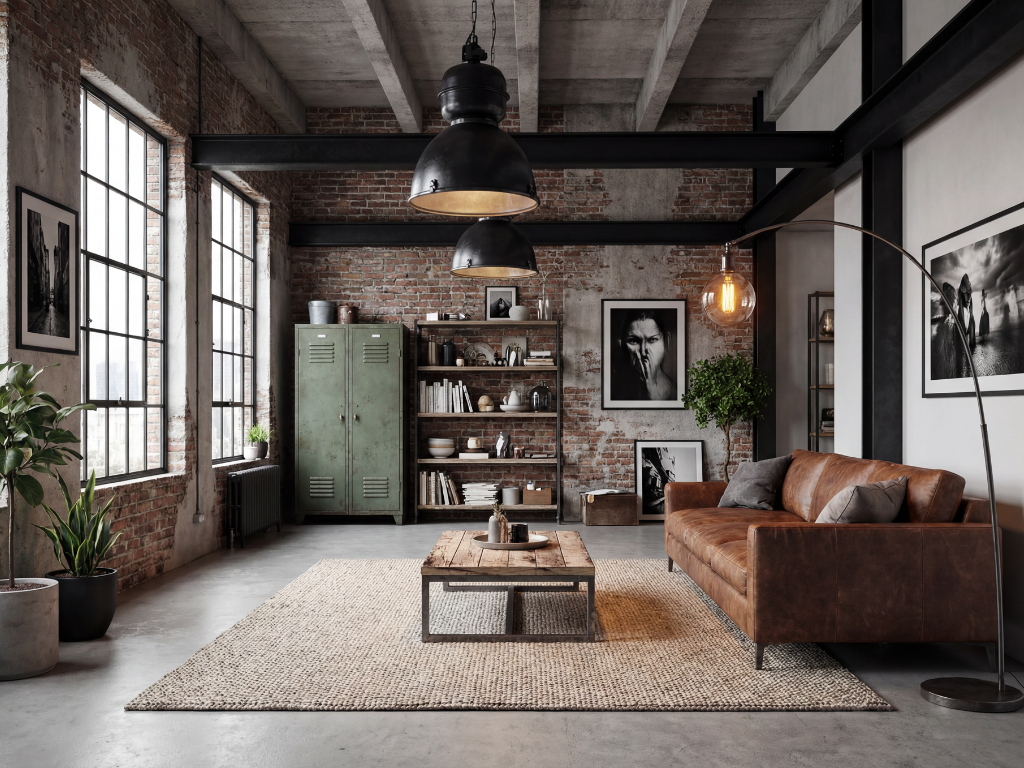
Living in a real industrial loft comes with a very specific set of realities.
The kind that photograph beautifully and then surprise you in person. An open floor plan loft, a true high ceilings loft situation where sound bounces, a lot of concrete, a lot of brick, and that wonderful, slightly relentless brightness you only get with a natural light loft.
It’s the kind of space that can feel inspiring and… a little emotionally chilly once evening hits.
Here’s what matters most: decorating an industrial loft isn’t about buying “industrial” things. The architecture already did that. The goal isn’t more pipes and steel and distressing. The goal is making the space function like a home.
The order makes all the difference, and it’s the same order every time:
Zoning first. Scale second. Comfort third. Aesthetics last.
Industrial Loft Style Checklist (The Actual System)
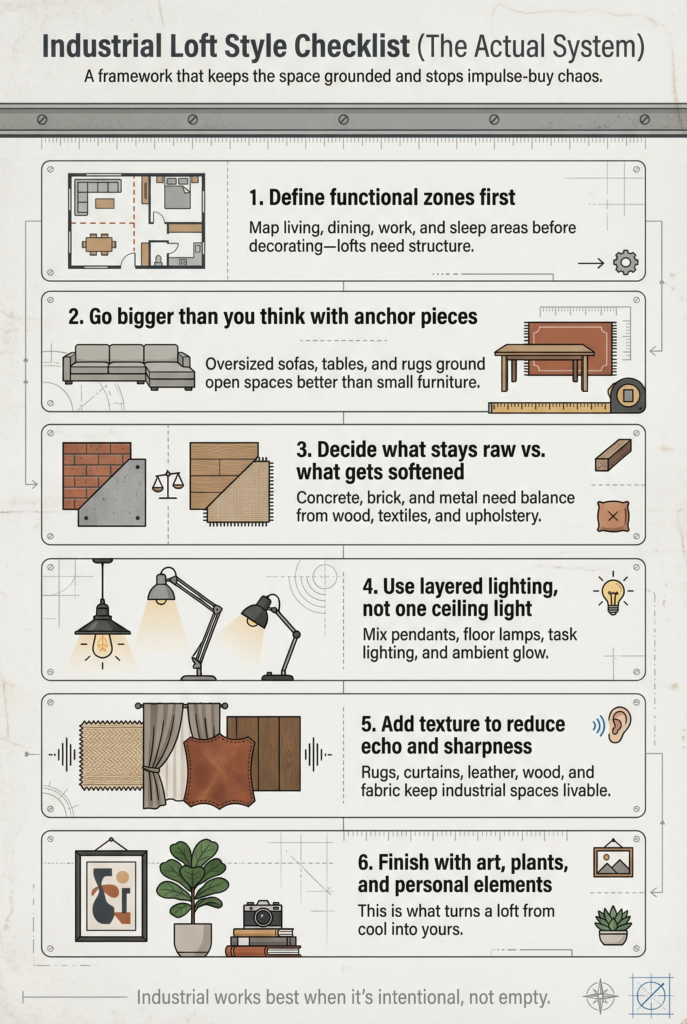
This is the framework that keeps everything grounded (and keeps impulse-buy chaos in check):
- Define functional zones loft-style before decorating
- Go bigger than you think with anchor pieces
- Decide what stays raw and what gets softened
- Use layered lighting design instead of one ceiling light
- Add textured layers decor to reduce echo and sharpness
- Finish with art, plants, and the personal stuff that makes it yours
A few sizing rules make loft decisions easier right away: living area rugs usually land at 9×12 or larger, dining rugs should extend at least 24 inches past the table on all sides, curtains look best mounted close to the ceiling and wide enough to stack fully off the window, main walkways need about 36 inches of clearance, and coffee tables feel most comfortable when they sit 14–18 inches from the sofa.
These numbers aren’t rigid, but they’re incredibly grounding in big spaces.
First, I Zone The Open Space Before I Buy Anything Cute
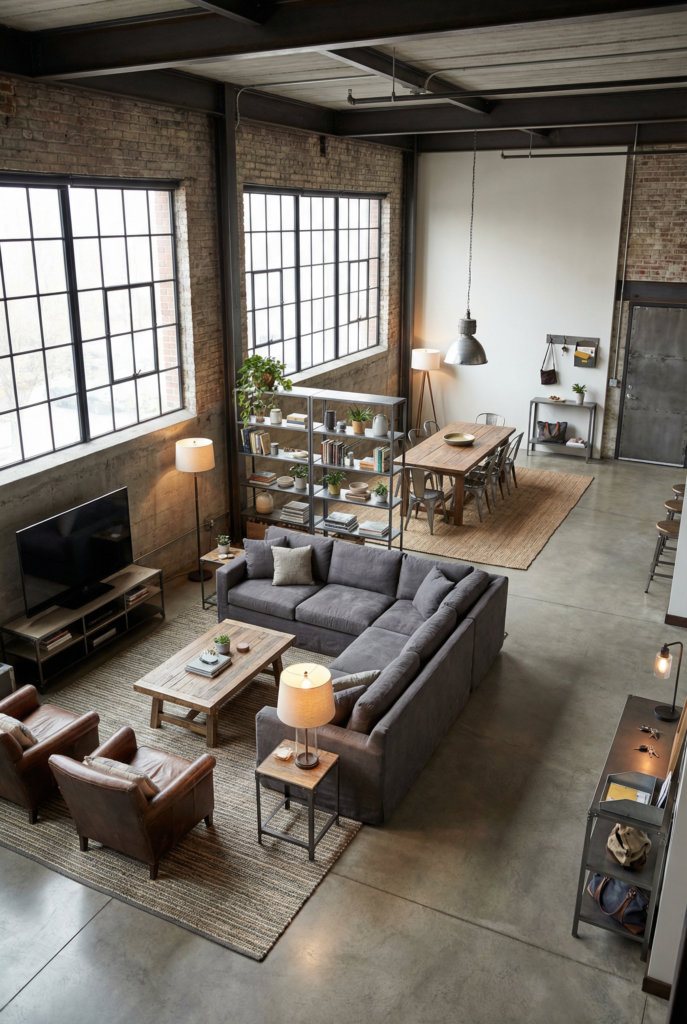
Open spaces promise freedom, but without structure they often feel unfinished. In a loft, zoning is what creates comfort. It’s also the quiet foundation of good loft interior design.
The starting questions are practical, not aesthetic: Where does sitting happen at night? Where does the TV make sense? Where do people naturally walk through the space? Where do keys and bags land (because they will land somewhere)?
Then the zones get defined with a few workhorse moves.
Rugs do the heavy lifting first. In an industrial space, rugs are basically soft walls you can vacuum. The living rug needs to be big enough that seating doesn’t hover awkwardly around it. In most lofts, that means 9×12 or 10×14.
A realistic budget for that size tends to fall between $200 and $600, especially if the priority is durability over delicacy. Low-pile and flatweave options generally behave well on concrete.
Next is the sofa, because scale sets the tone. In an industrial living room, smaller sofas often look temporary in a big room. Pieces in the 90–110 inch range tend to hold their own visually and help the living zone feel intentional.
After that, soft dividers help: shelving units, a wide console, a bookcase behind a sofa, even a substantial plant cluster. Those pieces define edges without blocking light, and they make loft apartment styling feel less like “everything in one room” and more like a home with rhythm.
Lighting placement starts here too. A pendant over dining, lamps around the seating area. That’s not just mood, it’s structure.
A Simple Layout Example
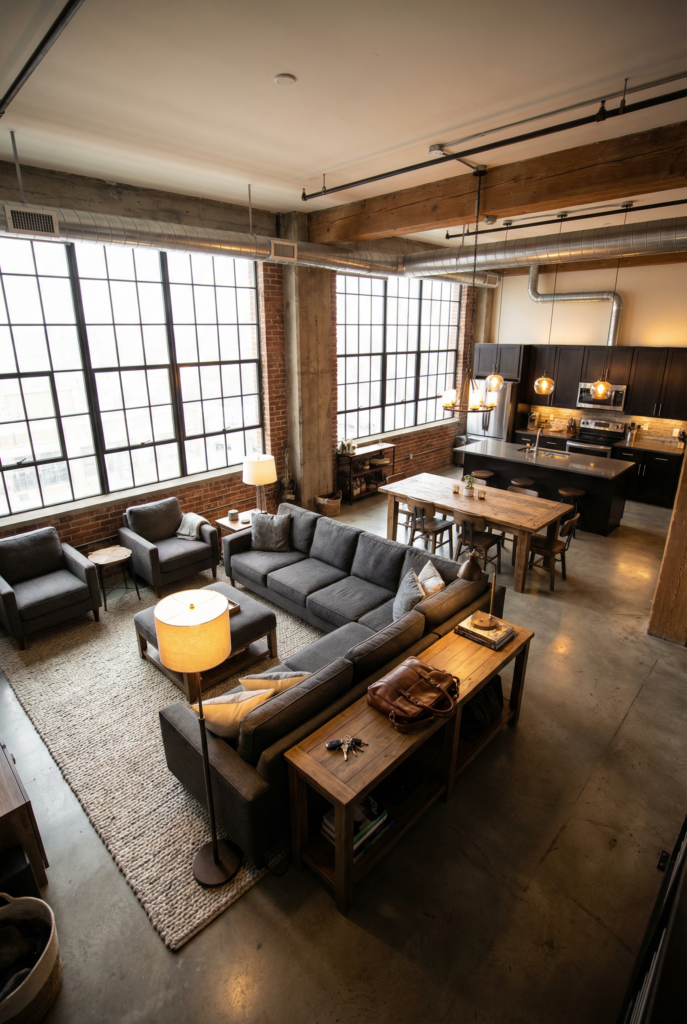
In a long, rectangular loft (a very common layout), placing the living zone near the windows takes advantage of the light.
The dining area works well between living and kitchen, acting as a connector.
A console behind the sofa creates a natural drop zone so clutter doesn’t take over the dining table. It’s not glamorous, but it makes the whole place feel calmer.
One important note: avoid pushing everything against the walls.
Lofts look bigger when you do that, but they feel worse — the center ends up empty and disconnected, and the furniture never quite settles.
Most lofts struggle not because of the decor, but because the layout never fully supports daily life.
Next, I Decide What To Do With Brick And Concrete
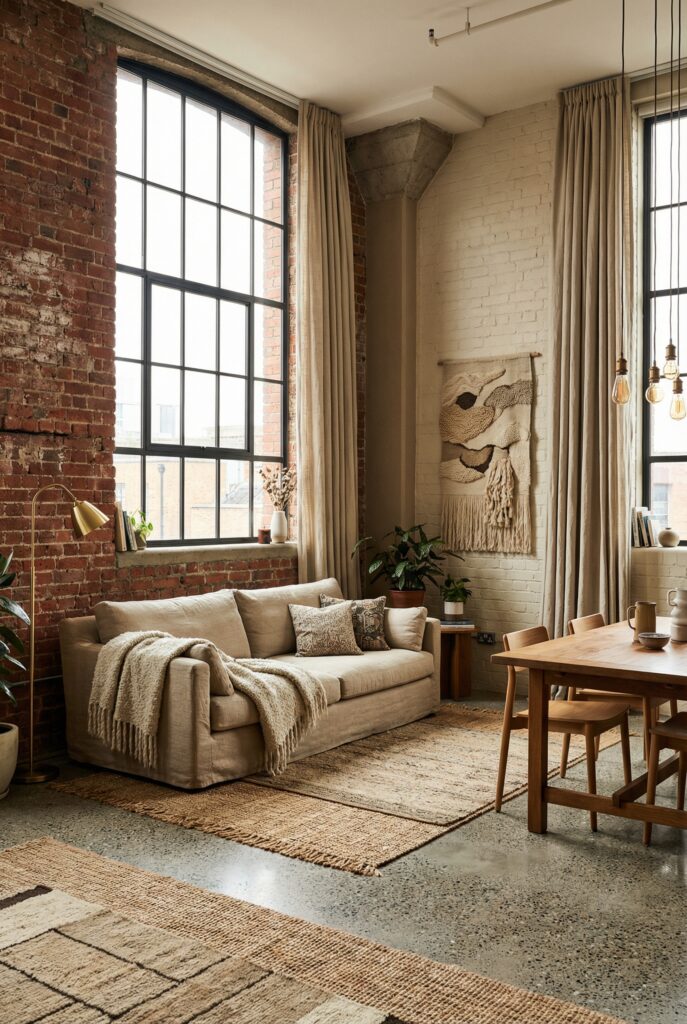
This part is where industrial spaces either stay beautifully raw or start feeling a bit cold.
Exposed brick walls can be stunning, especially when they get daylight. Concrete can look sculptural and intentional. Not everything needs to be softened.
But some areas benefit from intervention. Limewash is often the best “soften without erasing” move for brick because it preserves texture while reducing heaviness. Warm paint can help on adjacent drywall, especially in spaces where the brick and concrete start feeling too stark.
Textiles matter more than people admit. Curtains add warmth and softness, even if they’re largely decorative.
Upholstered furniture placed near hard surfaces helps with echo. A textile wall hanging can do more than another framed print if the room feels sharp.
When an industrial loft feels harsh, it’s rarely because it’s “too industrial.” It’s usually because nothing is counterbalancing the hard surfaces.
Pick Your Industrial Lane
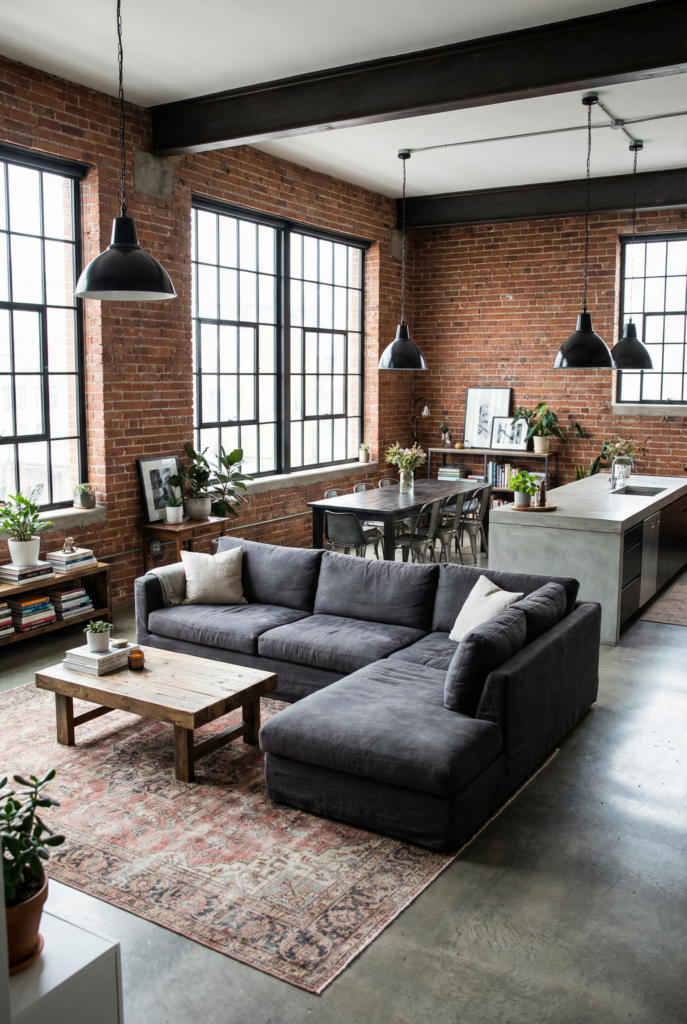
“Industrial” can mean wildly different things depending on the person. Choosing a primary direction makes decisions simpler.
Modern industrial aesthetic tends to be clean and restrained: fewer vintage pieces, simple shapes, and a palette that leans black, white, and warm wood.
It’s a close cousin of contemporary loft design, and it pairs well with minimalist furniture as long as the scale is right.
Vintage industrial elements bring in patina, factory-inspired finds, and warmer metals. It can feel soulful and collected, but it benefits from restraint so it doesn’t tip into “themed.”
Industrial + cozy keeps the raw architecture but leans into warmth through textiles, wood, plants, and softer tones. It still reads urban industrial design, but it feels like a place to exhale.
Most homes blend all three. The key is picking a main lane so purchases stop competing with each other.
Then, Furniture Is Chosen With Scale In Mind
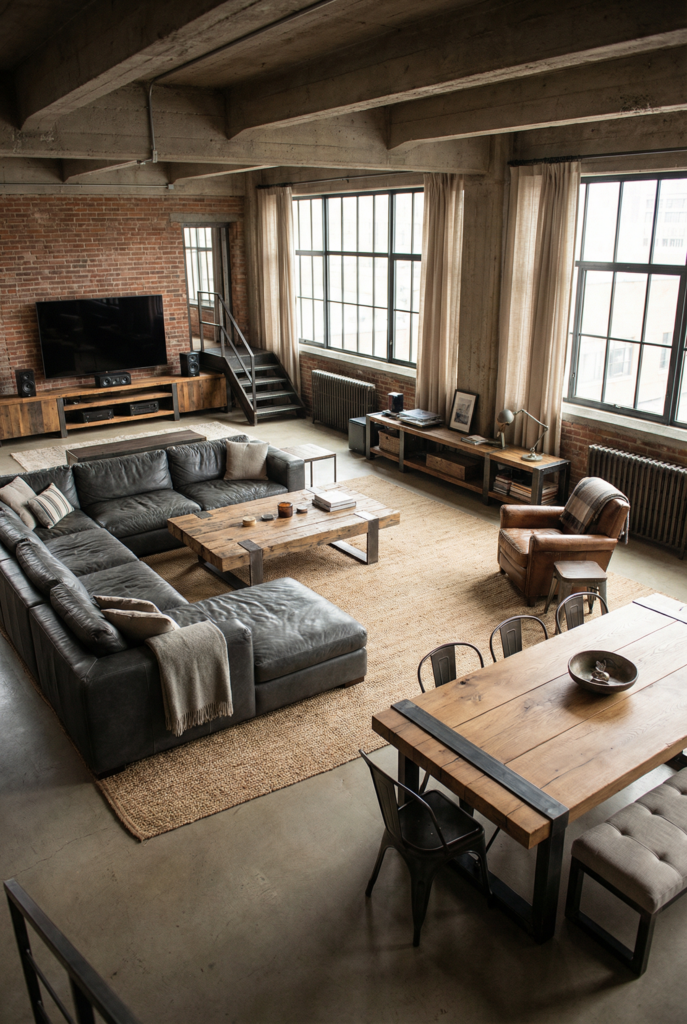
Industrial spaces tend to dwarf mid-sized furniture. Pieces that feel substantial elsewhere can look temporary in a loft.
Oversized anchor pieces help counteract this: large sectionals, chunky wood dining tables, and wide media consoles that feel grounded.
Material choices matter, too. Aged wood, blackened steel, leather, linen, and wool all hold their own in industrial chic interiors without feeling fussy.
This is also where “industrial” can drift toward “cold” if everything is hard-edged. That’s why warm woods work so well, and why a little softness in upholstery and textiles makes a difference.
Multi-use pieces are especially useful in lofts. Multi functional furniture like storage benches, ottomans with hidden compartments, and consoles that double as work surfaces help the space work harder without feeling crowded.
If the vibe leans a little warmer overall, that’s where modern rustic decor can quietly fit in: a warm wood table, a softer rug, a leather chair that reads more inviting than severe.
Then, Lighting Gets Layered (Properly)
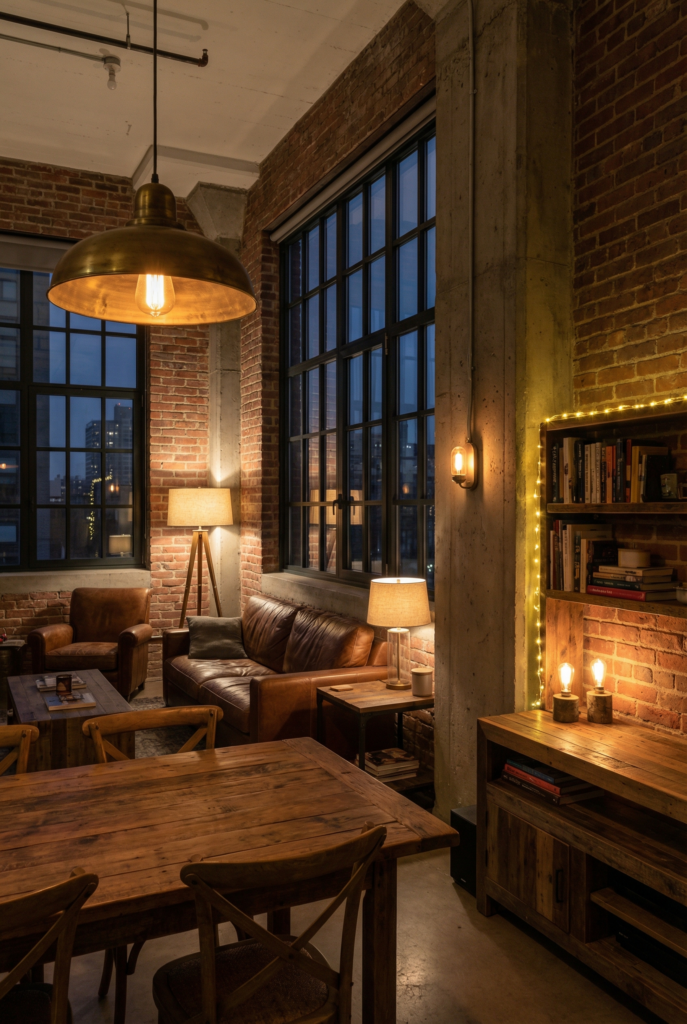
Lighting is the most common pain point in industrial spaces. Relying on one overhead fixture almost always creates a room that feels flat and cold at night.
Layered lighting fixes it: pendants over dining, floor lamps near seating, table lamps on consoles and shelves, and sconces where possible. This is the real heart of good lighting solutions loft-wide.
As a rough rule, each main living zone needs three to five light sources beyond any overhead fixture. That usually means at least one floor lamp, one table lamp, and one softer accent or ambient light. If there’s only one lamp, the loft almost always still feels flat.
Bulb temperature matters. Warm bulbs in the 2700K–3000K range soften concrete and brick dramatically. Cooler bulbs exaggerate harshness, especially at night.
When lamps are doing most of the work, the loft finally feels calm and livable. That’s when industrial stops feeling like a concept and starts feeling like home.
Materials And Finishes That Consistently Work
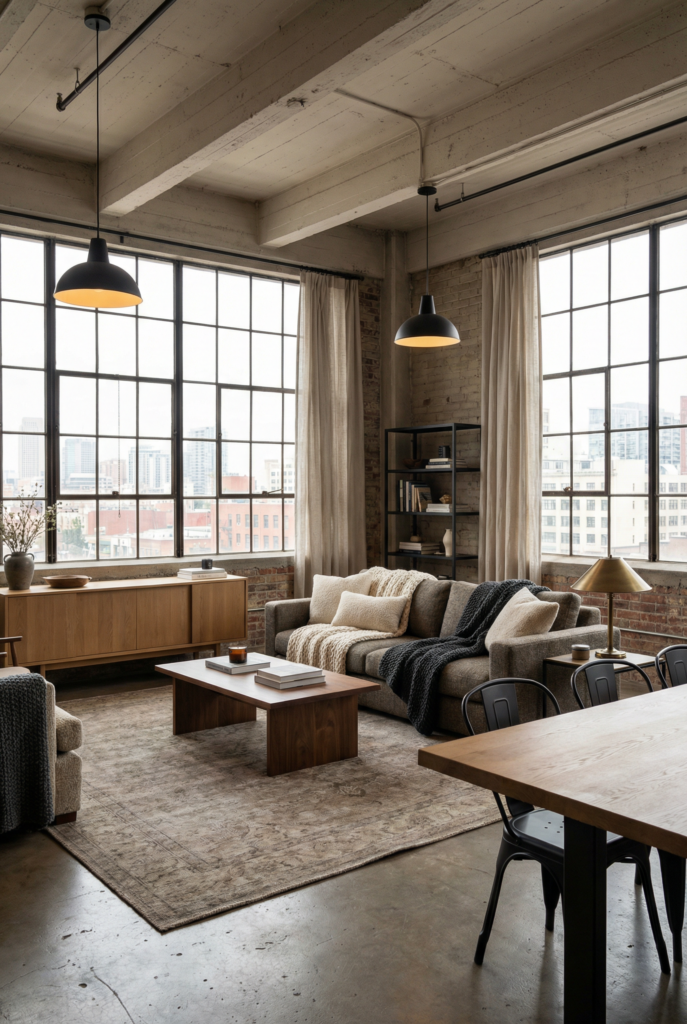
Certain combinations tend to perform especially well in loft environments, both visually and practically:
Floors benefit from low-pile rugs, wool blends, or performance fibers over concrete.
Metals feel best when matte or blackened, with brass used sparingly.
Woods skew warmer, with oak and walnut balancing concrete better than grey-washed finishes.
Textiles like linen curtains, wool, chunky knits, and occasional boucle soften edges without overwhelming the architecture.
A simple way to keep finishes cohesive is to choose one main metal — matte black or gunmetal work best — and repeat it two or three times across the space.
Then add one accent metal, like aged brass, once or twice. Mixing too many shiny metals is usually what makes an industrial loft drift into “restaurant” territory instead of home.
This is how cozy loft decor happens without turning the whole loft into something unrecognizable, and how industrial style accents stay intentional instead of busy.
Finally, Comfort Brings Everything Together
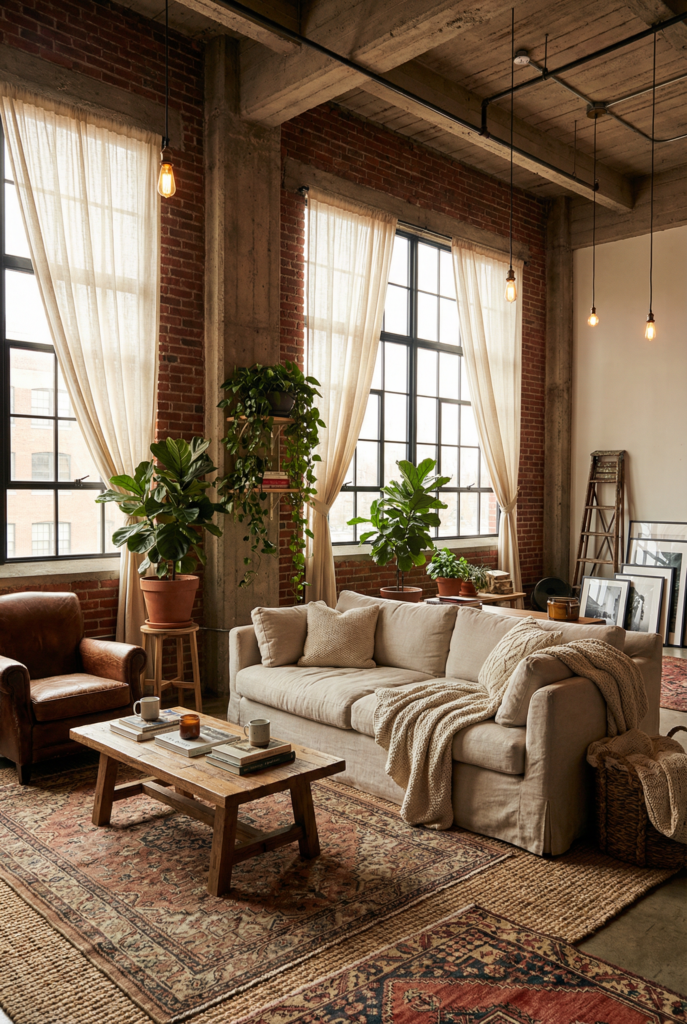
This is the step people rush because it feels like the “soft stuff.” It’s actually the step that makes the loft livable.
Rugs layered where needed. Curtains softening windows. Plants adding life. Textured throws and pillows that make you want to sit down. A balance of leather and wool, wood and linen, blackened steel and warm oak.
There’s usually at least one unresolved element in a real loft. Echo can linger. A rug can creep no matter what pad gets tried. A corner can stay slightly unfinished longer than expected. That’s normal.
A loft with strong architecture tends to evolve in layers. It doesn’t snap into perfection overnight.
A Small, Very Real Aside
Sometimes a room feels off for reasons that are hard to name. A lamp moves a few times. The light still feels wrong. And then it turns out the bulb temperature is the issue.
One swap later, the entire space feels warmer. Lighting really does that much work.
Where It Makes Sense To Spend And Save
Spending tends to pay off most with sofas, rugs, and lighting. Those elements define zones, improve comfort, and shape how the space feels day to day.
- Worth spending on: the sofa, large rugs, statement lighting
- Easy to save on: side tables, accessories, and a mix of affordable and meaningful art
This is where industrial decor ideas can stay practical: a few strong accents, a few pieces with weight, and then the rest is comfort and personality.
A Quick Note On Kitchens And Bathrooms
Lofts often have kitchens and bathrooms that share the same industrial bones, and the same rules apply.
For industrial kitchen designs, warmth usually comes from wood tones, softer lighting, and avoiding too many cold finishes at once.
For industrial bathroom ideas, it’s the same story: warm bulbs, tactile textiles, and one or two finishes that feel softer than concrete and tile alone.
It doesn’t have to be complicated. It just has to feel human.
The Takeaway
Decorating an industrial loft isn’t about adding more industrial elements. It’s about shaping a large, raw space into something that supports real life.
When zoning comes first, scale is respected, comfort is prioritized, and aesthetics come last, the space begins to feel settled.
Not staged.
Not themed.
Just lived in.
FAQs
How do you make an industrial loft cozy?
Soft textiles, warm lighting, rugs, wood tones, plants, and layered texture. The architecture can stay raw, the feeling should not.
Is industrial style still relevant in 2026?
Yes. When it’s architectural rather than trend-driven, it stays timeless.
What defines industrial loft style?
Raw materials like brick, concrete, and metal balanced with warmth, function, and comfort.
How can modern and industrial styles be mixed?
Clean-lined pieces can look beautiful against brick and steel when the scale is right and the lighting is warm.
What is the best loft decor style?
The one that makes the space livable. A loft can lean modern, vintage, or cozy, but the best result is the one that supports how people actually live there.