Eclectic bedroom decor is where your favorite “random” pieces finally start acting like they know each other. I’m going to help you mix styles, patterns, and color in a way that feels intentional, calm, and very you.
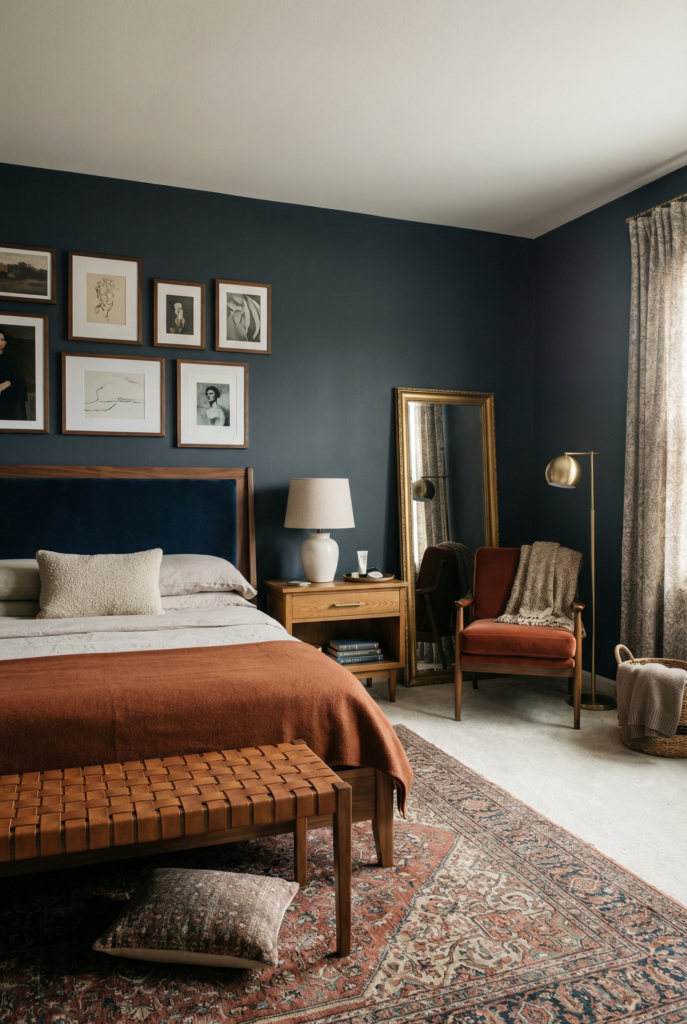
One night around 11:18 pm, I was scrolling bedroom photos and realized most “eclectic” spaces looked like very polite yard sales. Cute pieces. Random eras. Five almost-matching wood tones. A rug trying its best. And overhead lighting that felt more office than sanctuary.
None of them were disasters. But very few felt like a real person actually rested there.
What I kept noticing was this gap between inspiration and reality. People love the idea of eclectic decor, but end up with rooms that feel busy, unfinished, or weirdly dorm-ish. Too many ideas, not enough structure. Personality everywhere, clarity nowhere.
So instead of treating eclectic like a mood board, I started thinking about it like a system. A cohesive bedroom design that could mix styles and eras, feel personal, and still be calm enough to sleep in. Not a beige hotel. Not a chaotic “more is more” situation. Something grounded in between.
To me, an eclectic style bedroom is simple: it’s a space that blends different influences but tells one clear story. You see anchors that ground the room, contrasts that give it character, and connectors that quietly pull everything together. Before we go deep into frameworks, I want to start with some quick, skimmable ideas, then zoom into systems so you know not just what looks good, but why it works and how to fix it when it doesn’t.
15 Eclectic Bedroom Decor Ideas
Think of this as the dessert sampler before the main course. Each idea is short, punchy, and something you can actually try in a weekend. Pick two or three to start. You don’t need them all.
Commit to a grown-up anchor bed
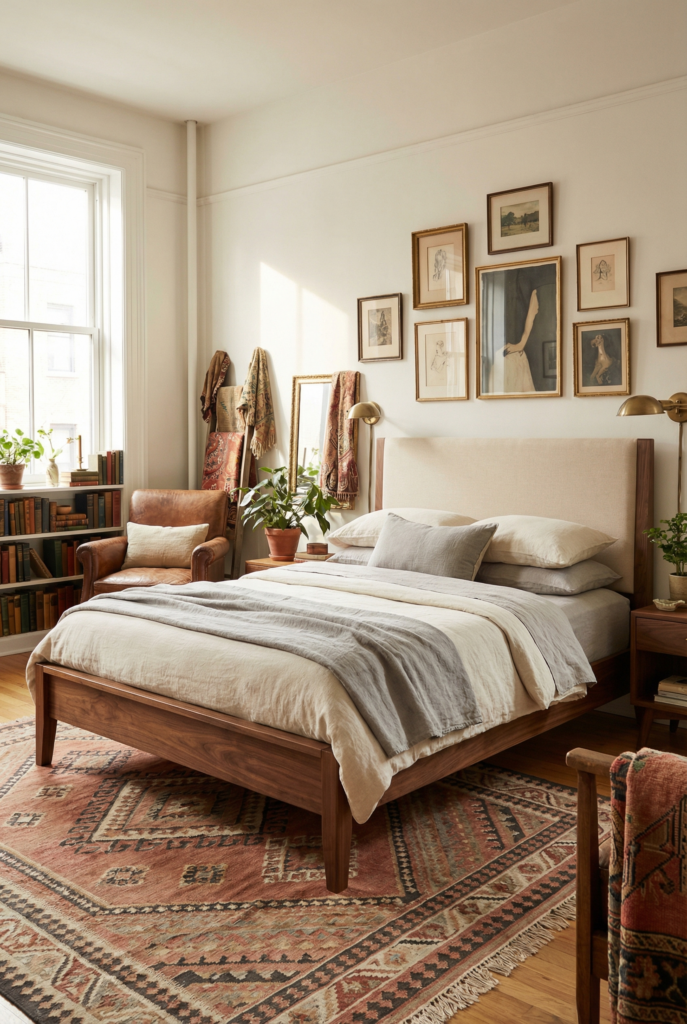
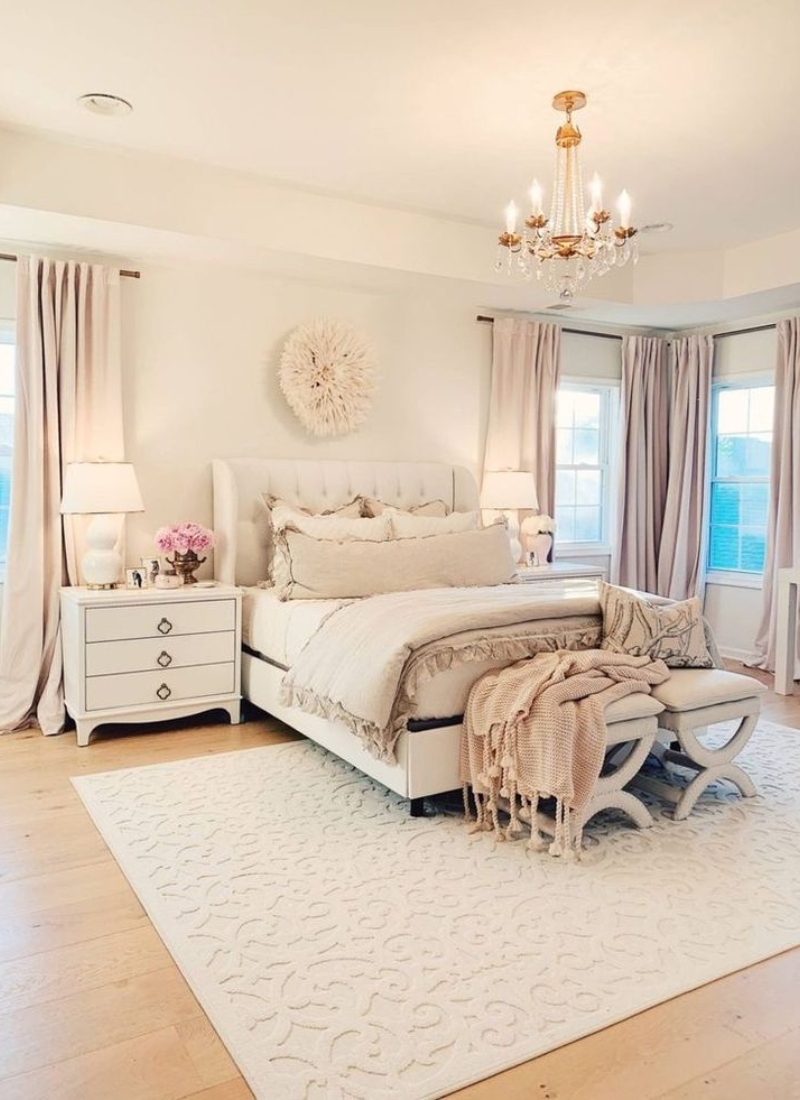
Choose a substantial bed frame or an upholstered headboard with clean lines. Let it be the quiet anchor, so your quirky art and thrifted pieces feel intentional, not like leftovers from five apartments ago.
Mismatched nightstands that still relate
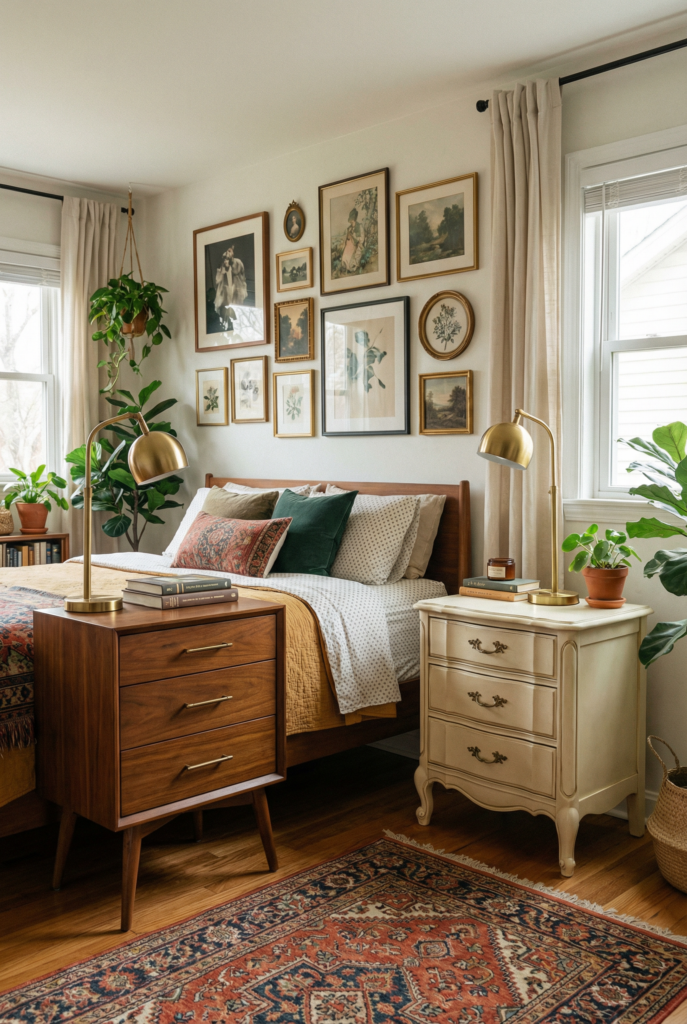
Use two different bedside tables, but connect them with one repeating element, like the same metal hardware or similar wood tone. They should feel like siblings, not strangers forced to share a room.
One focused gallery wall
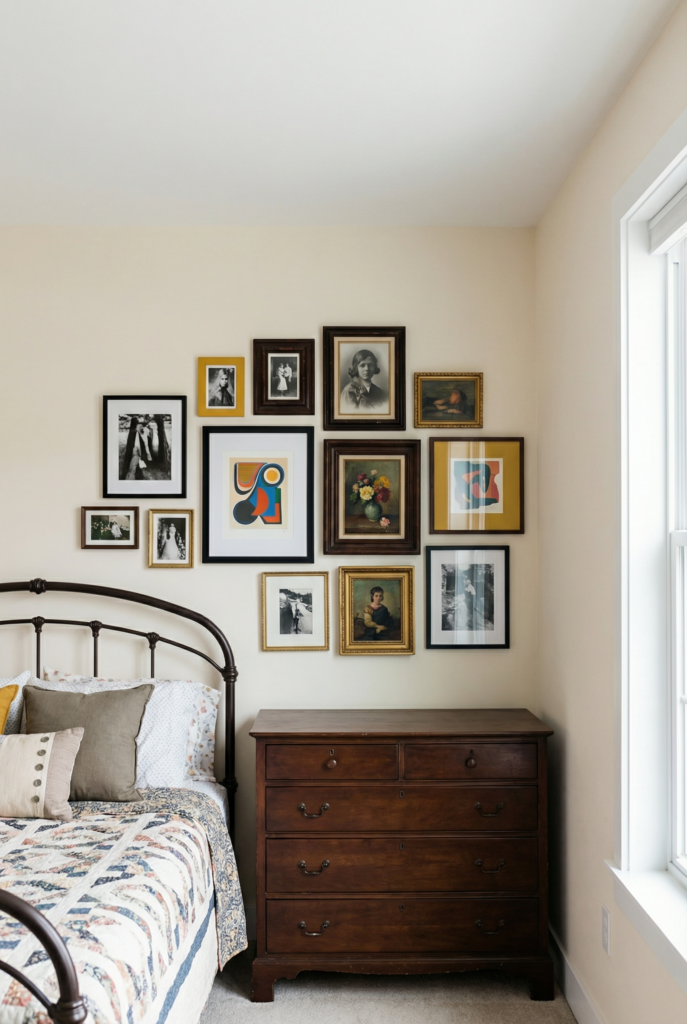
Create a tight gallery wall over the dresser or next to the bed instead of scattering art everywhere. Mix photos, prints, and little paintings, but tie them together with similar frame colors or one repeating hue.
A calm feature wall behind the bed
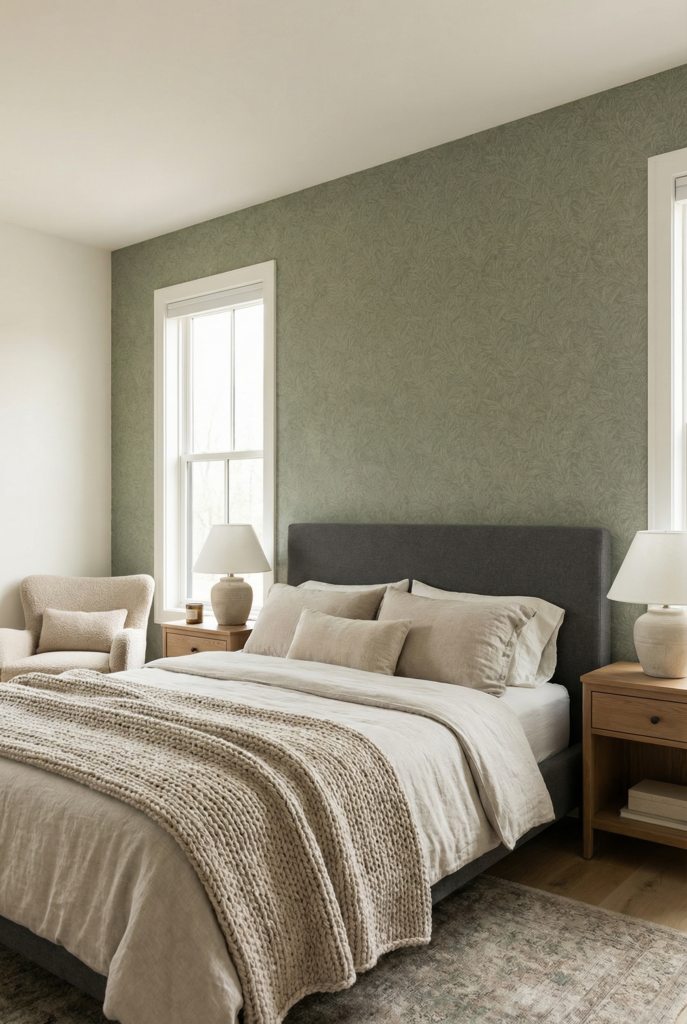
Paint or paper just the wall behind your headboard as a feature wall. It frames the bed, adds depth, and lets the other walls stay simpler so the room doesn’t feel like a funhouse.
Bold wallpaper in a smart dose
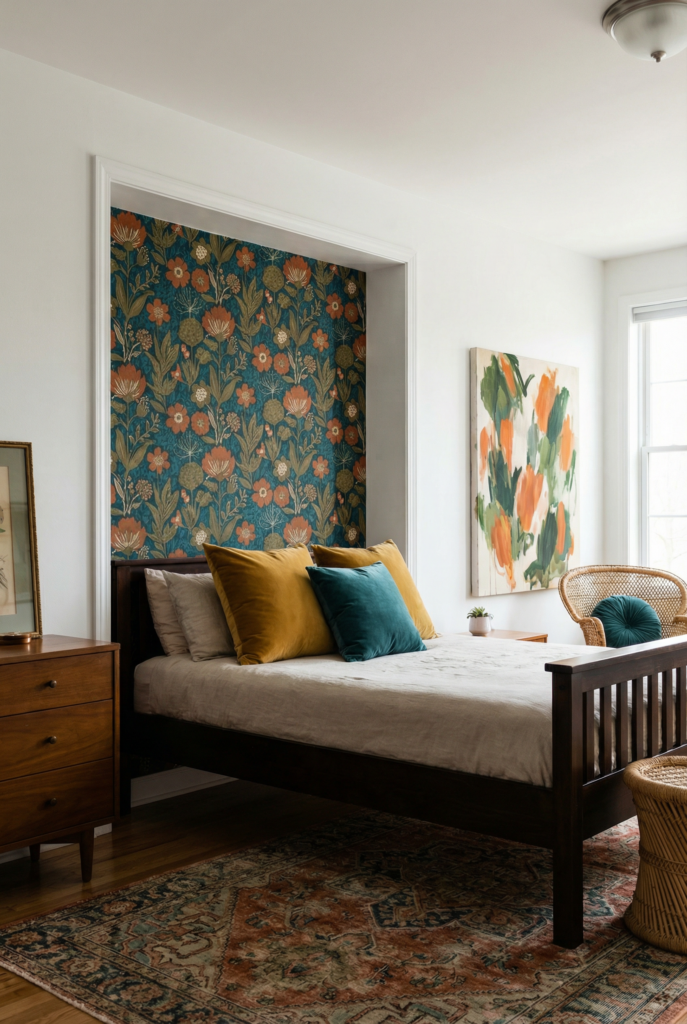
Love pattern but fear chaos? Try bold wallpaper behind the bed or inside a niche. Then echo one or two colors from the paper in your pillows or art so it feels integrated, not random.
Soft-to-nubby texture story on the bed
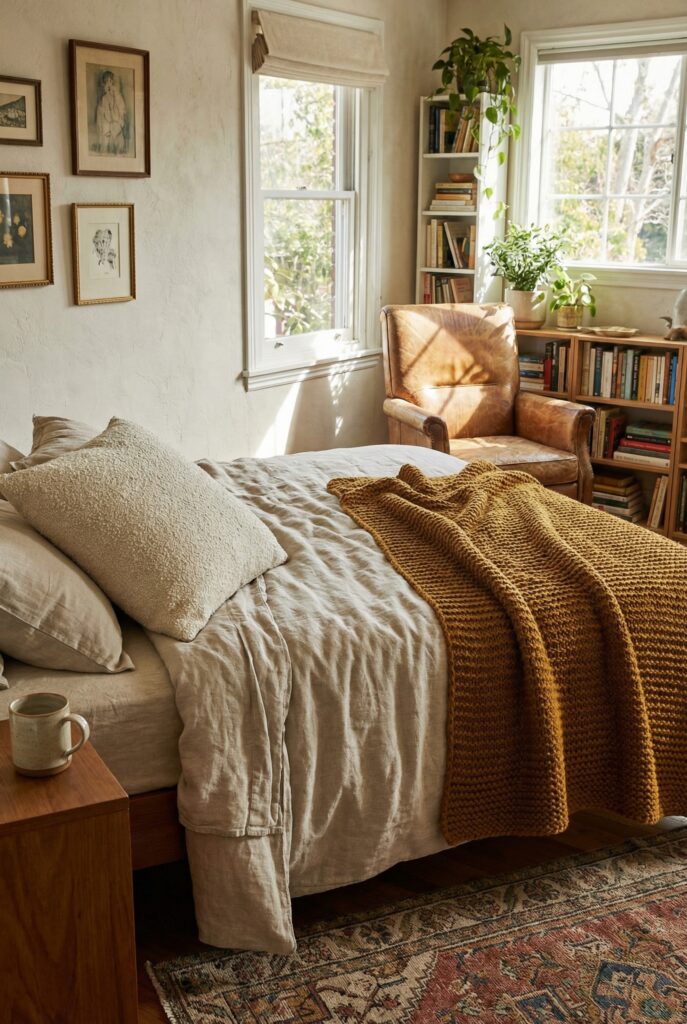
Layer soft fabrics like cotton or linen closest to your skin, then add one or two tactile finishes like a boucle pillow or chunky knit throw. Soft first, texture second. Your body will thank you at 11 pm.
Patterned curtains as quiet glue
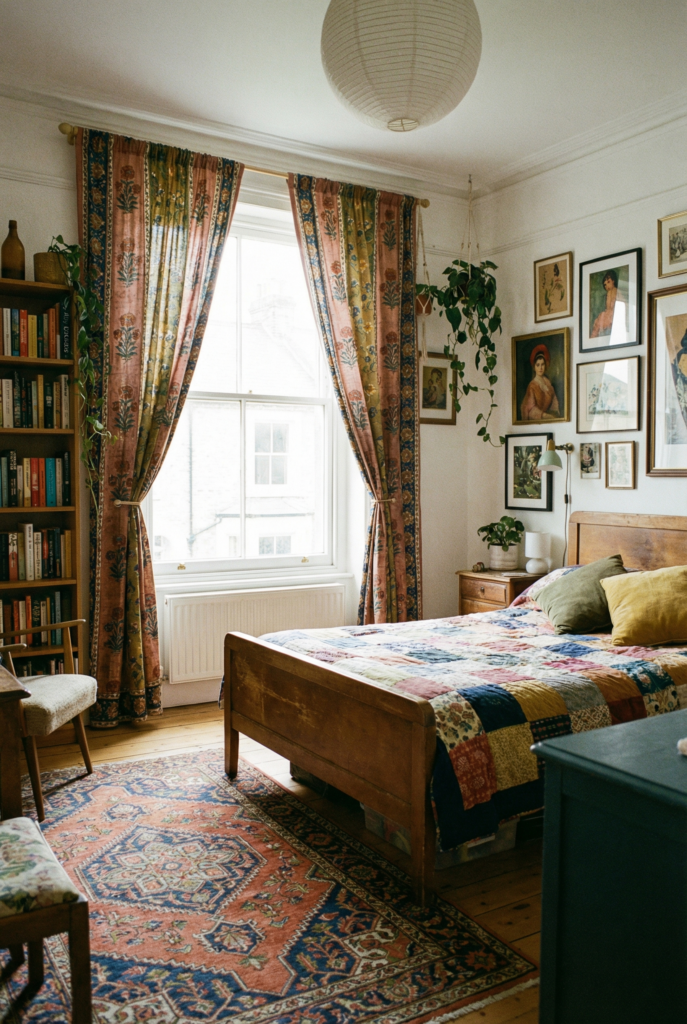
Use patterned curtains to pull colors from your rug or duvet up the wall. They frame the whole room and act like visual bookends, especially helpful in eclectic bedrooms with mixed furniture.
Scatter cushions as color connectors
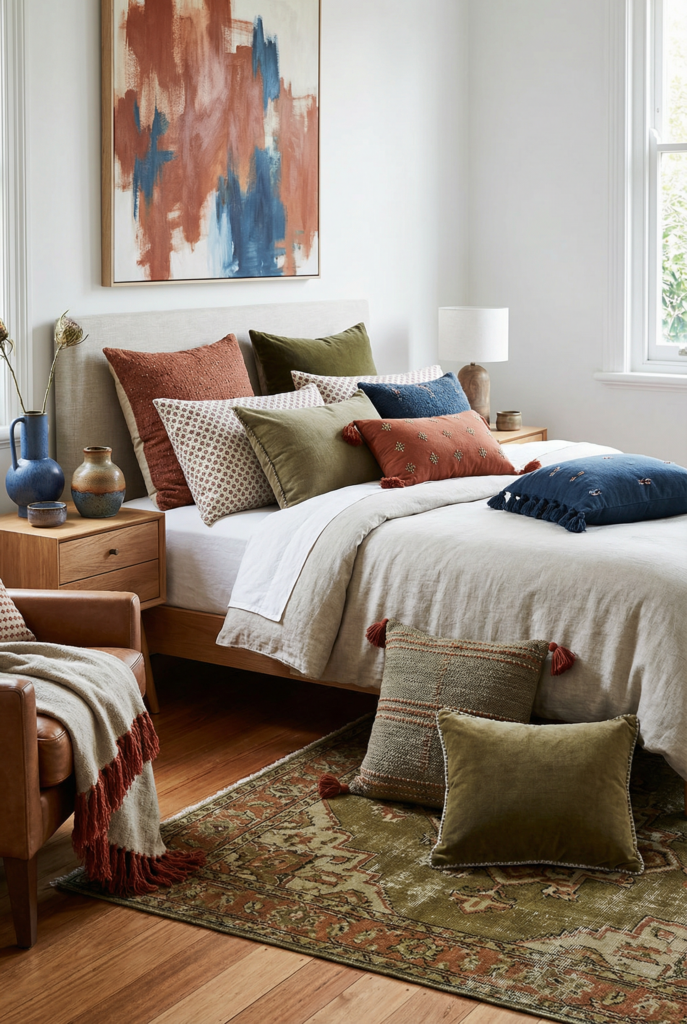
Use scatter cushions to connect rug, art, and bedding. If there’s a tiny stripe of rust in your artwork, repeat it on a pillow and maybe a little vase. Tiny repeats = instant cohesion.
Plush velvet bench at the foot of the bed
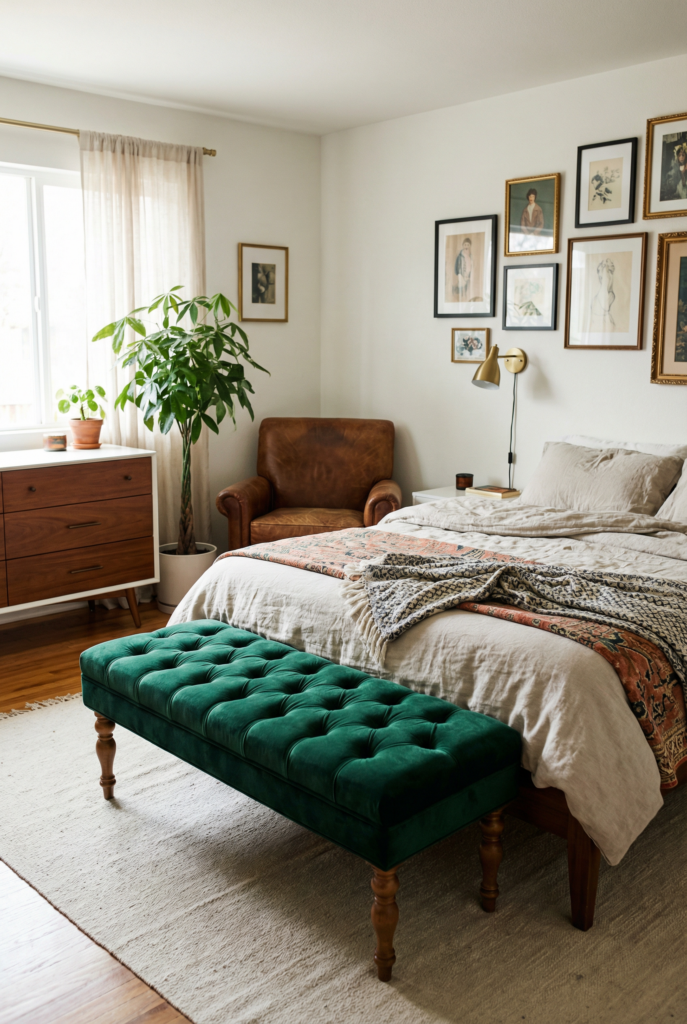
A plush velvet bench feels like hotel luxury, but it also catches the pile of jeans you pretend you’ll fold later. It’s both statement and workhorse, which is my favorite kind of furniture.
Mix metals, but give each a buddy
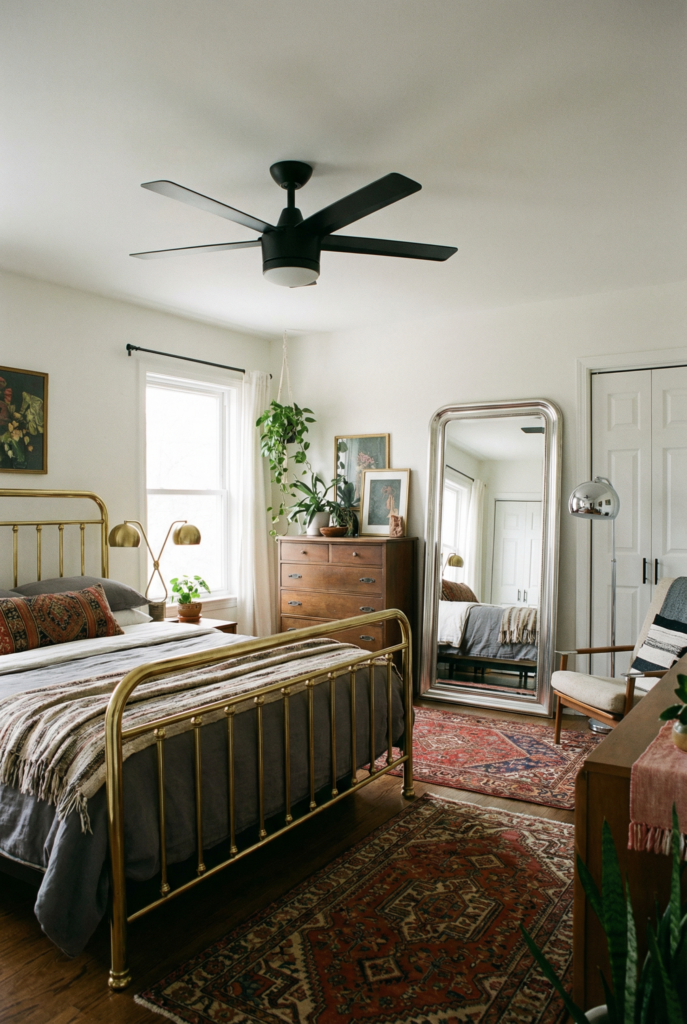
You can absolutely mix brass, black, and chrome. Just make sure every metal appears at least twice. When a finish has a friend, it looks intentional. When it stands alone, it looks like a mistake.
Use books as color and height
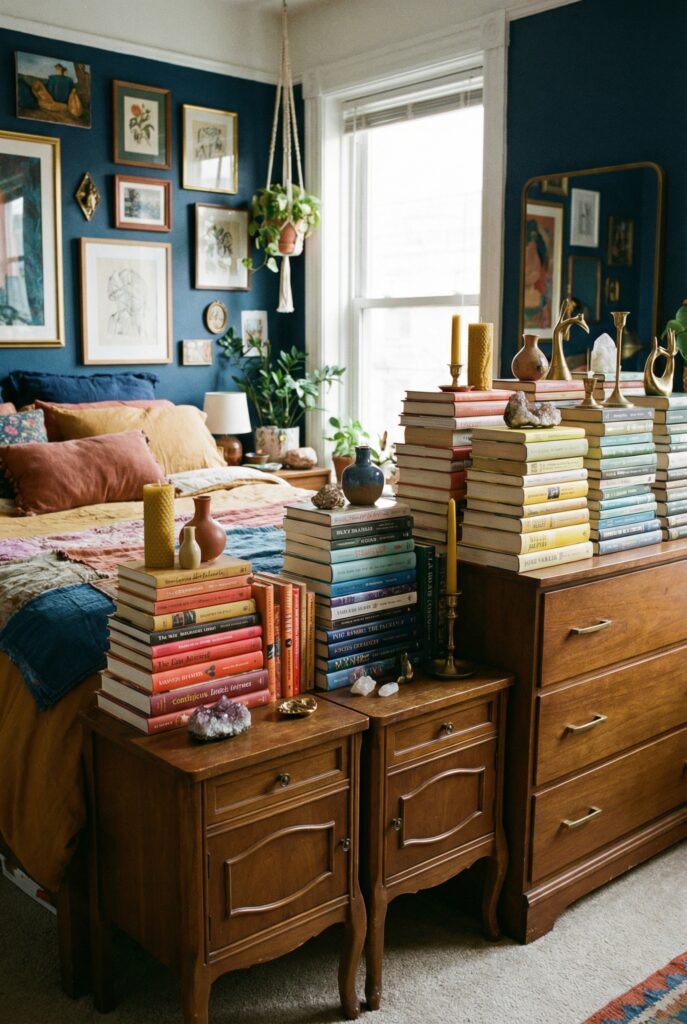
Stack books on nightstands and dressers to add height and color. Top them with a candle or small object that echoes your room’s palette. It’s decor and storage hiding in plain sight.
One oversized mirror instead of lots of small ones
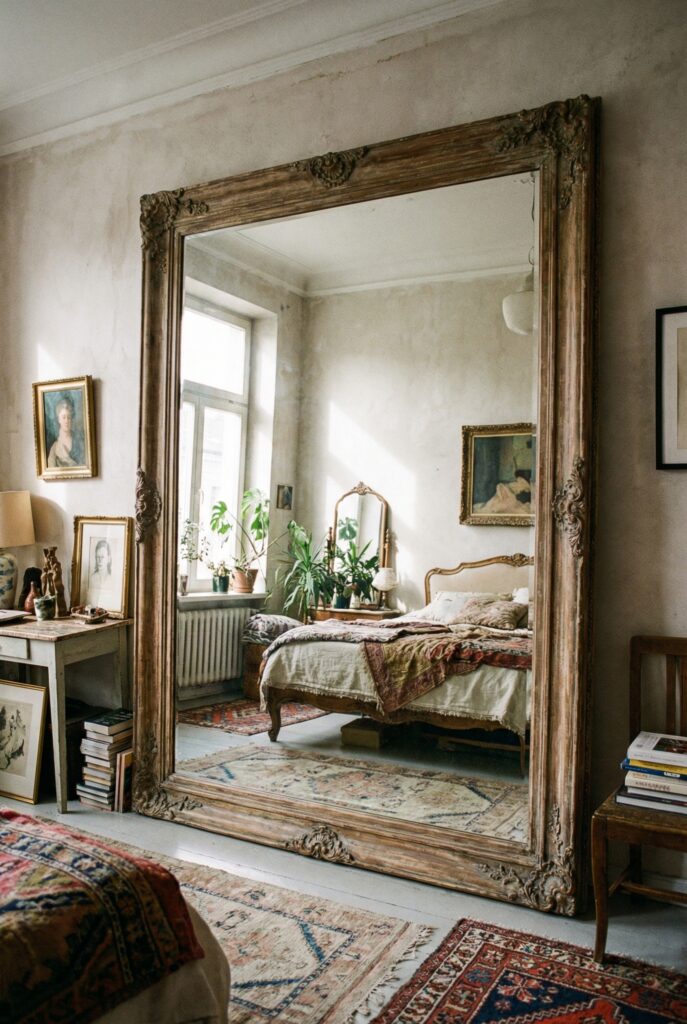
Lean a big mirror instead of hanging three tiny ones. It reflects light, adds scale, and quietly anchors whatever eclectic chaos is happening around it. Bonus: great for “do these shoes work?” moments at 7:03 am.
One delightfully weird lamp
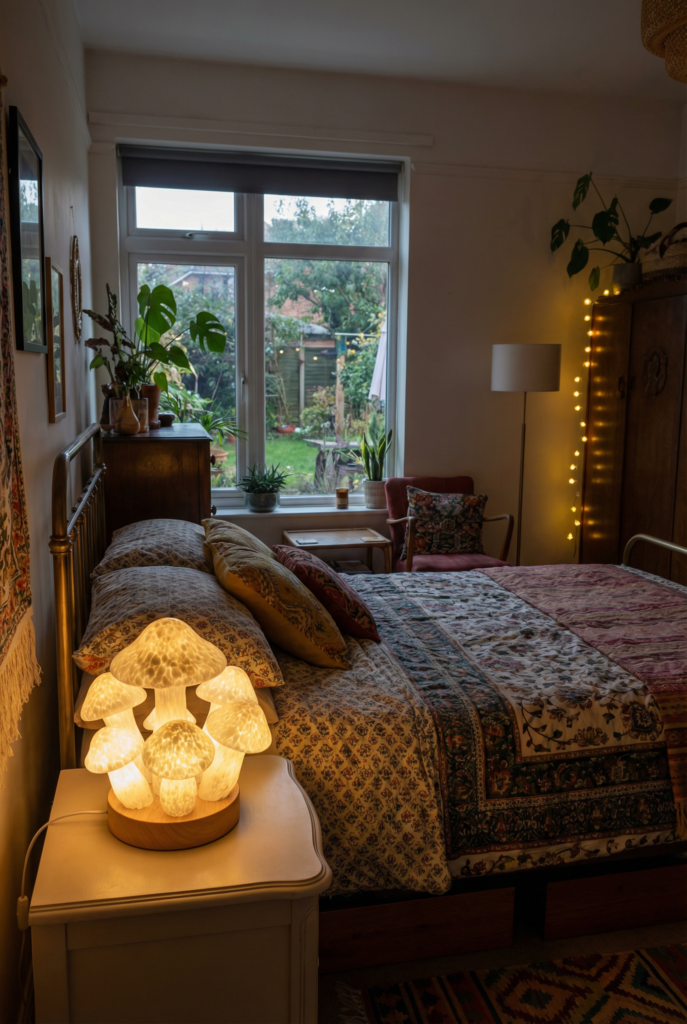
Keep most lighting simple, then add one sculptural or unexpected lamp. Mushroom, globe, squiggly base… anything. Let it be your playful moment within an overall calm lighting plan.
Upgrade the ceiling light when you can
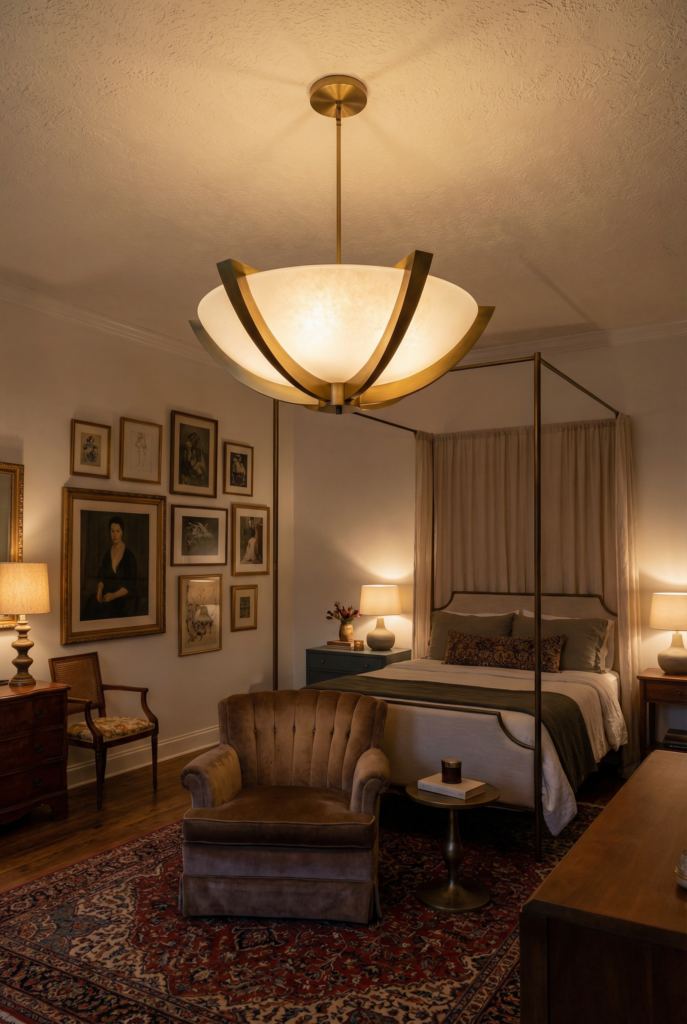
If you still have a boob light, I’m gently cheering you on to replace it. A simple flush mount or pendant instantly upgrades even basic eclectic bedrooms, especially at night when everything else is dimmed.
Hide the boring stuff in pretty containers
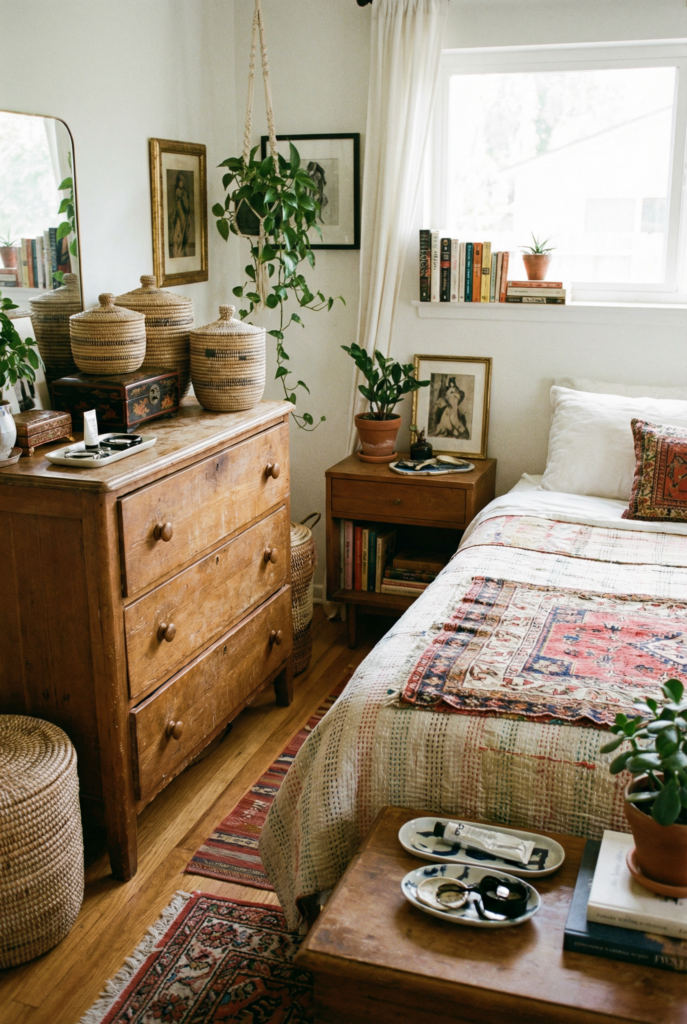
Corrals things like chargers, hand cream, and lip balm in lidded baskets or trays. Your surfaces look styled, but real life still fits. Even the kids’ toothpaste that somehow migrates in every single morning.
Mixing Styles and Eras Without Visual Whiplash
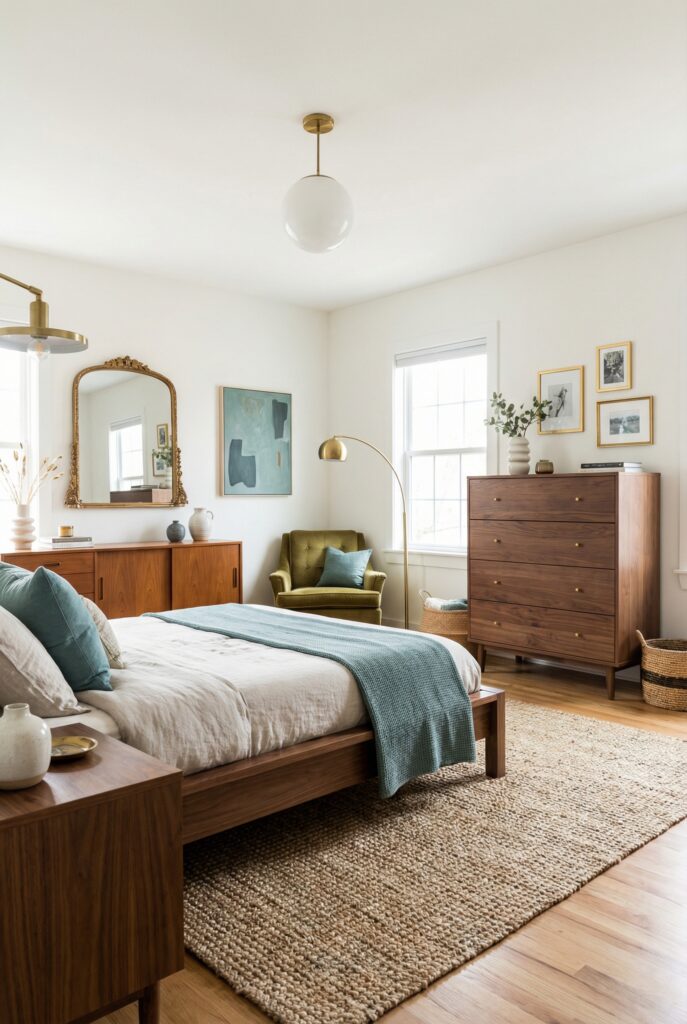
Eclectic decor is all about mix, but not every mix is a good mix. The secret is simple: anchors, contrasts, and connectors.
When you assign each piece a role, the room stops feeling like a random thrift haul and starts feeling like a creative bedroom design you meant to create.
Your anchors are the big, visible pieces that set the tone: bed, dresser, wardrobe. Contrasts are the pieces that clearly come from a different style or era and add personality.
Connectors are the quiet heroes that repeat colors, shapes, or materials so everything feels related.
Most eclectic bedroom ideas fall flat because people skip the connectors and buy too many statement pieces.
What to do
- Choose one main style or era to dominate about 60–70 percent of your room.
- Let your bed and dresser be anchors from that style.
- Add 1–3 strong contrast pieces, like a vintage nightstand with a modern bed.
- Use connectors like matching metals, similar wood tones, or repeated color to bridge them.
- Mix shapes: pair straight edges with rounded corners and a few soft curves.
What to avoid
- Ten different wood tones with no repeats.
- Every piece being a “moment” so nothing actually stands out.
- All furniture at the same height, which makes the room feel flat.
- Art in every style on every wall with no common thread.
Concrete bedroom example
Picture an adult bedroom with a simple linen-upholstered bed and a warm oak dresser. Those are your anchors. On one side of the bed, you add a slim black metal nightstand. On the other, a small vintage wooden stool. Both have brass lamps.
A black-framed print hangs over the bed and you repeat black on the curtain rod. Even though the pieces come from different eras, the brass and black tie everything together, so the whole room reads as one thoughtful eclectic bedroom decor story.
Quick win: Walk your room and label each big item in your head as anchor, contrast, or connector. If anything doesn’t have a role, edit or adjust it.
Layering Textures and Patterns Like a Grown-up
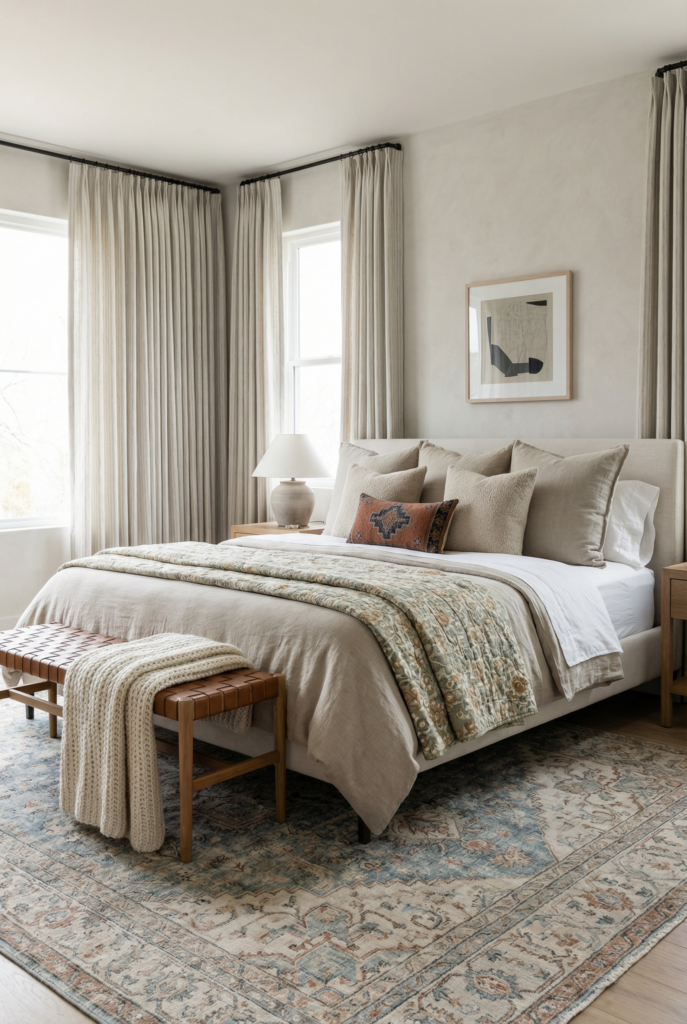
Textures and patterns are where an eclectic bedroom either becomes a cozy bedroom or an exhausting one. Your goal is layers, not noise. Instead of “as many patterns as possible,” think “pattern ladder” and “soft-to-tactile flow.”
The pattern ladder has three rungs: one large-scale pattern, one medium, one small. The textures follow a similar rule: soft against your skin, nubbier as you move away from the bed. Most of your “wow” can live in textiles. That’s cheaper than replacing furniture and much kinder if you change your mind in six months.
What to do
- Choose one big pattern (rug or duvet), one medium (shams or curtains), one small (accent pillow).
- Use solids to separate patterns so they don’t shout over each other.
- Keep bedding mostly in soft fabrics like cotton, linen, or bamboo.
- Add tactile finishes in small hits: a boucle pillow, chunky knit throw, woven bench.
- Repeat at least one texture three times, like linen on curtains, quilt, and euro shams.
What to avoid
- Three loud patterns all touching: patterned rug + busy curtains + wild duvet.
- Only flat textures, which make the room look like a 2D photo.
- Shiny everything, which can feel cold in a bedroom.
- Choosing fabrics for looks only; your body has to sleep in here.
Concrete bedroom example
Imagine a welcoming bedroom with a big, faded patterned rug in soft blues and terracotta. The duvet is solid cream. Pillow shams carry a medium stripe, and a small lumbar pillow brings in a tiny geometric print. That’s your pattern ladder.
The textures: smooth cotton sheets, a linen quilt folded at the foot, and one chunky knit throw over the corner. Linen curtains pick up the terracotta from the rug.
The mix feels layered and cozy, but you still have plenty of calm surfaces for your eyes to rest.
Quick win: Strip your bed and rebuild it using only one pattern, one strong texture, and one accent color. Then add back one more pattern if it still feels too flat.
Color Logic so the Room Feels Intentional, not “accidentally rainbow”
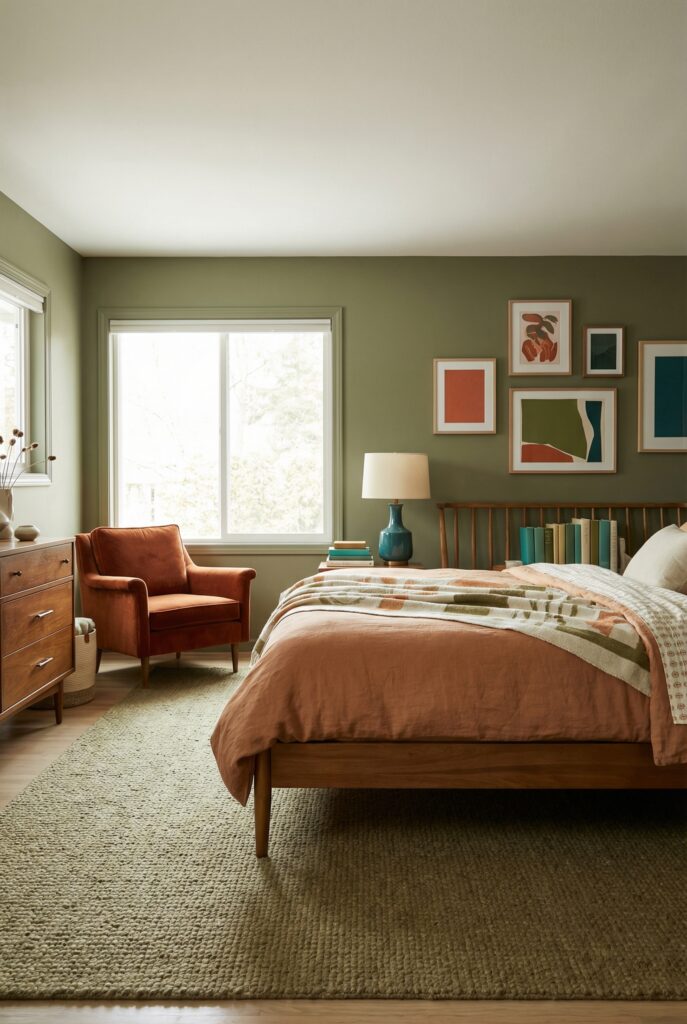
Color is the fastest way to make eclectic bedrooms look either beautifully curated or wildly chaotic. The trick is to think in color families and repeats, not individual shades.
Instead of hunting for the perfect “sage” or “blush,” ask: what are my three color families, and where do they show up?
For a mature bedroom, you want one dominant color, one supporting color, and one accent. Neutrals like white, cream, wood, or black float around those three.
When each color appears in multiple places, everything starts to feel like one thought, even if the pieces themselves are very different.
What to do
- Pick a dominant color for big surfaces (walls, bedding, or rug).
- Choose a secondary color for textiles and art.
- Add a small accent color for lamps, small decor, or a stripe in pillows.
- Make sure each chosen color appears at least three times in the room.
- Notice how the colors look in morning, afternoon, and evening light before committing.
What to avoid
- Ten accent colors, each used once.
- Painting walls before considering your existing furniture.
- Matching everything to one tiny paint chip.
- Forgetting that warm vs cool undertones affect how “cozy” the room feels.
Concrete bedroom example
Picture a unique bedroom style with warm white walls. Your rug has charcoal, rust, and oatmeal. You decide charcoal is dominant, rust is secondary, and soft teal will be the accent.
Charcoal appears on the bed frame, one nightstand, and a lamp. Rust shows up in the quilt, art, and a lumbar pillow. Teal appears on a small vase, a stripe in a cushion, and a tiny print in your gallery wall. Neutrals fill in the gaps. The overall effect feels intentional and calm, not like your room swallowed a paint fan deck.
Quick win: Take a photo of your bedroom and quickly list the three colors you see most. If you can’t, you probably have too many fighting accents. Pick three to commit to and move the rest to other rooms.
Statement Furniture and Personal Expression without Clutter Overload
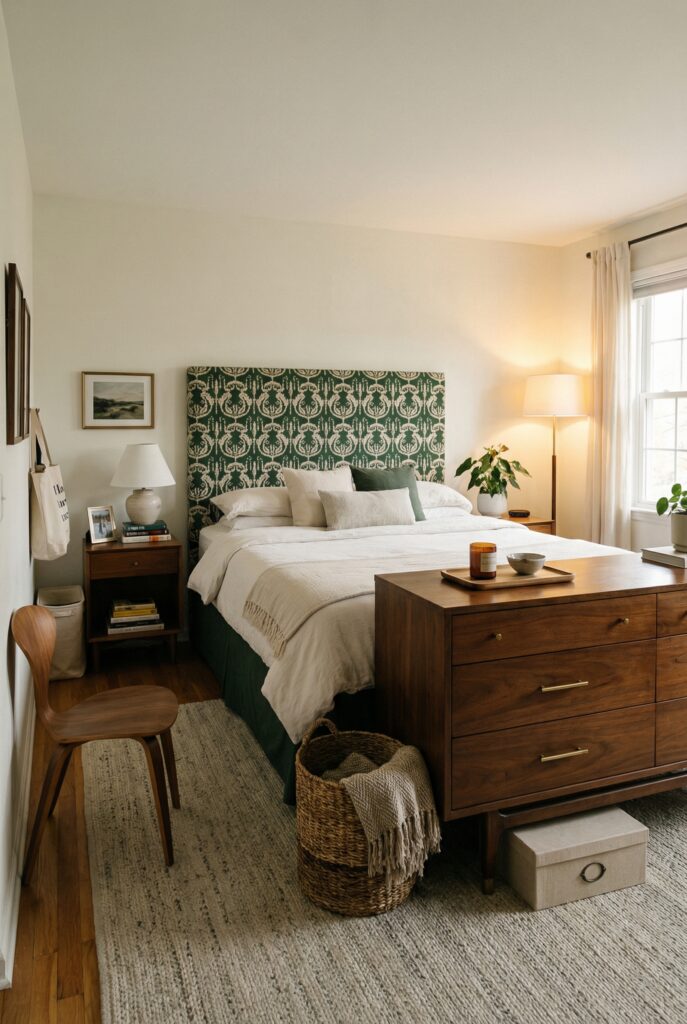
Eclectic decor is supposed to feel personal. The danger is when “personal” turns into “everything I’ve ever loved is on display at once.” Your bedroom should showcase you, but also let you actually sleep.
The key is a few strong statements, surrounded by quieter supporting pieces.
Think of your bed, a dresser or wardrobe, and maybe one extra star (like a wild chair or dramatic bench) as the leads. Everything else is the supporting cast.
Your personalized decor lives in smaller doses: a favorite print, a stack of books, a couple of meaningful objects. Real life stays, but in containers that look good.
What to do
- Choose 1–2 hero pieces and keep them visible and clear of clutter.
- Use simple, functional nightstands that actually hold what you need.
- Style surfaces with small “stories”: a stack of books, a candle, a framed photo.
- Rotate special objects seasonally so everything gets a moment, but not all at once.
- Let at least one corner stay practical and a bit messy. You live here.
What to avoid
- Crowding every surface with every sentimental object.
- Statement everything: ornate bed, wild rug, crazy curtains, bold dresser.
- Tiny nightstands that look cute but can’t hold your water, book, and phone.
- Hiding all personality because you’re afraid of clutter.
Concrete bedroom example
Imagine an eclectic bedroom decor scenario where the hero is a vintage wooden wardrobe with carved doors. The bed is simple and low, with plain white sheets and a linen throw. Nightstands are basic boxes with clean lines. On top, a small bowl for jewelry, one framed photo, and a book stack.
At the end of the bed, a plush velvet bench in deep blue echoes a color from the wardrobe’s grain. A single piece of art above the bed ties the colors together. The statements are strong, but they’re outnumbered by calm, functional pieces, so the room still feels restful.
Quick win: Decide on your hero piece today. If you have more than two, quietly demote one by simplifying what’s around it.
How to Make Eclectic Feel Mature, Not Messy
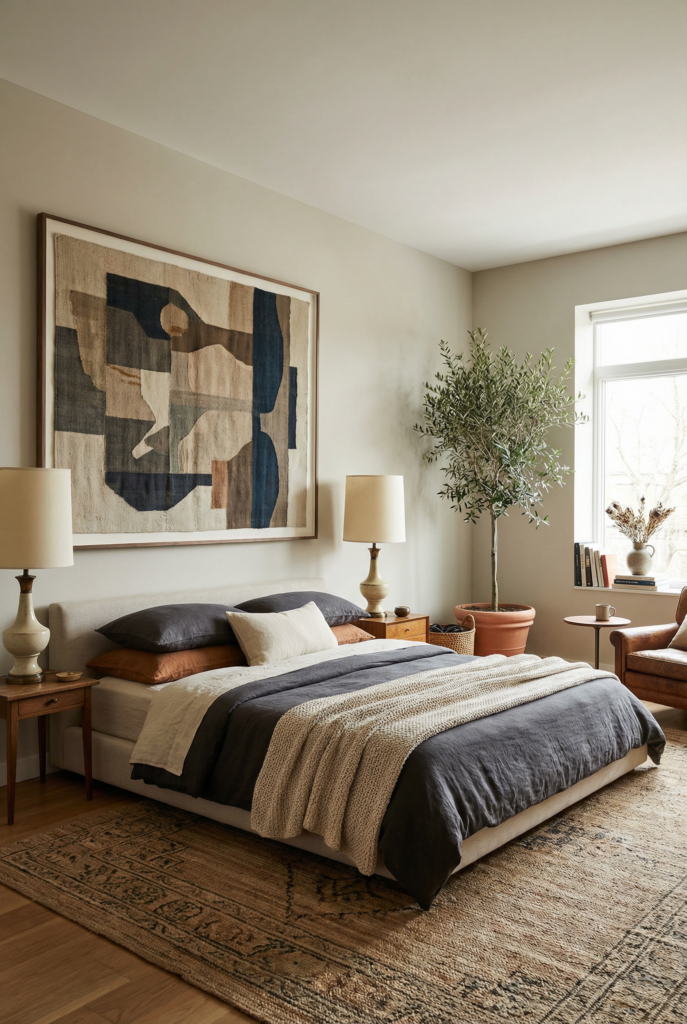
If your room currently feels like “grown-up dorm,” you’re not alone. Making eclectic feel mature is mainly about scaling up and editing down. Bigger art, fewer trinkets. Fewer colors, better lighting.
Small moves that help a mature bedroom vibe immediately:
- Swap lots of tiny frames for one or two larger ones.
- Match lamp shades, even if the lamp bases are different.
- Choose bedding in two colors max, plus neutrals.
- Hide practical things (like humidifiers or extra cords) behind plants, screens, or baskets.
You can still keep playful touches. Let one shelf or one small wall be your “maximal” moment, especially if you love maximalist decor. The overall room just needs space to breathe.
Renter-friendly Eclectic Solutions
Renting doesn’t mean you’re stuck with bland. It just means your big moves live in things you can take with you. The good news: some of the best eclectic bedroom ideas are portable.
Easy renter friendly tips:
- Use removable wallpaper or decals on one wall for a reversible feature wall.
- Hang curtains with tension rods or no-drill brackets, high and wide, to fake taller ceilings.
- Lean art and mirrors instead of mounting them.
- Cover ugly flooring with a large rug that sets your whole palette.
- Use plug-in sconces instead of hardwired lights.
And if you’re terrified of drilling tile or touching anything electrical, same. Start with textiles and lighting you can plug in and move. The impact is huge, the commitment is tiny.
Why This Looks Wrong + How to Fix it
Some quick troubleshooting for that “something is off” feeling.
The room feels busy and small
Likely cause: too many mid-sized items and patterns, no big anchors.
Fix: Clear one whole surface. Remove one pattern. Add a larger piece of art or bigger nightstand so your eye has something solid to land on.
Everything matches too much and feels flat
Likely cause: no contrast in shape or texture.
Fix: Add one curved piece (round side table, arched mirror) and one nubbier texture like a woven basket or chunky throw.
The bed always looks messy, not styled
Likely cause: too many pillows, not enough repetition.
Fix: Choose a simple formula: two sleeping pillows, two euros, one lumbar. Stick to one main color with a small accent.
The room feels like three different styles fighting
Likely cause: no clear anchor style or connectors.
Fix: Decide your main style. Let one or two pieces from other styles stay and either repaint or re-hardware anything that doesn’t relate in color or finish.
You love every item but together it’s overwhelming
Likely cause: too many accents, not enough neutrals.
Fix: Put some decor in your “not now” box. Choose which favorites actually earn a spot, and let the rest rotate in later.
Cohesion Checklist: how to know when to stop
Eclectic personalities love to keep tweaking. At some point, you need a stopping point so you can actually enjoy your room. Use this as your “do not add more stuff tonight” checklist.
- From the doorway, is there one main focal point (usually the bed or wall behind it)?
- Do your main colors repeat at least three times each?
- Do you have at least one mostly clear surface?
- Can you describe the room’s vibe in three words or less?
- Does every big piece feel like it has a job: anchor, connector, or contrast?
- Is there one thing that still annoys you more than all the others? Focus on that next, not adding something new.
If you can say yes to most of these, you are done for now. Live in it. See how the room feels at 7 am light and 11 pm light. Let real life test it.
Conclusion: your bedroom as a quiet experiment in individuality
At the end of the day, this is what you’re really doing: turning your bedroom into a low-stakes lab for your taste. You test mixes of eras, see which textures feel good, notice which colors actually help you unwind. You layer and edit until the room reflects you instead of whoever designed that one trendy hotel.
The fast ideas at the top give you easy ways to start. The systems around mixing styles, layering textures and patterns, color logic, and statement furniture teach you how to keep everything cohesive.
The renter solutions, troubleshooting, and checklists help when you get stuck.
Most importantly, you now have language for what your room is doing: anchors, connectors, controlled contrast. Once you see those patterns, any eclectic bedroom decor decision becomes easier.
You’re not chasing trends. You’re building a bedroom that feels like your personality, but also lets you actually sleep.
FAQ
What is an eclectic style bedroom?
An eclectic style bedroom is a space that mixes different styles, eras, textures, and colors but still feels intentional. You’ll usually see a few strong anchor pieces, some contrasting items for personality, and repeated colors or finishes that tie everything together. It looks collected over time, not bought all at once.
What’s the difference between boho and eclectic?
Boho is a more specific look: lots of plants, rattan, fringe, earthy colors, and relaxed textiles. Eclectic is a broader approach where you mix any styles you like in one room. A boho bedroom can be eclectic, but you can also be eclectic with more classic, modern, or minimal pieces.
What are the rules of eclectic design?
The useful rules are about balance. Start with one main style, add one or two supporting styles, and repeat key colors and materials so the room feels like one story. Limit your bold patterns and statement pieces, and make sure every big item is either an anchor, a connector, or a contrast.
What are eclectic colors?
Eclectic colors aren’t one specific palette. They’re usually a mix of grounded neutrals with a few richer accents, like deep greens, blues, or terracottas. The important thing is repetition: each chosen color appears in several places around the room so it feels unified, not random.
What is the 3-color rule in interior design?
The 3-color rule says rooms look more cohesive when you use one main color, one secondary color, and one accent color. In a bedroom, that might be a neutral wall color, a colored quilt, and a small accent in lamps or pillows. Neutrals like wood, white, black, or tan weave around those three.
What is an example of eclectic style?
A good example is a room with a simple modern bed, a vintage dresser, metal lamps, a patterned rug, and a small gallery wall mixing art and photos. The furniture comes from different eras, but shared colors in the rug, pillows, and curtains tie everything together, so it feels intentional, not random.
What is the eclectic design theory?
Eclectic design theory is basically “harmony through contrast.” You create interest by mixing eras, shapes, and materials, then bring in harmony through repetition and a few clear focal points. It assumes people are layered and lets your room reflect that, while still feeling livable.
What are the characteristics of eclectic design style?
Common characteristics include a mix of old and new pieces, varied textures, layered textiles, thoughtful color repetition, and a few surprising details. You’ll often see different furniture styles in one room, personal objects on display, and a balance of calm areas and more detailed moments. The result feels like a real person lives there, not like a one-note theme.