
So here’s something I didn’t think about once while we were planning this house – not once – and then it became a whole thing: do all houses even have attics?
The answer is no. And finding that out while actually building one is a surprisingly interesting way to learn it.
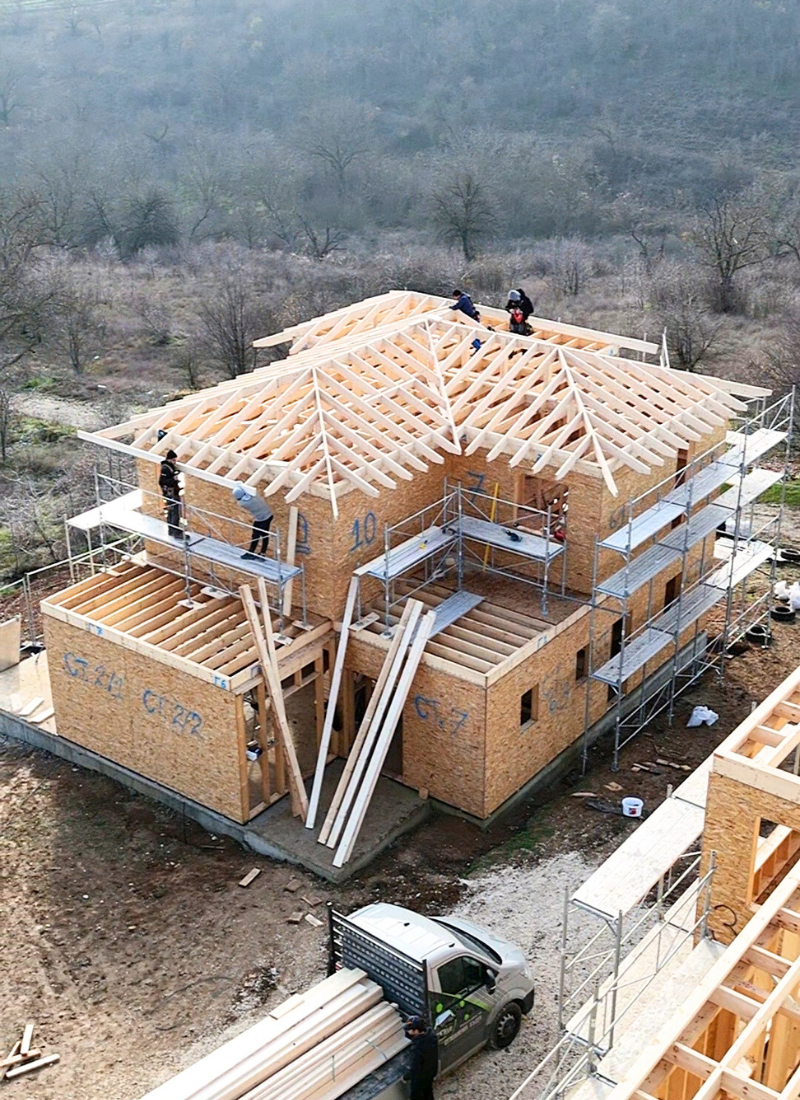
Not every home has an attic in the way most people picture one – that dusty space above the ceiling where holiday decorations go to be forgotten for eleven months and rediscovered with mild panic in December. We have an attic. But it is not that. Not even close. And figuring out what it actually is taught me more about roof design, insulation, and how houses actually work than I expected to learn from what is essentially an empty triangular void above our 2nd floor.
The short answer: no, not all houses have attics. Whether yours does depends almost entirely on your roof design and ceiling type. Flat roofs, cathedral ceilings, shed roofs, certain modern builds – none of these create the conditions for an attic space to exist. And even when a house technically has one, like ours, it’s not always usable in any meaningful way.
Let me explain all of it.
Why Some Houses Don’t Have Attics
An attic exists because of the space created between your ceiling and your roof. When a pitched roof sits above a flat ceiling, that triangular void in between – that’s your attic. Simple geometry.
But when that geometry changes, the attic disappears. And this is the part I didn’t fully understand until we were actually in it.
A flat roof has almost no space between the ceiling and the roof surface – sometimes a few inches, sometimes nothing at all. A cathedral ceiling follows the roofline directly, so there’s no separate void created. (Cathedral ceilings are stunning, by the way. We did not do a cathedral ceiling. I think about this sometimes.) A shed roof – single slope – can create a tiny wedge of space on one end, but rarely enough to call an attic in any functional sense. And some modern construction methods build the roof structure and ceiling as essentially one unit, which eliminates the space entirely.
So if you’ve ever been in a house and wondered where the attic is – it’s possible there just isn’t one. That’s not a flaw or an oversight. It’s a design choice with real tradeoffs that someone made intentionally, and understanding those tradeoffs is actually pretty useful.
Types of Houses Without Attics
These are the situations where you’re most likely to have no attic at all:
- Flat roof homes – very common in modern and contemporary architecture, also in commercial buildings converted to residential. No pitch means no void means no attic. Clean lines, great for rooftop decks, genuinely no attic.
- Cathedral ceiling homes – the ceiling IS the roof structure, essentially. Beautiful, dramatic, and attic-free. The tradeoff is that all your insulation has to go into the roof assembly itself rather than a separate layer, which changes the cost and the method significantly.
- Ranch-style homes with low-slope roofs – sometimes there’s a crawl space up there, but not enough to qualify as an attic in any practical sense.
- Homes with structural insulated panels (SIPs) – newer building method where insulation is built directly into the roof panel. No separate attic needed or created, and honestly the thermal performance is excellent.
- Certain prefab and modular homes – depending on the design, the roof system may not create usable attic space at all.
None of these are wrong. They’re just different – with different insulation strategies, different ventilation approaches, and different tradeoffs that will matter to you or not depending on what you actually need the space for.
Types of Houses That Do Have Attics – But Not All Attics Are Equal
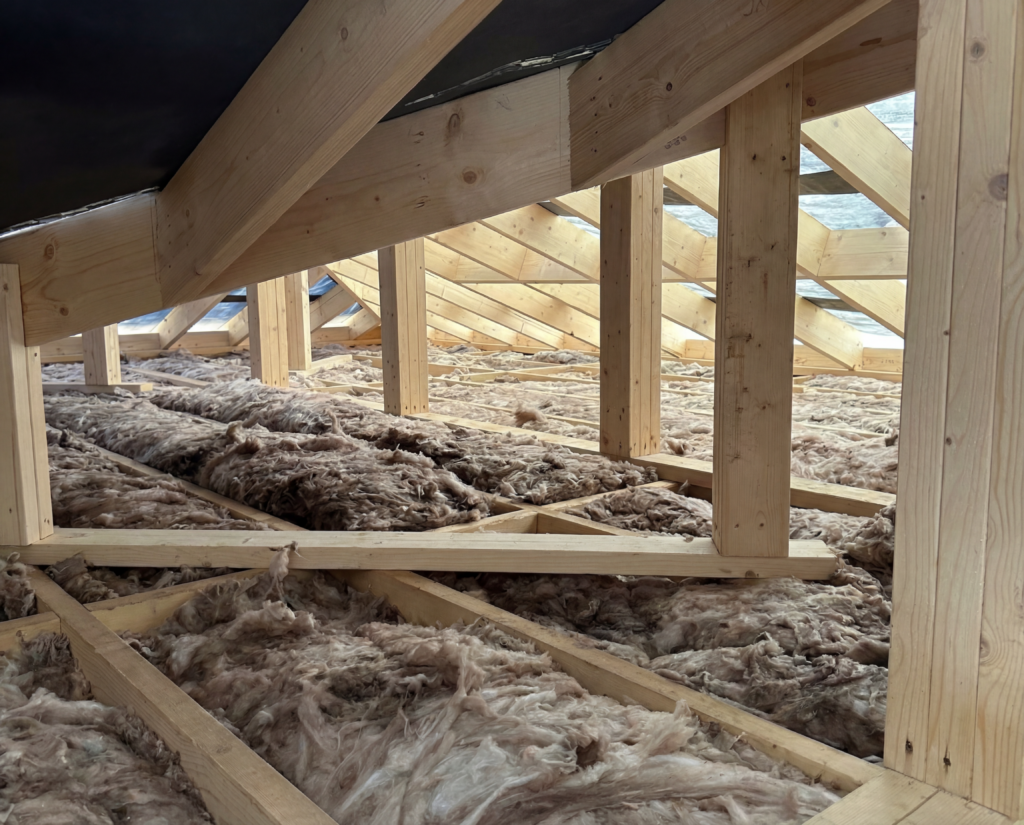
This is what a cold roof attic actually looks like
This is where it gets personal. Because we have an attic. It is technically there. It exists. And I would describe it as: technically an attic, emotionally not an attic.
Our house has a cold roof – which means it’s a ventilated roof system where the insulation sits at the ceiling level, not at the roof level, and air circulates freely in the space between. The highest point of our attic is 1 meter. One meter. I cannot stand up in there. I cannot store anything meaningful in there. I cannot do really anything in there except crouch and contemplate my life choices. What we CAN do is access it for maintenance, which is genuinely important and not nothing, but is also not what I had in mind when I heard the word attic for the first time as a child.
We have 20cm of insulation across the attic floor right now – which is solid, actually – and we’ll be adding more eventually because with a cold roof system, more insulation at ceiling level means better thermal performance, lower energy bills, and a house that stays comfortable without working as hard. The insulation is completely invisible.
So yes – our house has an attic in the architectural sense. But if you’re imagining a space to store childhood yearbooks and spare mattresses and the exercise bike you’re definitely going to use again, I need to manage your expectations.
Attics that do exist come in a few different types and it’s worth knowing which one you have:
- Full attic – full height, potentially livable or convertible, accessible via a proper staircase. The dream version.
- Half attic – partial height, usable for storage on one end, not the other. Still useful.
- Crawl attic – low clearance, accessible but not usable for storage, primarily for maintenance and insulation. Closer to what we have.
- Cold roof attic – like ours, ventilated space above the insulation layer, not conditioned, not storage, just… there. Doing important work. Quietly.
Does It Actually Matter If Your House Doesn’t Have an Attic?
It matters for some things and genuinely not at all for others, and I think people worry about this more than they need to.
Where it actually matters:
- Insulation strategy – homes without attics need roof-level insulation or SIP panels, which changes both the cost and the method. This is worth understanding before you build, not after.
- Ventilation – attics play a real role in roof ventilation in many systems. Without one, the builder needs a different solution, and you want to make sure they have one.
- Storage – if you were counting on attic storage, you need to plan for that elsewhere. This is the one that catches people off guard most often.
- Future conversion – some full attics can be converted to living space eventually. No attic or a crawl attic means that option doesn’t exist, which may or may not matter depending on your plans.
Where it really doesn’t matter:
- Energy efficiency – a well-insulated home without an attic can perform just as well or better than one with a poorly insulated attic. The attic itself isn’t the point. The insulation is the point.
- Resale value – buyers care about the overall home and how it performs, not specifically about whether an attic exists.
- Day-to-day living – most people genuinely never think about their attic until they need it. And then they think about it a lot. But mostly, not an issue.
FAQ – because these come up a lot
Do all houses have attics?
No. Whether a house has an attic depends on the roof design and ceiling type. Flat roofs, cathedral ceilings, and certain modern construction methods don’t create attic space at all.
Can you have a roof without an attic?
Yes, absolutely. Flat roofs and cathedral ceiling designs are the most common examples. The insulation in these cases typically goes directly into the roof structure rather than in a separate attic layer.
What is a cold roof attic?
A cold roof (also called a ventilated roof) is a roof system where insulation sits at the ceiling level and air is allowed to circulate freely in the space above. The attic space in a cold roof is unheated, uninsulated at the roof level, and typically not usable for storage — but it does exist as a ventilated void. This is what we have, with 20cm of insulation at ceiling level and a maximum height of about 1 meter.
Is an attic necessary for a house?
Not at all. An attic is a result of certain roof designs, not a requirement for a functional, well-built home. Many beautifully designed and highly energy-efficient homes have no attic whatsoever.
How much insulation should a cold roof attic have?
It depends on your climate, but 20-30cm is a common target for cold climates. We’re at 20cm currently and plan to add more — the more insulation at the ceiling level in a cold roof system, the better your thermal performance.
So – do all houses have attics? No. Should you care? Depends entirely on what you were planning to do with one. We have an attic that is 1 meter tall, ventilated, insulated, and completely inaccessible for any purpose other than maintenance. I have made my peace with this. Mostly.
Have you dealt with an attic situation that wasn’t what you expected? A cold roof, a crawl space that barely counts, a full attic you inherited and have no idea what to do with? Tell me in the comments – I’m genuinely curious how other people navigate this.



Leave a Reply