I love a pretty desk. I also love finishing a task without knocking over a water bottle, smearing highlighter on a sticky note, and losing my one good pen to the void.
So if you’re here for desk decoration ideas for office, you’re in the right place. I’m going to help you make your desk look intentional, feel good to sit at, and still work like a tiny command center. Because yes, you can have a cute space and a functional brain.
Also, I’m going to be honest: I still get iced coffee rings on my desk. It’s a lifestyle. Not a flaw.
Start With the “Office-Friendly” Desk Rules
Your desk can be warm and personal without turning into a dorm room nightstand. The secret is setting a few office-friendly boundaries first, then decorating inside those lines.
If your desk feels messy, it’s usually because one of three zones is overflowing. Your desktop is the “camera zone,” your visible storage is the “polished zone,” and your hidden storage is the “chaos zone.”
Here’s the quick way I sort it:
- Desktop: only what you touch daily (keyboard, mouse, one notepad, one drink)
- Visible storage: pretty containers that can be seen (pen cup, inbox tray, one catchall)
- Hidden storage: drawers for backups and chaos (extra cords, snacks, refills, random tools)
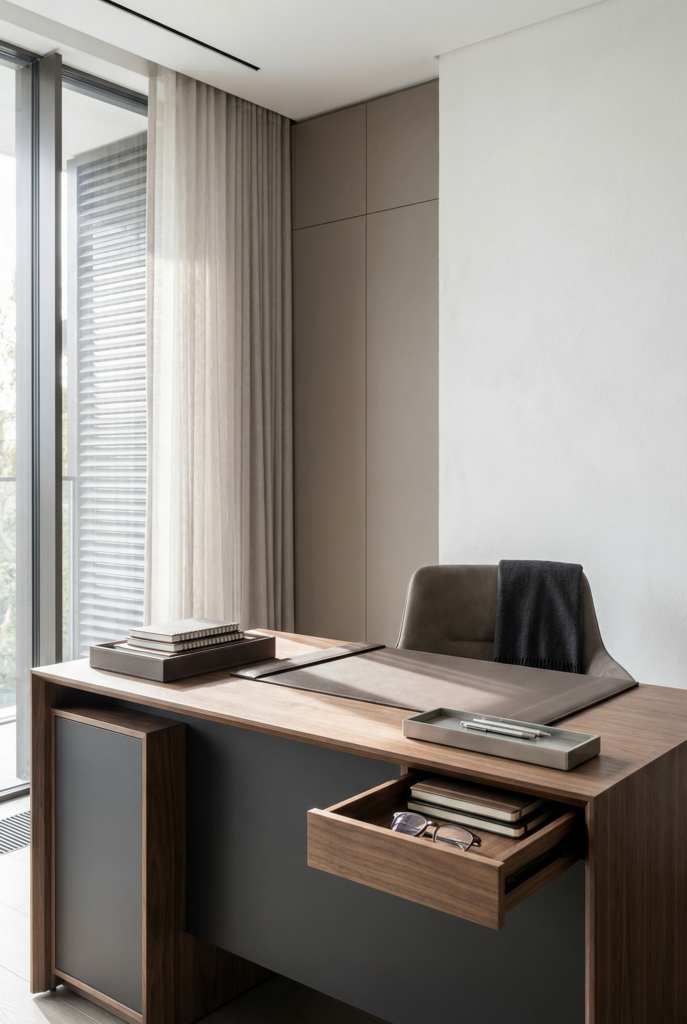
When you decide what belongs in each line, office desk decorations stop feeling like clutter and start looking curated like a zen office. If you’re drowning in stuff, your fix is not more cute containers. It’s fewer items in the wrong zone.
Scent & sound etiquette (office-safe swaps)
If you share air and walls with other humans, scent and sound have to be polite. The goal is comfort without becoming “that desk.” You know the one.
For sound, I love a focus playlist, but keep the volume low enough that nobody can recognize the lyrics from three feet away. If you need steady calm, white noise in headphones is the safest move. If you’re on calls all day, even better: a soft background track can keep your mood steady without broadcasting it to the office.
For scent, skip candles at work and go for clean, low-impact options:
- light hand cream that stays close to you
- a drawer sachet (hidden, not cloud-like)
- a tiny, low-scent diffuser only if your office allows it
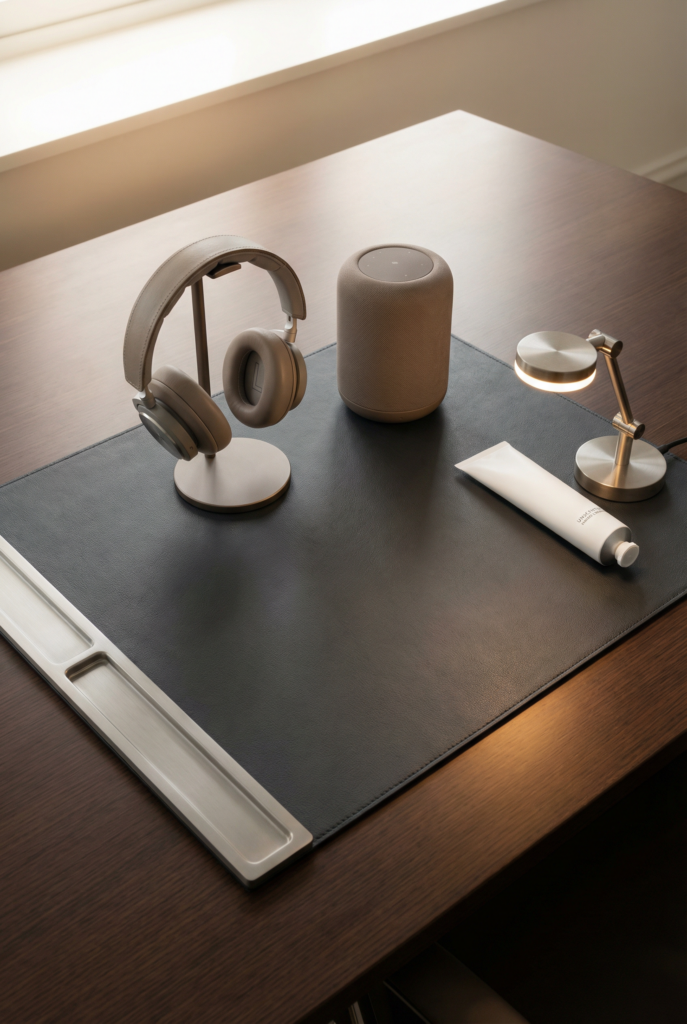
Your desk should feel welcoming, not like a perfume counter.
Personal items without looking unprofessional (the “3 personal items” guideline)
You can absolutely make your desk feel like you without looking unprofessional. My personal guideline is three personal items, max, in the “visible zone.”
A simple trio works every time:
- one framed photo (not a chaotic collage situation)
- one small piece of art (print, postcard on a stand, tiny sculpture)
- one meaningful object (a travel trinket, a little ceramic dish, a “this is my thing” item)
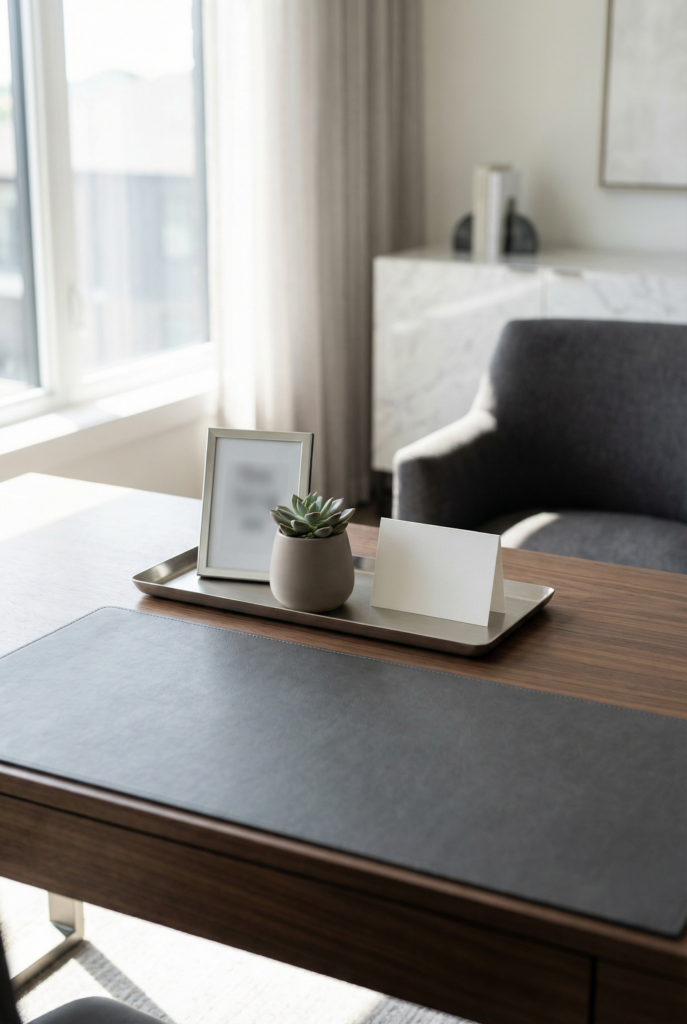
The trick is scale. Keep it small enough that it doesn’t compete with your actual work tools. If you want more personality, make one functional item personal, like a favorite mug that doubles as a pen cup. Just… maybe wash it. I say this with love and experience.
The 5-Layer Desk Styling System (Your Step-by-Step)
If your desk never looks “done,” you probably don’t have layers. Layers make it feel styled, even when you’re in the middle of real work.
Layer 1: Base — desk mat, color foundation, mouse pad choice (modern desk decor)
Your base layer is what your eye reads first, so it sets the whole mood. A desk mat is my favorite shortcut because it instantly makes the surface look finished and protects it from the daily abuse of coffee, pens, and dramatic sighs.
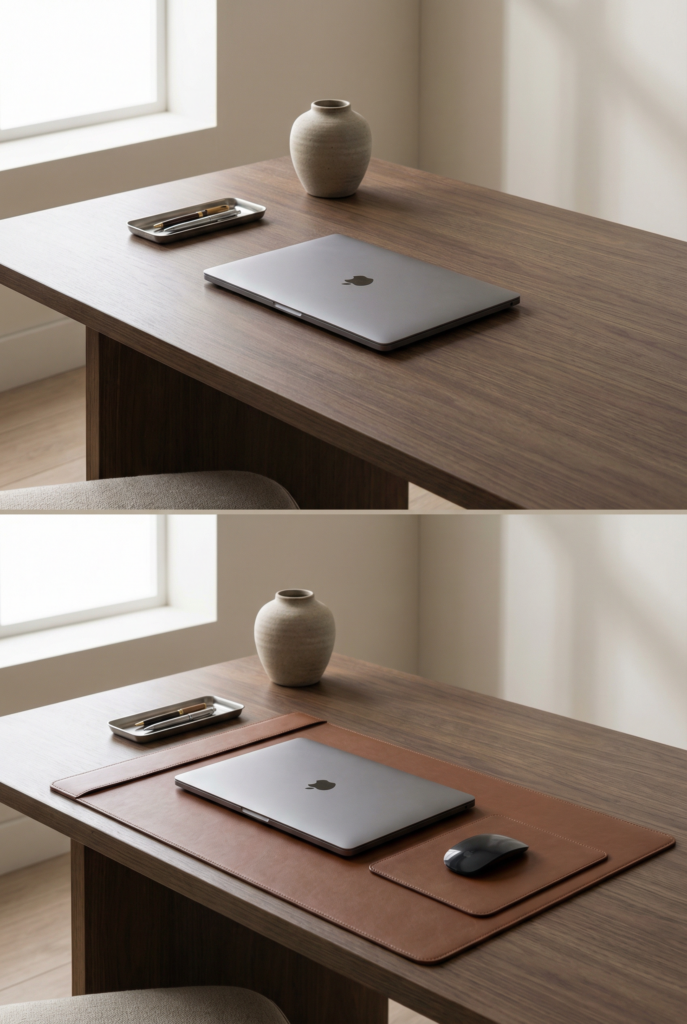
Choose a simple color foundation: one neutral plus one accent, or two neutrals with texture. This is where modern desk decor looks expensive fast, even if you grabbed a mat for like $18 on a random Tuesday. I like a soft black, warm tan, or muted gray, then I pick a mouse pad that matches instead of fighting it. That one tiny match can make a desk look intentional.
If you can’t do a full mat, you can still create a base with a mouse pad and a small tray that share the same tone. Your desk stops looking like a pile of stuff and starts looking like a plan.
Layer 2: Function — pen cup, notepad, inbox tray, functional desk accessories
This layer is your workhorse: the things you reach for every day. If they’re ugly, you notice. If they’re cute, you feel weirdly more capable.
Start with functional desk accessories that solve your real annoyances. My “desk basics” look like this:
- a pen cup that fits scissors and highlighters
- one notepad you actually like looking at
- an inbox tray (or slim paper tray) so papers stop living under your keyboard
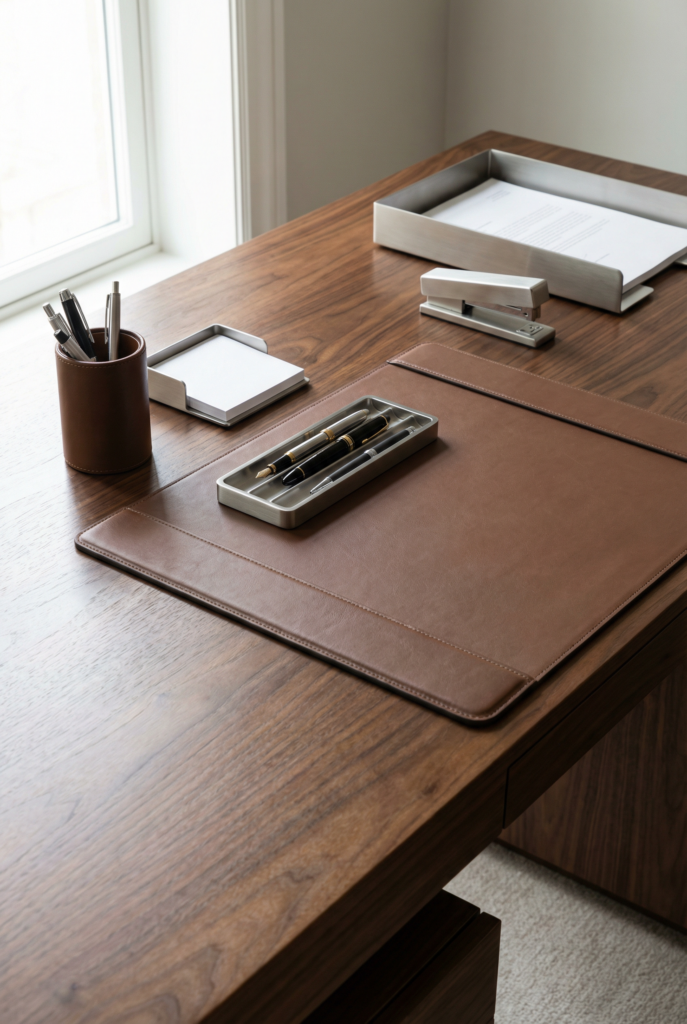
If you deal with lots of paper, a tray is non-negotiable. If you’re mostly digital, you can skip it and use a slim catchall instead. This is also where decorative desk accessories earn their keep. Choose versions that look good but are easy to use. The best styling always looks effortless, but it’s secretly just smart choices that don’t interrupt your workflow.
Layer 3: Contain — trays, magazine holders/bookends, drawer dividers, desk storage solutions
Containment is what makes a desk feel calm, because nothing is floating around “loose.” If you want stylish desk organization, you need a few containers that do the boring jobs.
My simple containment stack:
- one tray for daily small stuff (badge, lip balm, sticky notes, stapler)
- one vertical holder for notebooks and folders (magazine holder or bookends)
- drawer dividers so the “junk drawer avalanche” stops happening mid-call
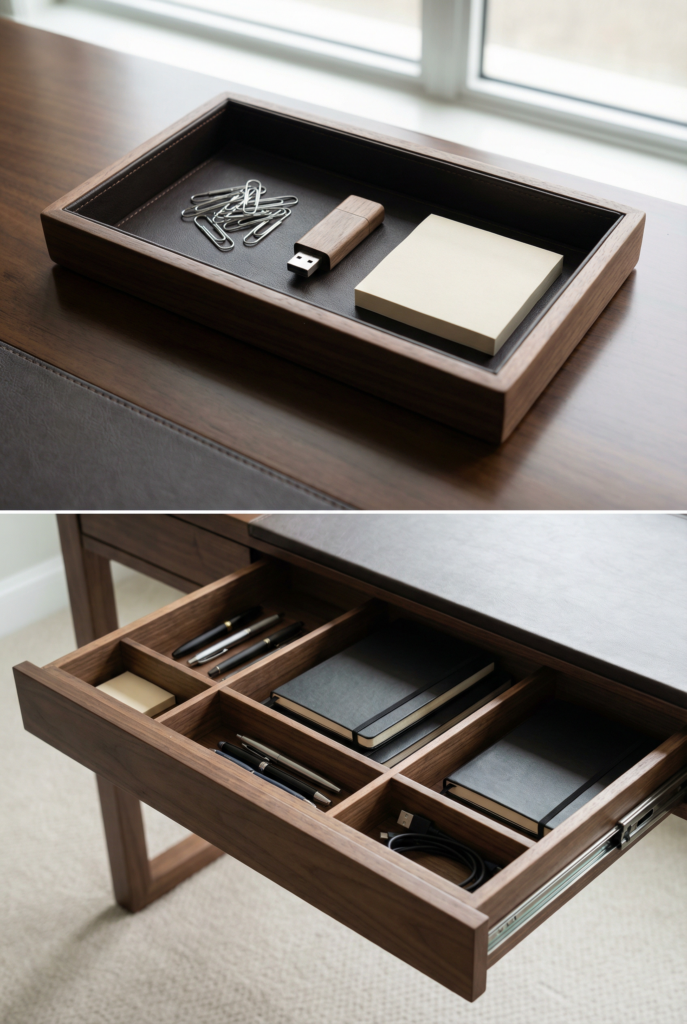
Vertical storage is magic because it uses height, not surface space. This is where desk storage solutions make your desk look styled, even when you’re busy. The goal is not hiding everything. It’s giving everything a home so your desk feels clean, not empty.
Layer 4: Lift — lighting + monitor riser/stand (height + comfort)
Lift is about getting things off the surface and up to a comfortable height. It’s how your desk stops looking flat, and how your neck stops hating you.
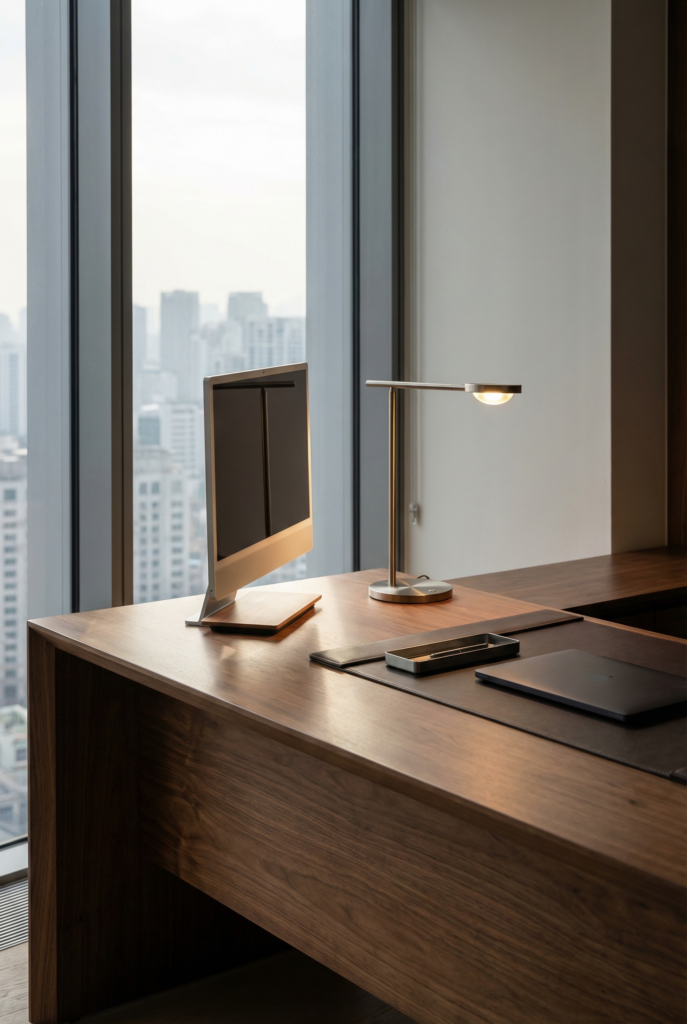
A monitor riser or stand adds instant structure and frees up space underneath for a keyboard or notebook. Choose one with clean lines and a finish that matches your base layer. If you’re using a laptop, a stand can do the same thing, but make sure your keyboard and mouse feel comfortable afterward.
Lighting is part of this layer too. Even a small task lamp adds height and makes the desk feel “designed,” not accidental. Bonus: it makes you look less like a haunted Victorian child on Zoom. Lift is the layer that quietly turns a desk into a workspace you actually want to sit at.
Layer 5: Personal — photos, art, plants, meaningful objects (personalized desk decor)
This is where your desk gets its soul. Personal items are what turn “nice desk” into “this is clearly your spot.”
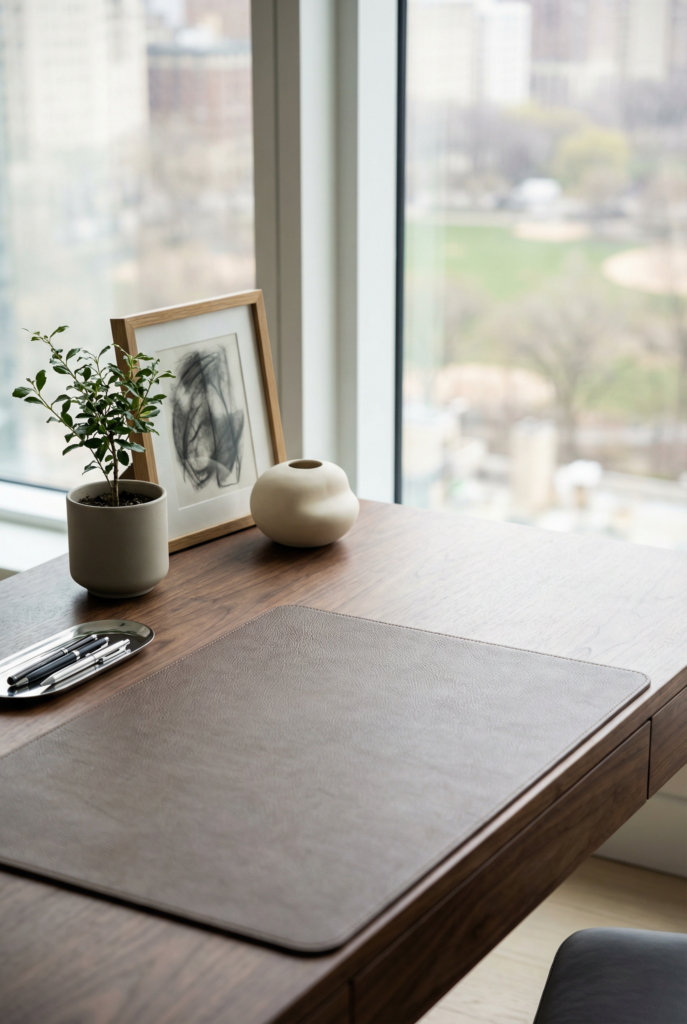
Keep it edited and meaningful. I like one frame, one small art moment, and one plant or object. If you want personalized desk decor without clutter, make it something that can be moved in two seconds when work gets intense. A tiny framed print, a postcard on a stand, a small plant, a single sculptural object. Not twelve tiny figurines staring at your coworkers.
This is the layer where you can reflect your style without saying a word. Calm colors, playful shapes, or a little vintage moment. Just remember: if everything is “special,” nothing reads special. Pick one or two pieces you genuinely love, then let them breathe.
Pick a Desk “Vibe Recipe” (So It Looks Intentional)
Your desk looks intentional when it follows a vibe recipe. That’s basically a small set of style rules you can repeat, so you’re not reinventing your desk every Monday morning.
Modern Minimal (black/white + one warm wood)
Modern minimal works when you want your desk to look sharp, clean, and quietly expensive. Keep the palette black and white, then add one warm wood tone to soften it.
A quick recipe:
- black and white basics (mat, tray, pen cup)
- one warm wood anchor (riser, pencil cup, or small shelf)
- one plant or simple art piece, then stop
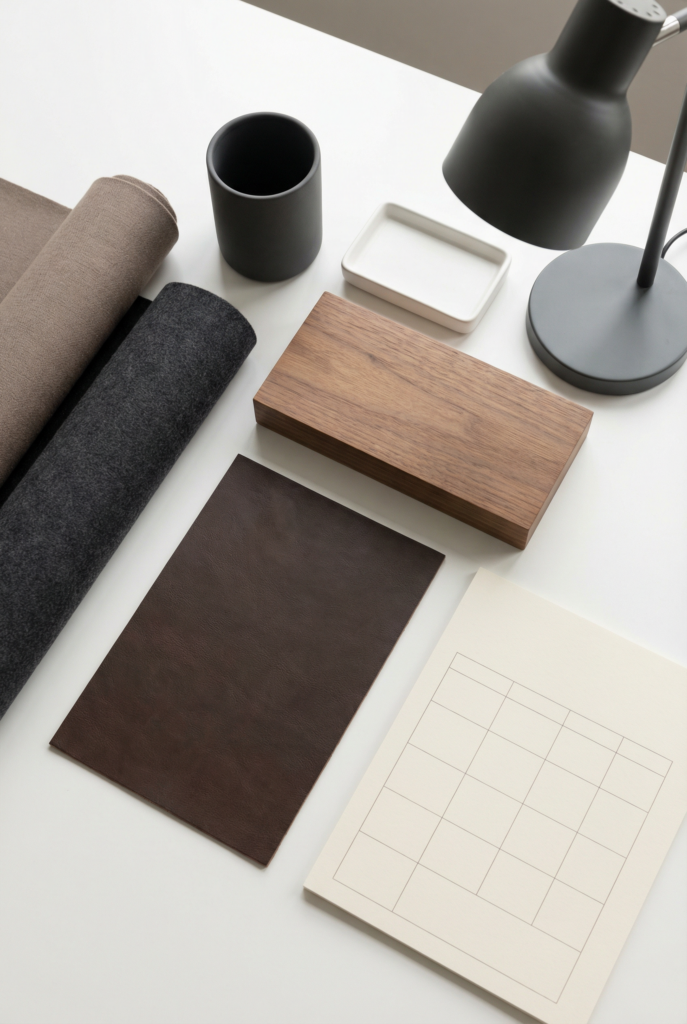
If your desk gets messy fast, this vibe forgives you because it’s built around negative space. Just watch one thing: cables. Cables are the villain of modern minimal. I hide mine as best I can, but one always escapes like it’s auditioning for a soap opera.
Color Pop Creative (bright accessories + contained clutter)
Color pop is for when you want energy without chaos. The trick is bright accessories paired with strong containment, so the color reads fun, not messy.
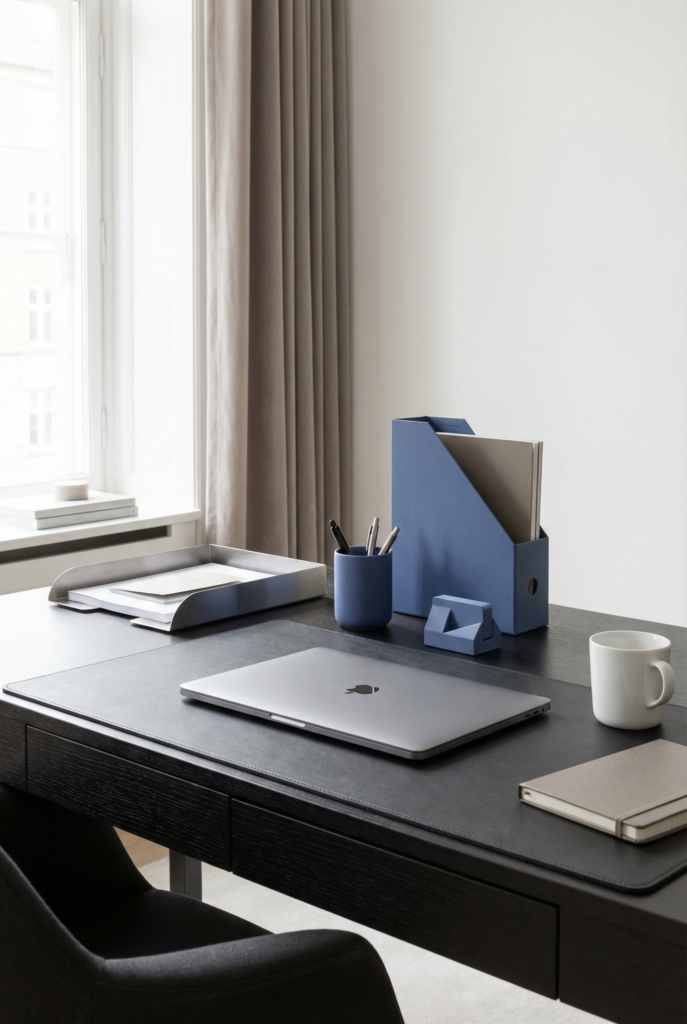
Pick one or two bright colors and repeat them across small items: a pen cup, a tray, a notebook. Keep your base layer neutral so the color stands out on purpose. This is where colorful desk accessories feel grown-up, because they’re framed by calm. If you go bright on everything, it turns into visual noise fast.
I love this vibe for creative desk decor because it gives you that little dopamine hit every time you sit down. Just commit to a container rule: if it’s small, it lives in a tray or drawer. Loose bits are what make a colorful desk feel like a craft store explosion.
Sleek Corporate (neutral + metal accent + clean lines)
Sleek corporate is for a desk that says “I’m organized” even if you’re currently winging it. Stick to neutrals like black, gray, navy, or beige, then add one metal accent.
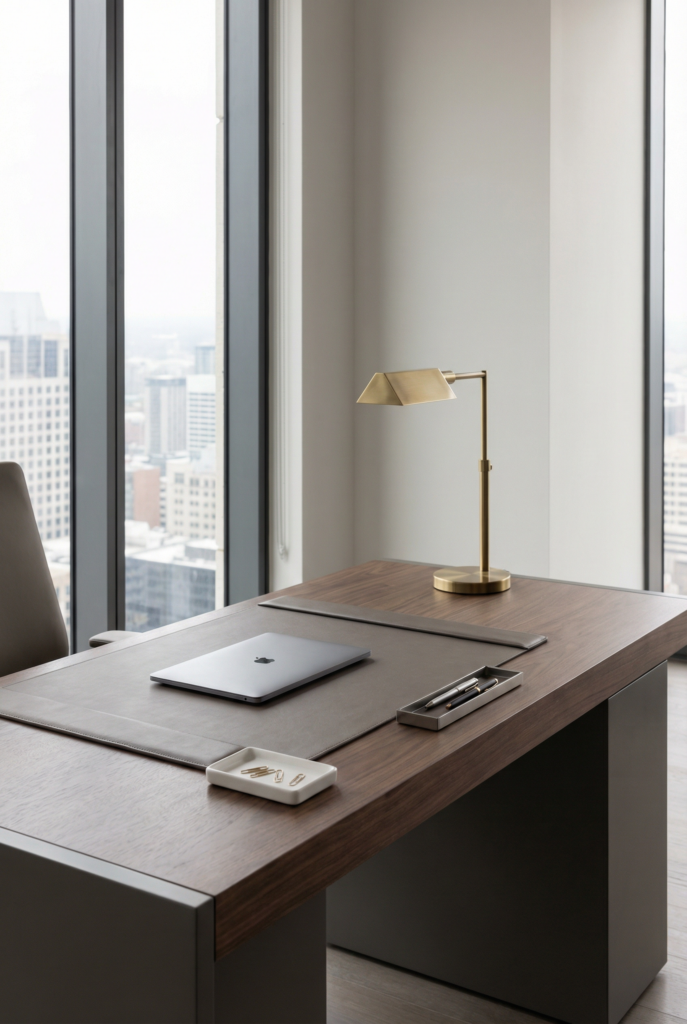
The metal can be subtle: a silver lamp, a brushed gold pen cup, a steel inbox tray. Keep lines clean and shapes simple. This vibe works best when your surfaces stay mostly clear, so lean hard on vertical storage and a single tray for daily items. It’s also a great base if you want to layer in office theme ideas later, like seasonal art swaps, without disrupting the whole setup.
If you’re in a shared office, this vibe is the least likely to raise eyebrows. It looks professional, but still polished enough to feel like you care.
Cozy WFH (soft texture + warm light + calm palette)
Cozy WFH is for when your desk lives inside your home and you want it to feel like part of your space. Think soft texture, warm light, and a calm palette that doesn’t clash with the rest of your room.
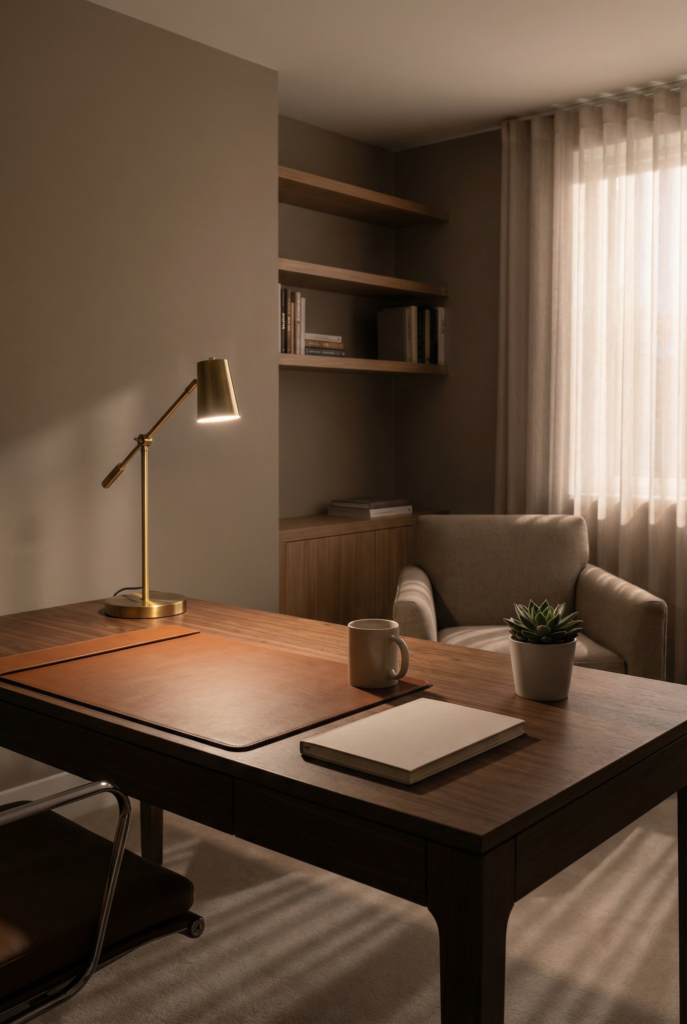
This is where home office decor gets to be a little more personal: a woven tray, a linen-look mat, a warm bulb in your lamp. If you’re decorating home office spaces, this vibe makes your desk feel like an extension of your home, not a cold corner you avoid. Add a soft coaster, a small rug under your chair, and maybe a plant you can actually keep alive.
This vibe is perfect for a work from home setup, but I’ll warn you: cozy can invite clutter. Cozy does not mean “everything I own on the desk.” Cozy means soft, edited, and calm.
Optional callout: House Beautiful-level impact on a desk budget (wallpaper behind desk / monochrome moment)
House Beautiful
If you want a big visual change without buying a bunch of stuff, do one “backdrop” move: removable wallpaper behind your desk, or a monochrome moment where your accessories match your wall tone. It’s dramatic in the best way, and it makes your desk look styled even when your inbox tray is full.
Organization That Counts as Decor (Clutter-Free Desk, But Pretty)
The best desk styling is secretly organization. If you want a clutter-free desk that still feels warm, you need systems that look good while they work.
Trays + catchalls (paper + small items)
Trays are the easiest way to make your desk look organized in five seconds. They corral the little stuff that normally wanders around and makes the desk look messy.
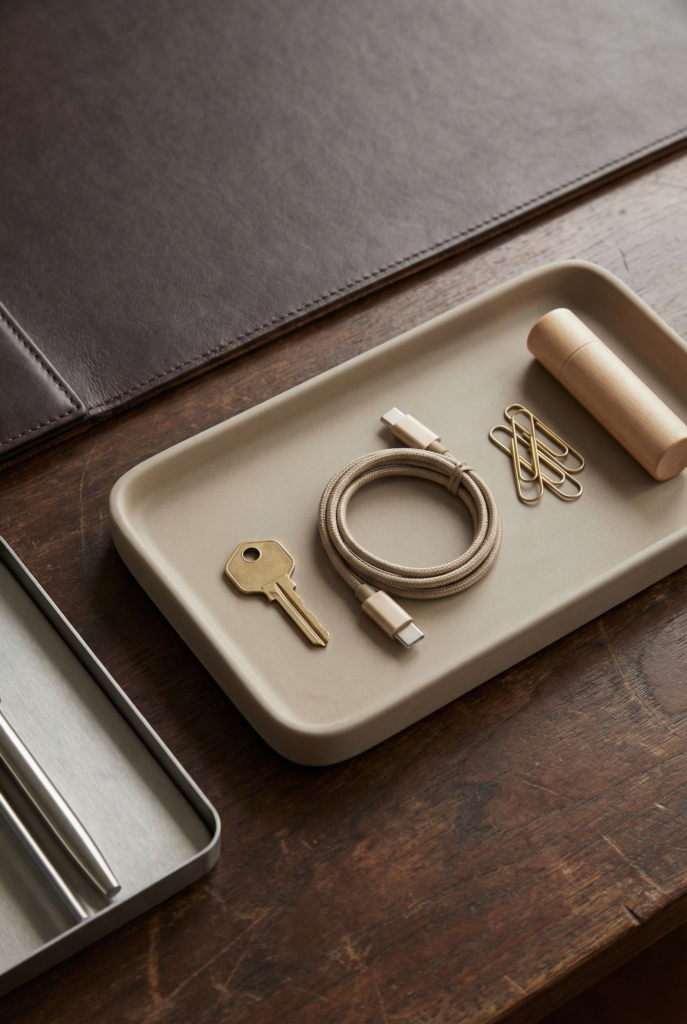
Use one tray for small items you touch all day and one paper catchall if you deal with loose documents. The tray can be wood, acrylic, metal, ceramic, whatever fits your vibe. The key is that it’s large enough to hold the mess without spilling it all over the desk. I keep mine near my dominant hand, because if it’s inconvenient, I will ignore it. Every time.
If you’re gathering workspace organization ideas, start here. A tray is both decor and a boundary. It tells your brain where clutter goes, which is honestly the whole game. And it’s the fastest way to make your desk look like you meant to do this.
Cable management that disappears (clips, box, under-desk route)
Cable management is the difference between “styled desk” and “tech spaghetti.” If your desk is cute but your cords are everywhere, your eye will always read it as messy.
My simple cable plan:
- clip cords along the back edge of the desk
- hide the power strip in a cable box
- route everything down one side only (one “cord zone,” not five)
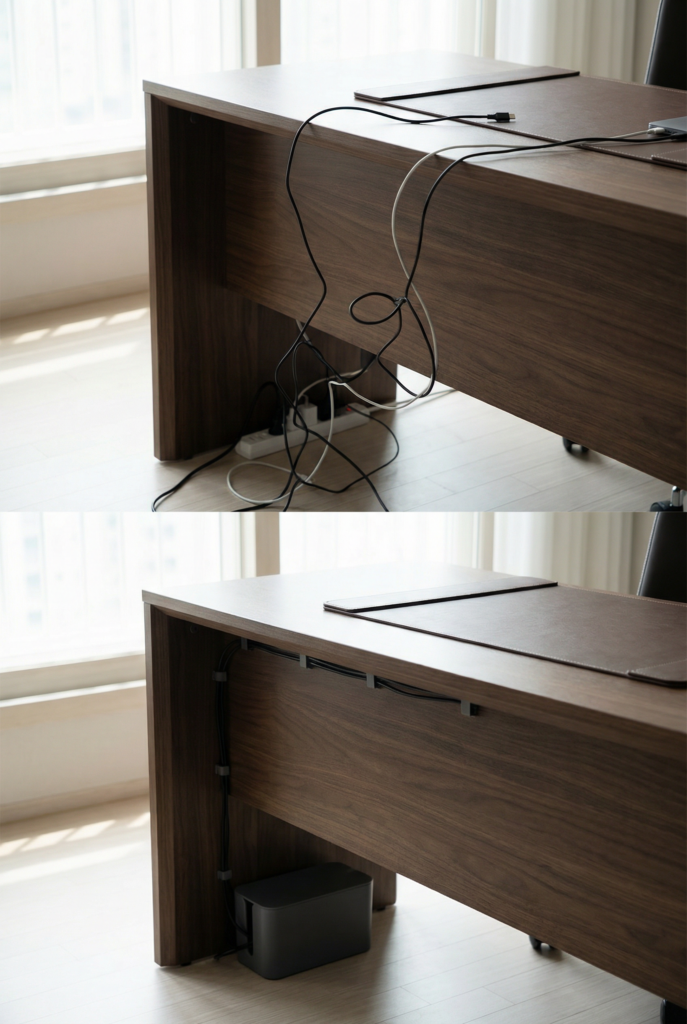
I also label the chargers, because I am tired of unplugging the wrong one during a meeting. It happened once. It will haunt me forever. This is one of those desk organization tips that instantly makes everything look more intentional, even if nothing else changes.
Wall space helpers (pegboard/floating shelf/bulletin board)
If your desk surface is small, the wall is your best friend. A pegboard, floating shelf, or bulletin board lets you store useful things without turning your desktop into a stack.
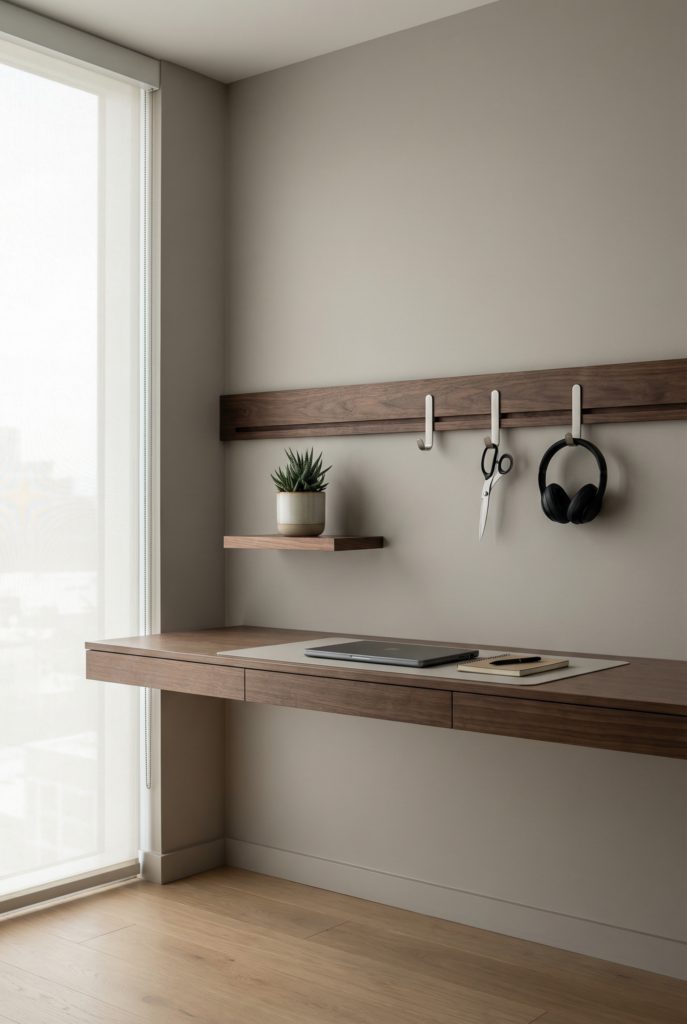
A pegboard works when you have lots of small tools. A shelf works when you want display plus function. A bulletin board is for the paper people who need to see things to remember them. Choose one that matches your vibe so it feels like decor, not office supply store leftovers.
This is one of my favorite workspace organization ideas because it gives you breathing room. It also makes your desk feel more like a styled zone, which is very office inspiration energy.
Hot-desk / hybrid option: a portable desk caddy (grab-and-go)
If you hot-desk or split time between home and office, a portable caddy is the secret weapon. It keeps your essentials together so you can set up fast and leave fast.
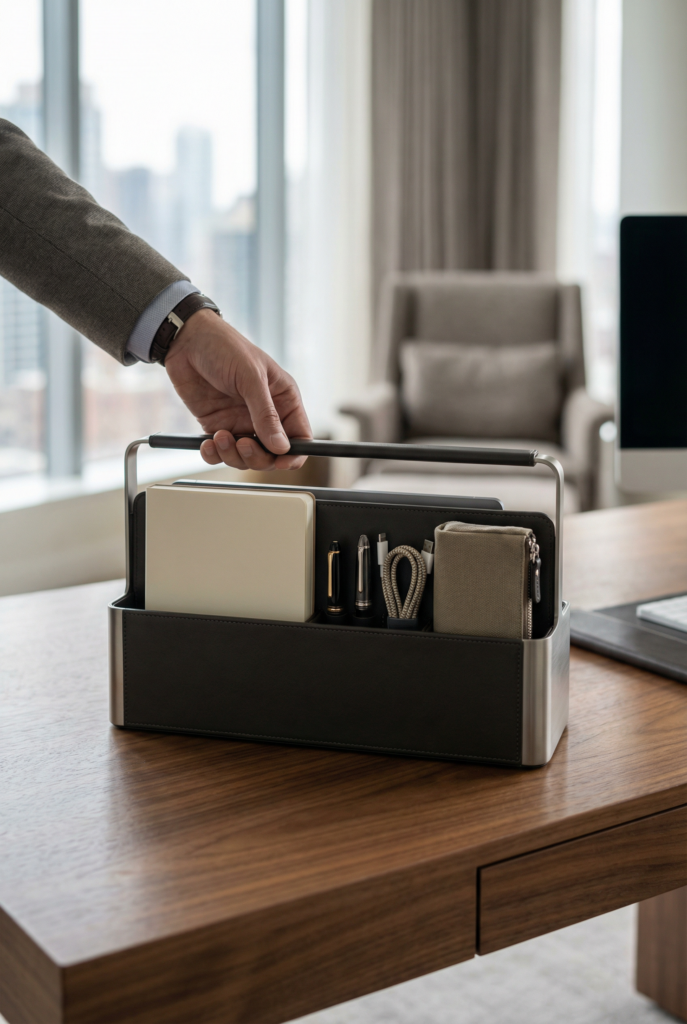
Look for one with compartments for pens, chargers, a notebook, and small personal items. Keep it edited. If it becomes a tiny junk drawer, it stops helping. I like to pack mine the night before, because morning-me is not trustworthy. Morning-me will forget the laptop charger and then act shocked about it.
A caddy also helps your desk look clean because your “stuff” arrives contained. You get a consistent setup, which makes your desk look intentional even when you’re moving around.
Plants & Nature That Survive Real Workdays
Plants make a desk feel alive. But they also need to survive you getting busy and forgetting they exist for three days straight.
Best low-maintenance desk plants (succulents/pothos-style options)
If you want plants for desk life without stress, go low-maintenance. Succulents are great if you have bright light and you can resist overwatering. Pothos-style trailing plants are great if you want something forgiving that still looks lush.
A few reliable options:
- succulents (bright light, water less than you think)
- pothos-style trailing plants (forgiving and cute)
- snake plant and ZZ-type plants (low light, low drama)
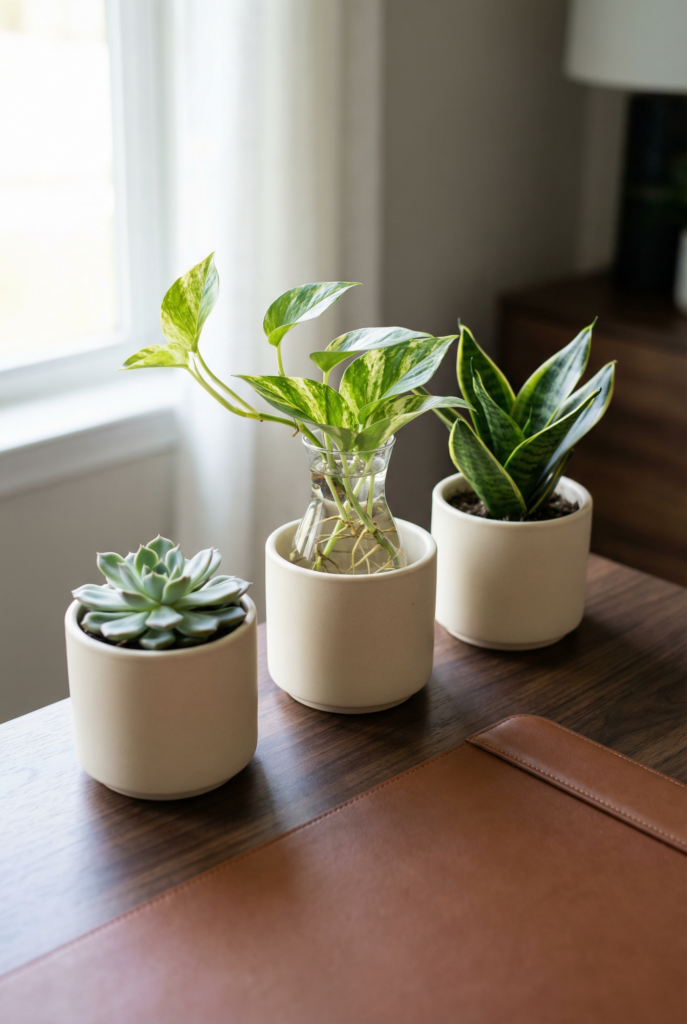
Keep the pot small and use a catch tray so you don’t destroy your desk surface. I have learned this the hard way, after a tiny water ring that refused to leave. Plants are also an easy way to add decorative desk plants without adding clutter. One plant is enough to soften the whole setup.
Faux plant tips (how to make them look real)
Faux plants can look great, but only if you style them like they’re real. The biggest giveaway is cheap shine and weird plastic leaves.

Choose a faux plant with variation in color and a matte finish. Then put it in a heavier pot, like ceramic or stone-look, so it feels grounded. Add a little moss or top layer in the pot to hide the plastic base. That small detail makes a huge difference. Also, dust it. Yes, dust the fake plant. It’s annoying, but it keeps it from looking like it’s been sitting in a storage closet since 2014.
If you’re plant-anxious, faux is a totally valid path. You still get that nature vibe without the guilt.
Flowers (when it’s worth it)
Flowers are worth it when you need a mood shift fast. A small bunch on a Monday can genuinely change how your desk feels, especially during a busy season.
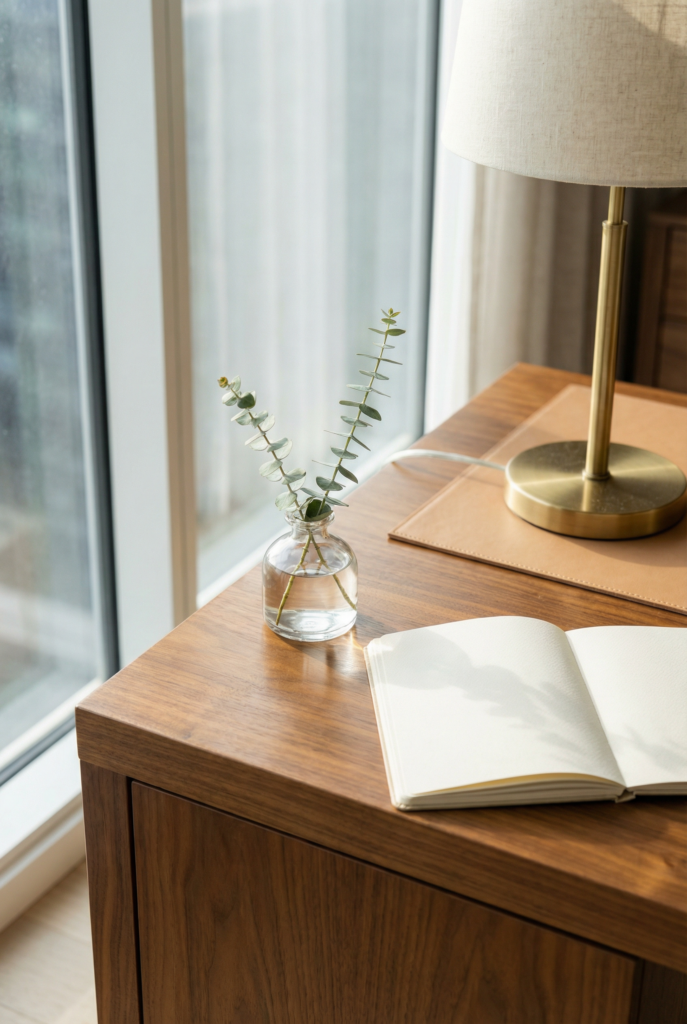
Keep it simple and small. One bud vase is better than a giant arrangement that eats your entire workspace. If you’re in an office, choose low-scent blooms so you’re not blasting your neighbors. If you’re at home, you can go bigger, but keep them off your main work zone.
My favorite trick is grocery store flowers in a tiny vase, trimmed short, like a little “I tried” moment. Even three stems can make your desk feel cared for. Just commit to tossing them before they go sad.
Lighting for Workspace (Productivity + Mood + Zoom-Friendly)
Good lighting makes you more productive and makes your desk feel more styled. It’s one of the most overlooked parts of a productivity desk setup, and one of the highest impact.
Task lamp basics + bulb tone
A task lamp should light your work area without glaring on your screen. The simplest rule: aim the light at your desk surface, not directly into your eyes.
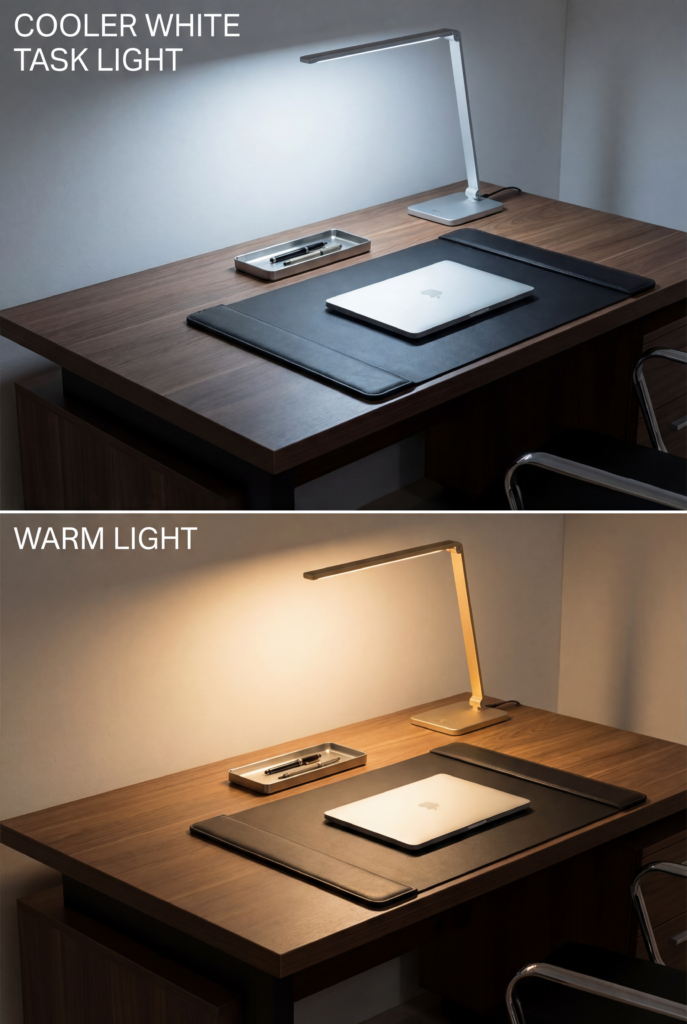
Bulb tone matters. A warm bulb feels cozy but can feel dim for detail work. A neutral bulb is usually the sweet spot for focus and video calls. If you can, choose an adjustable lamp so you can shift it throughout the day. In the morning I like brighter light, and by 3 p.m. I want a calmer vibe because my brain starts acting like it’s done for the day.
This is the foundation of lighting for workspace comfort. It also adds height and structure, so your desk looks styled even when you have papers out.
Natural light placement + “window side” idea
Natural light is the best desk lighting if you can get it. Place your desk so light comes from the side, not directly behind you, so you don’t turn into a shadow on calls.

If you can sit with a window to your left or right, that’s ideal. It reduces glare and keeps your screen readable. If the window is behind your screen, add a sheer curtain to soften the brightness. If the window is behind you, you’ll end up backlit and looking like a mystery person in witness protection.
A “window side” styling idea I love: keep your plant on the window side and your lamp on the opposite side. It balances the visual weight and makes the desk feel intentional.
Optional: LED strip/bias lighting (when it fits your style)
Bias lighting is when you add soft light behind your monitor or along the back edge of the desk. It reduces harsh contrast at night and adds a subtle glow that can feel very “done.”
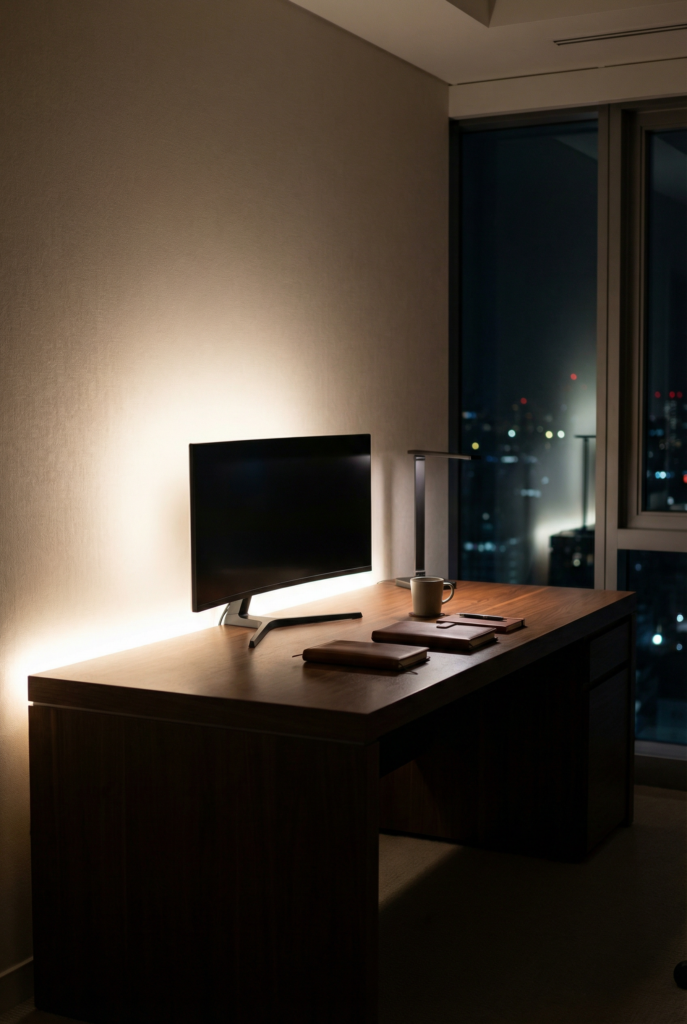
This works best for modern or sleek setups, and it’s especially nice if you work evenings. Keep it soft and simple. If it’s rainbow-party-mode all day, it can get distracting fast. I like LED lighting when the desk feels flat or the room lighting is harsh. My one gripe: the adhesive can be annoying, and sometimes it peels. I have re-stuck mine more times than I’d like to admit.
Mood Boosters That Aren’t Messy
Mood matters. If your desk feels blah, your brain will follow. The key is adding mood-enhancing decor that doesn’t create a mess or distract you.
Sound: white noise / focus playlist (office-safe volume)
Sound can help you focus, but it should stay private and subtle in a shared space. Headphones are the safest option.
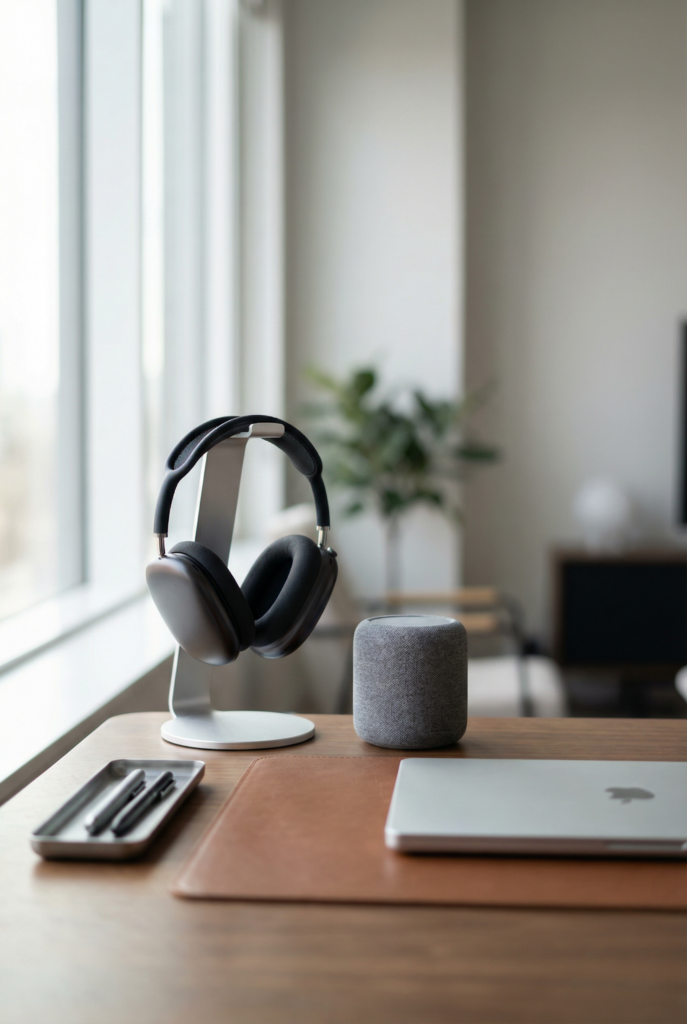
If you work best with steady background noise, white noise or a low hum can keep your brain from snagging on every conversation nearby. If music helps, a focus playlist with minimal lyrics is usually less distracting. Keep the volume low enough that you can still hear someone say your name. This is one of my favorite tiny upgrades because it changes the feel of the day without changing your desk physically.
Scent swaps: candle alternatives for offices (diffuser rules)
In offices, scent has to be subtle or it becomes a problem. The goal is a tiny hint of comfort, not a cloud.
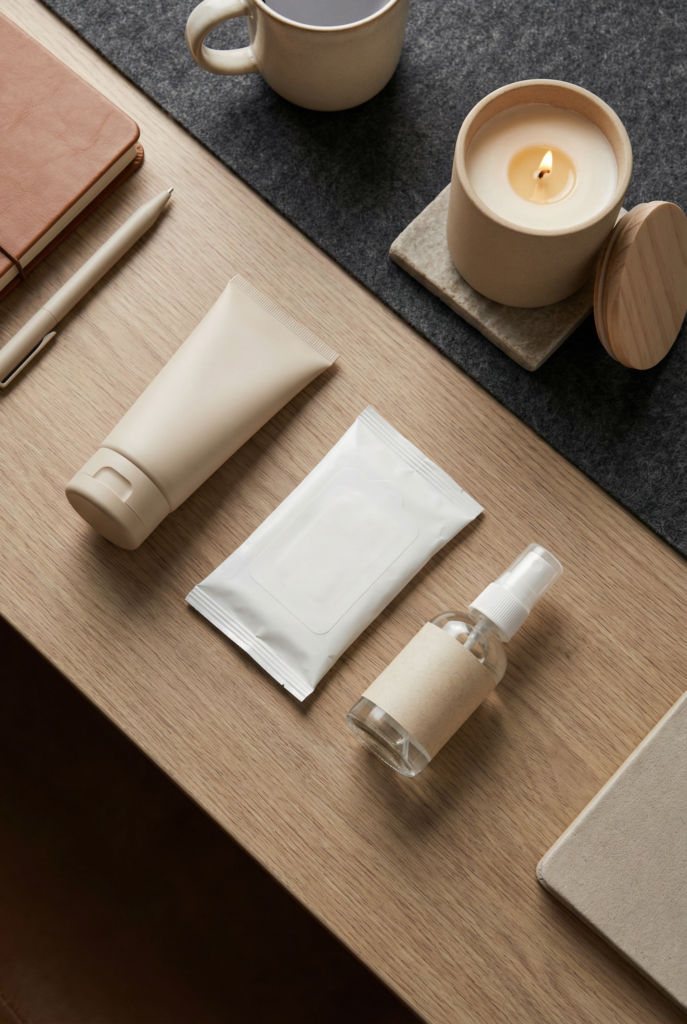
If your office allows it, a very small diffuser can work, but keep it mild. Safer swaps include a scented drawer liner, a lightly scented hand sanitizer, or a sachet in a drawer. Always follow office rules, and assume someone nearby has sensitivities. A desk that smells “clean and calm” is lovely. A desk that smells like a candle store is… a lot.
Micro “joy items” that still look professional
Micro joy items are tiny things that make you smile without taking over the desk. Think one small object, not a collection.
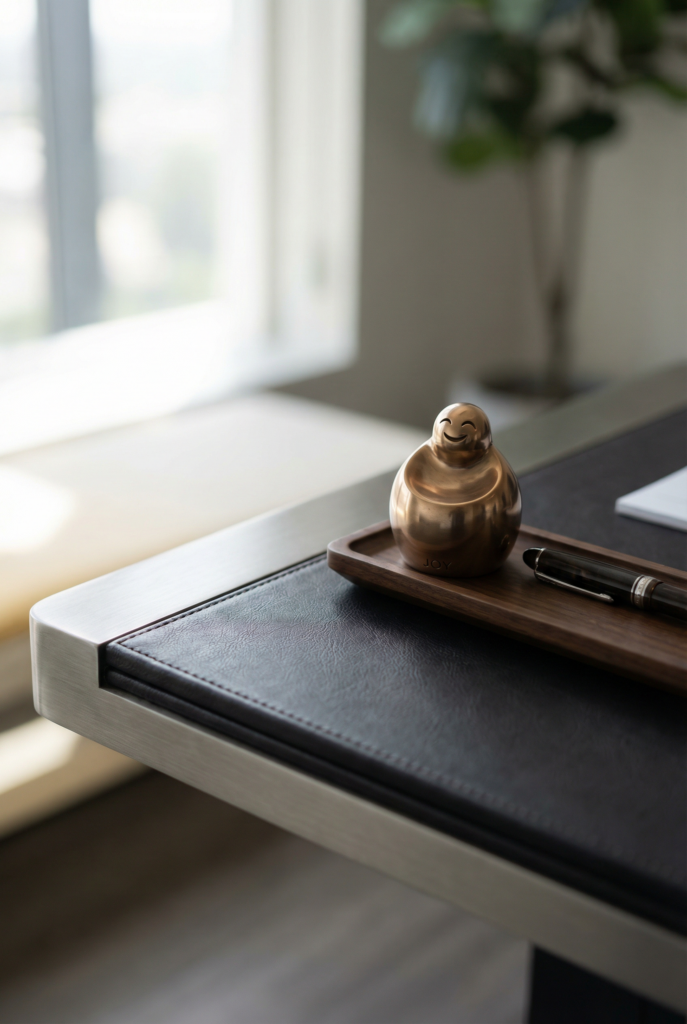
A beautiful paperweight. A tiny framed quote. A smooth stone. A small piece of art on a stand. Something you can look at for two seconds and feel calmer. Keep it professional by choosing pieces that feel intentional, not novelty. If you’re tempted to add five joy items, remember the rule: one or two, then stop. I say this as someone who once bought three tiny trays because I couldn’t decide and then used none of them for a week.
Comfort Upgrades That Look Stylish
Comfort is not optional. If you’re uncomfortable, you’ll fidget, you’ll hate your desk, and you’ll end up working from the couch like a gremlin.
Wrist rest + cushion (pretty + supportive)
Wrist support can be cute and ergonomic. Choose a wrist rest that matches your base layer, like a neutral fabric, soft faux leather, or a simple wood tone. It can blend in and still help.

If you sit all day, a cushion can make a huge difference. Look for one that doesn’t scream “medical device.” Neutral tones, clean stitching, and simple shapes keep it looking polished. This is how you create a comfortable workspace without sacrificing style. My personal warning: if you eat lunch at your desk, pick materials you can wipe down. I once dropped salsa on a cushion. It was a tragedy and a lesson.
Monitor riser / laptop stand + keyboard tray (clean lines)
If your screen is too low, your neck will pay the price. A monitor riser or laptop stand lifts your screen to a better height and makes your desk feel more structured.
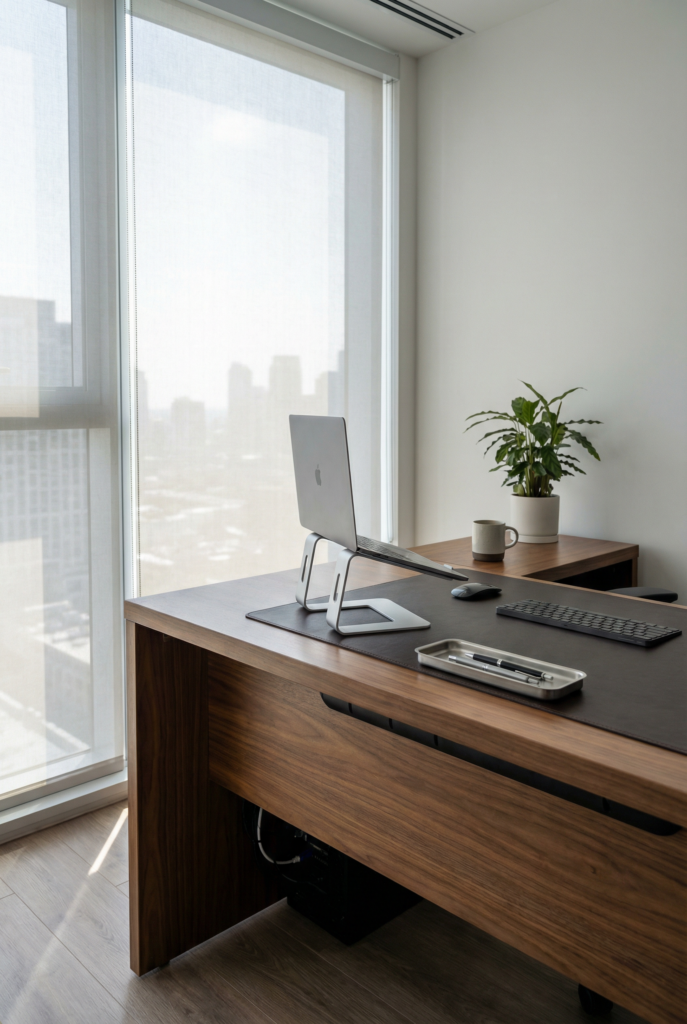
Choose clean lines and a finish that matches your vibe recipe. Wood for warm, metal for sleek, neutral for minimal. If you need extra space, a keyboard tray can help keep your surface clear. Just make sure it doesn’t wobble, because nothing ruins a vibe like a shaky setup.
Footrest/rug idea (WFH)
If you work from home, a footrest or small rug can make your desk feel grounded. It’s a comfort upgrade that also makes the area look finished.
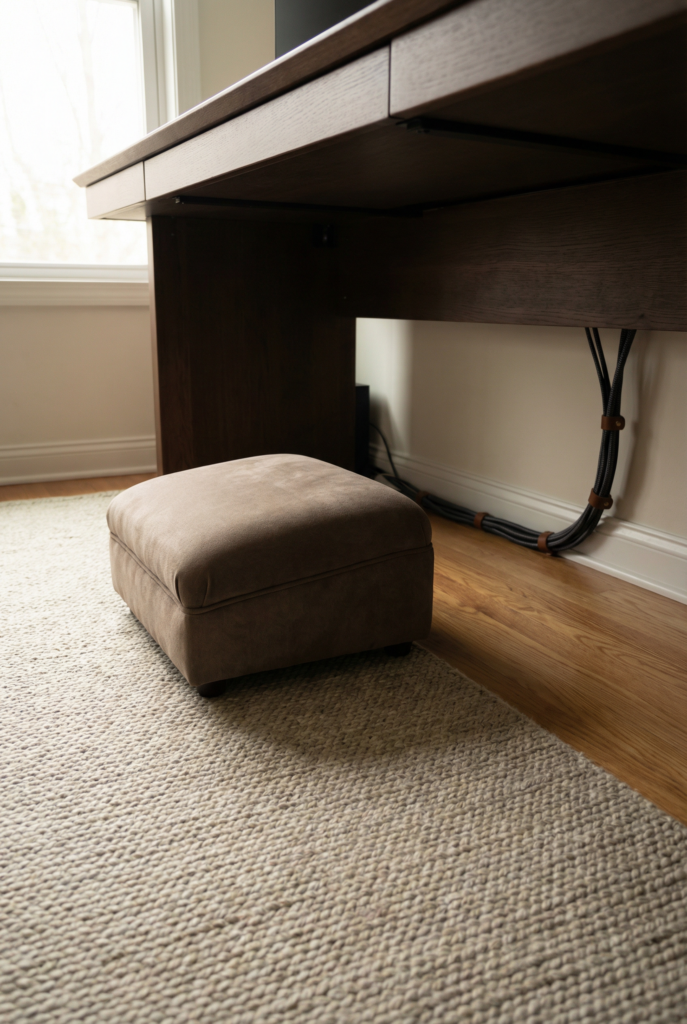
A footrest helps with posture, especially if your chair height isn’t perfect. A small rug under your chair adds softness and defines the workspace zone, which is great if your desk is in a bedroom or living room. Keep the rug low-pile so your chair can still move. This is one of those upgrades that makes your desk feel like part of your home, not a temporary setup.
Time + Focus Tools That Double as Decor
Time tools can be pretty. They can also keep your desk from becoming a swirl of sticky notes and panic.
Desk calendar ideas (minimal vs colorful)
A desk calendar is a visual anchor. It keeps your schedule visible without turning your desk into a wall of notes.
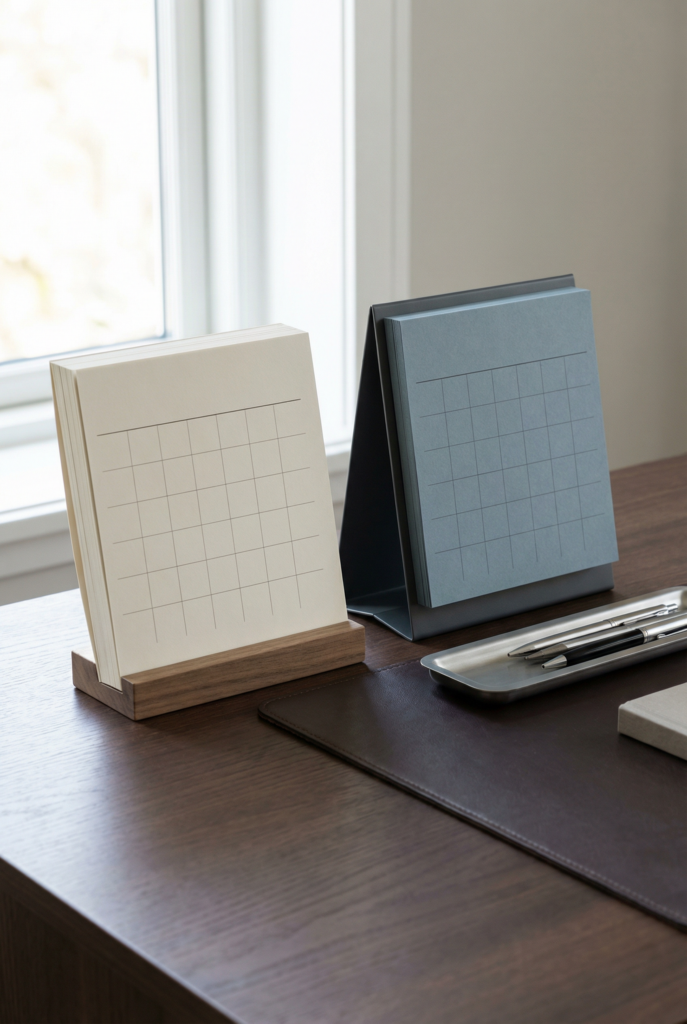
If you love calm, choose a minimal calendar in neutral tones with lots of white space. If you need energy, go for a colorful one, but keep the rest of the desk muted so it doesn’t feel chaotic. I keep mine angled so I can glance at it during calls without looking like I’m disengaged. It’s also the one thing that stops me from booking back-to-back meetings and then wondering why I’m exhausted.
Magnetic/bulletin board reminders without visual chaos
If you need reminders in your face, use a board, but keep it edited. Too many notes create noise and you stop seeing any of them.
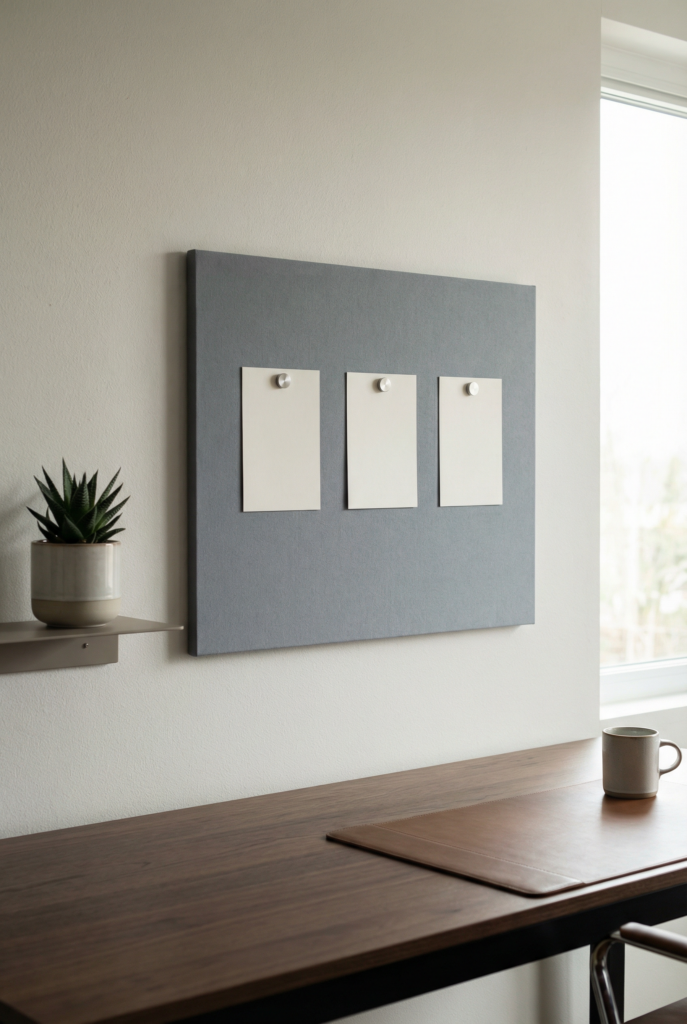
A magnetic board works well if you want a clean look. A bulletin board works well if you need to pin paper. The trick is to limit what lives there. Keep one section for “this week” and clear it regularly. Use matching pins or magnets so it looks intentional. Add one pretty print if you want it to feel like inspiring office decor, then keep the rest functional.
“One notepad system” to keep the surface clear
If your desk is covered in random notes, you don’t need more notes. You need one system.
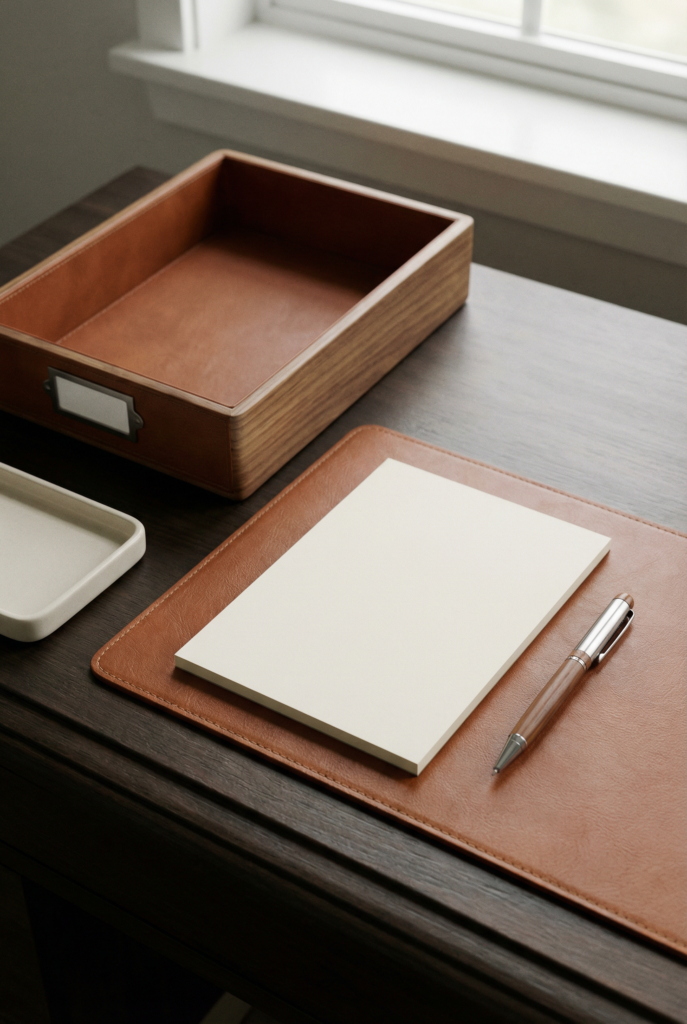
Pick one notepad for daily tasks and commit to it. Keep it in one spot, always. When you write something elsewhere, transfer it to the main pad or toss it. This is the only way I’ve found to keep the surface clear without losing my mind. And yes, I still keep one sticky note for emergencies. I am not a robot.
Tiny “Unique” Touches (Pick 1–2)
Unique touches should feel like a wink, not a pile. Pick one or two, and let them be the moment.
Digital background/screensaver refresh
Your desk doesn’t exist only in real life anymore. Your digital background is part of your workspace vibe, especially if you’re on calls.
Choose a screensaver or background that matches your desk palette. Calm colors, simple patterns, or a photo that feels soothing. It’s a tiny change, but it makes your whole setup feel more cohesive.
Keyboard skin/stickers or artisan detail (subtle!)
If you want personality without clutter, add it to the tools you already use. A subtle keyboard skin, small stickers, or an artisan detail can make your setup feel custom.
The key word is subtle. Choose a muted pattern or one small sticker that makes you smile. Too many stickers can start to feel messy, especially in a shared office.
If you want joy without visual clutter, line a drawer. It’s my favorite “hidden surprise” move.

Use contact paper in a pattern you love. Every time you open the drawer, it’s a tiny happy moment. It also makes drawers feel cleaner and more intentional, which helps you actually use them.
Small mirror/reflective accent for tiny desks
A small mirror or reflective accent can make a tiny desk feel bigger and brighter. It bounces light and adds a little sparkle without adding bulk.
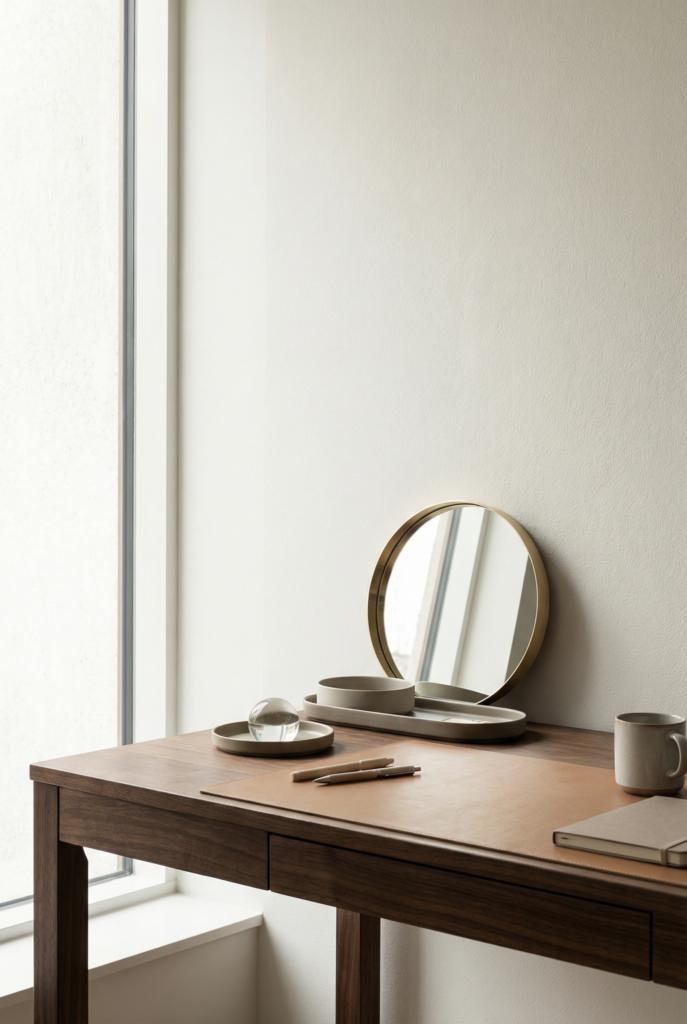
Try a small round mirror on a stand, or a reflective tray that doubles as a catchall. It’s practical too. You can check your face before a call without using your phone camera like a teenager.
Snack tin/jar (WFH or “in-drawer” version)
If you work from home, a snack tin is both practical and cute. If you’re in an office, keep it in a drawer so it doesn’t look like your desk is a pantry.
Choose a small tin that matches your vibe recipe and fill it with something that won’t crumble everywhere. I learned this after an unfortunate granola incident that left my keyboard crunchy for days.
The Reset Routine (So It Stays Cute)
A pretty desk is not a one-time event. It’s a routine. The good news is it doesn’t have to take long.
10-minute end-of-day desk reset
An end-of-day reset keeps your desk from becoming a disaster zone by Wednesday. Ten minutes is enough if you do the same steps every time.
My simple reset:
- clear the desktop into tray, drawers, or inbox tray
- toss trash immediately (tomorrow-you will thank you)
- wipe the surface or mat if you can
- set out one notepad and one pen for the morning
This routine is what keeps office desk decorations looking styled instead of swallowed by work. It also makes your next morning feel less chaotic. You don’t need perfection. You just need a reset you can repeat.
Weekly 5-minute refresh checklist
Once a week, do a five-minute refresh to keep things from drifting into chaos. This is your “edit and return” moment.
- empty and reset the tray
- file or toss paper piles
- refill essentials (pens, sticky notes, etc.)
- dust the plant or faux plant
- nudge cables back into their lane
This is where you notice what isn’t working. Maybe the pen cup is too small. Maybe the tray is in the wrong spot. A weekly refresh keeps your setup aligned with real life, which is the whole point.
Monthly “swap one thing” seasonal update (without buying everything)
If you love variety, don’t redo your whole desk. Swap one thing monthly or seasonally, and keep the rest stable.
Change a piece of art. Swap a frame. Switch the plant pot. Rotate one accessory color. This is how you follow office decor trends without turning your desk into a shopping project. Your base, function, and contain layers stay the same, so your desk still feels calm and usable. Then one small change gives you that fresh feeling. It’s the same trick I use in rooms: one new detail, then I stop before I spiral. Sometimes.
Wrap-Up: Make It Intentional, Then Make It Yours
Here’s what I want you to do: pick one vibe recipe, complete the five layers, and give yourself permission to keep it simple. You’re building a space that supports your work, not a showroom.
When you finish, screenshot your desk. Seriously. It helps you see what’s working and what’s still bugging you. Then pin this post so you can reset later when life gets messy again.
FAQs
How can I decorate my office desk at work?
Start by setting office-friendly rules, then build your desk in layers: a clean base, functional tools, containment, lighting, and one or two personal pieces.
What should I put on my office desk?
Keep daily-use essentials on the surface, add one tray for small items, and choose one personal item that makes you happy but still feels professional.
What should I put on my office desk?
Keep daily-use essentials on the surface, add one tray for small items, and choose one personal item that makes you happy but still feels professional.
What are some desk decor trends?
Right now, I’m seeing clean palettes, warm wood accents, hidden cable management, and plants or soft textures that make workspaces feel calmer.
How to make your desk look pretty?
Choose a vibe recipe, repeat your colors, and contain the small stuff. A desk looks pretty when it looks intentional.
What are trending office decor styles?
Modern minimal, sleek corporate neutrals, cozy home blends, and color pop setups are all popular right now, depending on your workspace and personality.
How do I make my desk at work more cozy?
Add warm lighting, a soft-texture desk mat, and one calming personal item. Cozy is about comfort plus editing, not adding piles.
How do I customise my office desk?
Make one functional item personal, then add one meaningful object or photo. Custom looks best when it’s restrained and thoughtful.
How to make your desk look expensive?
Limit colors, upgrade one anchor piece like a mat or lamp, and hide cables. Clean lines and consistency read high-end.
How to make your office space look fun yet professional?
Use color in small, contained accessories, keep the desktop mostly clear, and choose playful details that still look intentional.